
Educational Toys for 4-5 Year Olds: The Complete Guide
Expert-backed recommendations to nurture curiosity, build foundational skills, and make learning feel like play for preschoolers and kindergartners.
See Top Picks by Category🧠 Why the 4-5 Year Window Matters: Between ages four and five, children undergo a remarkable developmental leap. Their brains form over one million neural connections per second, laying the foundation for literacy, numeracy, and social reasoning. The right educational toys at this stage do more than entertain—they transform play into a powerful learning engine. This guide cuts through the noise to help you select toys that genuinely support cognitive, physical, and emotional growth.
What Makes a Toy Truly Educational at This Age?
Not every toy labeled "educational" delivers on its promise. For 4-5 year olds, genuine educational value comes from toys that engage multiple developmental domains simultaneously. The most effective options share several core characteristics:
- Open-ended play potential: Toys that can be used in multiple ways—like building blocks or pretend-play sets—sustain engagement far longer than single-purpose gadgets.
- Progressive challenge: The best learning toys offer multiple difficulty levels, allowing a child to grow into new challenges as their skills develop.
- Multi-sensory engagement: Toys that combine visual, tactile, and auditory feedback reinforce learning through multiple neural pathways.
- Social play opportunities: At this age, cooperative play becomes central to development. Toys that invite sharing, turn-taking, and collaborative problem-solving build essential social skills.
- Real skill transfer: Educational toys should connect to real-world skills—counting, letter recognition, spatial reasoning, or scientific observation—rather than isolated game mechanics.
When evaluating any toy, ask: does it invite active thinking, or does it merely entertain? The best educational toys for this age group sit at the intersection of fun and cognitive challenge. For broader age-specific recommendations, explore our full collection of educational toys for 3-4 year olds and educational toys for 5-6 year olds.
Top Educational Toy Categories for 4-5 Year Olds
Rather than a single "best" toy, the ideal educational play collection spans several categories. Each targets distinct developmental pathways while reinforcing skills across domains. Below is a breakdown of the most impactful categories, with tier classifications to help you match options to your child's needs and your family's preferences.
1. STEM & Building Toys: Engineering Young Minds
Construction and engineering toys are arguably the most versatile educational investment for this age group. They develop spatial reasoning, fine motor control, and early physics intuition—all while feeling like pure fun. Magnetic tile sets, interlocking building blocks, and beginner robotics kits each offer distinct advantages.
What to look for: Sets with large, easy-to-grip pieces (sized safely for small hands), clear visual instructions, and room for free building. Avoid kits that are too prescriptive—the learning happens in experimentation, not in following step-by-step instructions.
For age-specific building toy recommendations, see our guide to educational building toys for 5 year olds. If your child enjoys structured building challenges, you may also want to explore educational toys for 6 year olds as they progress.
2. Literacy & Language Toys: Building Reading Readiness
Between four and five, children typically develop phonemic awareness—the ability to hear and manipulate individual sounds in words. Toys that reinforce letter-sound correspondence, rhyming, and early sight words give children a meaningful head start on reading. Alphabet puzzles, phonics games, and storytelling sets all support this critical developmental window.
What to look for: Toys that connect letters to sounds (not just letter names), opportunities for storytelling and narrative play, and games that involve turn-taking and conversation. The best literacy toys are social—they work best when an adult or older sibling participates.
For related options, browse fridge magnet alphabet letters and educational games for 4-5 year olds. Our broader guide to educational toys for three year olds covers earlier literacy foundations if you have a younger child.
3. Math & Logic Toys: Building Numerical Confidence
Four- and five-year-olds are ready for foundational math concepts: counting to 20 and beyond, one-to-one correspondence, simple addition and subtraction with manipulatives, pattern recognition, and basic geometry. Toys that make these concepts tangible—through physical objects children can touch, sort, and count—are far more effective than abstract drills.
What to look for: Manipulatives (counters, sorting bears, pattern blocks), games with clear numerical goals, and toys that connect math to real-world contexts (like play shopping or measuring). Avoid flash-card-only approaches; young children learn math best through hands-on experience.
Explore our educational games for 3-5 year olds for pattern and logic game ideas. For older children ready for more advanced challenges, see educational board games for 6 year olds.
4. Imaginative & Pretend Play: The Engine of Social Learning
Pretend play is not idle entertainment—it is serious cognitive work. When a four-year-old runs a pretend restaurant or cares for a doll, they are practicing narrative construction, empathy, negotiation, and self-regulation. The best pretend-play toys provide rich props and open-ended scenarios rather than prescriptive scripts.
What to look for: Play sets that invite multiple roles and storylines (doctor kits, kitchen sets, puppet theaters), dress-up clothing that sparks character play, and props that encourage cooperative play with siblings or friends. Consider how the toys connect to your child's current interests.
For related categories, explore educational iPad games for 4 year olds (for optional screen-based pretend play) and educational iPad games for 5 year olds. If you have a younger child, our educational toys for 2-3 year olds guide covers earlier pretend-play stages.
Category Comparison: Matching Toys to Developmental Goals
| Category | Primary Skills Developed | Best For | Typical Tier |
|---|---|---|---|
| STEM & Building Toys | Spatial reasoning, fine motor skills, early physics, problem-solving | Children who enjoy construction, experimentation, and hands-on challenges | Mid-Range to Premium |
| Literacy & Language Toys | Phonemic awareness, letter recognition, vocabulary, narrative skills | Children showing interest in letters, stories, and early reading | Entry-Level to Mid-Range |
| Math & Logic Toys | Counting, pattern recognition, sorting, early arithmetic, logical reasoning | Children who enjoy puzzles, sorting, and structured challenges | Entry-Level to Mid-Range |
| Imaginative & Pretend Play | Social-emotional skills, language, empathy, creativity, self-regulation | Children who enjoy role-playing, storytelling, and collaborative play | Entry-Level to Top-Tier |
| Fine Motor & Sensory Toys | Hand strength, dexterity, hand-eye coordination, sensory processing | Children who need to strengthen pencil grip or benefit from sensory input | Entry-Level to Mid-Range |
Tier classifications reflect relative market positioning, not absolute quality. An entry-level toy can be perfectly educational and developmentally appropriate; premium tiers typically indicate more durable materials, greater complexity, or broader expansion potential. Match the tier to your child's engagement level and your long-term play goals. For fine motor-specific recommendations, see our guides to fine motor skills toys for 5 year olds and fine motor skills toys for 7 year olds.
Key Developmental Benefits of Educational Toys at Ages 4-5
- Cognitive acceleration: Educational toys that require planning, sequencing, and problem-solving strengthen executive function—the brain's "air traffic control" system that governs attention, impulse control, and working memory.
- Fine motor precision: Manipulating small pieces, drawing, and building all refine the pincer grip and hand-eye coordination essential for handwriting and self-care tasks.
- Language explosion: Collaborative play with educational toys naturally expands vocabulary and encourages complex sentence construction as children negotiate roles, describe actions, and tell stories.
- Early math confidence: Hands-on math toys transform abstract concepts into concrete experiences, building a positive relationship with numbers before formal schooling begins.
- Social-emotional growth: Games with rules teach turn-taking, winning gracefully, and handling frustration—critical skills for kindergarten readiness.
- Creative problem-solving: Open-ended toys invite children to generate their own solutions, building resilience and flexible thinking.
- Attention span development: Engaging educational toys gradually extend a child's ability to focus on a single task—a key predictor of school success.
How to Choose Educational Toys for Your 4-5 Year Old
Selecting the right toys requires balancing developmental appropriateness, your child's individual interests, and practical considerations. Use this framework:
- Assess current skills: Observe what your child can already do. If they count to 20, choose toys that introduce simple addition. If they recognize letters, look for phonics-based games.
- Follow their interests: A dinosaur-obsessed child will engage more deeply with a dinosaur-themed counting game than a generic one. Interest-driven learning is far more effective than forced engagement.
- Consider play style: Does your child prefer solitary, focused play or active, social play? Choose toys that match their natural tendencies while gently expanding their range.
- Check safety and durability: Ensure toys are free from small parts that pose choking hazards, use non-toxic materials, and are built to withstand enthusiastic play.
- Limit screen-based toys: Prioritize tactile, physical toys. Screen-based educational tools can supplement but should not dominate your child's toy collection.
- Plan for growth: Choose toys with adjustable difficulty or expansion potential so they remain engaging as your child develops.
For children transitioning from the toddler stage, our educational toys for 3-4 year olds guide provides helpful context. As your child approaches kindergarten, educational toys for 5-6 year olds will help you plan the next stage.
Safety Considerations for Educational Toys at This Age
While 4-5 year olds are past the highest-risk choking stage, safety remains paramount. Follow these guidelines:
- Age labeling: Always follow the manufacturer's age recommendation. "3+" labels indicate the toy is unsafe for children under three due to small parts.
- Material safety: Choose toys made from non-toxic materials. Look for certifications like ASTM (US), EN71 (Europe), or equivalent regional safety standards. For environmentally conscious options, explore our guide to eco-friendly toys.
- Magnet safety: If choosing magnetic toys, ensure magnets are securely encased. Swallowed magnets are a serious medical emergency.
- Battery safety: For electronic toys, ensure battery compartments are screw-secured and inaccessible to children.
- Supervision: Even safe toys require adult supervision, particularly those with smaller components or those used during active play.
For a deeper dive into toy safety, see our educational toys for 2-3 year olds guide, which covers safety considerations for younger siblings as well.
Building a Balanced Educational Toy Collection
A well-rounded educational toy collection for a 4-5 year old includes variety without overwhelming choice. Aim for a curated selection across these domains:
- 2-3 construction/building sets (e.g., magnetic tiles, interlocking blocks, a beginner engineering kit)
- 2-3 literacy toys (e.g., alphabet puzzle, phonics game, storytelling props)
- 2-3 math manipulatives (e.g., counting bears, pattern blocks, a simple math game)
- 2-3 pretend-play sets (e.g., play kitchen accessories, doctor kit, dress-up items)
- 1-2 art/sensory materials (e.g., play dough, child-safe scissors, sensory bins)
- 1-2 puzzles or logic games (age-appropriate jigsaw puzzles, pattern-matching games)
Rotate toys every 2-3 weeks to maintain novelty and engagement. Store out-of-rotation toys out of sight, then reintroduce them—children often engage more deeply with "new" toys they haven't seen recently. If you're transitioning from earlier stages, our educational toys for 3-4 year olds recommendations can help you identify which toys to keep and which to retire.
Ready to Find the Perfect Educational Toys?
Browse our hand-picked selection of developmentally appropriate, expert-approved educational toys for 4-5 year olds. Each recommendation is chosen for its genuine learning value, safety, and engagement potential.
Explore Recommended Toys Below ↓Frequently Asked Questions
What makes a toy educational for a 4-5 year old?
An educational toy for a 4-5 year old stimulates cognitive development, fine motor skills, language acquisition, or social-emotional learning. The best educational toys are open-ended, encourage problem-solving, and align with the child's developmental stage without being overly complex or overly simple.
How many toys should a 4-5 year old have access to at once?
Child development experts recommend keeping 8-12 toys accessible at a time and rotating them every few weeks. This prevents overwhelm, increases focus during play, and makes each toy feel new again when reintroduced.
Are screen-based educational toys suitable for 4-5 year olds?
Screen-based educational toys can supplement learning but should be limited for 4-5 year olds. The American Academy of Pediatrics recommends no more than one hour of high-quality screen content per day for preschoolers, with hands-on, tactile play prioritized for optimal development.
How do I choose educational toys that grow with my child?
Look for open-ended toys with adjustable difficulty levels, such as building sets with multiple instruction tiers, pattern games with progressive challenges, or STEM kits that offer different experiment levels. These adapt to your child's developing skills and extend the toy's useful life.
Explore Related Educational Toy Guides
Whether you are shopping for a sibling, planning ahead, or looking for complementary toys, these guides cover adjacent age ranges and categories:
- Educational Toys for 3-4 Year Olds
- Educational Toys for 5-6 Year Olds
- Educational Toys for 6 Year Olds
- Educational Toys for 7-8 Year Olds
- Educational Building Toys for 5 Year Olds
- Educational Games for 4-5 Year Olds
- Educational Games for 3-5 Year Olds
- Fine Motor Skills Toys for 5 Year Olds
- Eco-Friendly Toys Guide
Recommended Educational Toys for 4-5 Year Olds
⚠️ AFFILIATE DISCLOSURE: This website contains affiliate links. As an Amazon Associate, we earn from qualifying purchases. If you make a purchase through these links, we may receive a small commission at no additional cost to you. Read our full affiliate policy.

iPlay, iLearn Rocket Space Toy 3 4 5 Year Old Boys Kids Girls, Toddler STEM | Spaceship Building Playset w/Electric Drill, 2 Astronauts, Educational Learning Science Kit Birthday Gift for Age 3 4 5 6 7 8
Check price on Amazon
Dinosaur Toys for 3, 4, 5, 6, 7 Year Old Boys, Take Apart Toys with Electric Drill for Kids, STEM Educational Construction Building Toy, Ideal Birthday Christmas Easter Gifts, Incl Tyrannosaurus Rex
Check price on Amazon
Montessori Learning Toys for 3 4 5 Year Old Gift, Number Counting Block Toy | Preschool Educational Toys, Math Manipulatives, Kids Boys Girls Birthday Gifts, Counting Toys, Preschool Learning Activities
Check price on Amazon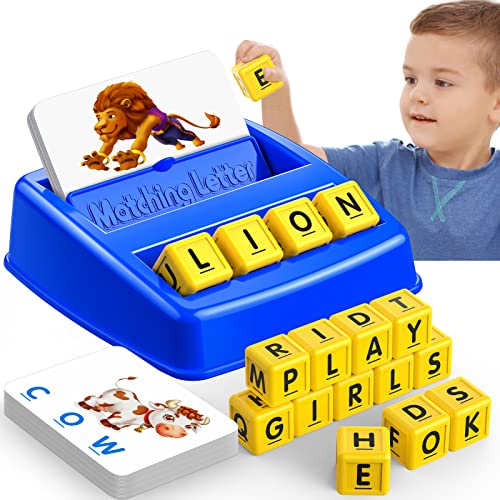
LIWIN LET'S GO! Learning Games for Kids Ages 3-8, Matching Letter Game for Kids Toys Ages 3-8 Educational Toys for 3-8 Year Olds Boys Girls Birthday Party for 3-8 Year Olds Boys Girls Blue
Check price on Amazon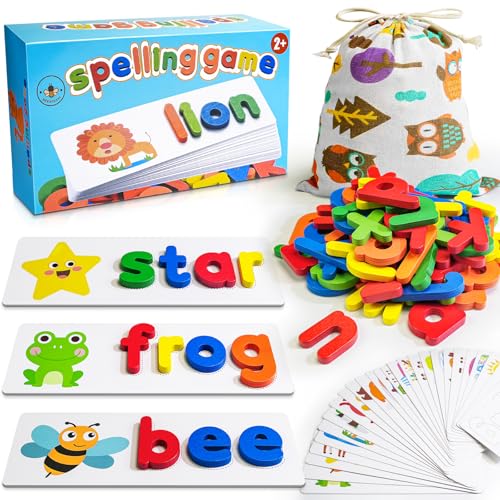
BEESTECH Alphabet ABC Learning Educational Toys for Toddlers | Wooden Puzzles, Flash Cards Matching Games for 3 4 5 Years Old Boys Girls, Preschool Activity Spelling Toys
Check price on Amazon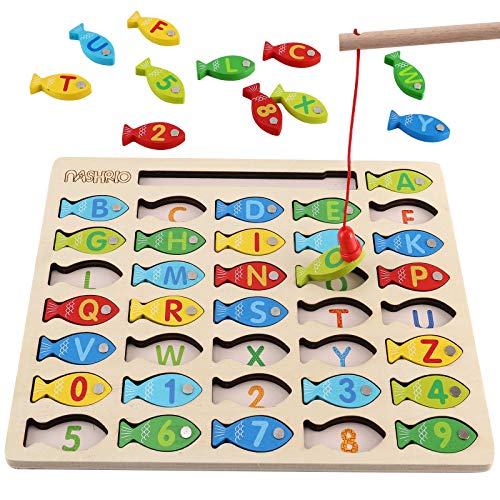
Magnetic Wooden Fishing Game Toy for Preschoolers, Alphabet Fish Catching Counting Games Puzzle with Numbers and Letters, Preschool Learning ABC and Math Educational Toys for 3 4 5 Years Old Kids
Check price on Amazon
Magnetic Tiles - Road Set, Magnetic Building Blocks, Preschool Montessori Toys Gift for 3+ Year Old Boys and Girls, Sensory Christmas Toys for Kids Aged 3-5 and 4-8, Ideas for Kid with Autism
Check price on Amazon