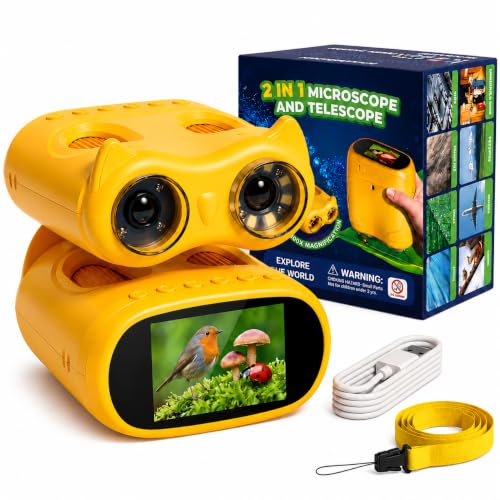
🔬 Microscope & Telescope Toys: STEM Science Kits for Kids
Inspire young scientists and astronomers with hands-on exploration! Discover the best microscope and telescope toys that make learning about biology, chemistry, and astronomy exciting and accessible for every age.
Shop Science ToysWhether your child dreams of exploring distant galaxies or discovering the hidden world of microorganisms, microscope and telescope toys open up a universe of discovery. These educational toys combine the thrill of exploration with solid STEM learning, making them perfect for curious minds aged 5 and up.
In this comprehensive guide, we'll break down everything you need to know: from choosing the right magnification power and lens quality to understanding age-appropriate features and safety considerations. By the end, you'll feel confident selecting the perfect scientific instrument toy for your young explorer.
Why Microscope & Telescope Toys Are Essential STEM Tools
Science toys are more than just playthings—they're investment in your child's future. When children use a kids microscope or telescope for children, they're not just looking at specimens or stars; they're developing critical thinking, observation skills, and a lifelong appreciation for science.
🔬 Did you know? Studies show that children who engage with hands-on science toys at an early age are 65% more likely to pursue STEM careers later in life. Microscope and telescope toys build confidence in scientific inquiry and foster patience and attention to detail.
For younger children, preschool toys with basic magnifying lenses are a great starting point. As they grow, more advanced STEM toys like compound microscopes and reflector telescopes introduce them to real scientific principles.
Types of Microscope Toys for Kids
Choosing the right microscope depends on your child's age, interests, and your budget. Here are the main types available:
1. Digital Microscopes
These connect to a tablet or computer, displaying magnified images on a screen. They're user-friendly and allow children to capture photos and videos of their discoveries. Perfect for ages 6–10 who are just starting their scientific journey.
2. Compound Microscopes
Traditional microscopes with multiple lenses. They offer higher magnification (up to 1000x) and are excellent for serious young biologists. Recommended for ages 8 and up who are ready to prepare their own slides.
3. Stereo Microscopes
Also known as dissecting microscopes, these provide lower magnification (10x–40x) but give a 3D view. They're ideal for examining coins, rocks, leaves, and other macro objects. Great for younger children (ages 5–8).
4. Pocket Microscopes
Compact and portable, these are perfect for outdoor adventures. While magnification is limited, they're excellent for field trips and nature walks. Suitable for ages 5–10 as a travel-friendly option.
Types of Telescope Toys for Kids
Astronomy is one of the most captivating sciences for children. Here's what to look for in a kids' telescope:
1. Refractor Telescopes
Use lenses to gather and focus light. They're low-maintenance, durable, and excellent for beginners. Best for ages 6–10 who want to view the moon and planets.
2. Reflector Telescopes
Use mirrors to collect light, offering larger apertures for better views of faint objects like nebulae and galaxies. Recommended for ages 10 and up with a serious interest in astronomy.
3. Tabletop Telescopes
Compact and lightweight, these are great for young children (ages 5–8) to take on camping trips. They provide decent views of the moon and bright planets.
4. Smart Telescopes
These app-controlled telescopes automatically locate celestial objects. They're intuitive and fun, perfect for tech-savvy kids aged 8–12 who want immediate results.
Microscope vs. Telescope: Which One Is Right for Your Child?
If you're torn between a microscope and a telescope, here's a quick comparison to help you decide based on your child's interests:
| Feature | 🔬 Microscope | 🔭 Telescope |
|---|---|---|
| Best For | Exploring small objects, cells, and biology | Exploring the night sky, planets, and stars |
| Ideal Age | 5–12 years | 6–14 years |
| Skill Development | Fine motor, biology knowledge, slide preparation | Patience, spatial awareness, astronomy basics |
| Indoor/Outdoor | Indoor primarily | Outdoor (nighttime observation) |
| Magnification Range | 10x – 1000x | 20x – 200x (or more) |
| Price Range | $25–$150 | $40–$300 |
If your child shows interest in both, consider a gift guide that includes a beginner's kit with both instruments, or start with a microscope for younger kids and graduate to a telescope as they grow.
Age-Approved Microscope & Telescope Toys
Choosing the right tool for the right age ensures safety, engagement, and learning. Here's our quick guide:
🔬 Ages 3–5
PreschoolLook for sturdy magnifying glasses or wooden microscope toys with low magnification (5x–10x). These are safe and introduce basic observation skills.
Ideal price: $10–$25
🔬 Ages 6–8
Early ElementaryDigital microscopes and tabletop telescopes are perfect. They're easy to use and come with fun activity guides. Look for 20x–200x magnification.
Ideal price: $25–$70
🔬 Ages 9–12
Upper ElementaryCompound microscopes (400x–1000x) and reflector telescopes (70mm+ aperture). These provide serious scientific exploration.
Ideal price: $70–$150
🔬 Ages 13+
Teens & AdultsProfessional-grade microscopes and telescopes. Great for teens pursuing advanced science projects or astronomy clubs.
Ideal price: $150+
How to Choose the Best Microscope or Telescope Toy
When shopping for a kids microscope or telescope for children, keep these factors in mind:
- Magnification: For a microscope, 100x–400x is sufficient for most home labs. For a telescope, look for an aperture of at least 60mm for clear views.
- Durability: Children can be rough, so choose metal or high-quality plastic construction with sturdy stands.
- Included Accessories: Kits with slides, sample specimens, or star charts add immediate value and get kids started right away.
- Ease of Use: Focus knobs should be smooth, and setups should be intuitive. Digital models with app connectivity are great for beginners.
- Safety: Ensure the toy meets safety standards (look for ASTM or EN71 certification). Avoid scopes that can focus sunlight (for telescopes) without appropriate filters.
For more buying advice, check out our toy safety guide and age safety labels articles to ensure you're selecting the safest option for your child.
Learning Benefits of Science Exploration Toys
Investing in science kits for kids like microscopes and telescopes offers multiple developmental advantages:
- Critical Thinking: Kids learn to hypothesize, observe, and draw conclusions.
- Patience & Focus: Setting up slides or aligning a telescope requires careful attention and perseverance.
- STEM Interest: Hands-on science often sparks a lasting passion for biology, astronomy, or engineering.
- Fine Motor Skills: Adjusting focus knobs, changing eyepieces, and preparing samples build dexterity.
- Family Bonding: Stargazing or exploring pond water together creates wonderful shared memories.
If your child loves these, they might also enjoy chemistry sets or robotics kits to expand their scientific horizons.
Frequently Asked Questions
What age is appropriate for a microscope toy?
Children as young as 3 can start with simple magnifying glasses. For actual microscope toys, ages 5–6 are ideal for digital models, while compound microscopes are best for 8 and up.
Can a kids telescope see planets?
Yes! A good kids telescope with 60–70mm aperture and 50x–100x magnification can clearly show Jupiter's moons, Saturn's rings, and Venus phases. Tabletop models can show the moon's craters beautifully.
How much should I spend on a microscope for a child?
For beginners, $25–$60 buys a solid digital microscope. For more serious young scientists, $70–$150 gets a reliable compound microscope that can last for years.
Are these toys safe?
Absolutely—when chosen correctly. Look for age-appropriate models with rounded edges, non-toxic materials, and clear safety certifications. Never let children look at the sun with a telescope without proper solar filters.
What other STEM toys complement microscopes and telescopes?
Consider coding toys for digital skills, electronics kits for engineering, and geography toys to connect earth science with astronomy.
🔭 Ready to Explore the Universe, One Discovery at a Time?
Browse our curated selection of microscope and telescope toys below. Every product is hand-picked for quality, value, and educational impact. Start your child's science adventure today!