Learning Toys for 8-10 Year Olds: The Complete Expert Guide
Between ages 8 and 10, children's minds are primed for challenge, discovery, and independence. This guide cuts through the noise to help you find learning toys that genuinely build skills — and that kids actually love to play with.
Why This Age Group Matters: Eight to ten year olds are in a critical developmental window. They're moving from concrete to abstract thinking, developing logical reasoning, and forming lasting interests that may shape their future studies and hobbies. The right learning toy at this stage doesn't just entertain — it builds confidence, curiosity, and a genuine love of figuring things out.
What Makes a Great Learning Toy for 8-10 Year Olds?
Not every toy marketed as "educational" delivers real value. At this age, children are quick to spot busywork, and they disengage from toys that feel like chores. The best learning toys for 8-10 year olds share several traits:
- Open-ended challenge: Toys that offer multiple solutions or paths keep children engaged far longer than single-outcome activities.
- Real skill progression: The best kits start simple and grow more complex, letting kids build mastery over weeks rather than minutes.
- Tangible outcomes: Children this age are proud of what they can show for their effort — a working circuit, a finished model, a strategy that beat a sibling.
- Social play potential: Toys that work well with friends or family encourage communication, negotiation, and cooperative problem solving.
- Age-appropriate complexity: Instructions and concepts should challenge without frustrating. Look for clear guidance and adjustable difficulty.
If your child is slightly younger, our guide to learning toys for 4 year olds covers the earlier developmental stage. For younger toddlers, there's also our learning toys for 1-2 year olds collection.
Top Categories of Learning Toys for 8-10 Year Olds
1. STEM & Science Kits
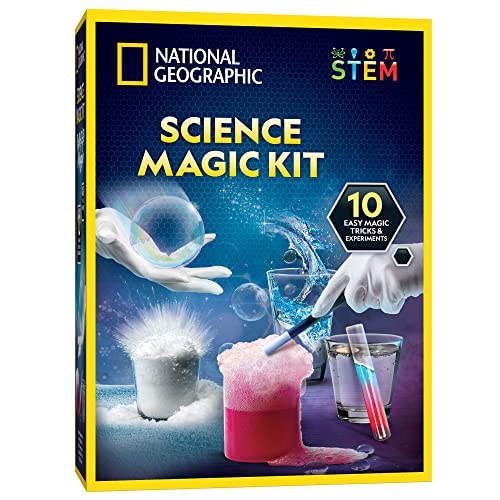
Science kits bring abstract concepts into the real world. For 8-10 year olds, chemistry sets, physics experiment kits, and biology discovery sets are especially effective because they let children form hypotheses, run experiments, and observe real outcomes. Look for kits that emphasize process over outcome — the best ones encourage children to wonder, test, and refine.
For children fascinated by the very small and very large, a quality microscope or telescope opens up entirely new worlds and supports sustained scientific curiosity. These tools are often used for years as children's skills and confidence grow.
2. Robotics & Coding Toys
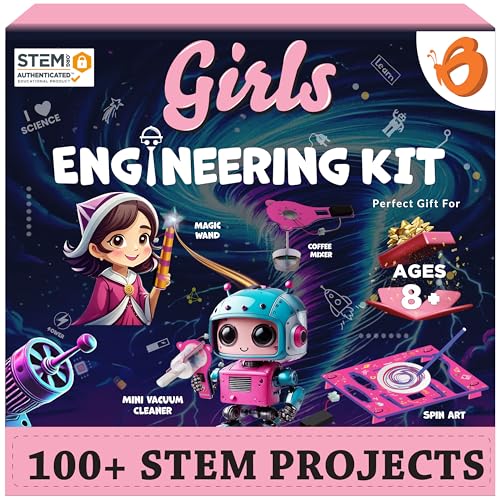
Coding toys for this age group have matured enormously. Beginner-friendly robots and block-based coding platforms let children see their logic come to life in physical form. The key is choosing a system with clear progression: entry-level coding toys teach sequencing and loops, while mid-range and top-tier systems introduce sensors, conditionals, and creative projects.
At this age, coding toys also build resilience. Debugging a program teaches children that failure is information, not defeat — a mindset that pays dividends in every subject.
3. Strategy & Brain-Building Board Games
Strategy games are among the most efficient learning toys available. They build working memory, logical reasoning, foresight, and emotional regulation. For 8-10 year olds, games that involve resource management, deduction, or cooperative problem solving are ideal. Children practice planning several steps ahead and adapting when their plans go sideways.
If you have younger children in the household, learning board games for 5 year olds can bring the whole family to the table while older children play more complex variants. For quiet, focused practice, classic memory games remain remarkably effective at building attention and recall.
4. Creative Building & Construction Sets
Building sets at this age go far beyond simple bricks. Advanced construction kits introduce engineering principles, mechanical linkages, and architectural thinking. Children learn to follow complex plans, then — more importantly — to deviate from them and design their own creations.
Magnetic building systems are another powerful option; our guide to magnetic building blocks for 3 year olds shows how the same core concept scales up beautifully for older children with more intricate sets.
5. Language, Math & Literacy Toys
Learning toys that reinforce school skills don't have to feel like homework. Math games that involve strategy and competition keep arithmetic practice engaging. Word games, logic puzzles, and storytelling kits build vocabulary and narrative thinking. For children who enjoy structure, these toys offer satisfying progress; for those who prefer creativity, look for open-ended versions that let children invent their own rules.
Comparing Learning Toy Tiers: What to Expect
Learning toys for this age range span several quality tiers. The table below summarizes what each tier typically offers so you can match a toy to your child's experience level and your family's preferences.
| Tier | Best For | Typical Characteristics | Skill Progression |
|---|---|---|---|
| Starter Tier | Children new to a subject or exploring interests | Clear instructions, gentle learning curve, durable construction, often screen-free | Single-skill focus with room to build confidence |
| Mid-Tier | Children with some experience ready for deeper challenges | Multi-stage projects, more components, adjustable difficulty, often blend hands-on and digital elements | Progressive levels that reward persistence |
| Top-Tier | Enthusiastic learners and children ready for open-ended creation | Rich component sets, advanced concepts, design-your-own projects, premium materials | Open-ended mastery with room for independent exploration |
How to Choose the Right Learning Toy for Your 8-10 Year Old
With so many options, the decision comes down to a few practical questions:
- What does your child already gravitate toward? A child who loves taking things apart will thrive with mechanical and electronics kits. A child who loves stories will engage more deeply with language and strategy games.
- How much adult involvement is realistic? Some toys are designed for independent play; others shine with a parent or sibling nearby. Be honest about the time and attention available.
- Screen-free or screen-enhanced? Both have value. Screen-free toys build sustained focus and fine motor skills; technology-enhanced toys can teach coding, digital creativity, and adaptive problem solving. A balanced mix often works best.
- What's the shelf life? Look for toys with multiple difficulty levels or open-ended potential. A toy that grows with your child offers far more long-term learning than one that's mastered in an afternoon.
- Safety and materials: Check for non-toxic materials, age-appropriate warnings (especially for electronics and chemistry kits), and clear safety instructions.
For families planning ahead, our most popular toys for 9 year olds roundup offers a snapshot of what children this age consistently enjoy. You can also explore popular gifts for 6 year olds if you're shopping for a younger sibling at the same time.
Subject-by-Subject Learning Toy Guidance
Science & Discovery
Chemistry sets, experiment kits, and nature exploration tools. Focus on kits that encourage observation and hypothesis-testing rather than simply following steps.
Starter to Top-TierTechnology & Coding
Block-based coding robots, electronics kits, and beginner-friendly microcontrollers. Prioritize systems with clear progression from simple to complex projects.
Starter to Mid-TierEngineering & Building
Advanced construction sets, mechanical model kits, and design challenges. Look for sets that balance structured builds with open-ended creation.
Mid-Tier to Top-TierMath & Logic
Strategy games, logic puzzles, and math-focused board games. The best options disguise skill practice as genuine play.
Starter to Mid-TierLanguage & Literacy
Word games, storytelling kits, and comprehension-building puzzles. Choose options that encourage conversation and creative expression.
Starter to Mid-TierArt & Design
Structured craft kits, design-focused building sets, and maker-style projects. These build fine motor skills, patience, and aesthetic thinking.
Starter to Top-TierPractical Tips for Parents and Gift-Givers
Learning toys work best when they're supported by thoughtful adult behavior. A few principles make a real difference:
- Follow the child's lead: If your child is obsessed with dinosaurs, find learning toys that connect to that interest — a dinosaur-themed coding game or a paleontology dig kit will outperform a "better" toy they don't care about.
- Protect unstructured time: The most powerful learning often happens when children are allowed to tinker, fail, and try again without an adult directing every step.
- Rotate, don't overwhelm: Keep a subset of learning toys accessible at any given time and rotate others out of sight. Novelty plus focus beats a crowded toy shelf.
- Celebrate process, not just results: Praise effort, experimentation, and persistence. These are the habits that turn a single toy into a lifelong learning mindset.
- Play alongside them sometimes: Cooperative learning play — building together, playing a strategy game as a team, or working through a science kit together — strengthens both skills and relationships.
Ready to Find the Perfect Learning Toy?
Browse our curated selection of recommended learning toys for 8-10 year olds below. Each option has been chosen for its ability to engage, challenge, and genuinely build skills.
View Recommended ToysFrequently Asked Questions
What types of learning toys are best for 8-10 year olds?
The best learning toys for 8-10 year olds blend hands-on engagement with genuine skill-building. Top categories include STEM kits like robotics and electronics sets, strategy board games that develop critical thinking, science experiment kits, coding toys, and creative building sets. At this age, children benefit most from toys that offer open-ended problem solving and real-world application.
How do I choose a learning toy that matches my child's skill level?
Start by observing what your child already enjoys and where they show curiosity. Entry-level STEM kits suit beginners exploring a new subject, while mid-range and top-tier kits offer greater complexity for children with prior experience. Look for clear age guidance on packaging, adjustable difficulty levels, and toys that grow with your child through multiple skill stages.
Are screen-free learning toys still valuable for 8-10 year olds?
Absolutely. Screen-free learning toys remain highly valuable because they promote sustained focus, fine motor development, and face-to-face social interaction. Building sets, strategy board games, mechanical kits, and hands-on science experiments all deliver rich learning without screens. Many parents find a balanced mix of screen-free and technology-based learning toys works best.
How can learning toys support school curriculum for 8-10 year olds?
Learning toys reinforce classroom concepts through active play. Math games strengthen arithmetic fluency, science kits bring textbook concepts to life, coding toys build computational thinking, and strategy games develop reading comprehension and logical reasoning. When children encounter these ideas in a playful context, retention and enthusiasm both improve.
What safety considerations matter for learning toys at this age?
While 8-10 year olds have outgrown choking hazards, safety still matters. Check for non-toxic materials, age-appropriate warnings on electronics and chemistry kits, and proper supervision requirements for tools or experiments. Look for toys that meet recognized safety standards and offer clear instructions for safe use.
Learning toys are an investment in your child's curiosity and capability. Whether you're drawn to a hands-on science kit, a strategy game that brings the family together, or a coding toy that opens the door to technology, the right choice is the one that meets your child where they are and invites them to go a little further. For more age-specific guidance, explore our broader collections, including popular toys for five year olds and fun toys for 4 year olds as younger siblings grow into their own learning adventures.