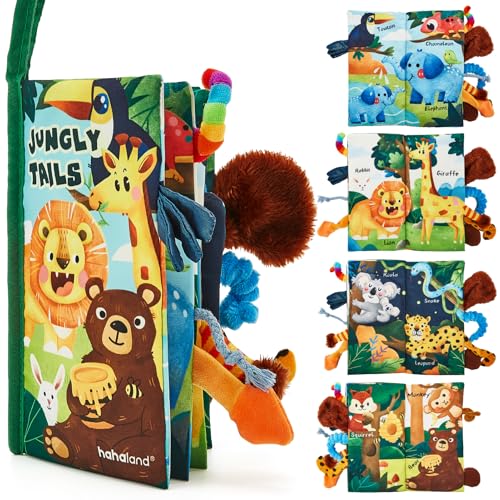
Baby Toys 0–12 Months: The Ultimate Expert Guide
From newborn tummy time to first steps – discover the best developmental toys for every stage of your baby's first year. Safe, engaging, and backed by child development experts.
Shop Top-Rated Baby Toys →Why the First 12 Months Matter
The first year of life is a period of remarkable growth. Your baby's brain doubles in size, and every experience shapes neural connections that will last a lifetime. Choosing the right toys for 0–12 months isn't just about keeping your little one entertained – it's about supporting crucial developmental milestones.
From sensory exploration to fine motor skills, the best sensory toys for babies stimulate curiosity and build the foundation for future learning. But with so many options, how do you choose what's truly beneficial and safe?
This comprehensive guide walks you through every stage of your baby's first year, highlighting the best baby toys 0-12 months for each developmental phase. Whether you're a first-time parent or looking for the perfect gift, you'll find expert recommendations, safety tips, and practical advice to make informed decisions.

Developmental Stages & Toy Recommendations
Every baby develops at their own pace, but these general milestones will help you choose age-appropriate toys that match your baby's growing abilities.
0–3 Months
Newborns respond to high-contrast images, gentle sounds, and soft textures. Tummy time mats, rattles, and black-and-white cards are ideal.
3–6 Months
Babies start reaching, grasping, and putting things in their mouths. Soft toys, teething rings, and activity gyms support this exploration.
6–9 Months
Hand-eye coordination improves dramatically. Stacking cups, cause-and-effect toys, and musical instruments become fascinating.
9–12 Months
Babies are on the move! Push toys, shape sorters, and interactive books support crawling, standing, and early problem-solving.
0–3 Months: Sensory Beginnings
In the first three months, your baby's world is all about sensory discovery. They see best at a distance of 8–12 inches and are drawn to faces, high-contrast patterns, and gentle movement. Toys for this stage should be soft, visually stimulating, and easy to grasp.
High-contrast black-and-white books and cards are excellent for visual development. Soft rattles and musical baby toys introduce auditory awareness. A tummy time mat with dangling toys encourages neck strength and early motor skills.
- Visual Stimulation: High-contrast patterns and mirrors
- Auditory Development: Soft rattles and gentle music
- Motor Skills: Tummy time mats with hanging toys
- Touch & Texture: Soft fabric books and crinkle toys
Remember: safety is paramount. Always choose toys that are too large to fit in a baby's mouth, made from non-toxic materials, and free from small parts.

3–6 Months: Reaching & Grasping
Around three months, babies begin to discover their hands. They'll start reaching for objects, swatting at toys, and bringing everything to their mouths. This is a critical time for developing fine motor skills and hand-eye coordination.
Teething rings, soft fabric balls, and stacking toys with bright colors are perfect for this stage. Activity gyms and play mats with removable toys encourage reaching and batting. Look for toys that make sounds when shaken or squeezed – these teach cause-and-effect.
At this age, babies also love mirrors and toys with different textures. A soft book with crinkle pages, a teething ring with varied surfaces, or a musical toy that lights up can provide hours of engaging exploration.
- Fine Motor: Teething rings, grasping balls
- Cognitive: Cause-and-effect toys with sounds
- Sensory: Textured fabric books and rattles
- Social: Mirror toys for self-discovery
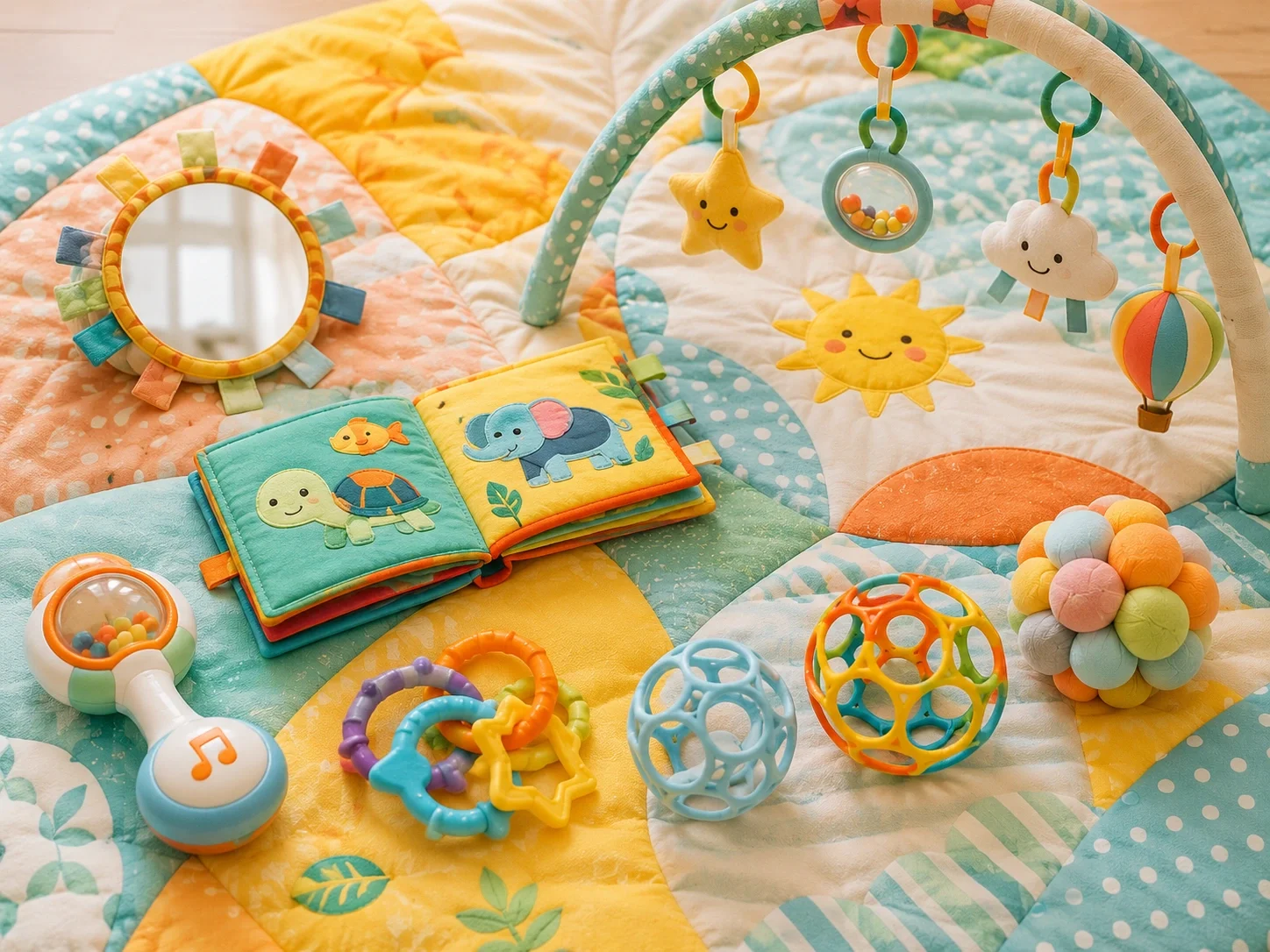
6–9 Months: Cause, Effect & Discovery
Between six and nine months, your baby becomes a little explorer. They can sit up with support, reach for objects with precision, and begin to understand that their actions can make things happen. Developmental toys that respond to their interactions are incredibly valuable.
Stacking cups, nesting blocks, and simple problem-solving toys teach early logic and spatial awareness. Musical instruments like shakers, drums, and xylophones encourage rhythm and auditory discrimination. Pop-up toys and activity cubes with buttons, sliders, and doors are a big hit.
This is also a great time to introduce Montessori-inspired toys that encourage independent exploration. Look for toys that are made from natural materials, have a clear purpose, and are sized for little hands.
- Cognitive: Pop-up toys, activity cubes
- Motor: Stacking cups, nesting blocks
- Auditory: Shakers, drums, xylophones
- Problem-Solving: Simple puzzles and shape sorters

9–12 Months: Mobility & Independence
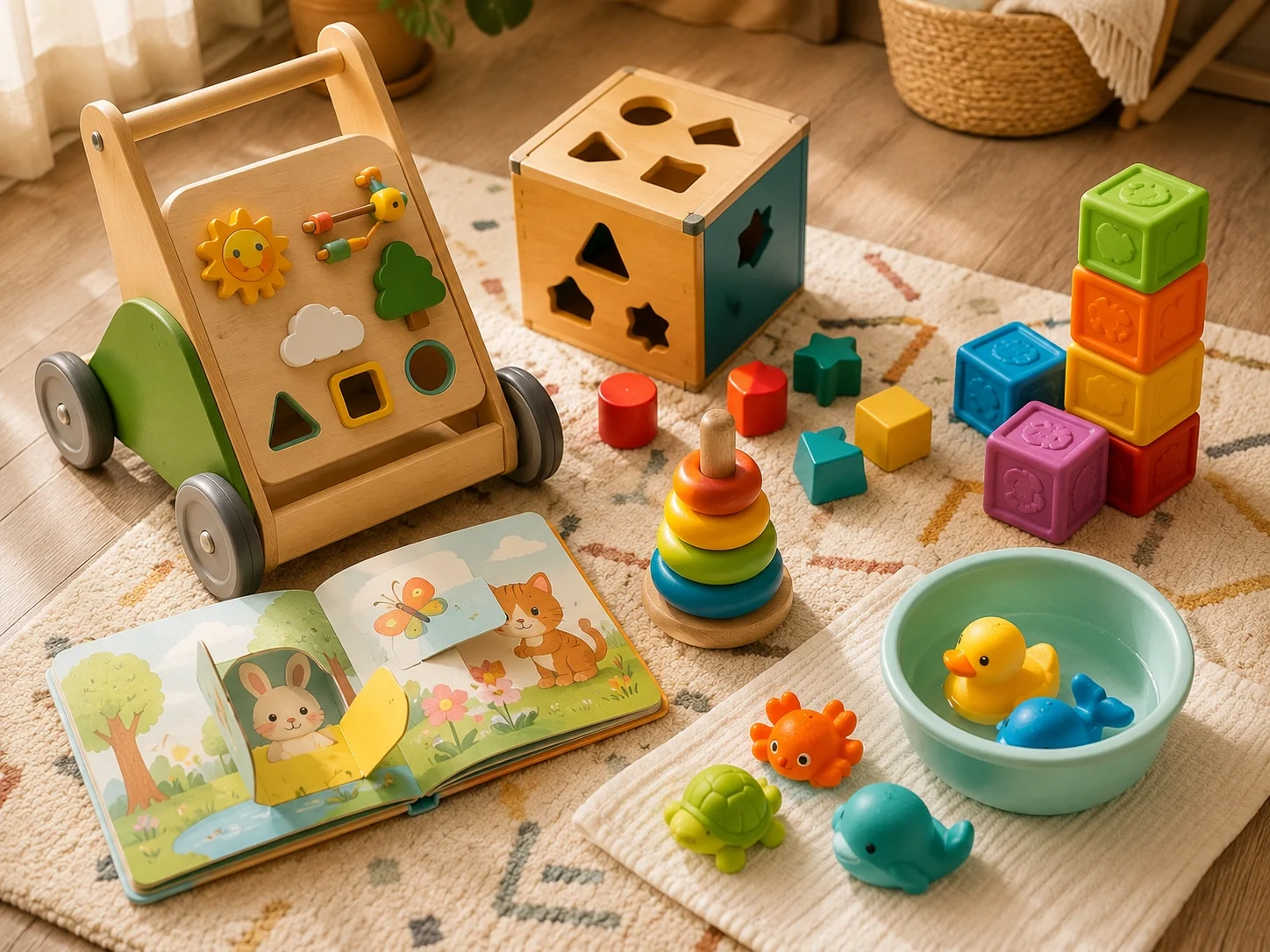
As your baby approaches their first birthday, they become increasingly mobile and independent. Some babies may be crawling, pulling up to stand, or even taking their first steps. Toys for 9–12 months should support physical development and emerging cognitive skills.
Push toys and wagons encourage walking and balance. Shape sorters and nesting boxes develop hand-eye coordination and problem-solving. Sturdy building blocks (large and safe for babies) introduce early construction play. Interactive books with flaps and textures keep curiosity alive.
At this stage, babies also love bath toys that float, squirt, and pour. These support fine motor skills, sensory exploration, and early understanding of cause and effect. Always supervise bath time closely.
- Physical: Push toys, ride-on toys
- Cognitive: Shape sorters, stacking rings
- Language: Interactive books with flaps
- Sensory: Water toys, sand toys
Toy Safety Guide for Babies 0–12 Months
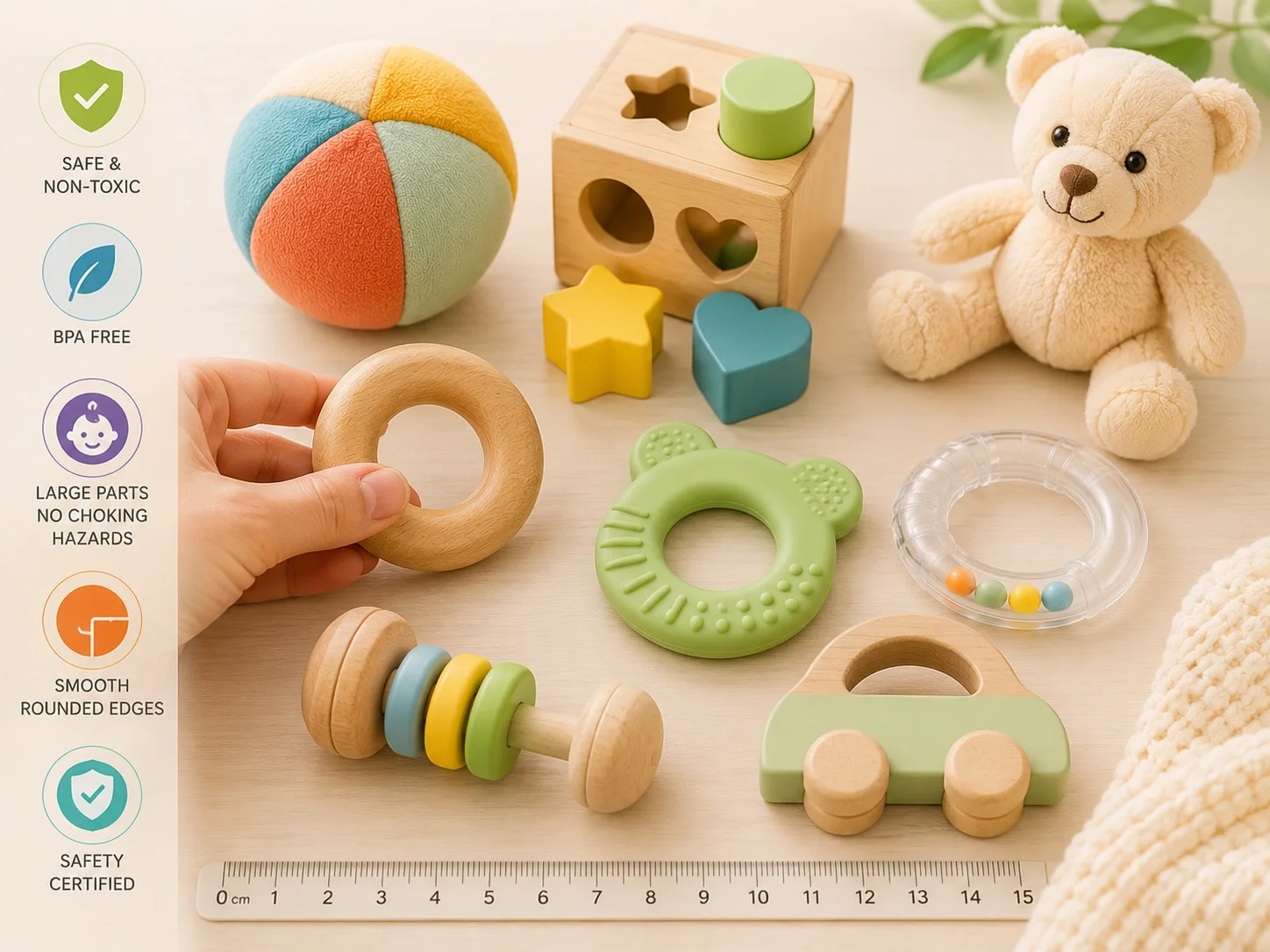
Safety is the number one priority when choosing baby toys 0-12 months. Here are essential guidelines to ensure your little one plays safely:
Always check the toy safety guide for up-to-date recalls and recommendations. Non-toxic toys are especially important for babies who put everything in their mouths. Look for certifications like ASTM, EN71, or CE marks.
🧠 Expert Tip: Follow Your Baby's Lead
Every baby develops at their own unique pace. While this guide provides general milestones, the best toy is one that matches your baby's current interests and abilities. Observe what captures their attention, and offer toys that challenge them just enough – not too easy, not too hard. And always, the most important "toy" is you: your voice, your face, and your loving interaction.
Related Guides: Toys by Age · Sensory Toys for Babies · Musical Baby Toys · Montessori Toys · Stacking Toys · Bath Toys