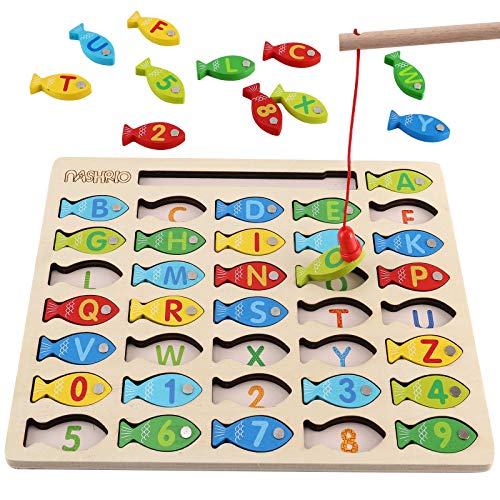
Learning Toys for 4 Year Olds: The Ultimate Parent Guide
Your four-year-old is bursting with curiosity, questions, and energy. This guide helps you choose learning toys that fuel that spark — supporting early literacy, numeracy, problem-solving, creativity, and social skills through purposeful play.
See Recommended ToysWhat 4 Year Olds Are Learning Right Now
At four years old, children are in a period of rapid cognitive and social growth. They are moving from parallel play to cooperative play, developing a stronger vocabulary, and beginning to understand cause-and-effect relationships, sequencing, and basic math concepts. The right learning toys meet them at this stage — not too simple to bore them, not so complex that they become frustrated.
Developmentally, most 4 year olds are working on:
- Language and literacy: Recognizing letters, understanding that words are made of sounds, and enjoying being read to. Toys like alphabet puzzles and phonics games reinforce these emerging skills. You can explore more options in our guide to learning toys for 4 year olds.
- Early math: Counting to 10 and beyond, recognizing shapes and patterns, and comparing sizes and quantities. Manipulatives such as counting bears, pattern blocks, and simple board games make these concepts concrete.
- Fine motor skills: Using scissors, drawing recognizable shapes, and manipulating small objects with increasing precision. Building toys, lacing cards, and art materials strengthen these muscles.
- Problem-solving and reasoning: Completing simple puzzles, following multi-step instructions, and figuring out how things work. STEM toys and construction sets are excellent for this.
- Social-emotional skills: Taking turns, sharing, and expressing feelings. Pretend play sets and cooperative games support these crucial life skills.
Key Categories of Learning Toys for 4 Year Olds
Rather than buying many toys, focus on a few high-quality items across these categories. Each one targets a different area of development, giving your child a well-rounded play diet.
1. Building and Construction Toys
Building sets are the workhorses of the 4-year-old toy shelf. They develop spatial reasoning, fine motor control, and patience. Magnetic tiles and large building blocks are particularly popular at this age because they are easy to grasp and produce satisfying results quickly. If you want a specific recommendation, see our guide to magnetic building blocks for 3 year olds — many sets work well for 4 year olds too.
2. Puzzles and Brain Teasers
Four year olds are ready for 24- to 48-piece puzzles and simple logic games. Puzzles teach persistence, shape recognition, and the concept that parts make up a whole. Look for puzzles with themes your child loves — animals, vehicles, or familiar story characters — to keep engagement high.
3. Early Literacy and Language Toys
Alphabet games, rhyming cards, and storytelling sets build pre-reading skills. Toys that combine letters with pictures and sounds are especially effective. A simple memory game with animal or letter cards also boosts concentration and vocabulary.
4. STEM and Science Exploration
Four year olds are natural scientists. Magnifying glasses, simple microscopes, and building kits that introduce gears and levers are wonderful choices. Our overview of microscope and telescope toys can help you pick a first science tool. Keep experiments simple and adult-supervised.
5. Creative and Art Materials
Play dough, washable markers, safety scissors, and collage materials support creativity and fine motor development. Open-ended art supplies are often more valuable than kits with a single predetermined outcome.
6. Pretend Play and Social Toys
Play kitchens, doctor kits, and dress-up clothes let children practice language, empathy, and cooperation. For children who enjoy imaginative scenarios, browse our ideas for make-believe toys for 3 year olds — many are still perfect for 4 year olds.
7. Musical Toys
Simple rhythm instruments, xylophones, and toy keyboards introduce pitch, tempo, and pattern — all foundational for both music and math. See our selection of music instruments toys for age-appropriate options.
How to Choose the Right Learning Toy for Your 4 Year Old
With so many options, it helps to have a simple framework. Use these questions as a filter before you buy:
- Does it match my child's interests? A toy that aligns with a current obsession — dinosaurs, trains, space — will get far more playtime than a generic "educational" toy.
- Is it open-ended? Can it be used in more than one way? Open-ended toys grow with your child and encourage creativity.
- Does it target a skill we want to practice? Decide whether you want to focus on letters, numbers, motor skills, or social play — then choose accordingly.
- Is it durable and safe? Four year olds are still learning to be gentle. Look for solid construction, rounded edges, and non-toxic finishes. Check age labeling and avoid small parts that could be a choking hazard.
- Will it work with how my child plays? Some children prefer solo quiet play; others thrive in active, social settings. Match the toy to their style.
Safety Considerations for 4-Year-Old Toys
Safety should always come first. At four, children still explore with their mouths occasionally and may not always follow instructions. Keep these guidelines in mind:
- Check age recommendations: Toys labeled for ages 3+ generally pass small-parts safety tests, but always inspect the specific item.
- Avoid small magnets and batteries: Swallowed magnets can cause serious injury. Ensure battery compartments are securely screwed shut.
- Supervise art and science activities: Scissors, small beads, and experiment materials require adult supervision.
- Inspect regularly: Check toys for loose parts, cracks, or worn paint, and remove damaged items promptly.
- Follow manufacturer warnings: All toys have specific safety guidance — read it.
Learning Toy Categories at a Glance
Use this table to compare the main categories and their developmental focus. Tiers indicate relative quality and design positioning within the category.
| Toy Category | Primary Skills | Best For | Typical Tier Range |
|---|---|---|---|
| Building Sets & Magnetic Tiles | Spatial reasoning, fine motor, creativity | Independent and cooperative play | Essential tier to premium |
| Puzzles (24–48 pieces) | Problem-solving, persistence, shape recognition | Quiet focused play | Entry-level to mid-range |
| Alphabet & Phonics Games | Early literacy, letter recognition | Pre-reading practice | Mid-tier |
| STEM & Science Kits | Cause-and-effect, observation, reasoning | Curious explorers | Mid-range to premium |
| Art & Craft Materials | Fine motor, creativity, self-expression | Open-ended creative play | Entry-level to top-tier |
| Pretend Play Sets | Language, social skills, empathy | Group and solo imaginative play | Essential tier to high-end tier |
| Musical Instruments | Rhythm, pattern recognition, listening | Active and sensory play | Starter tier to mid-range |
Frequently Asked Questions
What types of learning toys are best for 4 year olds?
The best learning toys support multiple areas of development: building sets and puzzles for problem-solving, alphabet and counting games for early literacy and math, art supplies for creativity, and pretend play sets for social skills. Look for open-ended toys that can be used in many ways as your child's abilities grow.
How do I know if a toy is developmentally appropriate for my 4 year old?
Check the age recommendation on the packaging as a starting point, but also observe your child's current interests and abilities. A 4 year old typically enjoys toys with simple rules, opportunities for imaginative play, and challenges that are just beyond their current skill level. Avoid toys with small parts that pose choking hazards.
Should I choose screen-free learning toys for my 4 year old?
Screen-free toys are highly recommended for 4 year olds because they promote hands-on exploration, social interaction, and imaginative thinking. While some educational apps can be useful in moderation, physical toys like building blocks, puzzles, and art materials offer richer developmental benefits at this age.
How many toys does a 4 year old actually need?
Fewer, better toys is the modern parenting mantra. A small collection of high-quality, open-ended toys rotated regularly keeps children more engaged than a overflowing toy box. Aim for variety across categories rather than volume.
Best Learning Toys for 4 Year Olds
⚠️ AFFILIATE DISCLOSURE: This website contains affiliate links. As an Amazon Associate, we earn from qualifying purchases. If you make a purchase through these links, we may receive a small commission at no additional cost to you. Read our full affiliate policy.

LeapFrog Mr Pencil's Scribble Write and Read, Green
Check price on Amazon
LeapFrog Prep for Preschool Activity Book
Check price on Amazon
Preschool Learning Toys Workbook & Letter Tracing Books for Kids Ages 3-5 | Reusable Writing Practice Activity Book for Toddlers Ages 3-5 - Educational Learning Toys for 3-4 Year Old Boys & Girls Gifts
Check price on Amazon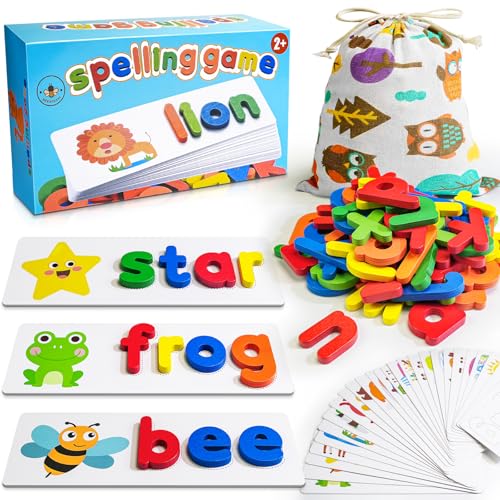
BEESTECH Alphabet ABC Learning Educational Toys for Toddlers | Wooden Puzzles, Flash Cards Matching Games for 3 4 5 Years Old Boys Girls, Preschool Activity Spelling Toys
Check price on Amazon
Preschool Math Manipulatives Learning Toys for Toddlers 2-4 | Montessori Number Counting Block Toys for Kids, Educational Toys for 3-5 Year Old Boys Girls Christmas Birthday Gifts
Check price on Amazon
Airbition Talking Flash Cards for Toddlers Ages 1‑4,224 Words English Blue | Montessori Language Learning Toys with 224 Words, Pocket Speech Therapy Toys, Sensory Learning Kit, Educational Toys for Kids
Check price on Amazon
LeapFrog 2-in-1 LeapTop Touch
Check price on Amazon