Learning Toys for 1 & 2 Year Olds: The Complete Guide to Smart Play
Wondering which toys actually build your toddler's brain? Our expert guide breaks down the best learning toys for 1 and 2 year olds — from sensory discoveries to early problem-solving — so you can choose with confidence and watch your little one thrive.
See Expert Toy PicksWhy the toddler years matter: Between ages one and two, a child's brain forms more than a million neural connections every second. The right toys don't just entertain — they shape language, motor control, and emotional regulation. This guide cuts through the noise and shows you exactly which learning toys for 1 and 2 year olds deliver real developmental value, backed by child-development principles and hands-on testing.
Why Learning Toys Matter at Ages 1 and 2
At one year old, children are active explorers. They grasp, bang, drop, and mouth everything within reach — each action a small experiment in cause and effect. By two, that exploration evolves into pretend play, early sorting, and a vocabulary that grows by leaps and bounds. Learning toys are designed to meet these developmental milestones head-on, turning everyday play into structured discovery.
The most effective learning toys for 1 and 2 year olds share one trait: they respond to the child. A stacking ring that wobbles, a button that plays a note, a shape that only fits one way — these feedback loops teach persistence, hand-eye coordination, and cause-and-effect reasoning without a screen in sight.
🧠 Cognitive Growth
Simple puzzles, nesting cups, and shape sorters train memory, attention, and early logic skills that form the foundation for preschool math and reading.
✋ Fine & Gross Motor Skills
Grasping blocks, pulling a toy train, or pushing a walker builds the small and large muscle groups toddlers need for self-feeding, drawing, and running.
🗣️ Language Development
Board books, musical toys, and naming games introduce new words and sounds, feeding the vocabulary explosion that happens around 18–24 months.
❤️ Social & Emotional Learning
Pretend-play toys like toy kitchens and dolls help toddlers practice empathy, turn-taking, and emotional expression in a safe, low-pressure setting.
What to Look for in Learning Toys for 1 & 2 Year Olds
Not every colorful toy on the shelf is a learning toy. The best picks for this age group share a specific set of features that align with toddler development and safety standards.
Safety First — Every Time
- No small parts that fit inside a toilet-paper tube (choking hazard test)
- Non-toxic, lead-free paints and finishes on wooden toys
- Smooth, rounded edges with no sharp points or splinters
- Battery compartments secured with screws — never tape or snaps
- No long cords or strings longer than 12 inches
- Age-appropriate labeling (look for “1+” or “2+” certifications)
Developmental Fit — Match the Stage
A toy that frustrates a 12-month-old might be a favorite at 20 months. Look for toys with adjustable difficulty: stacking towers that grow, puzzles with chunky first pieces, and building sets that scale with your child. Our top toys for 1 year olds and top toys for 2 year olds guides offer stage-specific picks if you want a deeper dive.
Best Learning Toys by Age: 1 vs. 2 Year Olds
Explorers & Cause-and-Effect Learners
At this stage, babies are testing limits and discovering that their actions make things happen. The best learning toys deliver immediate, satisfying feedback.
- Stacking cups and rings for spatial awareness
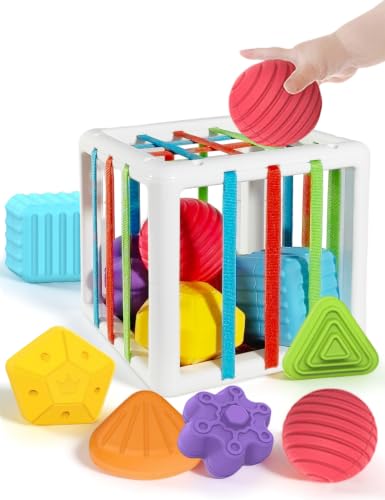
- Textured sensory balls for grasp and mouthing
- Simple musical toys with large, easy-to-press buttons
- Board books with high-contrast pictures and flaps
- Push-and-pull toys that move with the child
Problem-Solvers & Pretend Players
Vocabulary is exploding, and toddlers begin to imitate adult routines. Toys that invite sorting, matching, and imaginative role-play are gold at this stage.
- Chunky peg puzzles with animals and vehicles
- Magnetic tiles and large building blocks
- Toy kitchens, tool sets, and grocery-store toys
- Simple matching and memory games
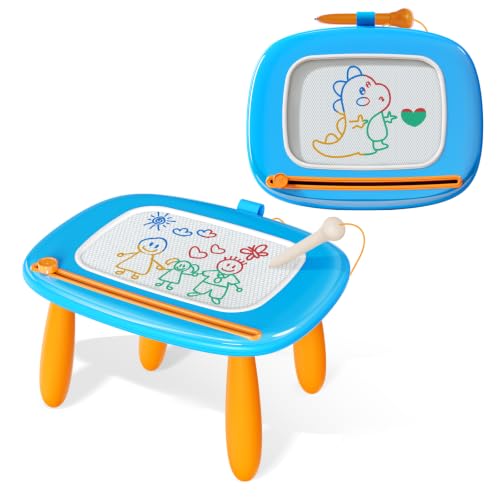
- Washable crayons and finger-paint sets
How to Choose: Quality Tiers for Learning Toys
Not sure where to start? Use this tier framework to match your child's needs and your family's play style. Each tier represents a distinct position in the market — you'll find strong options at every level.
| Tier | Best For | Typical Features |
|---|---|---|
| Starter Tier | First learning toys, everyday discovery | Simple shapes, basic sounds, sturdy plastic or wood construction |
| Essential Tier | Core developmental skills, daily play | Multi-sensory features, open-ended design, age-graded difficulty |
| Balanced Tier | Long-term growth, sibling sharing | Durable materials, expandable sets, strong brand safety record |
| Top-Tier | Heirloom quality, Montessori-inspired homes | Premium hardwood, non-toxic finishes, expert-endorsed design |
A starter-tier stacking toy can be just as developmentally valuable as a top-tier wooden set — the key is matching the toy's complexity to your child's current abilities. For more curated selections, explore our top-rated learning toys for 2 year olds and top-rated educational toys for 1 year olds.
Play Tips: Getting the Most From Learning Toys
A toy alone doesn't teach — the interaction around it does. Here are practical, research-backed ways to maximize learning during play with your 1 or 2 year old.
🔄 Rotate Toys Weekly
Keep only a handful of toys accessible at a time. A simple toy rotation system keeps novelty high and prevents overwhelm, leading to deeper, more focused play.
🗣️ Narrate Everything
Describe what your child is doing: “You're stacking the red block on top!” This simple habit doubles vocabulary exposure without any extra effort.
👐 Follow Their Lead
Let your toddler decide how to use a toy. Open-ended play — where a block becomes a phone or a car — builds creativity and problem-solving better than scripted play.
🧩 Set Up Play Stations
A low shelf with 3–4 accessible toys and a clear floor space encourages independent choice. This setup also makes cleanup easy and teaches organization.
💡 A Note on Screens
For children under two, the American Academy of Pediatrics recommends minimal screen time. Hands-on learning toys — blocks, puzzles, books, and sensory objects — remain the gold standard for early brain development. Choose toys that respond to your child's touch and curiosity, not a glowing rectangle.
Common Mistakes Parents Make When Buying Learning Toys
Buying too many toys at once. A cluttered playroom reduces focus. Start with 8–12 well-chosen toys and rotate them.
Ignoring the developmental stage. A toy labeled “2+” can frustrate a 14-month-old. Always match the toy to your child's current skills, not their birthday.
Overlooking safety testing. Look for ASTM F963 (US) or EN71 (EU) compliance marks. These certifications confirm the toy has passed rigorous safety testing.
Assuming more features means more learning. A simple wooden stacking toy often teaches more than a flashing electronic gadget. Open-ended, low-tech toys invite deeper, more sustained engagement.
Frequently Asked Questions
What are the best learning toys for 1 year olds?
The best learning toys for 1 year olds focus on cause-and-effect exploration, sensory development, and early motor skills. Look for stacking blocks, simple shape sorters, textured balls, musical toys with easy buttons, and board books. At this age, toys that encourage grasping, banging, and safe mouthing are ideal for cognitive growth.
How do learning toys help 2 year olds develop?
Learning toys for 2 year olds support language explosion, pretend play, and problem-solving. Toys like peg puzzles, magnetic tiles, toy instruments, and simple matching games build vocabulary, fine motor control, and social-emotional skills. Two year olds benefit most from open-ended toys that let them imitate real-life activities.
Are wooden learning toys better than plastic for toddlers?
Both wooden and plastic learning toys have merits for toddlers. Wooden toys offer durability, natural textures, and often heirloom quality, making them a long-term investment. Plastic toys can be easier to clean and are often lighter for small hands. The best choice depends on your child's preferences and your family's play environment.
What safety features should I look for in toys for 1 and 2 year olds?
For 1 and 2 year olds, prioritize toys with no small parts that could pose choking hazards, non-toxic finishes and paints, smooth edges, and sturdy construction. Check for age-appropriate labels, avoid long strings or cords, and ensure battery compartments are securely screwed shut. Always supervise play and follow manufacturer age recommendations.
How many learning toys does a 1 or 2 year old actually need?
A 1 or 2 year old thrives with a curated collection of roughly 8 to 15 accessible toys rotated regularly. Fewer, higher-quality open-ended toys encourage deeper play and focus. Implementing a toy rotation system keeps engagement high and reduces overwhelm, making each play session more meaningful.
The Bottom Line
The best learning toys for 1 and 2 year olds are safe, developmentally appropriate, and open-ended enough to grow with your child. Prioritize sensory exploration and cause-and-effect play at age one, then introduce sorting, matching, and pretend play as your toddler approaches two. Rotate toys regularly, narrate play, and follow your child's lead — and you'll turn everyday playtime into the most powerful learning tool of all.
Ready to build your toddler's toy collection? Browse our hand-picked selections below, or explore related guides like top toys for 1–2 year olds, toys for 18 months to 2 years, and gifts for 2 year olds for more inspiration.