
Top Rated Learning Toys for 2 Year Olds
Your two-year-old is a tiny explorer on the move. This guide breaks down the learning toys that genuinely support their developmental leaps — from fine motor control and early language to problem-solving and imaginative play — so you can choose with confidence.
SEE TOP PICKS🧠 Why the right learning toy matters at age two: At two years old, children are crossing major developmental milestones — vocabulary is expanding rapidly, hand-eye coordination is sharpening, and independent play is beginning to take shape. The best learning toys for this age are not flashy or overly complex. They are simple, durable, open-ended, and designed to invite repeated exploration. This guide covers what to look for, how to evaluate quality, and which toy categories consistently rate highest among parents and early childhood educators.
What Makes a Learning Toy Top Rated at Age Two?
Not every toy labeled "educational" delivers real developmental value. When child development specialists and experienced parents rate learning toys for two-year-olds, the strongest performers share a consistent set of characteristics. Understanding these criteria helps you cut through marketing claims and focus on what actually matters.
Key Evaluation Criteria
- Open-ended play potential: The toy can be used in multiple ways, allowing the child to lead the play rather than follow a fixed script.
- Fine motor challenge: Grasping, stacking, sorting, twisting, and fitting pieces all build the dexterity a two-year-old is actively developing.
- Language and cognitive stimulation: Toys that introduce colors, shapes, numbers, or cause-and-effect relationships reinforce early learning naturally.
- Durability and safety: Toddlers test everything. Top-rated toys are built to survive drops, throws, and repeated use, with non-toxic finishes and no small detachable parts.
- Age-appropriate complexity: The toy should be engaging without being frustrating — challenging enough to hold attention, simple enough to succeed with minimal adult help.
- Independent play capability: At two, children are learning to play alone for short stretches. The best learning toys support this without requiring constant adult involvement.
Parents often ask whether wooden toys or plastic toys perform better in this category. The answer depends on the specific toy. Wooden toys tend to score higher for durability and open-ended design, while plastic toys often offer more intricate mechanisms and are easier to sanitize. Both materials are fully acceptable when the design and safety standards are strong. For a broader comparison of material options, see our guide on educational toys for 2 year olds.
The Toy Categories That Rate Highest for 2 Year Olds
Across expert reviews, parent feedback, and early childhood education frameworks, a handful of toy categories consistently earn top marks for two-year-olds. Each category targets a different developmental domain, and the strongest toy collections include a balanced mix of several types.
Shape Sorters & Stacking Toys
These classic toys are top-rated for a reason. Shape sorters build spatial reasoning and problem-solving, while stacking toys develop hand-eye coordination and an early understanding of size and balance. Look for chunky pieces sized for toddler hands and smooth, rounded edges.
Simple Peg Puzzles
Peg puzzles with large, easy-to-grip pieces introduce matching, shape recognition, and persistence. Two-year-olds typically start with puzzles of three to six pieces and gradually progress. Wooden construction and clear picture cues under each piece are hallmarks of top-rated designs.
Building Blocks & Magnetic Tiles
Large building blocks and magnetic tiles encourage creative construction, spatial awareness, and cause-and-effect thinking. For two-year-olds, oversized blocks that are easy to grip and stack without frustration deliver the best experience. Magnetic tiles are particularly strong for open-ended play.
Sensory & Fine Motor Toys
Toys that involve threading, lacing, scooping, or textured surfaces support fine motor development and sensory processing. Busy boards, lacing beads, and sensory bins are consistently rated high by parents for keeping two-year-olds engaged and focused.
Pretend Play Sets
Simple pretend play toys — play food, toy kitchens, doctor kits — support language development, social-emotional learning, and imagination. Two-year-olds are just beginning to engage in symbolic play, so keep props simple and realistic. Our grocery store toys guide covers one popular subcategory in depth.
Interactive Learning Toys
Toys that introduce letters, numbers, colors, and sounds through simple buttons or mechanisms can reinforce early academic concepts. The key is keeping screen time minimal and interaction physical. Top-rated options in this category prioritize tactile engagement over digital display.
How to Evaluate Learning Toy Quality Before You Choose
Once you know which categories fit your child, the next step is evaluating individual toys. This is where many parents feel uncertain — packaging claims are not always reliable, and online listings can be vague. Use the following framework to assess any learning toy for a two-year-old.
1. Check the Age Recommendation and Safety Certification
Every reputable toy carries an age recommendation and safety certification. For a two-year-old, ensure the toy is rated for ages 24 months and up. Verify that it meets the safety standards for your region and that all paints and finishes are non-toxic. Avoid any toy with small parts, long strings, or sharp edges. Our toy guides section covers safety labeling in more detail.
2. Assess Build Quality and Durability
Toddlers are not gentle. Top-rated learning toys for this age feature solid construction, reinforced joints, and materials that withstand repeated impact. Wooden toys should have smooth, splinter-free surfaces. Plastic toys should feel substantial rather than flimsy. Check for loose components that could detach over time.
3. Consider the Play Pattern
Ask yourself how the toy will actually be used. Does it invite open-ended exploration, or does it have a single fixed outcome? Toys with one correct answer tend to lose appeal quickly. The highest-rated learning toys for two-year-olds offer multiple ways to play and allow the child to direct the experience.
4. Match the Toy to Your Child's Current Skills
A toy that is too advanced will frustrate; one that is too simple will bore. Observe what your child can already do and choose toys that stretch those abilities slightly. For a broader age-stage overview, our 18 months to 2 years toy guide and top 10 toys for 2 year olds list are useful references.
Learning Toy Categories Compared
The table below summarizes how the main toy categories compare across key evaluation criteria. Use it to identify which categories best match your child's current developmental focus.
| Toy Category | Primary Skill Focus | Tier | Best For |
|---|---|---|---|
| Shape Sorters & Stackers | Problem-solving, spatial reasoning | Essential Tier | Children developing early logic and coordination |
| Peg Puzzles | Matching, persistence, shape recognition | Balanced Tier | Quiet, focused independent play |
| Building Blocks & Magnetic Tiles | Creativity, spatial awareness, motor control | Essential Tier | Open-ended construction and repeated play |
| Sensory & Fine Motor Toys | Dexterity, sensory processing | Balanced Tier | Children who benefit from tactile engagement |
| Pretend Play Sets | Language, social-emotional learning | High-End Tier | Imaginative play and vocabulary growth |
| Interactive Learning Toys | Early academics, cause-and-effect | Balanced Tier | Reinforcing colors, numbers, and sounds |
How Many Learning Toys Should a 2 Year Old Have Access To?
More toys does not mean better learning. In fact, research and practical experience both point to the opposite: toddlers engage more deeply when they have a focused, manageable selection. Most child development specialists recommend keeping 8 to 12 toys accessible at one time and rotating them every two to four weeks.
This approach, often called the toy rotation system, offers several benefits:
- Deeper engagement: Fewer options encourage longer, more focused play sessions.
- Reduced overwhelm: Toddlers can become overstimulated by too many choices, leading to shorter attention spans and more scattered play.
- Renewed interest: Rotating toys makes older items feel new again, extending their usefulness and reducing the pressure to constantly acquire more.
- Better organization: A smaller active collection is easier to store and maintain.
When selecting the active rotation, aim for a balanced mix across categories — for example, one puzzle, one building toy, one sensory toy, one pretend play set, and one interactive learning toy. Adjust based on your child's preferences and current developmental focus.
Red Flags to Avoid When Choosing Learning Toys
Even well-reviewed toys can be poor matches for a two-year-old. Watch for these warning signs:
- Overly complex mechanisms: Toys with many small buttons, screens, or intricate parts can frustrate toddlers who lack the dexterity to operate them.
- Single-outcome design: Toys that only work one way — press this, get that — tend to lose appeal quickly and offer limited developmental value.
- Excessive screen integration: While some interactive toys include screens, the highest-rated learning toys for two-year-olds prioritize physical, tactile play over digital display.
- Small detachable parts: Any toy with pieces small enough to fit inside a toilet paper roll poses a choking risk and should be avoided for this age group.
- Flimsy construction: Toys that wobble, crack, or shed parts after minimal use are not worth the initial appeal.
For a wider view of appropriate options across the toddler stage, our top toys for two year olds and top rated toys for 3 year olds guides provide additional context as your child grows.
Recommended Learning Toys for 2 Year Olds
⚠️ AFFILIATE DISCLOSURE: This website contains affiliate links. As an Amazon Associate, we earn from qualifying purchases. If you make a purchase through these links, we may receive a small commission at no additional cost to you. Read our full affiliate policy.

Aullsaty Talking Flash Cards for Toddlers Ages 1-3, 224 Words Montessori Speech Therapy Toys, Autism Sensory Toy, Educational Learning Speech Therapy Birthday Gifts for Boys Girls (Blue)
Check price on Amazon
Learning Resources Skill Builders! Preschool Flipbook Library
Check price on Amazon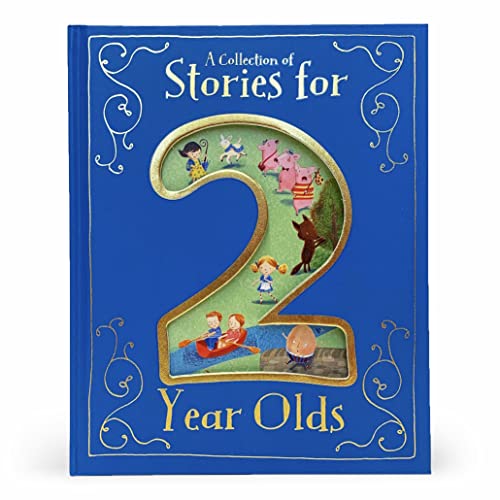
A Collection of Stories for 2 Year Olds
Check price on Amazon
Montessori Sensory Toys for 1 2 Year Old Boy Girl Gifts, Puzzle for Toddler | Montessori Toys, Toddler Toy 2-3, Boys Girls Birthday Gifts, Wooden Blocks, Shape Sorter, Learning Toy, Toddler Activities
Check price on Amazon
Let’s Learn ABCs – Interactive Toddler Sound Book with 27 Buttons | Tracing, Alphabet Song, Children's Board Book | Learn Letters & First Words | Fun Learning Activities for Boys & Girls
Check price on Amazon
Aullsaty Talking Flash Cards for Toddlers Ages 1-3, 224 Words Montessori Speech Therapy Toys, Autism Sensory Toy, Educational Learning Speech Therapy Birthday Gifts for Boys Girls (Pink)
Check price on Amazon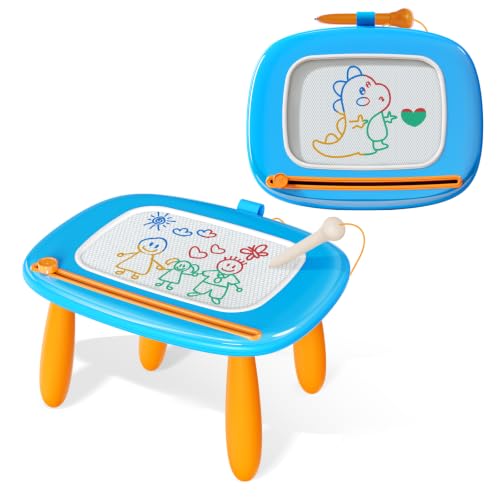
Kikidex Magnetic Drawing Board, Toddler Girl Toys for 1-3 Year Old, Doodle Board Pad Learning and Educational Toys for 1 2 3 Year Old Kids Birthday Gift (Light Blue)
Check price on Amazon
TOP BRIGHT Montessori Toys for 2 Year Old Gift, Magnetic Bird Feeding Game | Builds fine motor skills, Sensory toys age 2-4, Woodpecker Worms Toy, Hand-eye coordination, Non-toxic Wood
Check price on AmazonFrequently Asked Questions
What types of learning toys are best for 2 year olds?
The best learning toys for 2 year olds support active exploration. Look for shape sorters, stacking blocks, simple puzzles, sensory bins, and pretend play sets that encourage fine motor development, language growth, and problem-solving. Toys that are open-ended and allow independent play tend to deliver the most developmental value at this age.
How many toys should a 2 year old have access to at once?
Child development experts generally recommend keeping 8 to 12 toys accessible at a time and rotating them every few weeks. This approach, known as toy rotation, keeps play engaging, reduces overwhelm, and helps toddlers focus more deeply on each toy. It also extends the novelty of your existing collection without needing to add more items.
Are wooden learning toys better than plastic ones for toddlers?
Wooden toys are often favored for their durability, natural feel, and open-ended design, while plastic toys can offer more intricate mechanisms and easier cleaning. Both materials are developmentally valuable when they are age-appropriate and safety-certified. The most important factor is choosing toys that match your child's current skills and interests, regardless of material.
How do I choose safe learning toys for a 2 year old?
Always check the age recommendation on the packaging and verify that the toy meets safety standards for your region. Avoid small parts that could pose a choking hazard, ensure there are no sharp edges or loose strings, and confirm that paints and finishes are non-toxic. Supervision during play is still essential, even with safety-certified toys.
When should I introduce puzzles to a 2 year old?
Many 2 year olds are ready for simple peg puzzles with chunky pieces and clear picture cues. Start with puzzles that have a small number of large pieces and gradually increase complexity as your child's confidence grows. Puzzle play supports spatial reasoning, hand-eye coordination, and persistence.
Ready to Choose the Right Learning Toy?
Browse our expert-recommended selection of top rated learning toys for 2 year olds, carefully evaluated for safety, durability, and developmental value.
EXPLORE TOP PICKS