Tile Magnets: The Complete Guide to Magnetic Building Tiles
Everything you need to know about tile magnets — how they work, why they benefit developing minds, safety considerations, and how to choose the right set for your child's age and skill level.
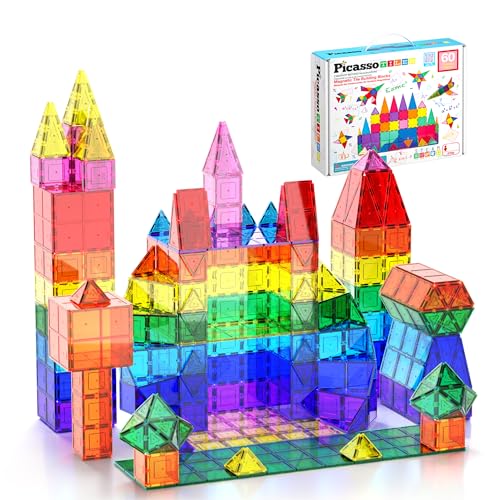
Explore Buying Guide🧲 What Are Tile Magnets? Tile magnets — also known as magnetic building tiles or magnetic tiles — are colorful geometric shapes with embedded magnets along their edges. When brought together, the magnetic forces allow children (and adults!) to construct anything from simple flat patterns to elaborate 3D structures like castles, towers, and vehicles. They are among the most versatile open-ended toys available, blending creative play with early STEM learning.
Why Tile Magnets Are a Smart Choice for Growing Minds
Tile magnets have earned a permanent place in playrooms and classrooms worldwide — and for good reason. Unlike single-purpose toys, magnetic tiles grow with your child. A toddler might simply stack two squares together, while a school-age child can engineer a multi-level parking garage with ramps and windows. This adaptability makes tile magnets one of the few toys that genuinely evolve alongside a child's developmental stages.
The magnetic connection mechanism is what sets tile magnets apart from traditional building blocks. The magnets provide a satisfying "snap" that reinforces fine motor control, while the immediate feedback helps children understand spatial relationships and cause-and-effect. Educators frequently recommend tile magnets for educational play because they naturally introduce concepts like symmetry, geometry, and structural integrity without feeling like a lesson.
🧠 Cognitive Development
Tile magnets encourage problem-solving, spatial reasoning, and planning. Children must think ahead about how shapes will connect and whether a structure will remain stable — skills that translate directly to math and engineering later in life.
✋ Fine Motor Skills
Aligning magnetic edges requires precision and hand-eye coordination. Repeated practice with tile magnets strengthens the small muscles in fingers and hands, preparing children for writing and other delicate tasks.
🎨 Creative Expression
With no fixed instructions, tile magnets invite open-ended play. Children can build a house one day and a rocket ship the next, fostering imagination and narrative thinking through play ideas that evolve naturally.
🤝 Social & Emotional Growth
Tile magnets are excellent for cooperative play. Whether building a shared castle or negotiating who gets which shape, children practice turn-taking, communication, and teamwork — essential social skills for group activities.
How Tile Magnets Work: The Science Behind the Snap
Each magnetic tile contains small neodymium or ferrite magnets sealed along its edges. The magnets are arranged so that opposite poles face outward, meaning two tiles will always attract along their edges regardless of orientation. This clever design means children don't need to worry about "wrong ways" to connect — the tiles simply snap together in any configuration.
The magnetic strength in quality tile magnets is calibrated to hold structures together firmly while still being easy for small hands to pull apart. Entry-level sets typically use ferrite magnets, which are safe and functional for basic builds. Mid-range and high-end tier sets often use neodymium magnets with stronger hold, allowing taller and more complex structures without collapse. Premium and professional-grade sets may also feature reinforced plastic housings and ultrasonic welding to prevent magnet exposure.
Most tile magnets come in standard geometric shapes: squares, equilateral triangles, right triangles, and isosceles triangles. These shapes mirror the building blocks of geometry itself, which is why tile magnets are frequently used in STEM toys curricula. More advanced sets may include rectangles, trapezoids, and even specialty pieces like windows, doors, and wheels, expanding the building possibilities significantly.
Tile Magnets by Age: What to Expect at Each Stage
One of the greatest strengths of tile magnets is their scalability. The same set that entertains a two-year-old can challenge a ten-year-old — the difference lies in how the child uses the pieces. Here's how tile magnets typically support development across age groups:
| Age Range | Typical Play Style | Developmental Focus |
|---|---|---|
| 18–24 months | Stacking, sorting by color, simple two-piece connections | Sensory exploration, cause-and-effect, basic motor control |
| 2–3 years | Building flat patterns, simple 3D shapes, naming colors | Fine motor precision, color recognition, early spatial awareness |
| 4–5 years | Constructing houses, towers, and enclosures with intentional design | Planning, symmetry, imaginative storytelling, cooperative play |
| 6–8 years | Complex 3D structures, vehicles with moving parts, themed builds | Engineering thinking, structural stability, problem-solving under constraints |
| 9+ years | Intricate models, architectural designs, combining multiple sets | Advanced spatial reasoning, design iteration, independent project management |
For families with multiple children, tile magnets offer a rare advantage: siblings of different ages can build side by side, each working at their own level. A younger child might focus on connecting two squares while an older sibling constructs a bridge overhead — both are engaged, both are learning.
How to Choose the Right Tile Magnets Set
With so many tile magnets options on the market, selecting the right set can feel overwhelming. The key is to match the set's features to your child's age, interests, and your family's play patterns. Here's what to consider:
📐 Shape Variety
Starter sets usually include squares and triangles — enough for basic structures. Mid-range sets add rectangles, trapezoids, and specialty pieces. If your child loves building detailed models, look for sets with windows, doors, and wheels included.
🔢 Piece Count
A 32-piece set suits one child for simple builds. For two children or more ambitious structures, 60–100 pieces is a balanced tier. High-end tier sets with 100+ pieces support complex architectural projects and long-term play.
🧲 Magnet Strength
Entry-level ferrite magnets are fine for flat patterns and small builds. Mid-range neodymium magnets hold taller structures better. Top-tier sets use stronger neodymium magnets with reinforced housings for maximum stability.
🛡️ Safety Features
Look for tiles with sealed edges and ultrasonic welding. Avoid sets with loose magnets or cracked plastic. Reputable brands use non-toxic, BPA-free plastic and meet safety standards like ASTM F963 and EN71.
When comparing tier options, consider that mid-range sets often provide the best balance of magnet strength, piece variety, and durability for everyday family use. Entry-level sets are a solid choice for testing whether your child enjoys magnetic building before committing to a larger collection. Premium and luxury tier sets typically offer superior magnet quality, thicker plastic, and more specialty pieces — a worthwhile investment for families who plan to use tile magnets for years.
For those exploring related building toys, you might also consider how tile magnets compare to traditional building block sets or other toy categories that support similar developmental goals.
Tile Magnets Safety: What Parents Need to Know
Magnetic toys require thoughtful supervision, especially for younger children. The primary concern with tile magnets — as with any magnetic toy — is the risk of magnets becoming detached and ingested. When multiple magnets are swallowed, they can attract each other across intestinal walls, causing serious injury.
To minimize risk with tile magnets:
- Choose age-appropriate sets: Most tile magnets are labeled for ages 3 and up. For children under 3, consider toys for 18 months to 2 years that are specifically designed for safe magnetic play or hold off on magnetic tiles until the child is past the mouthing stage.
- Inspect regularly: Check tile magnets for cracks, loose edges, or exposed magnets. Retire any damaged pieces immediately.
- Supervise play: Especially with younger children, stay nearby during tile magnets play sessions.
- Store safely: Keep tile magnets in a designated bin or container. Avoid mixing them with other small toys that could hide damaged pieces.
- Follow manufacturer guidelines: Reputable tile magnets brands provide clear safety information and age recommendations.
Caring for Your Tile Magnets
Tile magnets are durable, but a little care extends their lifespan significantly. Wipe tiles with a damp cloth and mild soap when needed — avoid submerging them in water, as moisture can compromise the internal magnets over time. Store tile magnets in a dry place away from extreme heat, which can warp plastic. When not in use, keep them in a toy rotation system or storage bin to prevent loss and damage.
If your child loses interest in tile magnets temporarily, don't discard them — rotate them back into play after a few weeks. Their open-ended nature means they'll feel fresh again, especially as your child's building skills advance.
Frequently Asked Questions About Tile Magnets
What age are tile magnets suitable for?
Most tile magnets are recommended for children aged 3 and older. However, younger children (18–24 months) can enjoy tile magnets with close supervision, focusing on stacking and simple connections. Always follow the age recommendation on the specific product you choose.
Are tile magnets safe if a magnet comes loose?
Loose magnets pose a serious ingestion hazard. Inspect tile magnets regularly for damage and discard any piece with a cracked housing or exposed magnet. If you suspect a child has swallowed a magnet, seek medical attention immediately.
How many tile magnets pieces do I need to start?
A set of 32–60 pieces is a good starting point for one child. If you have multiple children or want to build larger structures, consider a 100-piece set or plan to add expansion packs later. Many families start with a mid-range set and grow their collection over time.
Can tile magnets be combined with other building toys?
Tile magnets are generally designed to work with other sets from the same brand or with compatible magnetic systems. They can be used alongside traditional building block sets for mixed-material play, though the connections won't be magnetic in that case.
What should I look for when buying tile magnets?
Prioritize safety certifications (ASTM F963, EN71), sealed edges, strong but child-friendly magnets, and a shape variety that matches your child's interests. Read reviews and consider the tier of the set relative to your family's play patterns.
Are tile magnets good for STEM learning?
Yes. Tile magnets naturally introduce geometry, spatial reasoning, and structural engineering concepts. They're widely used in classrooms and are considered an excellent STEM toy for both home and school environments.
Final Thoughts on Tile Magnets
Tile magnets represent one of the best investments in open-ended, developmentally rich play. Their ability to adapt to a child's growing skills means they stay relevant for years — from first stacking experiments to elaborate architectural creations. By choosing the right set, supervising appropriately, and caring for your tile magnets, you're giving your child a tool for creativity, problem-solving, and joyful discovery.
Whether you're shopping for a first magnetic building set or expanding an existing collection, tile magnets offer a feature-rich for its class experience that supports learning through play. Explore more toy reviews and gift guides to find the perfect match for your family.