Make Believe Toys for 3 Year Olds: Unlock Imaginative Play
At three years old, a child's imagination takes flight. Discover the best make believe toys that spark creativity, build social skills, and turn every day into an adventure.
Explore Toy Types🧸 Why Make Believe Matters at Age Three: At this stage, toddlers transition from parallel play to cooperative pretend play. Make believe toys are not just fun—they are essential tools for language development, emotional regulation, and problem-solving. This guide breaks down the best categories, what to look for, and how to choose toys that grow with your child.
The Developmental Power of Pretend Play at Three
Three-year-olds are at a magical crossroads. They have enough language to narrate their play, enough motor control to manipulate small props, and enough social awareness to invite others into their world. Make believe toys harness this window of opportunity. Unlike passive entertainment, pretend play requires the child to be the director, the actor, and the audience all at once.
Research in early childhood development consistently shows that children who engage in rich pretend play score higher on measures of language, empathy, and self-regulation. The toys you provide act as scaffolding—they give shape to abstract ideas and make complex scenarios accessible.
🗣️ Language Explosion
Pretend play introduces new vocabulary naturally. A child playing "doctor" learns words like stethoscope, patient, and prescription without formal instruction.
❤️ Emotional Intelligence
Role-playing different characters helps children process big feelings. Playing "teacher" or "parent" lets them practice empathy and understand social roles.
🧠 Problem-Solving Skills
When a toy kitchen runs out of "food," a child must improvise. This flexible thinking is the foundation of creative problem-solving.
🤝 Social Cooperation
Sharing a pretend scenario requires negotiation, turn-taking, and compromise—core skills for school readiness and beyond.
Best Make Believe Toy Categories for 3 Year Olds
The market for pretend play toys is vast. To make your decision easier, we have organized the top categories by play style, developmental focus, and tier positioning. Each category below includes specific considerations for a three-year-old's abilities and interests.
Play Kitchens & Food Sets
A play kitchen is often the centerpiece of pretend play at three. Look for sturdy construction, rounded edges, and interactive elements like turning knobs or opening doors. Wooden sets tend to be more durable and offer a classic aesthetic, while plastic sets often include lights and sounds.
- Choose a compact countertop model if space is limited
- Include a variety of play food with Velcro cuts for slicing practice
- Pair with child-sized utensils and pots for realism
Dress-Up & Role Play Costumes
Dress-up costumes allow a child to physically step into a character. At three, easy-on/easy-off designs are critical—Velcro closures and elastic waistbands work best. Avoid costumes with small accessories that pose choking hazards.
- Stock a mix of professions: doctor, firefighter, chef, astronaut
- Include open-ended pieces like capes and hats for free-form play
- Fabric quality matters—look for washable, breathable materials
Puppets & Plush Characters
Hand puppets and plush characters are versatile tools for storytelling. A three-year-old can use a puppet to express feelings they cannot yet articulate directly. Look for puppets with movable mouths and soft, huggable bodies.
- Animal puppets are universally appealing and encourage sound imitation
- Pair with a simple puppet theater or a draped blanket for staging
- Choose machine-washable fabrics for hygiene
Dollhouses & Miniature Worlds
A dollhouse invites a child to create entire narratives within a structured environment. At three, scale matters—pieces should be large enough to grasp easily but small enough to arrange. Open-sided dollhouses allow multiple children to play simultaneously.
- Look for wooden dollhouses with working doors and windows
- Include family figures that reflect diversity
- Furniture should be chunky and easy to reposition
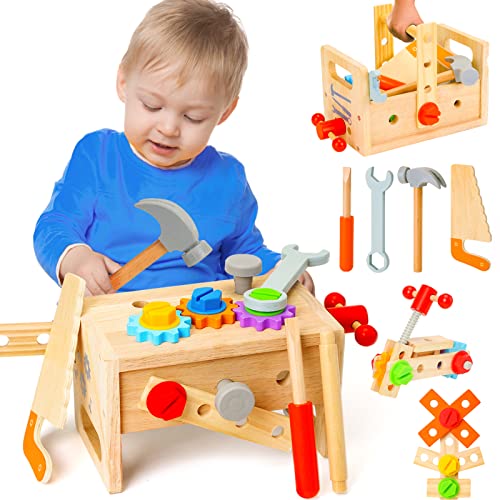
Tool Sets & Workbenches
A toy workbench taps into a toddler's desire to mimic adult activity. Three-year-olds love the repetitive motion of hammering and screwing. Choose sets with realistic but safe tools—plastic hammers and large bolts work well.
- Include a variety of tools: hammer, wrench, screwdriver
- Wooden workbenches offer a more tactile experience
- Avoid sets with loose nails or screws smaller than 1.5 inches
Doctor & Vet Kits
Medical kits combine nurturing instincts with pretend play. A three-year-old can "examine" a stuffed animal or a willing parent, practicing care and empathy. Look for kits with a sturdy carry case and realistic-but-safe instruments.
- Stethoscopes with real working diaphragms add authenticity
- Include bandages, a thermometer, and a doctor's coat
- Kits that double as vet sets extend play value
How to Choose: A Tier-Based Comparison
When evaluating make believe toys, it helps to understand where each option sits in the market. The table below uses universal tier descriptors to help you compare categories without relying on transient metrics. Remember that a higher tier often correlates with more durable materials and more intricate details—but the best choice depends on your child's play style and your available space.
| Category | Tier Positioning | Best For | Key Feature |
|---|---|---|---|
| Play Kitchens | Essential to Mid-Range | Social play, language development | Interactive knobs and storage |
| Dress-Up Costumes | Starter to Mid-Range | Identity exploration, empathy | Easy-on closures |
| Puppets | Essential Tier | Storytelling, emotional expression | Movable mouths |
| Dollhouses | Mid-Range to Premium | Narrative play, fine motor skills | Open-sided design |
| Tool Sets | Starter Tier | Motor skills, mimicry | Chunky, safe tools |
| Doctor Kits | Premium Tier | Nurturing play, vocabulary | Realistic instruments |
For parents exploring broader developmental categories, our guide to the most educational toys for 3 year olds complements this list by focusing on cognitive and sensory enrichment. If you are specifically looking for construction-based play, the magnetic building blocks for 3 year olds guide offers a deep dive into that adjacent category.
Safety Considerations for Three-Year-Olds
At three, children still explore the world through their mouths and hands. The U.S. Consumer Product Safety Commission recommends avoiding toys with parts smaller than 1.25 inches in diameter and 2.25 inches in length for children under three. Since your child is at the boundary, exercise caution with any set containing small accessories.
Look for toys labeled "3+" and check for non-toxic finishes, especially on wooden items. Avoid toys with loose magnets or button batteries—both pose serious ingestion hazards. For a comprehensive overview, refer to our general toy safety guide, though we recommend consulting the manufacturer's age labeling as your primary reference.
Durability is another safety factor. Cheaply made toys can break into sharp fragments. Mid-range and premium tier toys typically use reinforced joints and thicker materials that withstand rough play. If you are shopping for a child who still mouths objects, prioritize solid wood or high-density plastic over thin, flexible plastics.
Building a Make Believe Toy Collection That Grows
You do not need to buy everything at once. A thoughtful approach is to start with two or three core categories—a play kitchen, a set of puppets, and a dress-up bin—then expand based on observed interests. A child who gravitates toward nurturing play will get more mileage from a doctor kit, while a child who loves building will thrive with a dollhouse that doubles as a construction project.
Rotation is a powerful strategy. Keep a portion of the make believe toys in storage and swap them out every few weeks. This prevents novelty fatigue and makes each reintroduction feel fresh. For more ideas on managing toy volume, see our guide to toy rotation systems and decluttering kids toys.
Finally, resist the urge to over-accessorize. Open-ended props—a simple cape, a cardboard box, a wooden spoon—often spark more creativity than highly specific electronic toys. The best make believe toys are those that leave room for the child to fill in the gaps with their own imagination.
Ready to Spark Imagination?
Explore our hand-picked selection of make believe toys for 3 year olds below. Each recommendation is evaluated for durability, developmental value, and play potential.
View Recommended ToysFrequently Asked Questions
What are the best make believe toys for a 3 year old?
The best choices are those that invite open-ended play: play kitchens, dress-up costumes, puppets, and simple dollhouses. These toys allow the child to lead the narrative rather than follow a pre-programmed script.
How many make believe toys does a 3 year old need?
A focused collection of three to five core categories is plenty. Too many toys can overwhelm and reduce deep engagement. Rotating a smaller set keeps play fresh and focused.
Are wooden toys better than plastic for pretend play?
Wooden toys are generally more durable and offer a tactile, natural feel. However, high-quality plastic toys can also be excellent, especially for detailed playsets like doctor kits. The key is solid construction and safe materials, not the material type alone.
How can I encourage pretend play at home?
Provide a dedicated space, keep props accessible, and join in occasionally without taking over. Model imaginative scenarios—have a tea party with stuffed animals or build a blanket fort—and let your child take the lead.
When should I introduce a dollhouse?
Many three-year-olds are ready for a simple dollhouse with chunky furniture. Start with an open-sided design and a few family figures. As fine motor skills develop, you can add smaller accessories.