
Learning Board Games for 5 Year Olds: The Complete Parent's Guide
Transform playtime into brain-building time. Discover how the right board games can boost early literacy, math skills, and social confidence—while keeping your five-year-old genuinely excited to play.
At five years old, children are standing at a remarkable developmental threshold. They are transitioning from parallel play to cooperative play, beginning to recognize letters and numbers, and developing the patience to take turns. This is precisely the window where learning board games for 5 year olds become a powerful tool—not just for entertainment, but for cognitive and social growth.
As a parent or gift-giver researching this category, you likely already know you want something educational. But the market is crowded, and the difference between a game that genuinely teaches and one that merely entertains can be difficult to spot from a product listing. This guide cuts through the noise. We break down the specific skills five-year-olds are developing, what to look for in a game, and which types of games deliver the best balance of fun and learning.
Whether you are shopping for a birthday, a holiday, or simply building a home game shelf, the recommendations below will help you choose with confidence.
Why Board Games Are Essential for Five-Year-Old Development
Board games offer something screens cannot replicate: face-to-face interaction with real stakes and real waiting. For a five-year-old, the simple act of sitting at a table, rolling a die, and waiting for a turn is a foundational social exercise. Research in early childhood development consistently highlights that structured play—games with rules—supports executive function, including impulse control and working memory.
Beyond the social dimension, the best learning games for this age group weave academic concepts into the mechanics. A child might not realize they are practicing letter sounds while racing to collect picture cards, or counting spaces while navigating a colorful path. This stealth-learning approach is precisely why board games are so effective at this stage.
Early Literacy & Phonics
Games that involve letter recognition, rhyming, and sound matching reinforce pre-reading skills in a low-pressure, high-engagement format.
Number Sense & Counting
Rolling dice, moving spaces, and comparing quantities build foundational math concepts without the drill-and-kill feel of worksheets.
Social & Emotional Skills
Taking turns, winning gracefully, and losing without meltdowns are all practiced at the game table—invaluable for kindergarten readiness.
Fine Motor & Visual Skills
Manipulating small pieces, matching patterns, and scanning a board supports hand-eye coordination and visual discrimination.
What to Look For in a Learning Board Game for a Five-Year-Old
Not every game labeled "educational" is a good fit. Five-year-olds have specific needs: they need short play sessions, clear rules, and a genuine chance to win. Here are the criteria our experts prioritize when evaluating games for this age group.
1. Play Time Under 20 Minutes
Attention spans at five are still developing. A game that drags past the 20-minute mark often ends in frustration or a lost interest. Look for games explicitly designed for quick rounds—these are far more likely to be requested again and again.
2. Simple, Visual Rules
If a game requires reading a rulebook longer than a page, it is likely too complex. The best games for this age communicate rules through clear iconography, color coding, and a quick demonstration. A parent should be able to explain the game in under two minutes.
3. Genuine Skill Integration
A game is a "learning" game only if the mechanic itself requires the skill. For example, a game that asks players to match uppercase to lowercase letters integrates literacy into the core loop. A game with a generic spinner and a "learn your ABCs" label does not.
4. Built-In Adjustability
Five-year-olds vary widely in their abilities. Games that offer variable difficulty levels—or can be played cooperatively rather than competitively—are far more versatile and will grow with your child.
Editorial Tip: Prioritize games that reward participation and effort rather than pure luck. While luck-based games can be fun, games with a small element of strategy help children develop decision-making and planning skills.
5. Durable, Child-Friendly Components
Five-year-olds are not gentle. Chunky cardboard tiles, thick wooden pieces, and wipe-clean surfaces are signs of a game built to survive enthusiastic play. Flimsy cards and tiny pieces are a recipe for a game that ends up in the recycling bin within weeks.
The Best Types of Learning Board Games for 5 Year Olds
Based on our evaluation of dozens of titles across every major category, here are the game types that consistently deliver the strongest balance of learning value and genuine fun for five-year-olds.
Literacy & Letter Recognition Games
These games are the workhorses of early learning. They typically use letter tiles, picture cards, or a board with alphabet spaces to reinforce the connection between letters and sounds. The most effective versions integrate the literacy element into the core game mechanic—for example, a race to collect items that start with a specific letter sound.
- Look for games that include both uppercase and lowercase letters
- Ensure the game can be played by non-readers (using pictures and icons)
- Cooperative versions reduce pressure and encourage teamwork
These games are particularly valuable for children who are just beginning to show interest in letters and sounds. They pair exceptionally well with other early learning toys that build fine motor and cognitive skills.
Math & Counting Games
Math games for this age should focus on concrete, visual counting rather than abstract arithmetic. The best ones use dice, number tiles, and board spaces to make counting and quantity comparison feel like a natural part of the game. Many families find that a simple counting game is the first board game their child truly masters.
- Games with dice are ideal for practicing subitizing (recognizing quantities at a glance)
- Look for games that involve comparing quantities ("more than" / "less than")
- Avoid games that introduce multiplication or complex addition too early
Cooperative Learning Games
Cooperative games are a game-changer for five-year-olds. Instead of competing against each other, players work together to achieve a shared goal. This removes the sting of losing and teaches valuable skills like collaborative problem-solving and verbal communication. For children who are sensitive to competition, these games are often the best entry point.
- Cooperative games often have adjustable difficulty levels
- They naturally encourage conversation and shared decision-making
- Many are designed to be played in under 15 minutes
Pattern & Logic Games
Pattern and logic games sit at the more challenging end of the spectrum for five-year-olds, but they are incredibly rewarding. These games might involve matching shapes, completing sequences, or solving simple visual puzzles. They build the cognitive foundations for later math and coding skills.
- Start with games that have only a few possible solutions
- Look for games that can be played solo as well as with others
- These games pair beautifully with building blocks and construction toys
Premium Family Games with Learning Value
Some of the most beloved games for this age are those that can be enjoyed by the whole family, not just the five-year-old. These premium-tier games often feature higher production values, more durable components, and rules that scale for different ages. They represent a long-term investment in family game night.
- Look for games with a "junior" or "family" edition
- Prioritize games with high replay value and variable setup
- These games often become treasured family traditions
At-a-Glance Comparison of Game Categories
| Game Category | Tier | Best For | Key Skills |
|---|---|---|---|
| Literacy & Letter Games | Essential Tier | Pre-readers and early readers | Letter recognition, phonics |
| Math & Counting Games | Balanced Tier | Building number sense | Counting, number recognition |
| Cooperative Games | Balanced Tier | Children who dislike competition | Teamwork, communication |
| Pattern & Logic Games | Top-Tier | Children ready for a challenge | Visual discrimination, logic |
| Premium Family Games | Premium Tier | Whole-family play | Varies by game |
How to Choose the Right Game for Your Child
Every five-year-old is different. The game that captivates one child might bore another. Here is a practical framework for making the right choice.
Assess Your Child's Current Skills
Is your child already recognizing letters? Can they count to 20 reliably? Do they understand the concept of taking turns? Use these questions to guide your selection. A child who is just beginning to show interest in letters will likely be overwhelmed by a game with complex word-building mechanics. Start with a simpler game and upgrade as their skills grow.
Consider Their Temperament
Some children thrive on competition; others find it stressful. If your child is sensitive to losing, a cooperative game is almost always the better choice. You can always introduce competitive games later, once they have developed the emotional regulation to handle defeat.
Think About Your Family's Play Style
Will this game be played primarily by the child alone, with siblings, or with parents? If you want a game the whole family can enjoy, look for titles with broad age appeal. If the game is primarily for independent play, prioritize titles that can be played solo or with minimal adult supervision.
Start Simple, Then Expand
It is tempting to buy the most comprehensive game available, but starting with a simple, fast-playing game is almost always the wiser choice. A child who has a positive first experience with board games is far more likely to want to play again. Once they have mastered a simple game, you can introduce more complex titles with confidence.
Tips for Making Learning Games Fun
The difference between a game that collects dust and one that becomes a family favorite often comes down to how it is introduced and played. Here are our best tips for maximizing engagement.
- Let them win—sometimes. Five-year-olds need to experience success to stay motivated. You can gradually introduce more challenge as their confidence grows.
- Play in short bursts. Two or three quick rounds are often better than one long session. End on a high note before fatigue sets in.
- Narrate the learning. Casually point out what they are doing: "You found the letter B! That's the same sound at the start of 'ball.'" This reinforces the connection between the game and real-world knowledge.
- Keep it light. If a game is causing frustration, put it away and try again another day. The goal is to build a positive association with games and learning, not to drill skills.
- Rotate games. Just like toys, board games can lose their novelty if played every day. Rotating games keeps them fresh and exciting.
For families looking to build a broader collection of educational play options, exploring a wider range of learning toys for younger children can also provide valuable context for how skills progress.
Frequently Asked Questions
What is the best age to introduce board games?
Most children are ready for simple board games around age four or five, once they can follow basic rules and take turns. Starting with very simple games—like those that involve rolling a die and moving a piece—is the best approach.
How long should a board game last for a five-year-old?
Aim for games that last 10 to 20 minutes. Five-year-olds have limited attention spans, and a game that drags on too long often ends in frustration. Quick, replayable rounds are ideal.
Are competitive games bad for five-year-olds?
Not at all—competitive games can teach valuable lessons about winning and losing gracefully. However, cooperative games are often a better starting point for children who are sensitive to losing or who are new to board games.
Can board games really teach reading and math?
Yes, when the game mechanics are designed around those skills. A game that requires matching letters to sounds, for example, directly reinforces phonics. A game that involves counting spaces and comparing quantities builds number sense. The key is that the learning is integrated into the game, not tacked on.
How many board games does a five-year-old need?
Quality matters far more than quantity. A small collection of three to five well-chosen games is plenty. Focus on variety—one literacy game, one math game, one cooperative game, and one just-for-fun game is a solid foundation.
Final Thoughts
Learning board games for 5 year olds are one of the most effective—and most enjoyable—tools for early childhood development. They build academic skills, foster social confidence, and create lasting family memories. The key is to choose games that match your child's current abilities and temperament, and to keep the experience positive and pressure-free.
Start with a simple, fast-playing game in a category that aligns with your child's interests. As their skills and confidence grow, you can expand into more complex titles. Before long, you will have a game shelf that the whole family treasures.
For more guidance on choosing toys and games that support development at every stage, explore our full collection of educational toys and toys by age guides.
Recommended Learning Board Games for 5 Year Olds
⚠️ AFFILIATE DISCLOSURE: This website contains affiliate links. As an Amazon Associate, we earn from qualifying purchases. If you make a purchase through these links, we may receive a small commission at no additional cost to you. Read our full affiliate policy.

Number Hunter Math Board Game for Kids 5-7, 1st Grade & Kindergarten | Addition and subtraction game, STEM toy for 5+ year old, homeschool essentials, classroom learning, family game night
Check price on Amazon
ThinkFun Zingo Bingo Award Winning Preschool Game for Pre-Readers and Early Readers Age 4 and Up - One of the Most Popular Board Games for Boys and Girls and their Parents (97700)
Check price on Amazon
Hasbro Gaming Scrabble Junior Board Game | 2-4 Players | Family Educational Word Games for Kids | Back to School Gifts for Classroom | Ages 5+
Check price on Amazon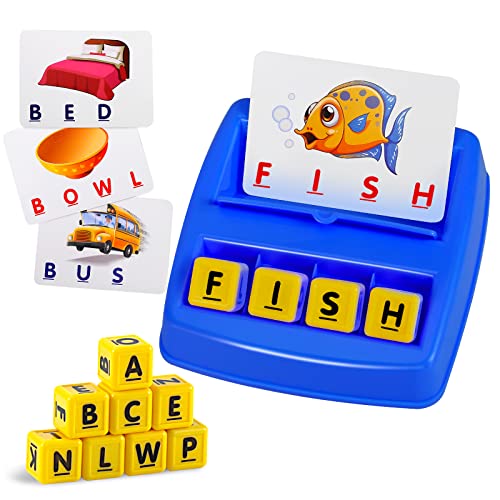
Matching Letter Game, Spelling Word and Increases Memory, Early Learning Educational Toy for Preschool & Kindergarten Kids Over 3-8 Years Old
Check price on Amazon
Hasbro Gaming Don't Spill The Beans Game for Kids, Easy and Fun Balancing Game for Children Ages 3 and Up, Easter Gifts for Boys and Girls, Preschool Games for 2 Players, Kids Board Games
Check price on Amazon
Junior Learning Phonics Board Games Set, 6 Counters, Ages 4-5, Language Skills, Pre K-K, Medium
Check price on Amazon
Hasbro Gaming Chutes and Ladders: Marvel Spider-Man Edition Board Game for Kids 2-4 Players, Preschool Games, Easter Gifts for Boys and Girls, Ages 3 and Up (Amazon Exclusive)
Check price on Amazon