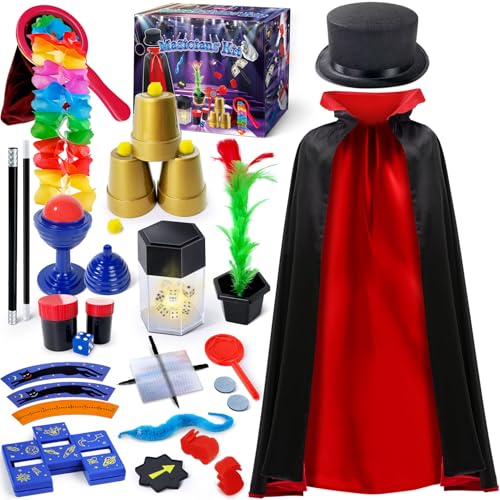
Magic Trick Set for 4 Year Olds: The Complete Beginner's Guide
Everything parents need to know about choosing a magic kit that is safe, age-appropriate, and genuinely fun for a four-year-old. Learn which tricks work best, how to support skill development, and what to look for before making a decision.
What You Will Find on This Page
Why a Magic Trick Set Suits a 4-Year-Old
At four years old, children are entering a remarkable phase of curiosity. They ask endless questions, love surprise, and are beginning to understand cause and effect. A magic trick set taps directly into this developmental window. Unlike passive toys, a magic kit invites active participation — the child becomes the performer, the creator of wonder, and the center of attention in a healthy, confidence-building way.
Magic also introduces a structured form of play that blends entertainment with learning. Simple tricks like a disappearing coin or a color-changing card require the child to follow steps, remember a sequence, and practice until the reveal feels smooth. This is early executive function training disguised as fun. For parents researching the right magic set, understanding these developmental benefits helps frame the purchase as an educational investment rather than just another toy.
If you are also exploring broader developmental play options, our guide to learning toys for 4 year olds provides complementary recommendations that pair well with magic play. And for families looking to balance screen time with hands-on fun, the most fun toys for 4 year olds collection offers additional ideas.
Key Features to Look for in a Beginner Magic Set
Not every magic kit labeled for young children is genuinely suitable for a four-year-old. The packaging may say "ages 4 and up," but the actual props and instructions vary widely. Here is what matters most when evaluating a magic trick set for this age group.
Self-Working Props
Tricks that work through clever design rather than manual dexterity. Look for magic wands with hidden mechanisms, color-changing cups, or boxes where an object vanishes with a simple tilt.
Visual Instructions
Four-year-olds cannot read. The best sets include large, clear picture-based instruction cards or a QR code linking to a short video demonstration that a parent can watch with the child.
Durable, Safe Materials
Preschoolers are not gentle. Rounded edges, non-toxic finishes, and sturdy plastic or wood construction are essential. Avoid sets with tiny loose parts or glass components.
Limited Piece Count
A set with 50 tricks can overwhelm a four-year-old. Ten to fifteen well-chosen tricks are more than enough. Focus on quality of experience, not quantity of props.
Storage Solution
A sturdy box or pouch keeps props organized and makes the set feel special. It also teaches the child to care for their belongings — an important early responsibility lesson.
Room for Growth
Some entry-level sets include a few slightly more advanced tricks that the child can graduate to after mastering the basics. This extends the useful life of the kit.
For a deeper look at how magic sets compare to other hands-on learning tools, the most educational toys for 3 year olds guide offers useful context on what developmental milestones to expect at this stage. Many parents find that combining a magic set with a magnetic fishing game or a memory game creates a well-rounded play corner.
Skills Your Child Develops Through Magic Play
Magic is often framed as pure entertainment, but the developmental benefits are well documented in early childhood education. When a four-year-old practices a simple trick, they are exercising multiple skill domains simultaneously. Here is a breakdown of what is happening beneath the surface.
- Fine Motor Control: Handling small props, opening and closing boxes, and manipulating wands all strengthen the small muscles in the hands and fingers — a key prerequisite for handwriting.
- Sequencing and Memory: Performing a trick requires remembering the order of steps. This builds working memory and the ability to follow multi-step instructions.
- Language and Storytelling: A magic performance involves narration. "Watch closely, I will make this coin disappear!" encourages expressive language and narrative thinking.
- Confidence and Self-Esteem: Successfully performing a trick for an audience (even a parent) delivers a powerful boost of pride and self-efficacy.
- Patience and Persistence: The first attempt rarely goes perfectly. Learning to try again is a foundational life skill, and magic provides a low-stakes environment to practice it.
- Social Understanding: Magic introduces the concept of perspective — the audience sees something different from what the magician knows. This is an early building block of theory of mind.
These benefits align closely with the skills targeted by other recommended toys such as make believe toys for 3 year olds and most educational toys for 3 year olds. The difference is that magic adds a layer of performance and surprise that many children find uniquely motivating.
Understanding Magic Set Tiers: Entry-Level to Premium
Magic sets for young children span a wide range of quality and complexity. To help you navigate the options without relying on specific figures, we use a tier-based classification that reflects the relative position of each set in the market. This system stays useful regardless of changing economic conditions and focuses on what matters: materials, design, and the depth of the experience.
| Tier | Typical Characteristics | Best For |
|---|---|---|
| Starter Tier | Basic plastic props, 5–10 tricks, simple cardboard packaging, picture-based instructions | First-time exposure; a low-commitment way to test interest |
| Essential Tier | Sturdier construction, 10–15 tricks, illustrated instruction booklet, reusable storage box | Families who want a reliable set that will last through repeated play |
| Balanced Tier | Mix of plastic and wood components, 15–20 tricks, video-linked instructions, organized case | Children who have shown sustained interest and are ready for slightly more variety |
| High-End Tier | Premium materials, self-working mechanical props, 20+ tricks with progressive difficulty | Gifting or families who view the set as a long-term learning investment |
A starter-tier set is often the wisest first choice for a four-year-old. It minimizes upfront commitment while giving the child a genuine taste of magic. If the interest takes hold, upgrading to an essential or balanced tier after a few months is a natural progression. Many parents find that the most popular toys for four year olds list includes a mix of tiers, which helps in comparing relative positioning.
Safety Considerations for Four-Year-Olds
Safety is non-negotiable at this age. Four-year-olds still explore objects with their mouths, and their motor control is still developing. When evaluating a magic trick set, apply the same scrutiny you would to any toy intended for a preschooler.
Choking Hazard Check
Avoid sets with small balls, coins, or detachable pieces that could fit through a toilet paper tube. Opt for larger props designed specifically for young children.
Non-Toxic Materials
Verify that paints, dyes, and plastics meet safety standards. Reputable brands clearly label their products as non-toxic and age-appropriate.
No Sharp Edges
Inspect all props for rough seams, sharp corners, or exposed metal. Magic sets should be smooth to the touch throughout.
Supervision Recommended
Even safe sets benefit from parental oversight, especially during the initial learning phase. This also creates a shared bonding experience.
For a broader overview of toy safety principles, our non-toxic toys guide covers material safety in detail, and the principles apply across age groups. If you are also considering a magnetic building blocks set or make your own stuffed animal kit as complementary gifts, apply the same safety checklist.
How Parents Can Support the Magic Journey
The parent's role in a child's magic experience is more important than the specific set chosen. A four-year-old will need help reading instructions, practicing the moves, and setting up a "show." Here are practical ways to make the most of the experience.
- Be the Audience: React with genuine surprise. Your child feeds off your enthusiasm. Clap, gasp, and ask "How did you do that?" — it validates their effort.
- Practice Together: Set aside ten minutes a day to run through one trick. Repetition builds fluency and confidence.
- Create a Performance Space: A small table, a cape (even a towel), and a "magic wand" make the experience feel special and encourage imaginative play.
- Let Them Teach You: Once a trick is mastered, ask the child to explain it to you. This reinforces learning and builds language skills.
- Manage Frustration: If a trick is not working, model calm problem-solving. "Let's look at the picture again together" is more helpful than taking over.
- Celebrate Effort, Not Perfection: Praise the practice, the creativity, and the performance — not just the successful reveal.
These parenting strategies overlap with the approaches recommended for other skill-building toys. For example, the learning toys for 1-2 year olds guide emphasizes scaffolding and patience, principles that apply equally here. Similarly, the most popular toys for 2 year olds collection highlights the importance of age-appropriate challenge.
Frequently Asked Questions
Is a magic trick set safe for a four-year-old?
Yes, provided you choose a set designed specifically for preschoolers. Look for large props, non-toxic materials, and no small detachable parts. Always supervise the first few sessions and check the manufacturer's age recommendation on the packaging.
How many tricks should a beginner magic set include?
For a four-year-old, 10 to 15 tricks is an ideal range. Fewer than that may feel limited, while more can overwhelm. What matters more than quantity is that the tricks are self-working and visually clear.
Can a four-year-old really perform magic tricks independently?
With self-working props and visual instructions, many four-year-olds can perform simple tricks with minimal help. The key is choosing tricks that do not require manual dexterity beyond their developmental stage. Parental support during the learning phase is still recommended.
What if my child loses interest after a few days?
This is common and not a cause for concern. Try integrating the magic set into a broader play routine — pair it with a memory game or a make believe toy to create themed play sessions. Often, interest returns when the child has a new audience or a fresh trick to learn.
Should I choose a starter-tier or high-end-tier magic set?
For a first magic set, a starter or essential tier is usually the wisest choice. It lets you gauge genuine interest before investing in a more comprehensive kit. If your child shows sustained enthusiasm, upgrading later is easy and rewarding.
How does a magic set compare to other educational toys for this age?
Magic sets offer a unique combination of performance, surprise, and skill-building. They complement construction toys, puzzles, and art supplies by adding a social and narrative dimension. The learning toys for 4 year olds guide offers a broader view of how magic fits into a balanced toy collection.
Ready to Explore Magic Sets?
Browse our curated selection of recommended magic trick sets for young children. Each option is evaluated for safety, age-appropriateness, and play value.
View Recommended Magic SetsFinal Thoughts: Choosing with Confidence
A magic trick set for a four-year-old is more than a toy — it is a gateway to confidence, creativity, and connection. The right set empowers your child to surprise you, to practice a skill, and to experience the thrill of performance. By focusing on self-working props, safety, and age-appropriate complexity, you set the stage for genuine engagement rather than fleeting novelty.
As you compare options, remember that the tier system is your friend. Start with a starter or essential tier set, observe your child's response, and upgrade only when the interest is clearly sustained. Pair the magic set with other hands-on favorites from our most fun toys for 4 year olds and most popular toys for four year olds guides to build a well-rounded play collection.
Most importantly, enjoy the show. The moment your child pulls a coin from behind your ear and beams with pride is worth every bit of research.