Educational Games for 4-5 Year Olds: The Complete Learning Guide
Discover how the right games turn playtime into powerful learning. This expert guide covers the skills that matter most at ages 4 and 5, the game types that build them, and how to choose wisely for your preschooler.
Explore Top PicksWhy This Guide Matters: Ages 4 and 5 are a developmental sweet spot. Children are mastering letter sounds, counting, shape recognition, and the social rules of sharing and turn-taking. The right educational games reinforce these skills through joyful, low-pressure play — and the wrong ones can frustrate or bore. This guide walks you through what to look for, how to match games to your child's stage, and which game types deliver the strongest learning outcomes for preschoolers.
What 4-5 Year Olds Are Ready to Learn
Before choosing games, it helps to understand the developmental milestones typical for this age. While every child develops at their own pace, most 4-5 year olds are working on the following skill areas — and the best educational games are designed around them.
Early Literacy and Language
At this stage, children are building phonemic awareness — the ability to hear and manipulate sounds in words. They begin recognizing uppercase and lowercase letters, matching letters to sounds, and understanding that print carries meaning. Games that involve letter matching, rhyming, alphabet sequencing, and story sequencing are especially valuable. For a broader look at the literacy-building stage, see our guide to educational toys for 4-5 year olds.
Early Math and Logic
Counting to 10 and beyond, one-to-one correspondence, shape and pattern recognition, sorting, and simple addition and subtraction with objects are all on the developmental menu. Games that involve dice, counting tokens, matching quantities, and completing patterns give children repeated, playful practice with these concepts. If your child enjoys structured logic challenges, our educational board games for 6 year olds guide is a natural next step as skills grow.
Social and Emotional Skills
Turn-taking, following rules, winning gracefully, and losing without meltdowns are all practiced through games. Cooperative games — where players work together toward a shared goal — are particularly valuable for 4-5 year olds because they reduce the pressure of competition while still teaching rule-following and teamwork. Games with simple, clear rules and short rounds work best.
Fine Motor and Visual-Spatial Skills
Games that require manipulating small pieces, placing tiles, stacking blocks, or threading beads strengthen the small muscles in the hands and fingers — the same muscles needed for handwriting. Puzzles, matching games with cards, and building games all support this development. For more targeted options, explore fine motor skills toys for 5 year olds.
The Best Game Types for 4-5 Year Olds
Not all educational games are created equal. These are the game categories that consistently deliver strong learning outcomes for preschoolers, based on their developmental needs.
1. Matching and Memory Games
Matching games — whether matching letters, shapes, animals, or quantities — build visual discrimination, memory, and concentration. Memory card games with a small number of pairs (6 to 12) are ideal for 4 year olds; 5 year olds can handle slightly larger sets. These games are entry-level in complexity but high in learning value, making them a staple of any preschool game collection.
2. Board Games with Simple Rules
Games with a clear path, a die or spinner, and a simple goal (reach the end, collect the most tokens) teach turn-taking, counting, and rule-following. Look for games with short rounds — 10 to 15 minutes — and minimal reading requirements. Cooperative board games are especially recommended for this age because they build teamwork without the emotional sting of losing. For a broader selection, see our educational toys for 3-4 year olds guide, which covers the foundational stage before this one.
3. Building and Construction Games
Building games — from simple block sets to pattern-building challenges — develop spatial reasoning, problem-solving, and persistence. For 4-5 year olds, look for sets with guided pattern cards or simple building challenges that give children a goal to work toward. Our guide to educational building toys for 5 year olds covers the best options in this category.
4. Literacy-Focused Games
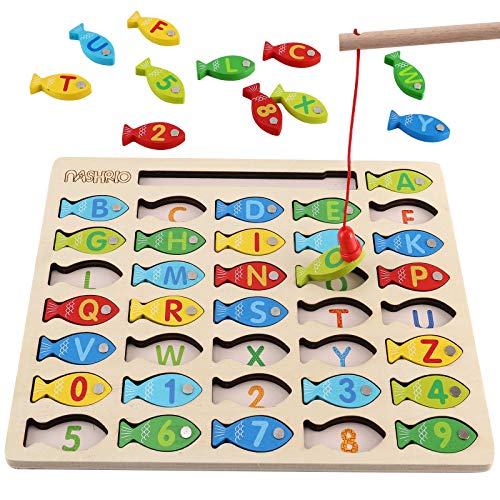
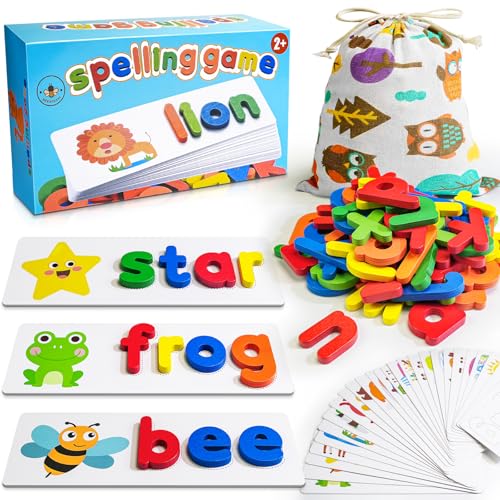
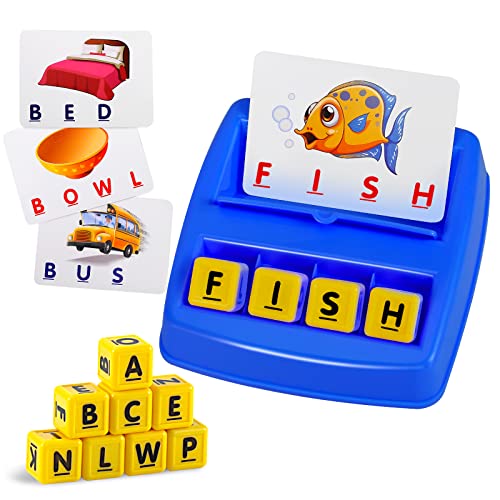
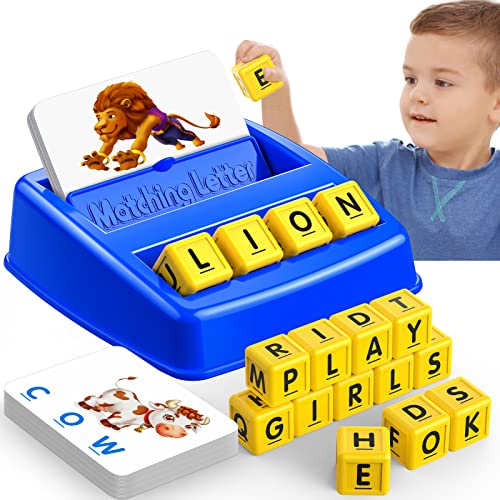
Alphabet games, rhyming games, and letter-sound matching games give children repeated exposure to the building blocks of reading. Games that incorporate movement or tactile elements (tracing letters in sand, matching magnetic letters) are especially effective for kinesthetic learners. Pair these with a strong foundation in educational toys for 4-5 year olds for a well-rounded literacy approach.
5. Math and Number Games
Counting games, number matching, shape sorting, and simple addition games make numeracy practice feel like play. Dice games are particularly effective because they combine counting, subitizing (recognizing quantities at a glance), and turn-taking in one simple format. For children ready for slightly more structured math play, see our educational games for 3-5 year olds collection.
How to Choose: A Tier-Based Framework
Rather than focusing on specific brands, it helps to think about educational games in terms of their market positioning and complexity. The framework below uses universal tier descriptors — not numeric figures — to help you match a game's design to your child's needs.
Starter Games
Simple, durable games with very few rules and short rounds. Ideal for first-time game players or children who need extra support with turn-taking. Often feature large pieces, clear visuals, and minimal reading.
Best for: First games, building confidence, quick wins
Core Learning Games
Games that combine one clear learning objective (literacy, math, or logic) with engaging play. These are the workhorses of a preschool game collection — well-specified for the category and built to grow with your child.
Best for: Daily learning play, skill reinforcement
Enriched Games
Games with higher production quality, more elaborate components, and multi-layered play. Often include extension activities or adapt to multiple skill levels, making them a long-term investment for families.
Best for: Families who play often, multi-age households
Game Type Comparison at a Glance
Use this table to quickly match a game type to your child's current needs and your family's play style.
| Game Type | Primary Skill | Tier | Best For |
|---|---|---|---|
| Matching & Memory | Visual discrimination, memory | Essential Tier | First games, quiet play |
| Simple Board Games | Turn-taking, counting | Essential to Balanced Tier | Family play, rule-following |
| Building & Pattern Games | Spatial reasoning, persistence | Balanced Tier | Independent play, problem-solving |
| Literacy Games | Letter recognition, phonics | Balanced Tier | Pre-reading practice |
| Math & Number Games | Counting, simple arithmetic | Balanced Tier | Numeracy confidence |
| Enriched Multi-Skill Games | Multiple skill areas | Premium Tier | Long-term play, multi-age families |
Key Considerations Before You Choose
Match the Game to Your Child, Not the Other Way Around
Some 4 year olds are ready for letter-sound games; others are still working on color and shape matching. Choose games that meet your child where they are, not where a label says they should be. A game that is slightly too easy builds confidence and fluency; a game that is too hard creates frustration and avoidance.
Prioritize Hands-On, Screen-Free Play
For this age group, physical games — board games, card games, building games — are the gold standard. They support fine motor development, face-to-face interaction, and sustained attention in ways that digital games cannot replicate. If you do include digital games, keep sessions short and choose titles designed specifically for preschoolers. Our guide to educational iPad games for 4 year olds covers the best screen-based options if you want to supplement.
Check Durability and Safety
Preschoolers are not gentle with game pieces. Look for games with thick cardboard, rounded corners, and non-toxic finishes. Avoid games with small parts that could be choking hazards if you have younger children in the home. Durable construction matters more than elaborate components at this age.
Keep Rounds Short
A 4-5 year old's attention span for a structured activity is typically 10 to 15 minutes. Games that can be completed in that window — or that have natural stopping points — are far more likely to be played regularly. Short, repeated sessions beat long, forced ones every time.
Frequently Asked Questions
What are the best educational games for 4-5 year olds?
The best educational games for 4-5 year olds balance fun with skill-building. Look for games that target early literacy (letter recognition, rhyming), early math (counting, shape matching), and social skills (turn-taking, cooperation). Matching games, simple board games, and building games are all excellent choices for this age group. Focus on games with short rounds and simple rules.
How do educational games help 4-5 year olds learn?
Educational games make skill practice feel like play. At this age, children develop foundational literacy, numeracy, and social skills. Games provide repetition in an engaging format, encourage problem-solving, and build confidence without the pressure of formal instruction. The playful context also strengthens memory and motivation.
Should I choose board games or digital games for my 4-5 year old?
Physical board games and hands-on games are generally recommended as the primary choice for 4-5 year olds. They support fine motor development, face-to-face social interaction, and screen-free play. Digital games can supplement learning in moderation, but hands-on games should form the foundation of your child's educational play.
How long should a 4-5 year old play an educational game?
A typical attention span for a 4-5 year old is about 10 to 15 minutes per activity. Look for games that can be completed in a short session or that have natural stopping points. Short, repeated play sessions are more effective than long, forced ones for this age group.
Next Steps in Your Child's Learning Journey
Once your child has mastered the games in this guide, they will be ready for slightly more structured challenges. If your child is turning 6 soon, explore educational board games for 6 year olds for the next stage. For children who enjoy hands-on building and problem-solving, our educational building toys for 5 year olds guide offers excellent extensions. And if you are still building your child's foundational collection, the broader educational games for 3-5 year olds guide covers the full preschool range.
Ready to Find the Perfect Game?
Our hand-picked selection of educational games for 4-5 year olds is curated to support literacy, numeracy, and social skills — all through joyful, developmentally appropriate play. Browse the recommendations below and choose the games that fit your child's stage and interests.
See Recommended Games