Educational Toys for 3 and 4 Year Olds
The early years are a crucial window for brain development. Discover how the right educational toys can support your preschooler's growth across language, motor skills, problem-solving, and creative thinking — all through the power of play.
See Our Top Recommendations🧠 Why Educational Toys Matter at Ages 3-4: At ages three and four, children are rapidly developing language, social skills, and early reasoning abilities. Educational toys designed for this stage encourage exploration, build confidence, and lay the foundation for school readiness — without turning play into a chore.
What Makes a Toy "Educational" for a 3-4 Year Old?
Not every toy labeled "educational" delivers real developmental value. At ages 3 and 4, the best educational toys share a few defining characteristics. They invite open-ended exploration rather than prescribing a single "correct" way to play. They match your child's current abilities while offering a gentle stretch toward the next milestone. And they engage multiple senses — sight, touch, sound, and movement — so learning happens naturally.
According to child development research, play-based learning during the preschool years is one of the most effective ways children acquire new skills. When a toy is genuinely educational, it supports one or more of these core developmental areas:
- Fine motor skills — grasping, stacking, threading, drawing, and manipulating small objects
- Language and literacy — letter recognition, vocabulary building, storytelling, and conversation prompts
- Early math concepts — counting, sorting, patterning, shape recognition, and spatial awareness
- Cognitive problem-solving — puzzles, matching games, cause-and-effect toys, and simple strategy
- Social-emotional skills — cooperative play, turn-taking, empathy, and pretend play scenarios
- Creativity and imagination — art supplies, building sets, dress-up, and open-ended play materials
If you're exploring options across slightly older or younger age ranges, our educational toys for 2-3 year olds and educational toys for 4-5 year olds guides can help you find the right fit for your child's exact stage.
Key Developmental Milestones for 3-4 Year Olds
Understanding what your child is working on developmentally helps you choose toys that are genuinely useful rather than simply entertaining. While every child develops at their own pace, here are the typical milestones that educational toys for this age group aim to support:
Gross and Fine Motor Development
Three-year-olds are refining their ability to run, jump, and climb, while four-year-olds are mastering more precise hand movements — holding a pencil correctly, cutting with safety scissors, and building increasingly complex structures. Toys that encourage both big movements and fine manipulation work best.
Language and Communication
Between ages 3 and 4, vocabulary often explodes from a few hundred words to well over a thousand. Children begin forming longer sentences, asking endless "why" questions, and engaging in back-and-forth conversation. Toys that prompt storytelling, naming, and dialogue are especially valuable during this window.
Cognitive and Problem-Solving Skills
Preschoolers start to understand cause and effect, sort objects by color or shape, complete simple puzzles, and follow multi-step instructions. Toys that present gentle challenges — with room for trial and error — build persistence and reasoning.
Social and Emotional Growth
Pretend play becomes richer and more social at this age. Children act out roles, negotiate with playmates, and practice sharing and turn-taking. Toys that support cooperative play, role-play, and emotional expression help build these critical social skills.
For a broader look at how toys evolve with your child's development, see our educational toys for three-year-olds guide.
The Best Categories of Educational Toys for 3-4 Year Olds
Rather than chasing individual products, it helps to understand the broad categories that consistently deliver developmental value. Here are the top categories our experts recommend for this age group:
🧱 Building and Construction Toys
Blocks, magnetic tiles, and simple building sets develop spatial reasoning, fine motor control, and creative problem-solving. They're among the most versatile educational toys for preschoolers.
🧩 Puzzles and Matching Games
Age-appropriate puzzles — from chunky wooden pieces to simple jigsaws — build shape recognition, patience, and visual discrimination. Matching games reinforce memory and categorization.
🎨 Art and Creative Materials
Crayons, washable markers, play dough, and safety scissors support fine motor development and self-expression. Art play is also a powerful outlet for emotional processing.
🔤 Early Literacy Toys
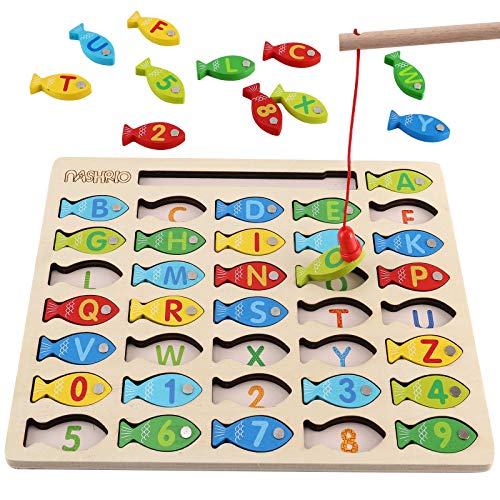
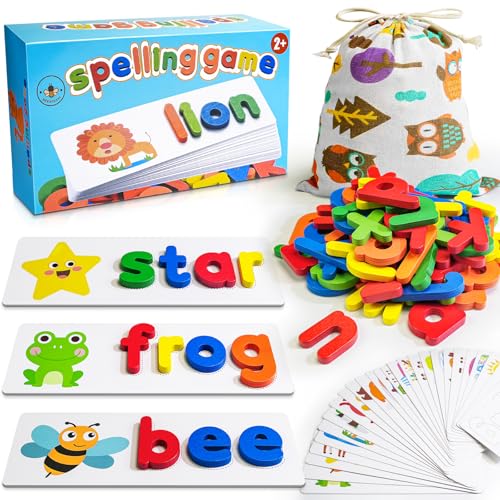
Alphabet puzzles, letter magnets, and interactive reading toys introduce letter recognition and phonics in a low-pressure, playful way.
🔢 Early Math Toys
Counting toys, sorting sets, pattern blocks, and shape sorters make foundational math concepts concrete and hands-on.
🎭 Pretend Play and Role-Play Sets
Play kitchens, doctor kits, dress-up clothes, and puppet sets encourage language development, empathy, and cooperative social play.
If your child enjoys games that combine learning with social interaction, our educational games for 3-5 year olds and educational games for 4-5 year olds collections offer excellent options.
How to Choose Educational Toys for Your 3-4 Year Old
With so many options on the market, choosing the right educational toy can feel overwhelming. Use this practical framework to make confident decisions:
1. Match the Toy to Your Child's Interests
A toy that aligns with your child's natural curiosities will always get more play time — and more developmental benefit — than one that sits in a closet. Observe what your child gravitates toward: building, drawing, pretending, or solving puzzles. Lean into those interests first.
2. Look for Open-Ended Play Potential
The best educational toys for 3-4 year olds can be played with in many different ways. A set of wooden blocks can become a castle, a road, a tower, or a pretend cake. Open-ended toys grow with your child and stay engaging far longer than single-purpose toys.
3. Prioritize Safety and Material Quality
Preschoolers still explore the world partly through their mouths, so non-toxic materials are essential. Look for toys made from solid wood, food-grade silicone, or BPA-free plastic. Check for age-appropriate safety labeling and avoid small parts that could pose choking hazards for younger siblings. Our guide to eco-friendly toys covers sustainable options in more depth.
4. Consider the Developmental "Stretch"
A good educational toy should be slightly challenging — engaging enough to hold attention, but not so difficult that it causes frustration. Toys that offer multiple difficulty levels or gradual progression work especially well during the preschool years.
5. Balance Screen-Free and Interactive Learning
While digital learning tools have their place, the American Academy of Pediatrics recommends prioritizing hands-on, screen-free play for preschoolers. If you do include interactive electronic toys, choose ones that encourage conversation and movement rather than passive consumption. For parents considering tablets, our guides to educational iPad games for 3-year-olds and educational iPad games for 4-year-olds offer balanced recommendations.
Quality Tiers for Educational Toys: A Quick Comparison
Educational toys vary widely in construction quality, durability, and design sophistication. To help you navigate the market without focusing on irrelevant factors, here's how we categorize toys into quality tiers based on materials, design, and longevity:
| Tier | Best For | Typical Characteristics |
|---|---|---|
| Starter Tier | Exploring interests, casual play | Basic functionality, lightweight materials, good for trying out a new type of play before committing to a higher tier. |
| Mid-Tier | Everyday learning, growing with your child | Durable construction, thoughtful design, multiple ways to play. Often the sweet spot for preschool educational toys. |
| Top-Tier | Long-term investment, heirloom-quality play | Premium materials, exceptional craftsmanship, designed to withstand years of active play and often passed down to siblings. |
Our recommendation: for toys your child will use daily over several years — like building sets or a well-designed art easel — a mid-tier or top-tier option is usually the most sensible choice. For toys that explore a temporary interest, a starter-tier option lets you test the waters first.
Our Top Educational Toy Recommendations for 3-4 Year Olds
Based on developmental research and hands-on testing, here are the educational toy categories and specific types we most often recommend for this age group. Note that we focus on the type of toy and its developmental role — you can find current product listings in our product section below.
For Fine Motor Development
Look for toys that require grasping, pinching, threading, or stacking. Examples include lacing cards, bead threading sets, tongs-and-transfer activities, and chunky peg puzzles. These build the hand strength and dexterity that later support handwriting and self-care skills.
For Early Literacy
Alphabet puzzles with chunky pieces, magnetic letter sets, and interactive storybooks that invite children to name objects and predict what happens next. If your child is showing strong interest in letters and sounds, our educational toys for 4-5 year olds guide covers next-step phonics materials.
For Early Math and Logic
Counting bears, sorting trays, pattern blocks, and simple sequence puzzles. These make abstract concepts like "more than" and "same as" concrete and physical. Building toys like educational building toys (which also have great options for younger siblings) are excellent for spatial reasoning.
For Creativity and Imagination
Washable art supplies, play dough sets, and open-ended pretend play props. Dress-up clothes and pretend-play sets are especially valuable at this age because they combine creativity with language and social skill development. Our dress-up gifts for 3-year-olds guide offers specific ideas.
For Screen-Free STEM Exploration
Simple science toys — magnifying glasses, magnetic discovery sets, sink-or-float kits — introduce scientific thinking without screens. If your child shows early interest in how things work, our broader educational toys for 5-6 year olds collection includes more advanced STEM options.
For parents who want to introduce learning through play with a structured format, educational games for 3-5 year olds offer a wonderful bridge between free play and guided learning.
Ready to Find the Perfect Educational Toy?
Browse our hand-picked selection of educational toys for 3 and 4 year olds below. Each product is chosen for its developmental value, safety, and quality of construction.
View Recommended ToysSafety Considerations When Buying Toys for 3-4 Year Olds
Safety should always come first, especially with young children who may still put objects in their mouths or play roughly. Keep these guidelines in mind:
- Check age recommendations: Toys labeled for ages 3 and up have passed safety testing for this age group. Avoid toys labeled for older children, even if they look appealing.
- Avoid small parts: If a toy or its components can fit inside a standard toilet paper tube, it poses a choking hazard for children under 3 — and may still be risky for some 3-year-olds who mouth objects.
- Look for non-toxic materials: Choose toys made from materials that are free from BPA, phthalates, and lead-based paints. Reputable brands publish safety certifications.
- Inspect for loose parts and sharp edges: Check toys regularly for wear and tear, especially if they've been handed down or purchased secondhand.
- Supervise art and water play: Washable art supplies and water tables are wonderful, but always supervise to prevent ingestion of materials or water accidents.
For a deeper dive into toy safety, see our comprehensive toy safety guide and our non-toxic toy guide.
Frequently Asked Questions
What are the best educational toys for 3 and 4 year olds?
The best educational toys for 3 and 4 year olds include building blocks, magnetic tiles, chunky puzzles, pretend play sets, art supplies, and simple STEM kits. These toys support fine motor skills, language development, problem-solving, and creativity — the core developmental areas for this age group.
How do educational toys help 3-4 year olds develop?
Educational toys for 3-4 year olds support key developmental milestones including fine motor control, hand-eye coordination, language acquisition, early math concepts, social skills through cooperative play, and cognitive problem-solving. Play-based learning during these years is widely recognized as one of the most effective ways children build foundational skills.
What should parents look for when choosing educational toys for preschoolers?
Parents should look for toys that match their child's developmental stage, are made from non-toxic materials, meet safety standards, encourage open-ended play, and offer multiple ways to play. Age-appropriate labeling and durability are also important factors. Prioritize toys that align with your child's interests for the most engagement.
Are electronic or screen-based toys good for 3-4 year olds?
Hands-on, screen-free toys are generally recommended as the primary educational play for preschoolers. If you include electronic toys, choose ones that encourage conversation, movement, and active participation rather than passive screen time. The American Academy of Pediatrics recommends limiting screen time for this age group and prioritizing interactive, real-world play.
How many toys does a 3-4 year old actually need?
Children this age thrive with fewer, higher-quality toys that allow deep, focused play. Many child development experts recommend a toy rotation system — keeping a small selection accessible and rotating others out of sight — rather than a large number of toys at once. This approach reduces overwhelm and increases engagement with each toy. Our toy rotation system guide explains how to set this up.
Explore More Age-Specific Toy Guides
Every child develops at their own pace. If you're unsure whether your child is ready for the toys in this guide, or you're looking ahead to the next stage, these related guides can help:
- Educational Toys for 2-3 Year Olds — for younger siblings or children who are still building foundational skills
- Educational Toys for Three-Year-Olds — a focused guide on the specific needs of 3-year-olds
- Educational Toys for 4-5 Year Olds — for children who are ready for slightly more advanced challenges
- Educational Toys for 5-6 Year Olds — early school-age learning toys
- Educational Games for 3-5 Year Olds — structured games that combine learning and fun
For a broader perspective on how educational toys fit into your child's overall development, browse our full educational toys category.