Educational Toys for 5-6 Year Olds: Building Bright Futures Through Play
Your complete guide to choosing learning toys that spark curiosity, build foundational skills, and make playtime count for kindergarten and first-grade kids.
Explore Recommended ToysWhy this age matters: At 5 and 6 years old, children are transitioning from preschool play to structured learning. Their brains are primed for phonics, number sense, scientific observation, and creative problem-solving. The right educational toys meet them where they are — turning everyday play into powerful learning moments that build confidence for school and beyond.
What Makes a Toy Truly Educational for 5-6 Year Olds?
Not every toy labeled "educational" delivers real learning value. For this age group, the best toys share several characteristics: they encourage active engagement rather than passive consumption, they're open-ended enough to grow with your child, and they align with the developmental milestones typical of kindergarten and early first grade.
Children at this stage are developing phonemic awareness, early reading skills, number recognition, basic addition and subtraction concepts, and fine motor control. They're also building social skills through cooperative play and learning to follow multi-step instructions. Educational toys that target these areas — without feeling like homework — deliver the most lasting benefit.
Safety and durability matter just as much as learning potential. Look for toys with non-toxic finishes, sturdy construction, and age-appropriate small parts. For more guidance on choosing safe, high-quality options, explore our broader collection of educational toys for 4-5 year olds and educational toys for 6 year olds.
Key Categories of Educational Toys for 5-6 Year Olds
The educational toy market is vast, but most high-value options fall into a few proven categories. Understanding these categories helps you shop with purpose and avoid toys that look impressive but offer little developmental substance.
🔬 STEM & Science Toys
Simple science kits, magnifying glasses, pattern blocks, and early coding toys introduce cause-and-effect thinking, observation skills, and foundational math concepts. Look for kits with clear instructions and hands-on experiments that don't require extensive adult setup.
📚 Literacy & Phonics Toys
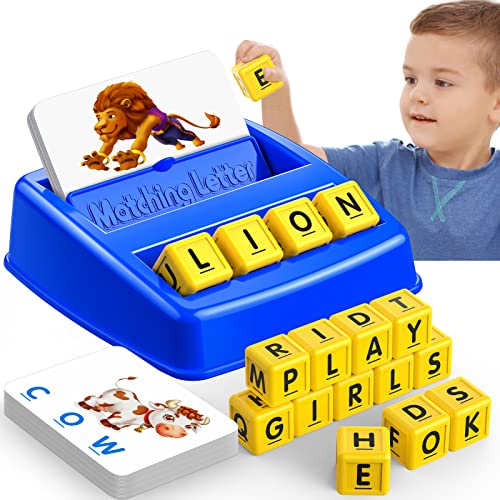
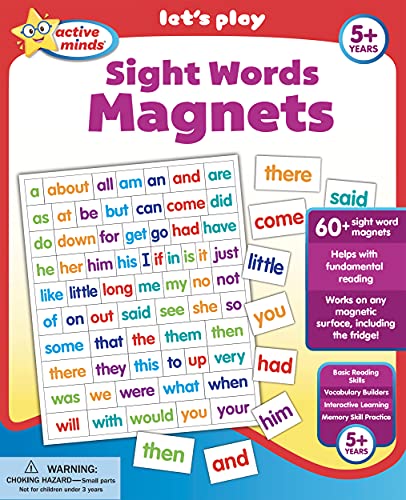
Alphabet puzzles, word-building games, and interactive reading toys reinforce letter sounds, sight words, and early spelling. These toys bridge the gap between letter recognition and actual reading, making phonics practice feel like play.
🔢 Math & Logic Toys
Counting bears, number boards, pattern games, and simple strategy games build number sense, sequencing, and problem-solving skills. The best math toys for this age group are visual and tactile, allowing children to physically manipulate numbers and quantities.
🎨 Creative & Building Toys
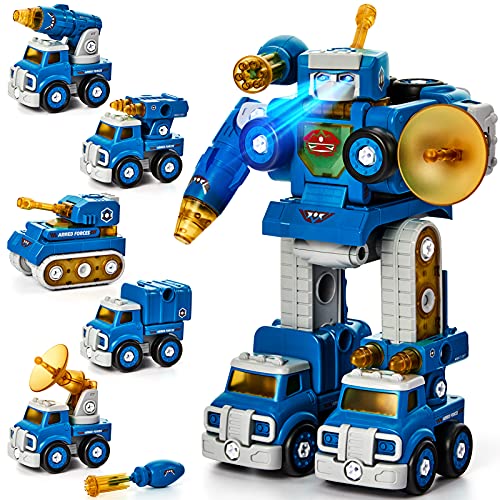
Building blocks, magnetic tiles, art supplies, and modeling compounds develop spatial reasoning, fine motor skills, and creative expression. Open-ended building toys are especially valuable because they grow with your child's abilities.
How to Match Toys to Your Child's Developmental Stage
Every child develops at their own pace, but most 5-6 year olds share certain capabilities. They can typically follow three-step instructions, recognize most letters and some letter sounds, count to 20 or beyond, and engage in cooperative play with peers. They're also developing the patience for longer activities and the fine motor control needed for writing and detailed manipulation.
When choosing toys, consider your child's current skills and offer a gentle stretch. A child who recognizes letters but struggles with sounds will benefit from phonics-focused games, while a child who already reads simple words might enjoy word-building challenges. Similarly, a child who loves building will thrive with more complex construction sets, while a child new to building might prefer larger, easier-to-handle pieces. For more age-specific recommendations, see our guides on toys for 4-5 year olds and toys for 7-8 year olds.
Don't overlook the value of educational building toys for 5 year olds — construction play is one of the most versatile learning tools available, supporting math, engineering thinking, and creative problem-solving all at once.
Quality Tiers: Understanding Toy Positioning
Educational toys vary widely in construction quality, materials, and design sophistication. To help you navigate the market, here's a framework for understanding relative positioning across the category. This classification reflects market positioning, not absolute quality — an entry-level toy can still be an excellent learning tool.
| Tier | Best For | Typical Characteristics |
|---|---|---|
| Essential Tier | Everyday learning and first introductions | Simple designs, basic materials, straightforward learning goals. Good value for families building a foundational toy collection. |
| Balanced Tier | Core skill-building with room to grow | Durable construction, multi-level challenges, broader learning scope. A solid choice for most families seeking long-term play value. |
| Premium Tier | Advanced learners and specialty interests | Premium materials, sophisticated design, extended learning potential. Well-specified for the category and designed for repeated, long-term use. |
| Top-Tier / Flagship | Deep engagement and enrichment | Exceptional build quality, comprehensive learning systems, often with expandable components. A long-term investment in educational play. |
When comparing options, consider how a toy's tier aligns with your goals. A balanced-tier phonics game may serve a child perfectly well through kindergarten and first grade, while a premium-tier building system might be worth the investment if your child shows sustained interest in construction and engineering. For related guidance, explore our educational toys for 8-10 year olds to see how toy complexity evolves as children grow.
Screen-Free vs. Digital Learning Toys: Finding Balance
For 5-6 year olds, screen-free toys offer irreplaceable benefits: they build fine motor skills, encourage face-to-face social interaction, and foster imaginative play that screens can't replicate. Hands-on manipulatives — from pattern blocks to play dough — engage multiple senses simultaneously, which strengthens memory and understanding.
That said, high-quality digital learning tools can supplement hands-on play when used thoughtfully and in moderation. Educational apps and interactive games can reinforce phonics and math concepts, but they should complement rather than replace physical play. If you're considering digital options, look for products designed specifically for early learners with clear learning objectives. You can explore related guides on educational iPad games for 5 year olds and educational tablet games for 5 year olds for more context.
💡 Practical tip: Rotate toys regularly to keep engagement high. A toy that sits out constantly loses its novelty; a toy that reappears after a few weeks feels fresh and exciting again. This simple strategy extends the learning value of every toy in your collection and makes your overall investment work harder.
Building a Thoughtful Educational Toy Collection
A well-curated collection doesn't need dozens of items. Focus on a few high-quality toys across each key category — literacy, math, STEM, and creative play — and let your child's interests guide the rest. Observe what they gravitate toward: a child who loves patterns might thrive with math manipulatives, while a child who tells elaborate stories might benefit from storytelling games and creative building sets.
Consider how toys work together. A building set pairs naturally with a pattern game; a phonics puzzle complements a word-building activity. The most valuable collections have toys that invite combination and cross-pollination of skills. For ideas on organizing and rotating your collection, see our guide on educational games for older children — many principles apply across age groups.
Finally, don't underestimate the educational power of classic toys. Board games teach turn-taking, strategy, and social skills. Art supplies build fine motor control and creative confidence. Even a simple deck of cards can support number sense and early math. For more structured options, explore educational board games for 6 year olds.
Frequently Asked Questions
What types of educational toys are best for 5-6 year olds?
The best options focus on foundational literacy, early math, STEM exploration, and creative expression. Look for building sets, phonics games, counting toys, simple science kits, and art supplies that encourage hands-on discovery and open-ended play.
How do I choose age-appropriate educational toys for a 5 or 6 year old?
Check the age label on the packaging, consider your child's developmental stage, and look for toys that match their current interests while gently introducing new challenges. Avoid toys with small parts for children who still mouth objects, and prioritize durable construction and non-toxic materials.
Are screen-free educational toys better for 5-6 year olds?
Screen-free toys are highly valuable for developing fine motor skills, social interaction, and imaginative play. However, high-quality digital learning tools can also support literacy and math when used in moderation. A balanced approach that prioritizes hands-on play is generally recommended.
What skills do educational toys for 5-6 year olds support?
Educational toys at this age support early reading and phonics, number sense and basic math operations, scientific curiosity and observation, problem-solving and critical thinking, fine motor coordination, and social-emotional skills like turn-taking and cooperation.
Making Playtime Count
The most educational toys are the ones your child actually wants to play with. A toy that sits on a shelf — no matter how well-designed — teaches nothing. Pay attention to your child's interests, involve them in choosing new additions to their collection, and create space for unstructured play where they can explore at their own pace.
At 5 and 6 years old, children learn best through play that feels joyful and self-directed. Your role is to provide the right tools and a supportive environment, then step back and let curiosity lead the way. The educational toys recommended below represent a thoughtful starting point — explore them, compare options, and choose what fits your child's unique personality and interests.
For a broader view of toys across this age range, see our full guide to educational toys for 6 year olds and our educational toys for 4-5 year olds.