Educational iPad Games for 5 Year Olds: A Complete Learning Guide
Turn screen time into brain time. Discover how the right iPad games can build early literacy, numeracy, and problem-solving skills while keeping your five-year-old genuinely engaged and entertained.
Why this guide matters: Five-year-olds are at a remarkable developmental crossroads. Many are beginning formal schooling, refining fine motor control, and expanding their vocabulary at an astonishing pace. The iPad, when paired with thoughtfully designed educational games, can become a powerful supplement to hands-on play and classroom learning.
But not all "educational" apps are created equal. Some are little more than digital flashcards wrapped in cartoon packaging. This guide cuts through the noise, helping you understand what genuinely supports a five-year-old's growth — and how to choose games that respect both their developing brains and your family's screen-time values.
Why Educational iPad Games Work for 5-Year-Olds
At age five, children are naturally curious, highly receptive to visual and auditory stimulation, and eager to assert independence. Well-designed educational iPad games harness these traits by offering immediate feedback, adaptive difficulty, and colorful, character-driven narratives that make learning feel like play.
Research in early childhood education consistently shows that interactive digital media can reinforce foundational skills when used intentionally. Games that focus on phonics, number sense, pattern recognition, and spatial reasoning give children repeated practice in low-stakes environments — building confidence alongside competence.
The key is intentionality. A five-year-old left to scroll endlessly through random apps will not reap the benefits. But a curated selection of educational iPad games for 5 year olds, played in short, supervised sessions, can meaningfully support the same developmental milestones you're nurturing through educational toys for 5-6 year olds and educational toys for 4-5 year olds.
Key Skills to Target at Age Five
Before you start browsing the App Store, it helps to know what you're looking for. Five-year-olds typically benefit most from games that reinforce these skill areas:
1. Early Literacy and Phonics
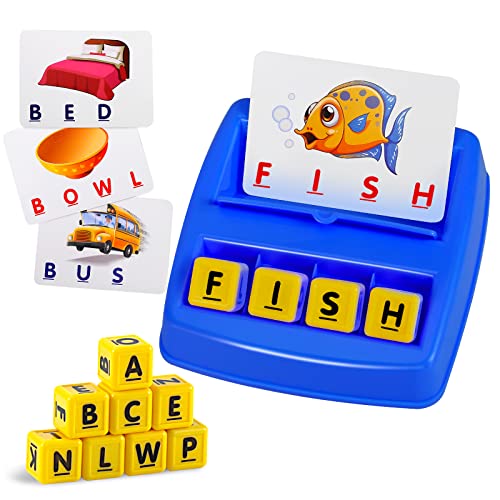
Letter recognition, phonemic awareness, and simple word building are central to kindergarten readiness. Look for games that connect sounds to letters in playful, multisensory ways. For a broader approach, explore educational toys for 5-6 year olds that complement digital phonics practice with tactile letter play.
2. Number Sense and Early Math
Counting, one-to-one correspondence, simple addition and subtraction, and shape recognition form the backbone of early math. The best math apps present these concepts through stories, puzzles, and hands-on manipulation rather than rote drills.
3. Problem-Solving and Logic
Pattern recognition, sequencing, and simple coding logic are increasingly recognized as foundational skills. Games that encourage trial-and-error thinking without punishing mistakes build resilience and analytical thinking.
4. Fine Motor and Hand-Eye Coordination
Dragging, tapping, tracing, and pinching on a touchscreen help refine the same dexterity that supports handwriting and tool use. This overlaps beautifully with the benefits of fine motor skills toys for 5 year olds, which you can rotate alongside screen-based practice.
5. Creativity and Open-Ended Play
Not every educational game needs a quiz at the end. Open-ended creative apps — digital art, music composition, and story-building — give five-year-olds the freedom to experiment and express themselves, which is just as valuable as structured skill practice.
Types of Educational iPad Games for 5-Year-Olds
Educational iPad games generally fall into a few broad categories. Understanding these helps you build a balanced digital "playlist" rather than defaulting to a single app.
Phonics & Literacy Apps
Letter tracing, sound blending, and simple reading games that mirror early kindergarten curricula. Ideal for building a strong reading foundation.
Math & Logic Puzzles
Number games, pattern puzzles, and logic challenges that make abstract concepts concrete through visual feedback and playful rewards.
Creative & Open-Ended Studios
Art, music, and storytelling apps that encourage imagination without rigid right-or-wrong outcomes. Great for quiet, self-directed time.
Science & Discovery Games
Interactive nature, animals, and simple experiment apps that spark curiosity about the physical and natural world.
Coding & Sequencing Games
Drag-and-drop programming puzzles that teach cause-and-effect thinking and early computational logic in a gentle, age-appropriate way.
Adaptive Learning Platforms
Comprehensive apps that adjust difficulty based on your child's performance, offering a personalized pathway through multiple skill areas.
Comparing Game Categories at a Glance
Use this quick-reference table to match game categories to your child's current interests and developmental needs. Remember that variety is key — rotating between categories keeps engagement high and prevents fatigue with any single format.
| Category | Best For | Key Skills | Typical Session Length |
|---|---|---|---|
| Phonics & Literacy | Pre-readers and early readers | Letter sounds, blending, sight words | 10–15 minutes |
| Math & Logic Puzzles | Children who enjoy patterns and numbers | Counting, shapes, sequencing, simple addition | 10–20 minutes |
| Creative Studios | Imaginative, self-directed learners | Fine motor, color, composition, storytelling | 15–25 minutes |
| Science & Discovery | Curious explorers and animal lovers | Observation, vocabulary, cause-and-effect | 10–15 minutes |
| Coding & Sequencing | Children who like puzzles and rules | Logical thinking, ordering, planning | 10–20 minutes |
| Adaptive Learning Platforms | Families wanting structured progression | Multi-subject, personalized pacing | 15–30 minutes |
What to Look For in an Educational iPad Game
The App Store is crowded, and the "educational" label is applied loosely. When evaluating a game for your five-year-old, prioritize these qualities:
- Curriculum alignment: Does the game target skills your child is actually working on at home or in preschool? Games aligned with early learning standards tend to offer more coherent progression.
- Clear audio instructions: Five-year-olds are often pre-readers. Strong voice-over guidance means they can navigate independently without constant adult help.
- No aggressive monetization: Avoid games that bombard children with upsells or hide core content behind repeated purchase prompts. Look for one-time purchase models or clearly defined subscription tiers.
- Ad-free experience: Especially for this age group, advertisements are distracting and inappropriate. Prioritize apps with no third-party ads.
- Parental controls and progress tracking: The best platforms let you set time limits, review what your child has practiced, and adjust difficulty.
- Positive feedback loops: Look for encouragement that celebrates effort rather than only correct answers. This supports a growth mindset.
If you're also considering a dedicated kids' tablet rather than sharing your iPad, our educational tablet games for 5 year olds guide explores similar criteria in more depth. And for families with younger siblings, the principles in our educational iPad games for 4 year olds guide can help you find titles that work across ages.
Balancing Screen Time with Hands-On Play
Educational iPad games are a supplement, not a substitute, for the rich tapestry of hands-on play that defines early childhood. The American Academy of Pediatrics and similar bodies worldwide generally recommend limiting recreational screen time for five-year-olds to about one hour per day of high-quality content.
In practice, this means treating iPad games as one ingredient in a balanced "play diet." Pair screen sessions with educational toys for 5-6 year olds, outdoor exploration, and creative projects. If your child loves building games on the iPad, for example, follow up with educational building toys for 5 year olds for tactile construction play.
Co-viewing and co-play are also powerful. Sitting alongside your child, asking questions about what they're learning, and connecting game content to real-world experiences dramatically increases the educational value of any app.
Practical Screen-Time Tips for Families
- Set a visual timer: Five-year-olds respond well to concrete cues. A sand timer or a simple countdown app helps them anticipate transitions.
- Create a "playlist" approach: Rotate between two or three apps rather than letting your child app-hop endlessly.
- End on a high note: Stop while the experience is still positive, rather than waiting for a meltdown when the timer goes off.
- Connect to offline play: If a game focuses on animals, follow up with a nature walk or a zoo visit. If it's about shapes, break out the pattern blocks.
- Review together: Ask your child what they learned or what was tricky. This simple conversation reinforces retention.
Safety and Privacy Considerations
Child-directed apps are subject to stricter privacy regulations in many regions, but it's still essential to review each app's practices. Before downloading a new game, check for:
- A clear, readable privacy policy that explains what data (if any) is collected.
- No requirement for a child to create an account or provide personal information.
- No external links that could lead a child out of the app without a parental gate.
- Transparent information about in-app purchases and how they are protected.
On the iPad itself, use Screen Time settings to restrict in-app purchases, disable app installation, and set content and privacy restrictions appropriate for a five-year-old. These built-in tools are your first line of defense.
A Simple Framework for Evaluating Any Game
When you're considering a new educational iPad game, run it through this quick checklist:
- Play it yourself first. Spend five minutes exploring the app. Is the interface intuitive? Are the instructions clear? Does it feel respectful of a child's intelligence?
- Check the skill focus. What specifically does the game teach? Can you articulate it in one sentence? If not, the educational value may be thin.
- Observe your child. Do they seem genuinely engaged and challenged, or are they simply tapping through animations? Look for signs of active thinking.
- Assess the feedback loop. Does the game celebrate effort and progress, or only correct answers? Does it offer hints and scaffolding when a child struggles?
- Review the monetization model. Is the experience respectful, or does it constantly nudge toward purchases?
This framework is similar to the one we recommend for educational iPad games for 3 year olds, with the expectation that five-year-olds can handle slightly more complex interfaces and longer session lengths.
Integrating iPad Games with a Broader Learning Ecosystem
Educational iPad games work best as part of a rich, varied learning environment. Think of them as one tool among many. A well-rounded week for a five-year-old might include:
- Hands-on educational games for 4-5 year olds that build social and turn-taking skills.
- Phonics practice through both apps and physical fine motor skills toys for 5 year olds like lacing cards and play dough.
- Outdoor play that develops gross motor skills and connects to science concepts learned on-screen.
- Quiet creative time with art supplies, building blocks, or educational toys for 5-6 year olds.
When digital and physical learning reinforce each other, children build deeper, more durable understanding. A game about shapes becomes more meaningful when followed by pattern-block play; a story-building app becomes richer when paired with physical storytelling props.
A Sample Weekly Rhythm
Here's an example of how families might weave iPad games into a balanced week without letting screens dominate:
- Monday & Wednesday: 15 minutes of phonics app practice, followed by a hands-on letter game.
- Tuesday & Thursday: 15 minutes of math puzzles, paired with counting games using physical objects.
- Friday: Creative app time — digital art or music — as a wind-down activity.
- Weekends: Screen-free outdoor exploration and family board games.
This rhythm is illustrative, not prescriptive. Every family's needs differ. The principle is simply that iPad games occupy a defined, intentional place rather than becoming default entertainment.
When to Be Cautious About iPad Games
Educational iPad games are not universally beneficial in every context. Consider alternatives or additional support when:
- Your child becomes distressed or dysregulated when screen time ends.
- Screen use is displacing sleep, physical activity, or face-to-face social interaction.
- Your child has developmental or sensory sensitivities that make fast-paced or visually intense games overwhelming.
- The "educational" content feels like a thin veneer over repetitive tapping with little real learning.
In these cases, consult your pediatrician or a child development specialist. Educational apps are tools, not treatments, and they should always serve your child's wellbeing rather than work against it.
Final Thoughts: Making iPad Games a Positive Force
For a five-year-old, the right educational iPad game can spark curiosity, reinforce foundational skills, and provide a sense of mastery — all while feeling like play. The key is thoughtful selection, intentional limits, and active parental engagement.
Start small. Choose one or two high-quality games that match your child's current interests and developmental stage. Play them together initially, then gradually step back as your child gains independence. Rotate in new titles as skills grow, and always keep the broader world of hands-on play, outdoor exploration, and social connection at the center of your child's learning life.
If you're looking for complementary screen-free activities, our guides to educational toys for 4-5 year olds and educational games for 4-5 year olds offer many ideas that pair beautifully with digital learning. And if you're curious how the landscape shifts as children grow, our educational iPad games for 6 year olds guide provides a natural next step.
Frequently Asked Questions
What should I look for in an educational iPad game for a 5-year-old?
Focus on games that align with early learning standards, offer a genuine balance of fun and skill-building, include parental controls, avoid aggressive monetization, and provide clear audio instructions suitable for pre-readers. Play the game yourself first to assess whether it respects your child's intelligence and offers meaningful learning rather than repetitive tapping.
How much screen time is appropriate for a 5-year-old?
Most pediatric guidelines recommend limiting recreational screen time to about one hour per day for children aged 5, with a focus on high-quality educational content and active co-viewing whenever possible. Treat iPad games as one ingredient in a balanced "play diet" that includes hands-on toys, outdoor activity, and social interaction.
Are educational iPad games safe for 5-year-olds?
Most reputable educational games are designed with child safety in mind, featuring ad-free experiences, no in-app purchases behind paywalls, and no external links. Always review an app's privacy policy and parental controls before downloading, and use the iPad's built-in Screen Time settings to restrict purchases and app installation.
Can iPad games replace hands-on educational toys?
No. Educational iPad games are a supplement, not a substitute, for hands-on play. Physical toys — building blocks, puzzles, art supplies, and sensory materials — offer tactile feedback and whole-body engagement that screens cannot replicate. Use iPad games to reinforce concepts introduced through physical play, not to replace it.
What if my child gets upset when screen time ends?
Transitions can be difficult at this age. Use visual timers, give a two-minute warning before the session ends, and establish a consistent routine so your child knows what to expect. If distress becomes frequent or intense, it may be a sign to reduce screen time or consult a child development specialist. The goal is for screens to be a positive, bounded part of the day.
Ready to Build a Thoughtful Digital Playlist?
Explore our hand-picked selection of educational toys and games that complement screen-based learning. From phonics manipulatives to math puzzles, find the perfect balance for your five-year-old's developing mind.