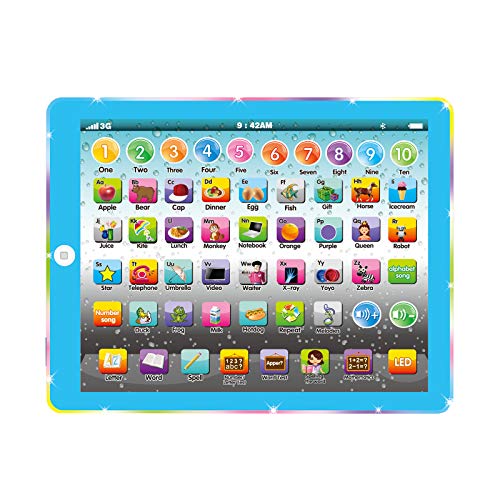
Educational Tablet Games for 5 Year Olds: A Parent's Guide
Your complete guide to choosing safe, engaging, and developmentally appropriate tablet games that help your 5-year-old learn, grow, and have fun.
🧠 Why This Guide Matters: At age five, children are on the cusp of formal schooling. Their brains are primed for literacy, numeracy, and creative problem-solving. A well-chosen tablet game can reinforce these skills in a playful, low-pressure environment — but only if parents know what to look for. This guide breaks down everything you need to make a confident, informed decision.
Why 5-Year-Olds Learn Differently on Tablets
Five-year-olds are transitioning from purely sensory play to more structured learning. They can follow multi-step instructions, recognize letters and numbers, and begin to understand cause-and-effect logic. Tablet games designed for this age group should harness these emerging abilities rather than overwhelm them.
Unlike passive video content, interactive educational games require active participation — tapping, dragging, drawing, and solving. This active engagement is what makes tablets a powerful learning tool when used correctly. The key is selecting games that are appropriately challenging and free from distracting ads or manipulative design.
What to Look for in a Tablet Game for a 5-Year-Old
Before diving into specific recommendations, let's establish the criteria that separate quality educational games from disposable entertainment. Use these benchmarks to evaluate any app you encounter.
1. Developmental Appropriateness
The best games align with what five-year-olds are developmentally ready to learn. Look for content that reinforces letter recognition, phonics, early counting, simple addition and subtraction, shape and pattern recognition, and spatial reasoning. Games that push too far ahead (e.g., multiplication or complex reading comprehension) can frustrate rather than educate.
2. Active Learning Mechanics
A game that simply asks a child to tap the correct answer repeatedly is testing, not teaching. The strongest educational games incorporate scaffolding — building difficulty gradually, offering helpful hints, and providing clear feedback that explains why an answer is correct or incorrect.
3. Ad-Free and Safe Environments
Ads interrupt learning flow and can expose children to inappropriate content. Reputable educational games for this age group typically operate on a subscription or one-time purchase model, ensuring the child's experience is uninterrupted. Always verify the app's privacy policy and whether it collects personal data.
4. Balanced Screen Time
Even the best educational game should be part of a balanced media diet. Pediatric guidelines generally recommend no more than one hour of high-quality screen time per day for children aged 2–5. Choose games that have natural stopping points and avoid those designed to keep children playing indefinitely through reward loops.
💡 Quick Checklist: Is This Game Right for My 5-Year-Old?
- Does it teach a specific skill (literacy, numeracy, logic, creativity)?
- Is the interface simple enough for a non-reader to navigate independently?
- Are there no third-party advertisements?
- Does it offer positive, constructive feedback?
- Can my child stop playing without a meltdown or pressure to continue?
Types of Educational Tablet Games for 5-Year-Olds
Educational tablet games fall into several broad categories, each serving a different developmental purpose. Many high-quality apps blend multiple types, but understanding these categories helps you identify gaps in your child's learning toolkit.
Literacy and Phonics Games
These games focus on letter recognition, letter-sound correspondence, rhyming, and early word building. For a five-year-old, the most effective literacy apps combine visual reinforcement with audio — for example, showing the letter "B" while saying the sound and displaying a picture of a ball. Look for games that progress from letter identification to blending sounds into simple words.
Math and Number Games
At five, children should be developing one-to-one correspondence (counting objects), number recognition, and an understanding of "more than" and "less than." Math games that use visual manipulatives — like counting blocks or dragging numbers to match quantities — are far more effective than those that rely solely on symbolic drills.
Logic and Problem-Solving Games
Simple puzzles, pattern completion, and sequencing games build critical thinking skills. These games often feel like pure entertainment to children — arranging shapes to complete a picture or figuring out which object comes next in a sequence — while simultaneously developing executive function and reasoning.
Creativity and Open-Ended Play
Not all educational games have a "right answer." Drawing apps, music-making tools, and open-ended building games encourage self-expression and fine motor development. These are particularly valuable because they allow children to direct their own play, fostering independence and imagination.
Coding and STEM Foundations
A growing category of games introduces five-year-olds to basic coding concepts — sequencing, loops, and conditional logic — through visual, block-based interfaces. These games rarely use the word "coding"; instead, they present puzzles where the child arranges commands to guide a character through a maze, naturally building computational thinking skills.
How to Evaluate Game Quality: A Tier-Based Approach
Not all educational games are created equal. We categorize them into three broad tiers based on their design quality, educational depth, and safety standards. This framework helps you prioritize which games to explore first.
| Tier | Characteristics | Best For |
|---|---|---|
| Essential Tier | Solid educational content, simple interface, minimal distractions. May lack adaptive difficulty or deep engagement. | Introducing a new skill or reinforcing classroom learning |
| Balanced Tier | Strong educational foundation combined with engaging gameplay, adaptive difficulty, and thoughtful feedback. Usually ad-free with clear parental controls. | Regular supplementary learning at home |
| Top-Tier | Exceptional design, evidence-informed curriculum, deep engagement, robust parent dashboards, and strong safety and privacy practices. Often subscription-based. | Families seeking a comprehensive, long-term learning companion |
When evaluating a game, consider where it falls on this spectrum. An essential-tier game might perfectly serve your child's current need for letter practice, while a top-tier game could provide a complete early-learning curriculum. The key is matching the game's strengths to your child's specific needs and your family's preferences.
✅ Signs of a High-Quality Game
- Clear learning objectives
- Adaptive difficulty that grows with your child
- Positive, explanatory feedback
- No ads or in-app purchases
- Simple, intuitive navigation for non-readers
- Parental dashboard or progress tracking
❌ Red Flags to Avoid
- Frequent pop-up ads or prompts to purchase
- Reward loops designed to extend play time artificially
- Content that is too advanced or too easy with no adjustment
- Requires reading to navigate (for pre-readers)
- No privacy policy or unclear data practices
- Aggressive timers or pressure mechanics
Balancing Tablet Time with Hands-On Play
Educational tablet games are a valuable supplement to — not a replacement for — hands-on, physical play. Five-year-olds need opportunities to manipulate real objects, engage in pretend play, and interact with caregivers and peers. The most effective approach is to use tablet games as one tool in a diverse play diet.
Consider pairing digital learning with physical activities. If your child enjoys a tablet game about building structures, follow up with a session using educational building toys for 5-year-olds. If they're learning letters on the tablet, reinforce that with magnetic letters on the refrigerator or alphabet puzzles. This multi-modal approach strengthens neural connections and makes learning more memorable.
For families looking to expand their child's learning toolkit beyond tablets, exploring educational toys for 5-6 year-olds provides a natural next step. Similarly, if your child shows interest in logic and strategy, educational games for 4-5 year-olds that involve physical components can complement digital play beautifully.
Setting Up Healthy Tablet Habits for Your 5-Year-Old
The context in which tablet play happens matters as much as the content itself. A few simple practices can transform tablet time from a passive distraction into an active, shared learning experience.
Co-View and Co-Play When Possible
Sitting with your child while they play — asking questions, celebrating successes, and helping them work through challenges — dramatically enhances the educational value. It also gives you real-time insight into what your child is learning and where they might be struggling.
Establish Clear Time Boundaries
Use visual timers or a simple verbal countdown to signal when tablet time is ending. This reduces power struggles and helps children develop self-regulation. A predictable routine — for example, "tablet time is after lunch for 20 minutes" — creates structure without making the tablet feel like a forbidden treat.
Create a Designated Learning Space
Encourage your child to use the tablet in a shared family space rather than alone in their room. This allows you to monitor content and engagement, and it reinforces that tablet time is a family activity rather than an isolating one.
Rotate Between Apps and Activities
Just as you might rotate physical toys to maintain novelty and engagement, rotate tablet apps periodically. This prevents over-reliance on a single game and exposes your child to a wider range of learning experiences. It also gives you the opportunity to reassess whether each app continues to meet your child's developmental needs.
Frequently Asked Questions
Ready to Explore the Best Educational Tablet Games?
Browse our curated selection of highly-rated educational games and apps designed specifically for 5-year-olds. Every option is vetted for safety, educational value, and engagement.
See Recommended Games ↓