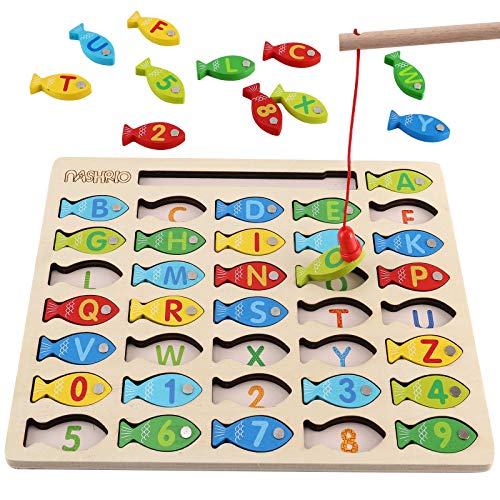
Educational Toys for 2 & 3 Year Olds: The Complete Learning Guide
Your child's brain grows faster between ages 2 and 3 than at almost any other stage. The right educational toys can turn everyday play into powerful learning moments. Here is everything you need to know before you choose.
See Our Top PicksWhy this age window matters: Between two and three years old, toddlers transition from parallel play to cooperative play, their vocabulary explodes from roughly 50 words to several hundred, and their hands become steadily more coordinated. The ideal educational toy at this stage matches that developmental curve — it should be simple enough to avoid frustration, yet open-ended enough to stay interesting for months. This guide breaks down exactly what to look for, which toy types deliver the strongest developmental payoff, and how to avoid common buying mistakes.
What Makes a Toy Truly Educational at This Age?
Not every toy labeled "educational" actually earns that label. For a two or three year old, a toy is educational when it actively invites the child to do something — sort, stack, match, imitate, build, or solve. Passive toys that entertain while the child watches deliver far less developmental value than toys that require hands-on engagement. The strongest picks in this category usually share five traits:
1. Open-Ended Play
The toy works in many ways, so the child keeps discovering new possibilities instead of mastering it once and moving on.
2. Fine Motor Challenge
Grasping, stacking, threading, or pressing builds the hand strength and pincer grip that later support drawing and writing.
3. Language Prompts
Toys that invite naming, storytelling, or caregiver conversation actively expand vocabulary during a critical language window.
4. Problem-Solving Loops
Simple cause-and-effect logic — a shape that only fits one hole, a puzzle piece that only fits one slot — trains early reasoning.
5. Safe, Simple Construction
No small parts, no sharp edges, non-toxic finishes, and a design that survives toddler handling without breaking into hazards.
The Developmental Benefits You Should Expect
When you choose well, the payoff shows up across several areas of development at once. Here is what strong educational toys typically support during the second and third year:
- Cognitive growth: Sorting, matching, and early counting introduce categorization and number sense long before formal math.
- Language explosion: Pretend play and picture-based toys give toddlers reasons to name objects, request actions, and narrate simple stories.
- Fine motor precision: Stacking blocks, peg boards, and threading toys refine grip control and hand-eye coordination.
- Social-emotional skills: Turn-taking games and pretend-play sets teach sharing, empathy, and self-regulation.
- Attention span: Toys with a clear goal but multiple solution paths stretch focus without triggering frustration.
If you want a broader developmental overview across adjacent ages, our guide to educational toys for 12–18 month olds covers the preceding stage, while our educational toys for 3–4 year olds guide shows where this journey leads next.
Toy Tiers: Matching Quality to Your Goals
Educational toys for this age group fall into recognizable quality tiers. Understanding the tiers helps you decide where to invest and where an entry-level option is perfectly sufficient. The table below uses relative positioning only — no specific figures — so it stays useful regardless of when you read it.
| Tier | Best For | What You Can Expect |
|---|---|---|
| Entry-level / Starter Tier | First-time buyers testing a toy category | Simple construction, fewer pieces, basic materials. Solid choice for gauging whether your toddler engages with the category before you commit further. |
| Mid-range / Balanced Tier | Everyday learning and repeated daily play | Durable construction, more thoughtful design, better ergonomics for small hands. Usually the sweet spot for most families. |
| Premium / High-end Tier | Long-term investment and multi-child households | Premium materials, reinforced joints, and designs that hold up across years and siblings. Feature-rich for its class. |
| Top-tier / Professional-grade | Montessori-style home setups and intensive learning goals | Exceptional material quality, carefully sequenced learning progressions, and heirloom-level build. A worthwhile investment when the toy will anchor a home learning routine. |
Top Educational Toy Categories for 2 & 3 Year Olds
Rather than chase a single "best" toy, focus on the categories that consistently deliver developmental value. Each category below covers a distinct learning channel, and a well-rounded play shelf usually includes at least three or four of them.
Stacking & Nesting Toys
The classic first "curriculum" toy. Stacking cups and rings teach size sequencing, cause and effect, and hand-eye coordination. Look for smooth edges and a base wide enough to reduce frustration. Mid-range sets usually offer more stable bases and better-tuned stacking tolerances than entry-level versions.
Shape Sorters & Puzzle Boards
Shape sorters are problem-solving tools in disguise: each piece must be matched, rotated, and inserted. Wooden puzzle boards with chunky knobs are especially good for developing the pincer grip. If you are weighing options, our educational toys for three year olds breakdown covers puzzle progression in more detail.
Building Blocks & First Construction Sets
Large-format building blocks and magnetic tiles introduce spatial reasoning and early engineering thinking. At this age, oversized blocks that are easy to grasp and hard to swallow are the priority. Mid-range sets typically offer more consistent clutch power and smoother edges.
Pretend Play & Role-Play Sets
Toy kitchens, doctor kits, and play food sets fuel language and social-emotional learning. The best pretend-play toys are open-ended enough that a toddler can invent new scenarios. Dress-up elements overlap with our guide to dress-up gifts for 3 year olds.
Sensory & Fine Motor Toys
Peg boards, threading beads with large holes, and textured sensory toys build grip strength and tactile discrimination. Entry-level fine motor toys are perfectly adequate here — the learning happens through repetition, not through premium materials.
Early Language & Counting Toys
Alphabet puzzles, picture card sets, and simple counting toys leverage the vocabulary explosion of this age. Look for clear illustrations and sturdy cardstock or wooden pieces. For adjacent ages, our educational toys for 2–3 year olds guide is the sibling to this page.
Electronic Learning Toys (Selectively)
Electronic learning toys can reinforce letters and sounds, but they should supplement — not replace — hands-on play. Choose models with a clear learning goal and a volume control. Our electronic learning toys for 2 year olds guide covers what actually works at this age.
Wooden & Eco-Friendly Educational Sets
Wooden toys with non-toxic finishes offer durability and a calmer aesthetic that supports focus. Premium wooden sets often feature reinforced joinery and sanded edges that hold up across siblings. See our eco-friendly toys overview for material considerations.
A Practical Buying Checklist
Before you add any educational toy to your cart, run through this short checklist. It catches the most common mistakes buyers make in this category:
- Check the age label against your child, not the toy's marketing. A toy labeled for ages 3+ is a genuine safety threshold, not a suggestion.
- Confirm there are no small parts. Anything that fits inside a toilet-paper tube is a choking hazard for a two year old.
- Prefer open-ended designs. A toy that can be used five different ways beats a toy that does one thing impressively.
- Look for caregiver involvement. The best educational toys at this age invite a parent to narrate, ask questions, and extend the play.
- Verify material safety. Non-toxic paints, BPA-free plastics, and securely attached components are non-negotiable.
- Match the tier to the use case. Starter tier is fine for testing a category; invest in mid-range or premium when the toy will be a daily staple.
Common Mistakes to Avoid
The most frequent buying mistakes in this category are not about quality — they are about mismatch. Avoid these traps:
- Buying too far ahead. A toy designed for a four year old will frustrate a two year old and collect dust. Match the difficulty to the current stage.
- Overloading on electronic features. Lights and sounds are engaging, but they can crowd out the child's own imagination if they dominate the toy.
- Ignoring the play shelf. Rotating toys every couple of weeks keeps them novel and extends their learning value far more than buying more toys.
- Skipping safety verification. Always confirm the age label, check for recalls, and inspect new toys for loose parts before first use.
Frequently Asked Questions
What is the single most important educational toy for a 2 year old?
There is no single winner, but if you could only pick one category, stacking and nesting toys deliver the broadest developmental payoff: size sequencing, fine motor control, cause-and-effect reasoning, and early language (big, small, on top, under). A well-made stacking set stays useful from age two into age three and beyond.
How many educational toys does a 2 or 3 year old actually need?
Far fewer than most homes contain. A rotation of eight to twelve well-chosen toys across four or five categories is more than enough. Fewer toys, rotated regularly, tend to produce deeper and longer play than a crowded shelf.
Are electronic learning toys worth it for this age group?
They can be, in a supporting role. Electronic toys that reinforce letter sounds or counting are useful supplements, but they should not replace hands-on building, pretend play, and fine motor toys. Prioritize toys that require the child to act, not watch.
How do I know if a toy is developmentally appropriate for my child?
Watch for the "just right" challenge zone: the toy should be solvable with effort but not immediately trivial. If your child masters it in seconds, it is too easy; if they abandon it in frustration, it is too hard. The best educational toys sit in between and stay there for months.
When should I move on to toys for older ages?
Follow the child, not the calendar. When your toddler consistently solves the current tier of toys and starts improvising new uses, it is time to introduce the next challenge. Our guides to educational toys for 3–4 year olds and educational toys for 4–5 year olds map out the next stages.
Ready to Choose the Right Toy?
You now have the framework: match the category to your child's current stage, check the safety basics, pick the tier that fits how the toy will be used, and rotate rather than accumulate. Browse our curated picks below to see which educational toys for 2 and 3 year olds made the cut.
View Recommended Educational Toys