
Electronic Learning Toys for 2 Year Olds: A Complete Buyer's Guide
Everything you need to know before choosing an interactive learning toy for your toddler — developmental benefits, safety considerations, and expert recommendations for every tier.
At two years old, children are entering a remarkable phase of brain development. Their vocabulary is expanding rapidly, their fine motor skills are becoming more precise, and their curiosity about cause-and-effect relationships is at an all-time high. Electronic learning toys can play a meaningful role in this stage — but only when they are chosen thoughtfully and matched to a child's developmental readiness.
This guide is designed for parents and gift-givers who already know they want an electronic learning toy for a 2-year-old but need clarity on which features matter, which safety standards to check, and which product tier aligns with their expectations. You will find no guesswork here — just practical, research-informed guidance that helps you make a confident decision.
If you are also exploring broader options for this age group, our guide to educational toys for 2-3 year olds provides a wider view of developmental play categories beyond electronics.
Why Electronic Learning Toys Matter at Age Two
Between ages two and three, children typically experience a language explosion — moving from single words to short phrases and beginning to follow simple instructions. Electronic learning toys that incorporate songs, repetitive phrases, and interactive buttons can reinforce these emerging skills in an engaging way. The key is that the toy should respond to the child's action, not simply entertain passively.
Research in early childhood development consistently highlights the importance of "contingent responsiveness" — when a toy reacts immediately and meaningfully to what a child does. A toy that says "Great job!" when a button is pressed, or that lights up when a shape is correctly placed, helps toddlers understand cause and effect. This feedback loop builds confidence and encourages repeated exploration, which is exactly how young children learn best.
That said, electronic toys should never replace hands-on, open-ended play. The ideal approach is to treat them as one tool in a balanced play diet that includes building toys, pretend play, outdoor activity, and caregiver interaction. For a broader perspective on screen-free and battery-free options, see our collection of educational toys for 12-18 month olds to understand the developmental progression.
Key Features to Evaluate Before You Choose
1. Age-Appropriate Content and Interface
A toy designed for a 2-year-old should have a simple, intuitive interface. Look for large buttons, clear visual cues, and audio that is neither too loud nor too fast. Content should focus on foundational concepts: letter sounds, counting to five or ten, color names, animal sounds, and simple vocabulary. Avoid toys that introduce complex sequences, advanced phonics, or abstract problem-solving — these are better suited for older children and can cause frustration.
2. Safety and Durability Standards
At this age, children explore with their mouths as much as their hands. Ensure the toy is free of small parts that could detach, has smooth edges, and uses non-toxic materials. Battery compartments should be secured with a screw. Volume should be capped at a child-safe level (many premium toys include a volume limiter). Also check for compliance with ASTM F963 (US), EN71 (EU), or equivalent safety standards in your region.
3. Battery Life and Power Management
Toddlers are relentless. A toy that drains batteries in a few hours or lacks an auto-off feature will create frustration for everyone. Mid-range and high-end tier toys typically include automatic shut-off after a period of inactivity, which preserves battery life and prevents accidental activation. Rechargeable batteries are increasingly common in premium models and reduce long-term waste.
4. Expandability and Longevity
Consider whether the toy offers multiple modes or difficulty levels that can grow with your child. A toy that only teaches one skill may be outgrown in weeks. Models with progressive learning modes — starting with cause-and-effect and advancing to simple quizzes — offer better longevity. For children ready to explore digital content, our guide to educational iPad games for 2 year olds covers app-based learning that can complement physical toys.
Understanding Product Tiers
Electronic learning toys for this age group fall into three broad tiers. Rather than focusing on specific figures, it is more useful to understand what each tier typically delivers in terms of build quality, feature depth, and developmental richness.
| Tier | Typical Characteristics | Best For |
|---|---|---|
| Essential Tier | Simple cause-and-effect mechanics, basic vocabulary or sound effects, durable plastic construction, limited modes (often one or two), screw-secured battery compartment, auto-off may be absent. | Families seeking a straightforward first electronic toy with minimal complexity. Good for children who are just beginning to understand button-press interactions. |
| Balanced Tier | Multiple learning modes, progressive difficulty, clearer audio, volume control, auto-off feature, sturdier construction with reinforced joints, often includes lights and music in addition to speech. | The most common sweet spot for most families. Offers a good balance of feature depth, durability, and developmental value without overcomplicating the experience. |
| Top-Tier / Premium | Rich interactive content, adaptive difficulty, high-quality audio (sometimes with volume limiting), rechargeable batteries, premium materials, often includes companion content or expandable modules, designed for extended use across ages. | Parents who want a long-term learning companion and are willing to invest in a toy that can grow with their child through multiple developmental stages. |
It is worth noting that the balanced tier often represents the most sensible entry point for most families. Essential-tier toys are perfectly adequate for introducing the concept of interactive learning, while premium-tier toys justify their higher positioning through extended longevity and richer content. The right choice depends on how intensively the toy will be used and whether you plan to pass it down to siblings.
How to Match an Electronic Learning Toy to Your Child
Every 2-year-old develops at their own pace. Some are already speaking in short sentences, while others are still building their first fifty words. When selecting a toy, observe your child's current interests and abilities:
- If your child loves music and dancing: Prioritize toys with musical modes, rhythm games, and sing-along features. These tap into natural enjoyment while reinforcing language patterns.
- If your child is drawn to letters and books: Look for toys that emphasize letter recognition, phonics sounds, and simple word building. These provide early literacy exposure in a playful format.
- If your child enjoys problem-solving: Choose toys with shape-sorting, matching, or simple quiz modes that reward correct answers with praise or music.
- If your child is highly active: Consider toys that incorporate movement — such as interactive mats, dancing toys, or toys that respond to physical manipulation — rather than stationary tabletop devices.
For children who are ready for more structured digital learning, our overview of educational iPad games for 3 year olds can help you plan the next step. And if you are considering a tablet-based approach, the educational tablet games for 5 year olds guide illustrates how digital learning evolves as children grow.
Safety Checklist for Electronic Learning Toys
Before handing any electronic toy to a 2-year-old, run through this quick safety checklist:
- Battery security: The battery compartment must be secured with a screw that requires a tool to open. Loose batteries are a serious choking and ingestion hazard.
- Small parts: Check for any detachable components — buttons, knobs, covers — that could come loose. Use a small-parts tester if available, or simply test by tugging gently.
- Volume level: Hold the toy at arm's length and activate the loudest sound. If it feels uncomfortably loud to you, it is likely too loud for a toddler's sensitive ears. Many quality toys include a volume limiter or a low-volume default.
- Material safety: Look for BPA-free, phthalate-free, and non-toxic material claims. Reputable manufacturers list these on the packaging or product page.
- Age labeling: Always follow the manufacturer's age recommendation. A toy labeled for 3+ may contain small parts that are unsafe for a 2-year-old, even if the child seems advanced.
- Supervision: No electronic toy replaces adult supervision. Toddlers should always be monitored during play, especially with toys that produce sound or light.
For a deeper dive into material safety across all toy categories, our guide to eco-friendly toys covers sustainable and non-toxic options in detail.
Ready to explore specific products? The recommended section below highlights electronic learning toys for 2-year-olds across all tiers — curated to help you compare features and find the right fit.
Frequently Asked Questions
How much screen time is appropriate for a 2-year-old using electronic learning toys?
Most pediatric health organizations recommend limiting passive screen time for children under 2 and prioritizing interactive, hands-on play. Electronic learning toys without screens — such as talking books, interactive shape sorters, or musical toys — are generally considered more appropriate than screen-based devices for this age group. When screens are involved, aim for short, supervised sessions focused on learning rather than entertainment.
Are electronic learning toys better than traditional toys?
Neither is inherently better — they serve different purposes. Traditional toys like blocks, puzzles, and pretend-play sets support open-ended creativity and problem-solving. Electronic toys excel at providing immediate feedback, language exposure, and structured learning. The best approach is a balanced mix of both, guided by your child's interests and developmental needs.
What should I do if my child loses interest in an electronic toy quickly?
This is common and often indicates that the toy's complexity level is mismatched with the child's readiness. Try introducing it again after a few weeks, or model how to use it during play. If the toy offers multiple modes, start with the simplest one and gradually introduce more advanced features. Rotating toys — putting some away and bringing them out later — is also an effective strategy for maintaining engagement.
Do electronic learning toys require special maintenance?
Basic care includes wiping surfaces with a damp cloth (avoiding battery compartments), checking battery compartments regularly for corrosion, and removing batteries if the toy will not be used for an extended period. Always follow the manufacturer's cleaning instructions — some toys are not designed to be submerged or exposed to moisture.
Can electronic learning toys help with speech delays?
Electronic toys can supplement language exposure, but they are not a substitute for professional intervention. If you have concerns about your child's speech or language development, consult a pediatrician or speech-language pathologist. Toys that model clear speech and encourage imitation can be helpful, but they work best as part of a broader strategy that includes rich caregiver interaction and, when needed, professional support.
Top Electronic Learning Toys for 2 Year Olds
⚠️ AFFILIATE DISCLOSURE: This website contains affiliate links. As an Amazon Associate, we earn from qualifying purchases. If you make a purchase through these links, we may receive a small commission at no additional cost to you. Read our full affiliate policy.

LeapFrog Learning Friends 100 Words Book
Check price on Amazon
JoyCat Kids Learning Tablet, 156-Page Talking Phonics Flash Cards | 40+ Themes, 600+ Words, 100+ Interactive Games, Learn to Read, Screen-Free Preschool Learning Toys Gifts for 2-6 Year Old
Check price on Amazon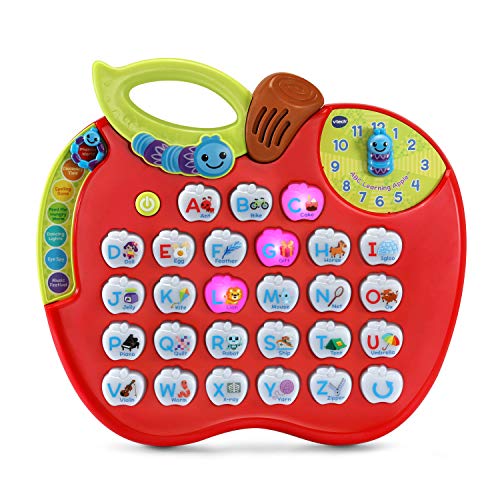
VTech ABC Learning Apple , Red
Check price on Amazon
VTech Little CEO Learning Desk Toddler Activity Center
Check price on Amazon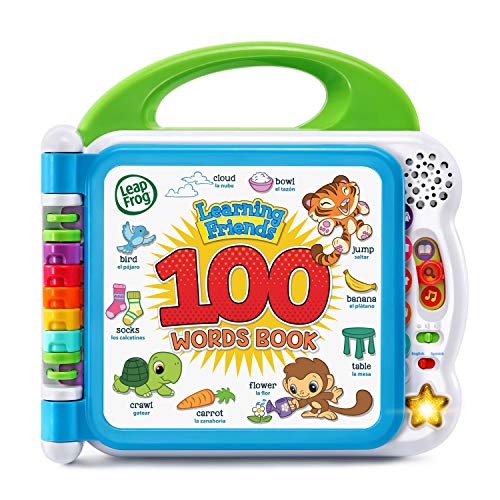
LeapFrog Learning Friends 100 Words Book (Frustration Free Packaging)
Check price on Amazon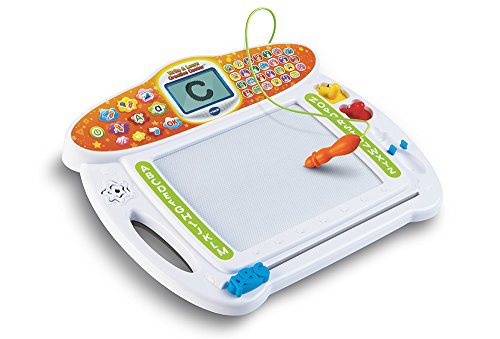
VTech Write and Learn Creative Center, White
Check price on Amazon
VTech Touch and Learn Activity Desk Deluxe (Frustration Free Packaging)
Check price on Amazon