Top Educational Toys for 5 Year Olds: Learning Through Play
Five is a magical age — curiosity is high, language is exploding, and problem-solving skills are taking shape. Discover educational toys that turn this developmental window into hours of joyful, brain-building play.
Explore Top Picks🧠 Why 5-Year-Olds Thrive with the Right Toys: At five, children are transitioning from parallel play to cooperative play, refining fine motor skills, and beginning to grasp early math and literacy concepts. The best educational toys for this age are open-ended, encourage experimentation, and strike a balance between guided learning and free exploration. This guide breaks down the categories, features, and top-tier options so you can choose with confidence.
Why Educational Toys Matter at Age 5
Five-year-olds are in a critical period of cognitive development. According to child development research, the brain reaches about 90% of its adult size by age five, and the neural pathways formed during this time lay the foundation for later academic and social success. Educational toys provide structured, hands-on opportunities to strengthen these pathways.
The right toys at this stage support:
- Early literacy: Letter recognition, phonics, and storytelling toys build pre-reading skills.
- Numeracy: Counting, sorting, and pattern recognition toys introduce foundational math concepts.
- Fine motor control: Manipulating small pieces, drawing, and building refine hand-eye coordination.
- Problem-solving: Puzzles, logic games, and building sets teach persistence and critical thinking.
- Social-emotional growth: Cooperative games and pretend play toys encourage sharing, negotiation, and empathy.
For a broader age-by-age comparison, explore our educational gifts for 4-year-olds and educational toys for 3-year-olds guides to see how the learning focus shifts as children grow.
Top Categories of Educational Toys for 5 Year Olds
We've organized the best options into six core categories. Each section explains what to look for, which tier fits your needs, and which products stand out in their class.
STEM Kits & Science Sets
Hands-on experiments, simple machines, and beginner coding toys that make scientific thinking tangible and fun.
Building Blocks & Magnetic Tiles
Open-ended construction toys that develop spatial reasoning, engineering intuition, and creative confidence.
Reading & Phonics Toys
Letter games, rhyming puzzles, and early reading tools that make literacy playful and low-pressure.
Math Manipulatives & Logic Games
Counting frames, pattern blocks, and strategy games that build number sense and reasoning skills.
Art, Craft & Music Toys
Drawing sets, modeling compounds, and beginner instruments that foster self-expression and fine motor control.
Pretend Play & Role-Play Sets
Play kitchens, doctor kits, and grocery sets that build vocabulary, social skills, and narrative thinking.
STEM & Science Toys: Building Tomorrow's Problem-Solvers
STEM toys for five-year-olds should be simple enough to succeed independently but open-ended enough to invite repeated experimentation. Look for kits with clear visual instructions, durable components, and real-world connections.
What to Look For
- Hands-on components: Gears, magnets, pipettes, and simple circuits that children can manipulate.
- Age-appropriate complexity: 5-year-olds need step-by-step guidance but should feel ownership over the process.
- Safety-first materials: Non-toxic, BPA-free plastics and rounded edges are essential. Check our toy safety guide for a full checklist.
- Replayability: Kits that offer multiple experiments or build variations deliver better long-term engagement.
Tier Breakdown
| Tier | Best For | Typical Features |
|---|---|---|
| Entry-level | First-time STEM exposure | Simple one-step experiments, large pieces, guided instructions |
| Mid-range | Curious kids ready for multi-step projects | Reusable components, 5–10 experiment variations, storage case |
| High-end tier | Kids who love deep-dive exploration | Modular kits, real scientific tools, online extension activities |
For a deeper look at science-focused options, see our guide to STEM toys for 8-year-olds to understand how the category evolves — many product lines scale up seamlessly from age 5 to age 8.
Building & Construction Toys: Spatial Smarts in Action
Construction toys are among the most versatile educational tools for five-year-olds. They combine fine motor practice, spatial reasoning, and creative expression in a single activity. Magnetic tiles and interlocking blocks are particularly effective because they offer immediate feedback — the structure either stands or it doesn't.
Key Benefits
- Spatial reasoning: Children mentally rotate and combine shapes, a skill linked to later math achievement.
- Persistence: Towers fall; kids rebuild. This teaches resilience and iterative thinking.
- Collaboration: Building together encourages negotiation and shared planning.
Top Building Formats for Age 5
- Magnetic tiles: Easy for small hands, visually satisfying, and endlessly expandable. Explore our magnetic tile guide for selection tips.
- Interlocking brick sets: Choose sets with larger pieces and clear pictorial instructions.
- Wooden plank construction: Simple, durable, and excellent for balance and gravity experiments.
✅ Pros of Building Toys
- Open-ended, high replay value
- Grows with the child for years
- Encourages independent and group play
⚠️ Considerations
- Small pieces require supervision for younger siblings
- Storage can become a challenge — see our toy rotation system for help
Literacy & Language Toys: Building Readers and Storytellers
At five, many children are on the cusp of reading. The best literacy toys make letter-sound connections concrete and playful, without turning learning into a chore. Look for toys that combine visual, auditory, and tactile elements.
What Works Best
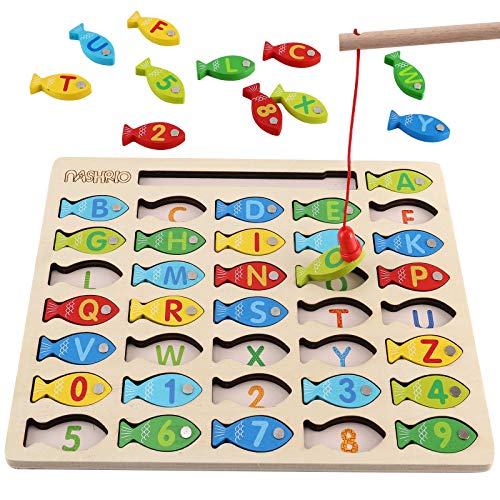
- Alphabet puzzles and matching games: Reinforce letter recognition through touch and sight.
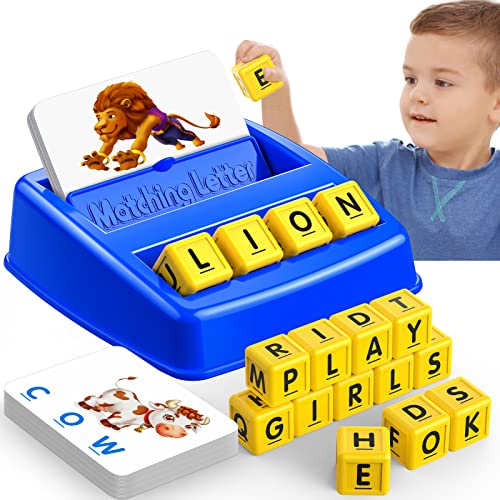
- Rhyming and word-building games: Develop phonological awareness, a key predictor of reading success.
- Storytelling cards and puppets: Encourage narrative thinking and vocabulary expansion.
- Interactive reading pens: Provide audio support for independent exploration (mid-range to high-end tiers).
Pair literacy toys with read-aloud time for the strongest impact. For more language-focused ideas, browse our educational gifts for 3-year-olds — many early literacy tools overlap across ages 3–5.
Math & Logic Toys: Making Numbers Make Sense
Five-year-olds are ready for counting beyond 20, simple addition and subtraction with objects, and pattern recognition. Math toys should be hands-on and visual — abstract worksheets are far less effective at this age.
Recommended Formats
- Ten-frame and counting toys: Build number sense and subitizing skills.
- Pattern blocks and tangrams: Develop geometric intuition and spatial awareness.
- Simple strategy games: Turn-taking games with dice or spinners teach probability and planning.
- Balance scales: Introduce weight and equivalence concepts through play.
For a wider selection of age-appropriate learning tools, visit our educational toys for 3-year-olds page — many math manipulatives scale from age 3 to 6.
Creative Arts & Music Toys: Nurturing Self-Expression
Creativity is not a soft skill — it's a cognitive powerhouse. Art and music toys support fine motor development, emotional regulation, and divergent thinking. For five-year-olds, the emphasis should be on process over product.
Top Creative Toy Types
- Modeling compounds: Strengthen hand muscles and encourage three-dimensional thinking.
- Drawing and painting sets: Develop pencil grip and color mixing understanding.
- Beginner instruments: Rhythm instruments, xylophones, and simple recorders build auditory discrimination and timing.
- Craft kits: Cutting, gluing, and assembling projects build sequencing and planning skills.
Many craft and music toys overlap with gifts for 6-year-olds — check that guide for options that extend the creative journey.
Pretend Play & Role-Play Toys: Social Skills Through Story
Pretend play is serious work for the developing brain. When a child runs a pretend grocery store or fixes a toy patient, they're practicing language, negotiation, empathy, and executive function — all at once.
High-Impact Pretend Play Toys
- Play kitchens and grocery sets: Build vocabulary and sequencing. See our grocery store toys guide for ideas.
- Doctor and vet kits: Encourage nurturing behavior and body awareness.
- Tool sets: Support fine motor development and understanding of how things work. Explore our toy tool sets.
- Dress-up and role-play costumes: Fuel imagination and narrative thinking.
Pretend play also pairs beautifully with toy cash registers and toy groceries for a full market experience.
How to Choose the Right Educational Toy for Your 5-Year-Old
With so many options, it helps to use a simple framework. Evaluate each toy against these five criteria:
- Developmental fit: Does it match the child's current skills and offer a gentle stretch? Avoid toys that are too easy (boring) or too hard (frustrating).
- Open-endedness: Can the toy be used in multiple ways? Open-ended toys tend to have longer play lives.
- Durability: Look for solid build quality and non-toxic materials. Our toy reviews cover durability testing in detail.
- Interest alignment: A dinosaur-obsessed child will engage more deeply with a dinosaur-themed STEM kit than a generic one.
- Storage and tidiness: Consider how the toy will be stored. Our toy shelves guide can help you plan.
For more buying frameworks, see our toy guides hub, which covers age-by-age and category-by-category selection.
Understanding Product Tiers: Entry-Level to High-End
Educational toys span a wide spectrum of quality and features. To help you navigate without focusing on numbers, here's a consistent tier framework used across this guide:
- Entry-level / Starter tier: Simple, durable toys with a narrow feature set. Best for first exposure or casual use.
- Mid-range / Balanced tier: The sweet spot for most families — good build quality, multiple play modes, and strong replay value.
- High-end tier / Top-tier: Premium materials, extended feature sets, and often modular or expandable systems. Best for deeply engaged learners.
Within each tier, some products offer good value for their class — meaning they deliver more capability than typical for that tier. We call these out where relevant.
Ready to Find the Perfect Educational Toy?
Browse our curated selection of top-rated educational toys for 5-year-olds, hand-picked for quality, safety, and learning value.
View Recommended ToysFrequently Asked Questions
What types of educational toys are best for 5-year-olds?
The best educational toys for 5-year-olds combine hands-on manipulation with open-ended play. Top categories include STEM kits, building sets (magnetic tiles, interlocking bricks), literacy games, math manipulatives, creative art supplies, and pretend play sets. Look for toys that match your child's current interests and offer a gentle developmental stretch.
How do I know if a toy is age-appropriate for my 5-year-old?
Check the manufacturer's age recommendation on the packaging, but also consider your child's individual development. A toy labeled "5+" should align with typical fine motor, language, and cognitive skills at that age. Avoid toys with small parts if there are younger siblings in the home, and always supervise new toys initially.
Are expensive educational toys always better?
Not necessarily. Many entry-level and mid-range toys deliver excellent learning value. The key factors are developmental fit, durability, and open-endedness — not tier alone. A simple set of pattern blocks can be just as educational as a high-end electronic kit, depending on how it's used.
How many toys should a 5-year-old have?
Quality matters more than quantity. A curated collection of 10–15 well-chosen toys, rotated regularly, tends to produce deeper engagement than a large pile of toys. Our toy rotation system guide explains how to implement rotation for maximum play value.
Can educational toys replace screen time?
Educational toys offer tactile, open-ended learning that screens cannot replicate. While some digital tools have value, hands-on toys are generally superior for developing fine motor skills, spatial reasoning, and sustained attention. Aim for a balance that prioritizes physical, manipulative play for 5-year-olds.
What safety features should I look for in toys for 5-year-olds?
Look for non-toxic materials (BPA-free, phthalate-free), rounded edges, and secure small parts. Check for age-safety labels and avoid toys with loose magnets or button batteries. Our toy safety guide provides a comprehensive checklist for evaluating toy safety.
Final Thoughts
Choosing educational toys for a 5-year-old is an investment in their development — but it doesn't have to be complicated. Focus on open-ended, durable toys that match your child's interests, and don't underestimate the power of simple building blocks, art supplies, and pretend play props. The best educational toy is the one your child reaches for again and again.
For more age-specific recommendations, explore our top toys for 4-year-olds and toys for 6-7-year-olds guides. And if you're shopping for a birthday or holiday, our toy gift guides hub has you covered.