Swing Set with Slide and Monkey Bars: The Complete Backyard Play Guide
Everything you need to know before choosing a swing set with slide and monkey bars — from safety standards and material choices to age suitability and space planning. Make a confident, well-informed decision for your family's backyard.
Explore Top Picks🔍 Why this guide matters: A swing set with slide and monkey bars is one of the most versatile backyard investments you can make for active, growing children. It combines three beloved play elements — swinging, sliding, and climbing — into a single structure that supports physical development, balance, coordination, and hours of screen-free fun. This guide walks you through every consideration so you can choose with confidence.
What Makes a Swing Set with Slide and Monkey Bars a Smart Choice?
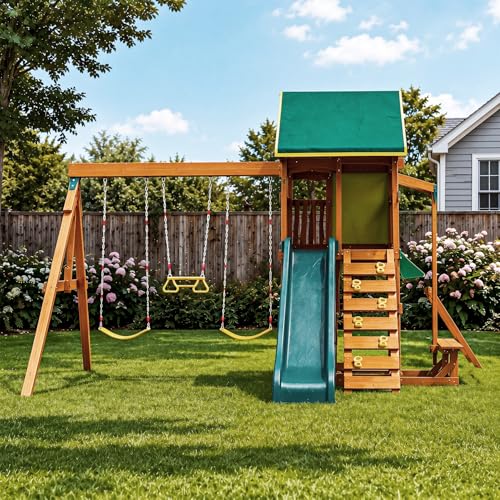
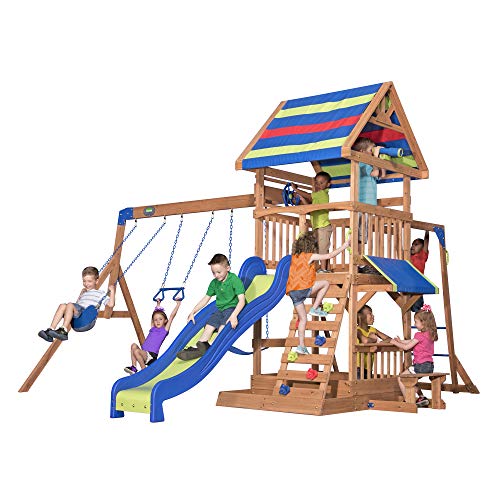
A combined swing set with slide and monkey bars offers more play value per square foot than almost any other outdoor toy. Instead of buying three separate pieces of equipment, you get a unified structure that encourages children to rotate between activities — swinging builds momentum and core strength, sliding provides a thrill and teaches turn-taking, and monkey bars develop upper body strength, grip, and coordination.
This multi-activity design also supports swing set with monkey bars configurations that grow with your child. Younger children can start with the slide and swings while older siblings master the monkey bars, making it a practical choice for families with children of different ages. For households with a smaller yard, consider a swing and slide set for small backyard that still delivers the core play experience without overwhelming the space.
From a developmental standpoint, the combination of swinging, sliding, and hanging engages the vestibular system, builds muscle memory, and encourages risk assessment in a controlled environment. These are the kinds of play experiences that pediatric occupational therapists often recommend for developing motor planning and sensory integration.
Key Features to Evaluate Before You Choose
Not all swing sets with slide and monkey bars are created equal. The differences in construction quality, safety features, and material choice can significantly affect longevity, safety, and overall satisfaction. Here is what to examine closely.
1. Frame Construction and Stability
The frame is the backbone of any swing set. Look for A-frame or multi-leg designs that distribute weight evenly and resist tipping. Reinforced joints, cross-bracing, and ground anchors are essential for stability, especially when multiple children are playing at once. Heavy-duty swing sets often use thicker gauge steel or pressure-treated lumber that can withstand years of active use. For a deeper comparison of frame styles, see our guide to the swing set category.
2. Monkey Bars: Grip, Spacing, and Safety
Monkey bars are the most demanding component in terms of upper body strength. Rung diameter, spacing, and surface texture all matter. Rubberized or textured grips improve hand comfort and reduce slipping. The spacing between rungs should be appropriate for your child's reach — too wide and younger children will struggle; too narrow and the challenge disappears. Many quality sets feature adjustable or multi-height monkey bars so the structure can grow with your child. For families with older children, a swing set with tube slide and monkey bars adds an enclosed sliding experience that older kids often prefer.
3. Slide Design and Materials
Slides are typically made from high-density polyethylene (HDPE), which offers a smooth glide and UV resistance, or from metal with a powder-coated finish. Consider slide length and height relative to your child's age — a gentle slope suits younger children, while a longer, steeper slide provides more excitement for older kids. Some premium sets include a tube slide or a wave slide for added variety. Always check that the slide has raised sides and a safe exit zone.
4. Swing Options
Most sets include at least two swing positions. Belt swings are the classic choice for school-age children, while full-bucket seats suit toddlers and preschoolers. Some sets offer a glider or a trapeze bar as an additional station. The number of swing positions affects how many children can play simultaneously — a swing set with 3 swings and a slide is a good option for larger families or playdates.
5. Safety Standards and Certifications
Reputable manufacturers design their products to meet ASTM F1148 (Standard Consumer Safety Performance Specification for Home Playground Equipment) or EN 71 safety standards. Look for rounded edges, capped bolts, non-slip steps, and clear age recommendations. Ground anchors and a proper fall zone with shock-absorbing surfacing (such as rubber mulch or wood chips) are critical for reducing injury risk. If you are installing on a patio or hard surface, consider swing sets patio models designed with a smaller footprint and appropriate anchoring.
Material Comparison: Wood vs. Metal vs. Composite
The material of your swing set affects appearance, maintenance requirements, and lifespan. Here is a practical breakdown.
| Material | Best For | Durability Notes | Maintenance Level |
|---|---|---|---|
| Wood (Cedar, Pine, Fir) | Families who prefer a natural, classic look and want a customizable structure | Solid build when pressure-treated; can be stained or painted; susceptible to rot if untreated | Annual sealing or staining; periodic hardware checks |
| Steel / Metal | Families in humid or rainy climates who want low-maintenance durability | Powder-coated steel resists rust; heavy-duty construction often outlasts wood | Low — occasional cleaning and bolt tightening |
| Composite / HDPE | Families seeking a balance of low maintenance and weather resistance | UV-resistant, won't splinter or rot; solid structural performance | Very low — wipe down as needed |
Wooden sets offer a traditional aesthetic and can be customized with add-ons like a swing set with slide and climbing wall or a swing set with slide and rock wall for added climbing variety. Metal sets, on the other hand, often provide a more streamlined assembly and lower long-term upkeep. For a broader look at swing set options by age and configuration, explore our swing sets resource hub.
Age Suitability: Which Set Fits Your Child?
Age appropriateness is one of the most important factors in choosing a swing set with slide and monkey bars. Here is a general guide.
- Ages 2–5: Prioritize lower slide heights, bucket swings, and monkey bars with close rung spacing or a low height. A swing sets for 2-5 year olds typically includes these features. Always supervise toddlers and preschoolers.
- Ages 5–8: Children in this range can handle standard monkey bars with proper supervision. Look for sets with adjustable swing heights and a slide that offers a moderate thrill. A swing sets for ages 6 and up is a reliable starting point.
- Ages 8–12: Older children benefit from taller monkey bars, longer slides, and sturdier frames that accommodate more vigorous play. A swing set for ages 8 and up or a swing sets for 8-10 year olds will provide the right challenge level.
- Ages 10–12+: Pre-teens and teens may gravitate toward more complex configurations such as a swing set with slide and teeter totter or a structure with a swing set with tree house and slide that adds imaginative play. For this age group, consider swing sets for 10-12 year olds or swing sets for ages 10 and up.
If you are shopping for a specific age group, our detailed guides for swing sets for kids and swing sets for 8 to 12 year olds break down the best configurations and safety considerations for each stage.
Space Planning and Installation Tips
Before you commit to a swing set with slide and monkey bars, measure your available space carefully. The general rule is to allow a safety zone of at least 6 feet around all sides of the structure, plus additional clearance in front of and behind the swings. For a standard set with two swings, a slide, and a monkey bar section, plan for a footprint of roughly 20 by 20 feet.
Ground surface matters too. Grass is common but can become muddy and worn. Wood chips, rubber mulch, or engineered wood fiber provide better shock absorption and are recommended for fall zones. If you are installing on a hard surface, look for sets with appropriate anchoring systems and consider adding a rubberized play mat beneath the structure.
💡 Pro Tip: Consider Future Add-Ons
If you have the space, choose a set with expansion potential. Many modular wooden sets allow you to add a swing set with slide and rock wall or a swing set with slide and climbing wall later as your children grow. This turns a single purchase into a long-term investment.
Safety Checklist Before and After Installation
- Verify the set meets ASTM F1148 or EN 71 standards.
- Check that all bolts are capped and no sharp edges are exposed.
- Anchor the set securely to the ground per the manufacturer's instructions.
- Maintain a clear fall zone with shock-absorbing surfacing.
- Inspect hardware monthly and tighten any loose bolts.
- Replace worn swing seats, chains, or slide components promptly.
- Supervise younger children, especially on monkey bars.
- Check for rust or wood rot seasonally and treat as needed.
Frequently Asked Questions
Most swing sets with slide and monkey bars are designed for children aged 3 to 12. Monkey bars typically suit children aged 5 and up who have developed sufficient upper body strength and grip. Always check the manufacturer's age recommendation and ensure supervision for younger children.
You generally need a flat area of at least 20 by 20 feet to accommodate the swing set plus the recommended safety zone of 6 feet around all sides. Smaller configurations exist for compact backyards, but always prioritize the safety clearance specified by the manufacturer.
Wooden swing sets offer a classic look, natural aesthetics, and can be stained or painted. Metal swing sets are typically more weather-resistant, require less maintenance, and often have a longer structural lifespan. Both can be durable if properly maintained and assembled.
Look for rounded edges, non-slip rungs on monkey bars, secure anchor systems, sturdy A-frame construction, and compliance with ASTM or EN safety standards. Rubberized grips on monkey bars and proper fall zones with shock-absorbing surfacing are also important.
Regular maintenance includes checking bolts and fasteners monthly, inspecting for rust or wood rot, lubricating swing chains, and tightening hardware. Wooden sets may need annual sealing or staining. Replace worn parts immediately and inspect the structure after severe weather.
Ready to Find the Perfect Swing Set?
Browse our hand-picked selection of swing sets with slide and monkey bars. Every option is evaluated for safety, durability, and play value.
See Recommended Sets