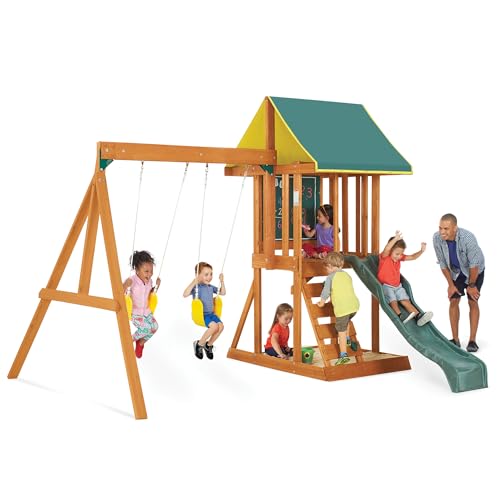
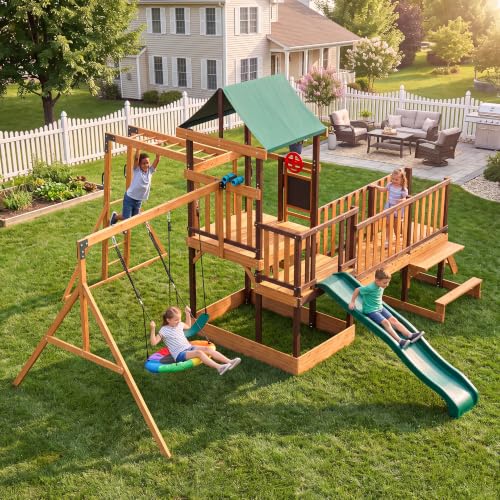
Swing and Slide Set for Small Backyard: The Complete Play Guide
Everything you need to choose a compact swing and slide set that fits tight spaces, keeps kids active, and delivers years of safe outdoor fun.
🌞 Why a compact swing and slide set matters: A small backyard doesn't mean small fun. Modern compact playsets are engineered to pack swings, a slide, and sometimes a climbing wall into footprints that fit courtyards, patios, and narrow gardens. This guide helps you understand the trade-offs, safety essentials, and which tier of set matches your family's play style.
Why Choose a Compact Swing and Slide Set?
Outdoor play is one of the most effective ways to support physical development, balance, and confidence in children. A swing and slide set for small backyard spaces brings the playground home without requiring a sprawling lawn. The appeal is straightforward:
- Space efficiency: Compact frames use A-frame or angled designs that reduce the footprint while keeping swing arcs safe.
- Year-round engagement: Swings and slides offer two distinct play modes, so children rotate between them instead of losing interest.
- Developmental benefits: Swinging builds core strength and coordination; sliding supports balance and risk assessment.
- Social play: Multiple play elements invite siblings and friends to play together in a shared outdoor space.
- Screen-free activity: A playset in the yard encourages spontaneous outdoor time without scheduling.
Key Features to Evaluate Before You Buy
Small-backyard sets vary significantly in construction and layout. Focus on these features to avoid a set that either overwhelms your space or underdelivers on play value.
1. Footprint and Swing Arc Clearance
Measure your available area first, then add clearance for swing motion. As a rule of thumb, allow at least six feet in front of and behind the swing beam so riders don't clip nearby fences, walls, or plants. Many compact sets advertise a reduced footprint, but the swing arc remains the real space consumer. Sets that mount swings perpendicular to a fence or wall often save space.
2. Frame Construction and Material
Wooden frames offer a natural look and can be stained to match your garden, but require periodic sealing. Steel frames with powder-coated finishes resist rust and demand less maintenance. For humid or coastal climates, a weather-resistant coating is essential. Look for reinforced joints and a solid build at the connection points, especially where the slide attaches to the platform.
3. Slide Type and Height
Slide height should match your child's age and comfort level. Younger children do well with a shorter, wider slide with raised sides. Older kids may prefer a longer slide, but in a small yard, slide length is naturally constrained. Some compact sets offer a wavy or tunnel slide for added excitement without extra footprint.
4. Swing Seat Options
Full-bucket seats with high backs are ideal for toddlers who need head and torso support. Belt swings suit older children. Many quality sets include both, or allow you to swap seats as children grow. A two-swing configuration is common in compact sets and works well for siblings close in age.
5. Safety Certifications and Anchoring
Check for compliance with recognized safety standards such as ASTM or EN71. Ground anchoring is non-negotiable for any outdoor playset. Most manufacturers include anchor kits or specify the method. Also review weight limits per swing position and the recommended age range on the label.
Quick Comparison by Tier
| Tier | Best For | Typical Construction | Play Elements |
|---|---|---|---|
| Entry-Level | Toddlers and first-time buyers with very tight spaces | Lightweight metal or resin frame | One swing, short slide |
| Mid-Range | Families with two young children | Wood or powder-coated steel | Two swings, slide, sometimes a small climbing element |
| Premium | Families wanting longevity and multiple play modes | Heavy-duty wood or high-grade steel | Two swings, long slide, climbing wall or lookout platform |
Tiers reflect relative market positioning and build quality, not a specific numeric range.
Understanding the Tier System
Throughout this guide, we use a consistent tier framework to describe relative build quality and feature depth. This avoids arbitrary numbers and helps you compare sets on a level playing field.
- Entry-level: The most compact footprint, essential play elements, and lighter materials. A good fit for toddlers or families testing whether a backyard playset suits their routine.
- Mid-range: The most popular tier for small yards. Better frame rigidity, more comfortable swing seats, and a slide that feels substantial. Often the sweet spot for durability versus space.
- Premium: Heavy-duty construction, reinforced joints, and expanded play features. Mid-range sets typically offer smoother swing mechanisms than entry-level models, while premium sets add long-term weather resilience and more versatile layouts.
When comparing options, ask whether a set's tier matches how intensively it will be used. A family with two active children playing daily will benefit from the reinforced build of a mid-range or premium set, while an entry-level set suits lighter, supervised use.
How to Fit a Playset into a Small Backyard
Placement is as important as product selection. Consider these practical layout strategies:
- Corner placement: Tucking the set into a corner frees the center of the yard for running and other activities.
- Along a fence line: Orienting the swing beam parallel to a fence can reduce the perceived bulk, provided you maintain swing clearance.
- Soft ground cover: Use rubber mulch, wood chips, or a play mat beneath the set to cushion falls. This is especially important on compact sets where the slide exit is close to other structures.
- Sun and shade: Position the slide so it doesn't become uncomfortably hot in direct afternoon sun. A partially shaded spot keeps the slide usable through summer.
- Access path: Leave a clear route to the set so children can reach it without crossing garden beds or obstacles.
If your space is extremely limited, consider a set with a slide that extends sideways rather than straight out, or a design where the slide doubles as a climbing ramp. For families with older children, you may also want to explore swing sets with a slide and climbing wall for added challenge in a similar footprint.
Safety Checklist for Small-Backyard Sets
Compact playsets operate in tighter surroundings, so safety margins deserve extra attention:
- Anchor the frame: Secure the set to the ground using the manufacturer's anchor kit. Never rely on weight alone, especially in windy areas.
- Maintain swing clearance: Keep at least six feet of clear space in the swing path. Remove fragile objects, sharp corners, and low branches from this zone.
- Inspect hardware regularly: Check bolts, S-hooks, and chain links for wear. Re-tighten connections seasonally.
- Supervise young children: Toddlers and preschoolers should always be supervised on swings and slides, particularly on sets with open platforms.
- Respect age and weight limits: Each swing position and the slide have specified limits. Follow them, and avoid overloading the frame with multiple children at once.
- Check surface conditions: After rain, inspect wooden parts for swelling or splintering and metal parts for rust spots.
Maintenance Tips for Long-Term Use
A well-maintained set can serve a family for many years. Simple habits extend its life:
- Apply a child-safe sealant to wooden frames annually, or as recommended by the manufacturer.
- Wipe down metal frames and touch up any chipped coating to prevent rust.
- Store removable swing seats indoors during extreme weather if the manufacturer allows.
- Rake and refresh ground cover under the set each season to maintain fall cushioning.
- Inspect the slide surface for cracks or rough edges, especially on plastic slides exposed to UV light.
Matching the Set to Your Child's Age
The ideal configuration changes as children grow. For toddlers, prioritize a bucket seat and a shorter slide with high sides. For preschoolers, a belt swing plus a gently sloped slide supports growing independence. School-age children benefit from a more robust frame and a slide with a bit more drop. If you're planning for a range of ages, a swing set with three swings and a slide offers flexibility but requires more width; in a small yard, a two-swing mid-range set with a convertible seat is often the more practical compromise.
Families with children at different stages may also consider swing sets for kids that include adjustable seat options, letting you adapt the set as the youngest child grows.
Common Mistakes to Avoid
- Underestimating the swing arc: The single most common regret is buying a set that technically fits the yard but leaves no safe swing clearance.
- Skipping anchoring: An unanchored set can tip, especially when two children swing in unison.
- Ignoring ground cover: Grass alone provides minimal fall protection. Add a dedicated surface under the set.
- Choosing by looks alone: A visually appealing set with thin tubing or weak joints will not hold up to daily use.
- Overlooking assembly requirements: Some sets require significant assembly time and two adults. Check the manual and plan accordingly.
Frequently Asked Questions
What is the smallest practical footprint for a swing and slide set?
Many compact sets fit within roughly eight to ten feet of width and six to eight feet of depth, but the swing arc dictates the real requirement. Always add clearance in front of and behind the swing beam beyond the frame dimensions.
Can I put a swing and slide set on a patio or concrete surface?
It is possible with a freestanding set that uses weighted bases or anchors, but concrete offers no fall cushioning. A dedicated play surface or a set placed on grass with added ground cover is safer for active swinging and sliding.
How many swings can fit in a small backyard?
Two swings is the most common configuration for compact sets. Three-swing sets exist but demand more width. For very tight spaces, a single swing with a slide is a practical starting point.
Do wooden or metal frames suit small yards better?
Both work well. Wood blends naturally into gardens and can be stained, while powder-coated steel resists weather with less upkeep. In a small yard, the visual bulk of the frame matters, so choose a design that feels proportionate to the space.
How often should I inspect the set?
Do a quick visual check before each play session and a thorough inspection of bolts, chains, and anchors monthly. Seasonal maintenance, such as sealing wood or touching up metal coatings, keeps the set safe and extends its lifespan.
Ready to Transform Your Small Backyard?
Browse our curated selection of compact swing and slide sets built for tight spaces, then compare features side by side.
Explore Top Picks BelowFinal Thoughts
A swing and slide set for a small backyard is one of the highest-impact outdoor purchases a family can make. The right set turns a modest patch of grass or patio into a daily destination for active, imaginative play. Focus on swing clearance, frame integrity, and age-appropriate seating, and choose a tier that matches your family's usage intensity. With proper anchoring and routine maintenance, a compact playset can deliver years of healthy outdoor activity — no sprawling lawn required.