Swing Sets for Kids: The Complete Backyard Buying Guide
Everything parents need to choose a safe, durable, and age-appropriate swing set — from frame materials and anchor systems to swing seat types, safety clearances, and long-term maintenance.
Why a swing set is more than just backyard fun: Swinging builds core strength, coordination, and balance while giving children a sense of freedom and open-ended outdoor play. But choosing the right swing set for your family involves more than picking a color — frame material, anchoring, age suitability, and safety clearances all matter. This guide walks you through every decision point so you can buy with confidence.
Types of Swing Sets for Kids
Swing sets come in several configurations, each suited to different yard sizes, age groups, and play styles. Understanding the main categories helps you narrow down options quickly.
Classic A-Frame Swing Sets
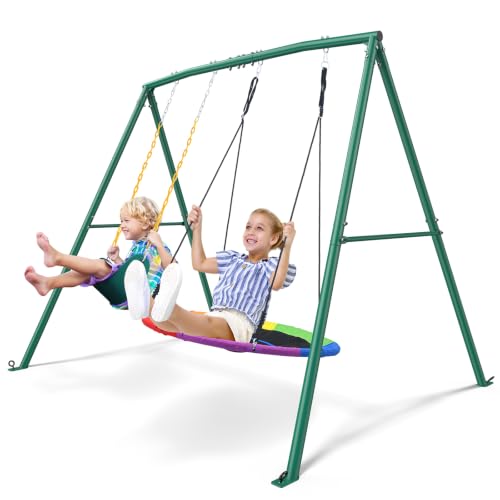
The traditional A-frame is the most recognizable design — two triangular supports connected by a top beam. These sets are straightforward to assemble, easy to relocate before anchoring, and typically support two to three swing positions. They are an excellent entry-level choice for families who want simple, reliable swinging without a large footprint. If you want a broader overview of configurations, explore the full range of swing sets.
Swing Sets with Slides and Climbing Features
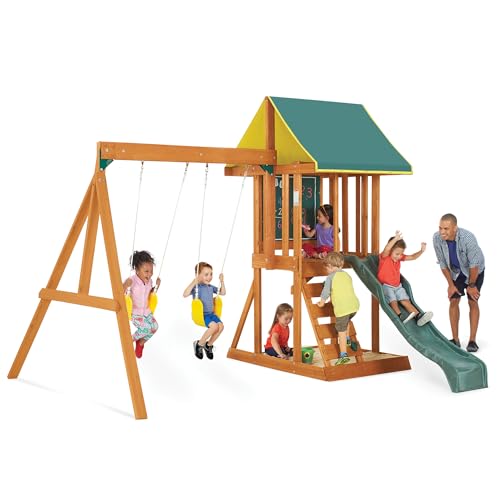
Playset-style swing sets combine swinging with a slide, climbing wall, monkey bars, or teeter-totter. These multi-activity sets keep children engaged longer and support physical development across multiple skill areas. Popular configurations include the swing set with slide and climbing wall and the swing set with monkey bars. For families who want maximum variety, a swing set with three swings and a slide offers room for siblings and friends to play together.
Toddler and Preschool Swing Sets
Sets designed for younger children feature lower beam heights, full-bucket seats with high backs, and often a shorter slide. These safety-focused designs suit ages 2 to 5 and are ideal for first-time swingers. See dedicated recommendations for swing sets for 2–5 year olds.
Swing Sets for Older Kids and Teens
As children grow, they need taller frames and higher weight capacities. Sets built for ages 8 and up often use reinforced steel or heavy-duty wood and may include belt swings, trapeze bars, and taller slides. Browse options for swing sets for 8–10 year olds and swing sets for 10–12 year olds to match growing children.
Specialty and Space-Saving Designs
Small yards and patios benefit from compact or patio-style swing sets that anchor differently and occupy less ground area. A swing and slide set for a small backyard is a smart solution when space is limited. For public or heavy-use settings, commercial-grade playground equipment offers the durability and safety certifications required for shared use.
Wood vs. Metal: Choosing the Right Frame Material
Frame material affects durability, maintenance, appearance, and long-term performance. Both wood and metal can be safe and sturdy — the right choice depends on your climate, maintenance preferences, and design goals.
| Factor | Wooden Swing Sets | Metal Swing Sets |
|---|---|---|
| Appearance | Natural, warm look; can be stained or painted to match your yard | Sleek, uniform finish; often powder-coated in bright colors |
| Maintenance | Requires periodic sealing, staining, and inspection for rot or insects | Minimal upkeep; rust-proof finishes resist weather with occasional cleaning |
| Weather Resistance | Depends on wood treatment; cedar and treated pine perform well when sealed | High-grade steel with weather-resistant coating handles harsh climates well |
| Weight Capacity | Varies by beam thickness and joint design; heavy-duty timber frames support multiple children | Often higher capacity per swing position; reinforced steel beams are very strong |
| Customization | Easy to add accessories, repaint, or modify | Limited customization; modular add-ons depend on brand |
| Best For | Families who enjoy DIY projects and want a natural aesthetic | Families who prefer low-maintenance, long-lasting outdoor gear |
Understanding Swing Set Tiers
Swing sets fall into distinct quality and feature tiers. Rather than focusing on numbers, think about how each tier aligns with your family's usage intensity, climate, and long-term plans.
Starter Tier
Basic A-frame sets with a single beam and two swing positions. Good value for its tier, ideal for younger children or occasional use. Frames are lighter, so proper anchoring is essential.
Balanced Tier
Sets with added features like a slide, glider, or trapeze bar. Solid build quality and competitive within its class. A popular choice for growing families who want variety without overbuilding.
High-End Tier
Heavy-duty timber or reinforced steel frames with multiple play stations, climbing walls, and premium materials. Built for daily use and designed as a long-term investment in backyard play.
Commercial-Grade
Engineered for parks, schools, and shared spaces. Meets stricter safety certifications, supports heavier use, and uses professional-grade hardware throughout.
Swing Set Safety: What Every Parent Should Know
Safety is the single most important factor when choosing and installing a swing set. Follow these guidelines to reduce risk and extend the life of your set.
- Ground clearance: Maintain at least 6 feet of clear space on all sides of the set, and twice the height of the top beam in front of and behind the swings.
- Anchoring: Always anchor the set using ground stakes, concrete footings, or the manufacturer's anchor kit. Anchoring prevents tipping and lifting during vigorous play.
- Level ground: Install on level, shock-absorbing surfaces such as wood chips, rubber mulch, or sand. Avoid concrete and asphalt beneath swings.
- Age-appropriate seats: Use full-bucket seats with high backs for toddlers, and belt or flat seats for older children. Never let a child stand on a swing seat.
- Regular inspection: Check bolts, chains, ropes, and S-hooks monthly. Replace worn parts immediately and inspect after storms.
- Supervision: Supervise young children at all times and establish clear rules about safe swinging — one child per swing, no twisting chains, and no jumping off mid-swing.
For age-specific guidance, see our breakdowns of swing sets for ages 6 and up and swing sets for ages 10 and up, which cover height and capacity considerations in more detail.
Popular Configurations Compared
Different configurations suit different play styles. Use this comparison to match features with your children's ages and interests.
| Configuration | Best For | Key Features |
|---|---|---|
| Slide & Rock Wall | Active climbers ages 4–8 | Climbing challenge plus sliding fun; builds grip strength and coordination |
| Slide & Teeter-Totter | Siblings and playdates | Social play opportunities; encourages cooperative turn-taking |
| Tree House & Slide | Imaginative play ages 5–10 | Elevated platform for pretend play; combines active and creative modes |
| Tube Slide & Monkey Bars | Older kids ages 6–12 | High-energy challenges; upper-body strength development |
| Patio Swing Sets | Small spaces and patios | Compact footprint; easy to position near the house |
Installation and Setup Tips
Proper installation is just as important as the set you choose. A few hours of careful preparation can prevent years of frustration.
- Choose the right location: Pick a spot with partial shade and good drainage. Avoid areas near fences, trees, or overhead power lines.
- Prepare the ground: Remove rocks and roots. Level the surface before assembly. Consider installing a shock-absorbing play surface beneath the swing zone.
- Follow the manual: Assemble with the manufacturer's instructions and use all provided hardware. Do not substitute bolts or chains.
- Anchor before first use: Never let children play on an unanchored set. Ground anchors or concrete footings should be installed before the first swing.
- Check torque and tightness: Re-tighten all bolts after the first week of use, then monthly thereafter. Wood expands and contracts with weather, so seasonal checks are essential.
If you are still deciding between an all-in-one playset and a dedicated swinging frame, our guide to swing sets covers the trade-offs in greater depth. Families planning for older children may also want to review swing sets for 8 to 12 year olds for capacity and height recommendations.
Ready to Choose Your Family's Swing Set?
Explore our curated selection of swing sets for kids — organized by age, configuration, and frame material — to find the perfect fit for your backyard.
Frequently Asked Questions
What age are swing sets for kids suitable for?
Most standard swing sets are designed for children ages 3 to 10, though toddler-specific models accommodate ages 2 to 5 with bucket seats and lower platforms. Models for older children and teens support ages 8 to 12 and beyond with higher weight capacities and taller frames.
Wood or metal swing set: which is better?
Wooden swing sets offer a natural look and easier customization but require periodic maintenance against rot and insects. Metal swing sets are generally more weather-resistant, require less upkeep, and often support higher weight capacities. Both are safe when properly anchored and assembled.
How much space do I need for a backyard swing set?
Allow a clearance zone of at least 6 feet around all sides of the swing set and twice the height of the swing beam in front of and behind the swings. Compact models fit small yards, while full playsets with slides and climbing walls need a larger footprint.
Are swing sets safe for toddlers?
Yes, when age-appropriate. Toddlers should use full-bucket seats with high backs, and the swing set should have a lower beam height. Always supervise young children, anchor the set securely, and follow the manufacturer's age and weight guidelines.
How do I anchor a swing set safely?
Use ground anchors, concrete footings, or stake kits recommended by the manufacturer. Anchoring prevents tipping and lifting during vigorous swinging. Install on level ground and maintain the anchoring system seasonally.