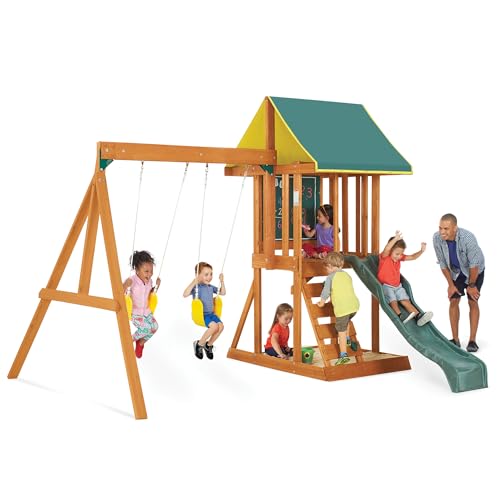
Swing Set with Slide and Rock Wall: The Complete Backyard Play Guide
Everything parents need to know before choosing a swing set that combines swinging, sliding, and climbing into one exciting backyard adventure.
EXPLORE RECOMMENDED PLAYSETSWhy a swing set with slide and rock wall? A playset that brings together three classic outdoor activities gives children a complete backyard destination. Swinging builds coordination and balance, sliding delivers thrills and vestibular input, and a rock wall challenges motor planning and confidence. This guide walks you through the key decisions — configuration, materials, safety, and setup — so you can choose a playset that fits your family, your yard, and your children's ages.
What Makes This Playset Combination So Popular?
The appeal of a swing set with slide and rock wall lies in variety. Instead of a single activity, children rotate between swinging, climbing, and sliding — which keeps them engaged far longer than any single-feature structure. For families with children of different ages, this combination is especially practical: younger children can enjoy the slide and low swings while older siblings tackle the rock wall. If you are comparing broader options, our overview of swing sets with slide and climbing wall explains how a rock wall differs from a traditional climbing wall and which suits different age groups.
Three Activities in One
Swinging, sliding, and climbing in a single footprint means more play value per square foot of backyard space.
Age Versatility
A rock wall with secured handholds suits older children, while a gentle slide and bucket swings serve younger siblings.
Active Development
Climbing builds grip strength and problem-solving, swinging supports balance and coordination, and sliding adds sensory fun.
Key Features to Evaluate Before You Choose
Not every playset with these three components is built the same. Focus on the following elements during your research.
Rock Wall Design
Look for a rock wall with textured, securely mounted climbing holds and a moderate incline appropriate for the intended age range. The best designs include a safety handrail or rope and a clearly defined landing area. A wall that is too steep or too tall for your youngest child can become a hazard rather than a source of fun. Many parents pair a rock wall with other climbing features; our guide to swing sets with slide and monkey bars covers additional upper-body play options.
Slide Type and Height
Slides range from short toddler-friendly chutes to longer wavy slides that suit older children. Consider the exit height: a slide that is too high for a young child requires close supervision. The slide should have raised sides and a smooth, seamless run-out at the bottom. If you have very young children, our guide to the swing and slide set for small backyard spaces shows compact configurations.
Swing Configuration
Bucket swings with full support are ideal for toddlers, while belt swings and trapeze bars suit older children. Check how many swing positions the frame supports and whether the beam is rated for the weight of multiple children at once. Families with more children often prefer a wider beam; our overview of a swing set with three swings and a slide compares multi-swing layouts.
Frame Material and Construction
Cedar and redwood offer natural rot resistance and a classic look. High-grade steel frames deliver heavy-duty strength and long-term durability. Composite materials balance weather resistance with low maintenance. Whatever the material, check for reinforced joints, galvanized hardware, and a rust-proof finish on metal components.
| Tier | Best For | Typical Characteristics |
|---|---|---|
| Entry-level | Smaller yards, first playset | Compact footprint, fewer accessories, lighter frame |
| Mid-range | Families with mixed ages | Wider beam, multiple swing positions, taller slide |
| Premium | Long-term backyard investment | Solid wood or heavy-duty steel, reinforced rock wall, extended slide |
Matching the Playset to Your Child's Age
Age suitability is the single most important safety factor. Most swing sets with a slide and rock wall are marketed for ages 3 to 10, but the specific features matter.
- Ages 2–3: Prioritize bucket swings, a low slide, and a rock wall with very easy holds or skip the wall entirely. See swing sets for 2-5 year olds.
- Ages 4–6: A moderate rock wall and a standard belt swing become appropriate with supervision. Compare swing sets for ages 6 and up.
- Ages 6–8: Children can handle taller rock walls, longer slides, and trapeze bars. Review swing sets for 8-10 year olds.
- Ages 8–12: Look for reinforced frames and higher weight ratings. Explore swing sets for 8 to 12 year olds.
Safety Checklist for Rock Wall Playsets
Outdoor play equipment requires thoughtful placement and ongoing maintenance. Use this checklist as your reference.
- Safety zone: Maintain at least 6 feet of clearance on all sides, and more in front of and behind the swings.
- Surface: Install shock-absorbing surfacing such as rubber mulch, wood chips, or a poured rubber mat beneath the entire structure.
- Anchoring: Secure the frame to the ground according to the manufacturer's instructions, especially on windy sites.
- Hardware checks: Inspect bolts, brackets, and swing chains regularly for looseness or wear.
- Rock wall holds: Verify that climbing holds are tightly fastened and free of cracks or sharp edges.
- Supervision: Young children should always be supervised, particularly on the rock wall and slide.
Space Planning and Backyard Setup
Measure your yard carefully before ordering. A typical swing set with slide and rock wall needs a footprint of roughly 12 by 14 feet, plus the safety zone. Slopes can complicate installation; most manufacturers recommend a relatively level surface. Consider access to the slide and rock wall — children should be able to reach the climbing side without crossing in front of moving swings. If space is tight, a compact configuration such as a swing set with slide and teeter totter can maximize play value in a smaller area. For larger yards, a swing set with tree house and slide adds imaginative play.
Materials Compared: Wood, Steel, and Composite
Wood playsets offer a natural aesthetic and can be stained or sealed over time. Cedar and redwood resist rot naturally; pressure-treated pine is common in entry-level and mid-range models. Steel frames provide heavy-duty strength and are often powder-coated for weather resistance, making them a strong choice for families with older, more energetic children. Composite playsets combine wood-like appearance with low maintenance. Whichever material you choose, confirm that the hardware is galvanized or stainless steel and that the finish is rated for outdoor exposure.
Assembly and Long-Term Maintenance
Most playsets ship in multiple boxes and require several hours of assembly, often best handled by two adults. Pre-drill holes, organize hardware by step, and follow the manual closely — especially for the rock wall and slide attachments. After assembly, schedule seasonal inspections: tighten hardware, check for splintering or rust, replace worn swing seats, and re-level the structure if the ground shifts. A well-maintained playset can serve a family for many years, making it a worthwhile long-term investment.
Ready to compare options? Browse our curated selection of playsets below, or explore the full swing set with slide and rock wall category for more detailed comparisons. You can also review related configurations such as a swing set with slide and monkey bars or a swing set with tube slide and monkey bars to find the best fit for your backyard.
Frequently Asked Questions
What age is a swing set with slide and rock wall suitable for?
Most models are designed for children aged 3 to 10 years, but suitability depends on the specific swing types, slide height, and rock wall difficulty. Always follow the manufacturer's age recommendation and supervise younger children closely.
What materials are best for a swing set with rock wall?
Cedar and redwood offer natural rot resistance, high-grade steel provides heavy-duty strength, and composite materials combine weather resistance with low maintenance. Check for galvanized or stainless steel hardware regardless of the frame material.
How much space do I need for a swing set with slide and rock wall?
Plan for a footprint of roughly 12 by 14 feet plus a 6-foot safety zone on all sides. Additional clearance is needed in front of and behind the swings.
Is a rock wall safe for young children?
Rock walls are safe when installed with secured handholds, proper fall surfacing, and adult supervision. Choose a wall with a moderate incline and easy-to-grip holds for younger children.
How often should I inspect the playset?
Perform a visual check before each play session and a thorough inspection at the start of every season. Tighten hardware, check for rust or splintering, and replace worn swing seats or climbing holds as needed.