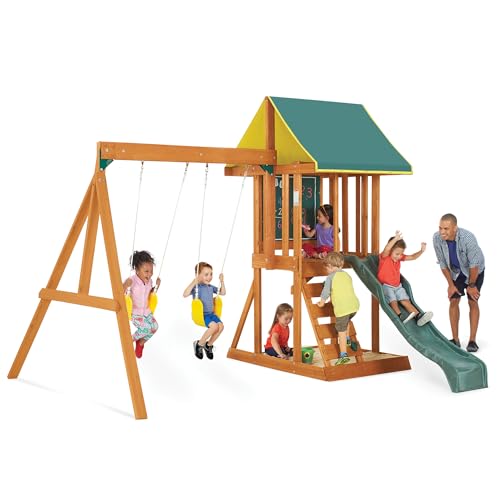
What to Look For in a Swing Set with Slide and Climbing Wall
When shoppers reach this stage of research, they already know they want a multi-activity set. The real questions are about structure, safety, and longevity. A swing set with a slide and climbing wall is only as good as its frame, its hardware, and the quality of its play surfaces. The best models share several traits: a reinforced main beam that resists sway, anchored legs, smooth-finished climb holds, and a slide with molded side rails that keep children centered.
Pay close attention to how the climbing wall connects to the main frame. A solid connection prevents wobble, which is the most common complaint on entry-level combination sets. Mid-range and top-tier models typically use thicker lumber or heavier-gauge steel, through-bolted joints instead of brackets alone, and wider climbing panels with graduated handholds that suit younger climbers.
Materials: Wood, Metal, or Hybrid Construction
The three main construction families behave very differently over time. Understanding them helps you pick the right set for your climate and your backyard's surface.
Wooden Sets
Cedar and redwood resist rot naturally, while pressure-treated pine delivers solid structure at a lower tier. Wooden frames absorb vibration well and blend into garden landscapes. Look for sanded, sealed surfaces and hardware rated for outdoor use.
Metal Sets
Powder-coated steel offers a rust-proof finish and a long service life with minimal upkeep. Metal frames are often lighter and easier to reposition. Check weld quality and tube thickness — heavier gauge steel reduces flex during swinging.
Hybrid Designs
Some sets combine a steel swing beam with wooden platforms and climbing panels. These balanced-tier options aim to marry the stability of steel with the warmth and workability of timber.
Matching the Set to Your Child's Age
Age is the single most important filter. A set that is perfect for a four-year-old can feel restrictive to a nine-year-old, and vice versa. The climbing wall in particular changes the safety equation: the taller and steeper the wall, the older the recommended user should be.
- Preschool years: Look for low climbing walls with closely spaced holds and a shallow-angle slide. Shorter swing chains and bucket-style seats suit younger riders. A compact unit in this category is often the better fit than a large tower set.
- School age: Children in this range can handle taller climbing panels, steeper slides, and standard belt or flat swing seats. This is where most combination sets hit their sweet spot.
- Older children: Heavier-duty frames and higher weight capacities matter more than extra features. Some families step up to a swing set with monkey bars or a structure rated for bigger kids as children grow.
If you are shopping for a narrower age band, our overviews of swing sets for younger children and swing sets for older kids break down the differences in more detail.
Safety Features That Matter Most
Combination sets introduce more movement paths than a simple swing frame, so stability is the top priority. Ground anchors or concrete footings are effectively mandatory. Beyond anchoring, here is what separates a safe set from a risky one:
- Reinforced joints: Through-bolts and steel brackets at the beam-to-leg connections prevent the wobble that leads to tip-overs.
- Non-slip climbing holds: Molded plastic holds with textured surfaces and rounded edges protect small hands during climbing.
- Slide side rails: A slide with raised, smooth side walls keeps riders centered and reduces the risk of falls.
- Fall zone surfacing: Wood chips, rubber mulch, or poured rubber beneath the structure absorbs impact. Never install over bare concrete.
- Age and weight labels: Always follow the manufacturer's stated limits. The climbing wall panel often has its own capacity rating.
Safety reminder: Supervise young children during play, especially on the climbing wall. Check bolts and anchors at the start of each season and after heavy storms. A quick monthly inspection of swing chains and slide fasteners prevents most avoidable accidents.
Comparing Quality Tiers
Rather than anchoring a recommendation to any single number, it helps to think in relative tiers. The table below describes how entry-level, mid-range, and premium combination sets typically differ. Use it to align your expectations with what each tier realistically delivers.
| Tier | Typical Construction | Best For |
|---|---|---|
| Entry-level | Lighter timber or thin-gauge steel, bracket-based joints, shorter climbing panels | Younger children and smaller yards; occasional use |
| Mid-range | Thicker lumber or heavier steel, through-bolted joints, textured climbing holds | Families with mixed-age children; daily play |
| Premium | High-grade cedar or commercial-grade steel, reinforced beams, wide climbing walls with graduated holds | Heavy daily use and growing families; long-term investment |
Mid-range models usually strike the best balance for most households: the joints are noticeably more rigid than entry-level sets, and the climbing panels are wide enough for two children to take turns safely. Premium sets make sense when the structure will be the centerpiece of the backyard for a decade or more.
Setup, Space, and Placement Tips
Measure before you buy. A typical set with a slide and climbing wall needs roughly a 10 by 12 foot footprint, plus a clearance zone of at least six feet on all sides — and more in front of and behind the swing beam to accommodate the arc of the seats. Place the slide so it faces away from fences and hard landscaping, and position the climbing wall where you can see it clearly from the house.
Level ground matters more than perfect grass. A slight slope is workable with proper footings, but a steep grade requires retaining work before installation. If your yard is tight, a compact structure designed for smaller spaces may be the smarter choice — see our guide to a swing and slide set for a small backyard for layout ideas.
Maintenance Habits That Extend Lifespan
- Re-tighten bolts and check anchors at the start of each season.
- Sand and re-seal wooden surfaces every year or two, depending on climate.
- Wipe down metal frames and touch up any chipped coating to prevent rust.
- Inspect swing chains and slide fasteners monthly during peak use.
- Rake and top up impact-absorbing surfacing beneath the structure.
Frequently Asked Questions
What age is a swing set with slide and climbing wall suitable for?
Most combination sets are designed for children aged 3 to 12. Always check the manufacturer's age recommendation and safety labels, as climbing wall difficulty and slide height vary between models.
What is the safest material for a swing set with climbing wall?
Cedar and redwood are popular wooden options thanks to natural weather resistance, while heavy-duty powder-coated steel offers long-term durability. Whichever material you choose, look for rust-proof finishes, reinforced joints, and smooth, splinter-free surfaces.
How much space do I need for a swing set with slide and climbing wall?
Plan for a safety zone of at least six feet around the entire structure. A typical combination set needs a footprint of roughly 10 by 12 feet, plus clearance for the swing arc in front of and behind the beam.
Do I need to anchor a swing set to the ground?
Yes. Ground anchors or concrete footings are strongly recommended for any swing set with a climbing wall, as the added climbing motion creates extra lateral force. Anchoring prevents tipping and keeps the structure stable during active play.
Ready to compare options? Browse our related guides on swing sets with a rock wall, models with monkey bars, and three-swing configurations to find the layout that suits your backyard.