Ride On Trucks for 2 Year Olds: The Complete Parent Guide
Everything you need to know before choosing a first ride-on truck for your toddler — safety features, developmental benefits, and the key differences between models.
Explore Top Picks🚚 Why a ride-on truck for a 2-year-old? At two years old, toddlers are developing balance, coordination, and a sense of independence. A ride-on truck channels that energy into active play while building gross motor skills. But with so many models on the market, choosing the right one requires understanding the features that actually matter for this specific age group.
Why Ride-On Trucks Are Great for 2-Year-Olds
Two-year-olds are at a fascinating developmental stage. They want to move, explore, and assert their independence — but their balance and coordination are still catching up. A ride-on truck offers a safe way to practice all of these skills without the risk of a bicycle or the complexity of a scooter.
Pediatric physical therapists often recommend ride-on toys for this age because they encourage:
- Gross motor development: Pushing, steering, and navigating obstacles build leg strength and core stability.
- Hand-eye coordination: Steering a truck around corners teaches spatial awareness and motor planning.
- Confidence and independence: Mastering a ride-on vehicle gives toddlers a sense of accomplishment that carries into other areas of development.
- Imaginative play: Trucks specifically lend themselves to pretend play — hauling "cargo," delivering packages, or helping with yard work.
Compared to other ride-on toys, trucks offer a distinct advantage: their wider stance and lower center of gravity tend to be more stable for beginners. If you are also exploring alternatives, our ride-on toys for 2-year-olds guide covers the full spectrum of riding options. For a broader look at the category, see ride-ons for 2-year-olds.
Types of Ride-On Trucks for Toddlers
Not all ride-on trucks are the same. For a 2-year-old, the three main categories are push trucks, foot-to-floor trucks, and electric ride-on trucks. Each serves a different purpose and suits a different level of mobility.
Push Trucks
These are the simplest and often the first ride-on a toddler uses. The child sits while a parent pushes from behind using a handle. Some models double as a walker for younger toddlers. Push trucks are excellent for children who are not yet able to propel themselves independently and still need an adult's guidance.
Foot-to-Floor Trucks
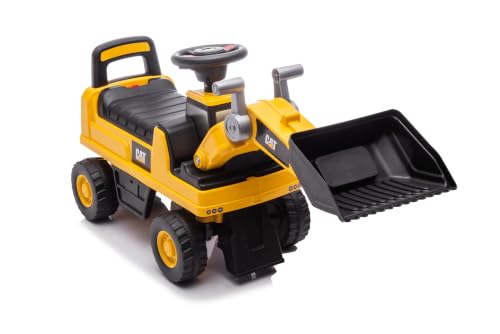
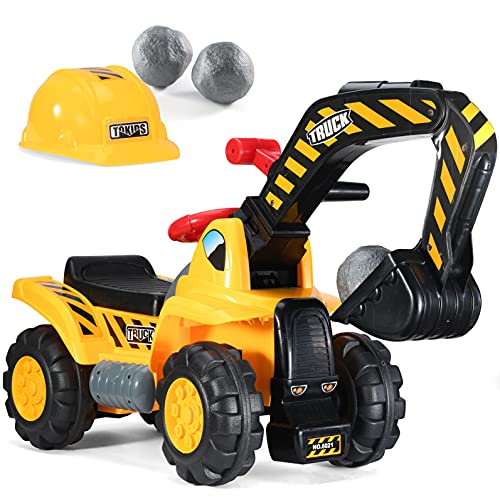
These are the classic toddler ride-ons. The child sits on the seat and propels forward by pushing with their feet — similar to a Flintstones car. There is no motor and no pedals. This is often the ideal first step for a 2-year-old because it puts them in full control of speed and direction. Many parents find this type the sweet spot for the age; explore our dedicated ride on trucks for 2 year olds collection for specific models.
Electric Ride-On Trucks
Battery-powered ride-on trucks are increasingly popular, and some models are designed specifically for younger toddlers with parental remote control. For a 2-year-old, a remote-controlled ride-on offers a safe introduction to motorized vehicles. If you are considering this route, review our guide to ride-on cars with parental remote control and the remote control ride-on car overview. You may also find our ride-on toys hub useful for comparing categories side by side.
Key Features to Look For
When evaluating a ride-on truck for a 2-year-old, focus on these characteristics. They matter far more than cosmetic details or branded characters.
🪑 Seat Height & Fit
The child's feet should touch the floor comfortably when seated. If the seat is too high, they cannot propel themselves safely.
⚖️ Stability & Center of Gravity
A wide wheelbase and low seat reduce tipping risk. Look for models described as stable or tip-resistant.
🎯 Steering Lock
Some trucks limit steering range to prevent sharp turns that can cause rollovers. This is a valuable safety feature for beginners.
🛞 Wheel Type
Wide, textured wheels roll more smoothly on uneven surfaces. Indoor/outdoor wheels offer versatility.
🧱 Durable Construction
Toddlers are not gentle. Reinforced plastic or solid build quality ensures the truck survives daily use.
🔧 Assembly & Maintenance
Simpler assembly means fewer loose parts over time. Check that wheels and handles are securely attached.
Tier Comparison: Which Level Fits Your Child?
Ride-on trucks fall into roughly four market tiers. Rather than focusing on specific figures, use this framework to understand what each tier generally delivers. The right choice depends on how much use you expect, where the truck will be ridden, and how long you want it to last.
| Tier | Best For | Typical Characteristics | Durability Outlook |
|---|---|---|---|
| Essential Tier | First-time riders, indoor use, occasional play | Lightweight plastic, simple steering, basic seat | Adequate for gentle use; may show wear with heavy outdoor play |
| Balanced Tier | Daily use, mixed indoor/outdoor, growing toddlers | Reinforced plastic, wider wheels, storage compartment | Solid build quality; handles regular use well |
| Premium Tier | Frequent outdoor use, multiple children, long-term ownership | Heavy-duty construction, premium materials, advanced steering | Durable construction designed to last through siblings |
| Top-Tier | Serious riders, families wanting a flagship model | Flagship features, near-commercial-grade build, premium finishes | Long-term investment with exceptional longevity |
A mid-range model typically offers a noticeably smoother steering mechanism and more durable wheels than an entry-level option, which translates to a better experience for a toddler who rides daily. For families with multiple young children, stepping up to a premium or top-tier model often proves to be a worthwhile investment over time.
If you are comparing across vehicle types, our ride-on toys for 2-3 year olds guide provides additional context. Parents planning ahead may also appreciate the ride-on toys for 3-year-olds and ride-on toys 3 year olds pages.
Safety Checklist for Parents
Safety should be the first filter you apply when choosing any ride-on toy for a 2-year-old. Use this checklist before and after purchase.
- Age labeling: Always follow the manufacturer's age recommendation. A truck labeled for 3+ is not appropriate for a 2-year-old, regardless of the child's size.
- Weight capacity: Check that your child's weight falls comfortably within the stated limit — not at the very edge.
- No sharp edges or pinch points: Run your hands over the truck's surfaces, especially around moving parts and the steering column.
- Small parts check: Ensure there are no detachable small components that could become a choking hazard.
- Helmet use: Even on a foot-to-floor truck, a properly fitted toddler helmet is strongly recommended, especially outdoors.
- Supervision: A 2-year-old should never ride unsupervised. Stay within arm's reach, particularly near driveways, slopes, or water.
- Surface awareness: Use on flat, smooth surfaces. Avoid steep inclines, stairs, and uneven terrain that could cause tipping.
- Regular inspection: Check screws, wheels, and handles monthly for loosening or wear.
If you are considering a motorized option, the safety considerations shift significantly. Our ride-on toys for 1-year-olds guide is a useful reference for the youngest riders, while the ride-on toys for 5-year-olds page covers the next stage of independence.
Top Recommendations
Below is a curated selection of the best ride-on trucks for 2-year-olds, organized by riding style. Each recommendation balances safety, durability, and developmental appropriateness for the toddler age group.
Best Foot-to-Floor Truck for Beginners
For a first ride-on, a foot-to-floor truck with a low seat and wide wheelbase is the safest and most intuitive choice. Look for models with a storage compartment under the seat — toddlers love hauling their treasures, and it adds an imaginative play dimension. Models in the balanced tier tend to hit the sweet spot here, with reinforced construction that survives daily indoor and patio use.
Best Push Truck with Parent Handle
If your toddler is still building confidence, a push truck with a removable parent handle lets you guide them while they learn. Choose one where the handle adjusts to your height to avoid back strain. These are particularly useful for neighborhood walks and park visits.
Best Remote-Controlled Ride-On Truck
For families ready to introduce a motorized truck, a remote-controlled model with a parental override is essential. The parent retains control of speed and direction while the child learns steering. Review our remote control truck guide and the ride-on toy car with remote control comparison for detailed feature breakdowns. Also consider the remote control monster truck if you want a more rugged option for outdoor terrain.
Best for Outdoor Terrain
If your primary riding surface is grass, gravel, or uneven pavement, prioritize large, textured wheels and a wider stance. Premium-tier trucks in this category typically feature heavy-duty axles and weather-resistant coatings. For inspiration on active outdoor play, see our ride-on toys for 2-3 year olds roundup.
Ready to Choose the Perfect Ride-On Truck?
Browse our hand-picked selection of toddler-safe ride-on trucks below. Every model is evaluated for stability, durability, and age-appropriateness.
View Top Picks ↓Frequently Asked Questions
Is a ride-on truck safe for a 2-year-old?
Yes, provided you choose a model rated for the child's age and weight, and you supervise at all times. Foot-to-floor trucks with a low seat and wide wheelbase are the safest starting point. Avoid motorized models unless they include a parental remote control and are explicitly rated for age 2. Always follow the manufacturer's age label.
Should I choose a foot-to-floor or electric ride-on truck?
For most 2-year-olds, foot-to-floor is the better first choice. It builds coordination and gives the child full control at a natural pace. Electric ride-on trucks are suitable if they have a parental remote and are rated for the age group. Our ride-on car with parental remote control guide explains what to look for in a motorized model.
What features should I prioritize for a 2-year-old?
Prioritize: a seat low enough for feet to touch the floor, a wide and stable wheelbase, limited steering range, no sharp edges, and durable construction. Storage compartments and cup holders are nice extras but not essential. For a full feature breakdown, revisit the key features section above.
How long will a ride-on truck last for a 2-year-old?
Most children use a foot-to-floor truck from age 2 until roughly age 4 or 5, depending on growth and interest. A premium-tier model with durable construction may last through multiple siblings. Entry-level models are often outgrown or worn out sooner, which is why many families choose a balanced or premium tier for daily use.
Do I need a helmet for ride-on truck play?
A helmet is strongly recommended, especially for outdoor use and for any motorized model. Even a slow-moving foot-to-floor truck can tip on uneven surfaces. Choose a properly fitted toddler helmet that meets safety standards. For more on active toddler play, see our ride-ons for 2-year-olds resource.
Can a 2-year-old use a ride-on truck indoors?
Yes, foot-to-floor trucks work well indoors on hard floors and low-pile carpet. Look for models with smooth-rolling wheels that won't scratch flooring. Avoid motorized models indoors. Indoor use is a good way to build confidence before moving outside.