
Ride On Toys for 1 Year Olds: A Complete Guide to Safe First Wheels
Your one-year-old is ready to explore the world on wheels. This guide explains which ride-on toys suit a first birthday, which safety features matter most, and how to choose a model that grows with your child — without the guesswork.
Explore Top PicksWhy ride-on toys matter at age one: At twelve months, most children are pulling up, cruising furniture, and testing balance. A well-chosen ride-on toy supports gross motor development, builds confidence, and turns floor time into active play. The right first ride-on is stable, low to the ground, and simple enough for a toddler to climb on and off independently — with a parent close by.
What Makes a Great First Ride-On Toy?
A one-year-old does not need speed or complex controls. What they need is stability, a low seat height, and a design that rewards effort. The best first ride-on toys fall into a few clear categories: push-and-ride walkers, foot-to-floor riders, and compact balance trikes. Each serves a slightly different developmental stage.
Before comparing models, understand the two broad families. Ride-on toys cover the full spectrum from simple foot-powered riders to battery-powered vehicles. For a one-year-old, the entry point is almost always a foot-to-floor design or a parent-controlled push toy. If you are already planning ahead, our ride-on toys for 2 year olds guide shows how the category evolves as balance improves.
Key Features to Look For
Low Seat Height
The seat should let your child place both feet flat on the floor. This makes stopping natural and reduces tipping risk.
Wide Wheelbase
A broad base with four wheels distributes weight evenly. Three-wheel designs are acceptable when the rear axle is wide.
Parent Push Handle
A removable handle lets you steer and steady the toy during early use, then detach it as confidence grows.
No Small Parts
Everything should be sealed or too large to swallow. Check for removable caps, loose screws, and detachable decals.
Grip and Textured Surfaces
Textured footrests and a contoured seat help small bodies stay put during movement.
Quiet, Smooth Wheels
Indoor-friendly wheels with soft tread reduce noise and protect floors while giving a smooth ride.
Ride-On Toy Tiers for One-Year-Olds
To keep comparisons meaningful, we group first ride-ons into three quality tiers. These descriptors reflect build quality, material choice, and feature depth — not a specific figure. Use them to match a toy to your family's needs.
| Tier | Best For | Typical Characteristics |
|---|---|---|
| Essential Tier | First introduction to wheels | Simple foot-to-floor design, lightweight frame, basic four-wheel stability, minimal assembly. |
| Balanced Tier | Growth through 18–24 months | Removable parent handle, adjustable seat, textured wheels, sturdier frame, convertible modes. |
| Premium Tier | Long-term use and multi-child families | Reinforced construction, premium materials, smooth-rolling wheels, convertible trike-to-rider design, storage. |
An entry-level model is often the smartest first step because a one-year-old's interests shift quickly. A balanced-tier option adds a parent handle and adjustable seating, which extends usable life. Premium-tier models justify themselves when you plan to pass the toy down to a sibling or use it across multiple years.
Safety First: What Parents Must Check
Essential Safety Checklist
- Age labeling: Choose toys explicitly labeled for 12 months and up. A "1+" label means the design has passed small-parts and stability checks for that age.
- Stability test: Place the toy on a flat floor and push gently at the handle. It should not tip forward or backward easily.
- No pinch points: Check folding mechanisms, wheel wells, and handle joints for gaps that could trap tiny fingers.
- Non-toxic finish: Painted surfaces should be sealed and free of peeling. Look for phthalate-free and BPA-free plastics.
- Supervision: No ride-on toy for a one-year-old is self-supervising. Stay within arm's reach at all times.
- Surface awareness: Use on flat, smooth surfaces. Avoid stairs, slopes, and uneven ground.
If you are considering a battery-powered model later, note that most electric ride-ons carry a minimum age of 3 years. For now, foot-powered designs are the appropriate and safest choice. Our guide to ride-on toys for 3 year olds covers the transition to powered options.
Types of Ride-On Toys That Suit a One-Year-Old
1. Push-and-Ride Walkers
These combine a walking aid with a seated ride. Your child pushes the handle to walk, then flips down a seat to ride. They are excellent for the cruising stage because they serve two developmental purposes. Look for a wide wheelbase and a handle height that suits an adult.
2. Foot-to-Floor Riders
The classic first ride-on: a low seat, four wheels, and a simple steering wheel or handlebar. Your child scoots with their feet. These are the most stable option and the easiest to climb on and off. Many designs include a storage compartment under the seat, which toddlers enjoy.
3. Compact Balance Trikes
A three-wheel design with a low frame and no pedals. Your child walks the trike forward while seated. Balance trikes bridge the gap between a foot-to-floor rider and a pedal trike. Choose one with a wide rear axle and a parent push handle for early use.
4. Rocking Riders
Some ride-ons convert between a rocking mode and a rolling mode. These are useful indoors and offer a gentler introduction to movement. Ensure the rocker base locks securely when switching modes.
For families thinking ahead, the ride-on toys for 2-3 year olds selection shows how these categories expand with pedals and steering.
How to Choose: A Practical Buying Framework
Work through these questions in order. They narrow the field quickly and prevent overbuying.
- Where will it be used? Indoor-only use favors soft wheels and compact frames. Outdoor use on pavement favors durable tread and a wider base.
- Does your child walk yet? If not, prioritize a push-and-ride walker or a parent-handle model. If yes, a foot-to-floor rider is ideal.
- Do you need it to convert? Convertible designs cost more at the balanced and premium tiers but replace two or three separate toys.
- How much storage do you have? Foldable or compact models suit small homes. Measure before ordering.
- Will siblings use it? If yes, a premium-tier model with reinforced construction is a worthwhile long-term investment.
Parents often ask whether to buy a ride-on or a rocking horse first. The answer depends on your child's temperament: rocking toys suit calm, seated play, while ride-ons reward active exploration. Many families own both.
Encouraging Safe, Confident Play
Introduce the toy on a flat, carpeted surface. Let your child explore it without pressure. Demonstrate pushing with feet, then step back. Short sessions of five to ten minutes are plenty at first. Praise effort rather than speed. As balance improves, gradually move to smooth outdoor surfaces.
Rotate the toy out of sight every few days to keep it novel. Toddlers engage more deeply with a toy they haven't seen in a while. This simple rotation habit extends interest and reduces clutter.
Frequently Asked Questions
Is a ride-on toy safe for a 1-year-old?
Yes, when it is age-labeled for 12 months and up, used on flat surfaces, and supervised by an adult within arm's reach. Foot-to-floor designs are the safest first choice.
Should I choose a battery-powered ride-on for a 1-year-old?
No. Most electric ride-ons carry a minimum age of 3 years. At one year, foot-powered designs support development better and carry lower risk.
How long will a first ride-on toy last?
An essential-tier foot-to-floor rider typically suits 12–24 months. A balanced or premium convertible model can remain useful until age 3 or beyond.
Do I need a parent push handle?
It is strongly recommended for early use. A removable handle lets you steady and steer the toy, then detach it as your child gains control.
What surface is best for a first ride-on?
Start indoors on short-pile carpet or a flat play mat. Move to smooth pavement or a flat patio once your child is steady. Avoid slopes, stairs, and gravel.
Best Ride On Toys for 1 Year Olds
⚠️ AFFILIATE DISCLOSURE: This website contains affiliate links. As an Amazon Associate, we earn from qualifying purchases. If you make a purchase through these links, we may receive a small commission at no additional cost to you. Read our full affiliate policy.

Little Tikes Push and Ride Racer – (Amazon Exclusive), 22"L x 10"W x 17"H with screws
Check price on Amazon
Best Ride On Cars CAT Excavator Push Car – Licensed Caterpillar Ride-On Digger Toy for Kids with Rotating Bucket & Under-Seat Storage – Construction Vehicle for Toddlers
Check price on Amazon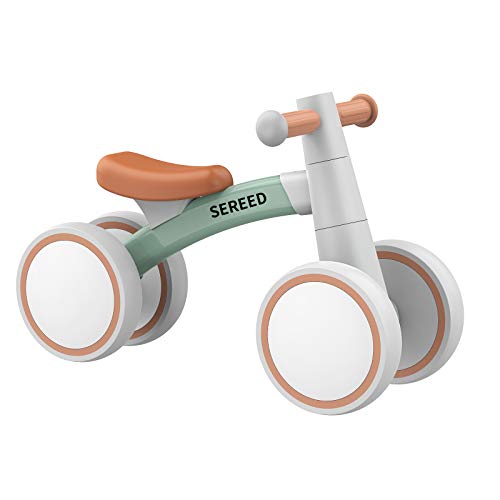
SEREED Baby Balance Bike for 1 Year Old Boy Girl, First Birthday Gift Toy | 12-24 Months Toddler Bike, First Learning Ride on Toys, 4 Silent Wheels Indoor Outdoor Baby Walker, Green
Check price on Amazon
VEVOR Ride On Push Car for Toddlers, Ages 19+ Months, Ride Racer, Sit to Stand Toddler Ride On Toy, Kids Ride On Car with Music Steering, Horn & Under Seat Storage, Ride On Toy for Boys Girls,
Check price on Amazon
John Deere Ride On Toys Sit 'N Scoot Activity Tractor for Kids Ages 18 Months and Up, Green
Check price on Amazon
Best Ride On Cars Mercedes G-Wagon Push Car Pink - Lights & Horn - Ages 1-3 | Plastic Construction, 25 x 12 x 12 in, 8 lb Weight, Under Seat Storage, Tall Backrest, Rear Roll Board, 18-36 Months
Check price on Amazon
Step2 Push Around Buggy Kids Push Car, Ride On Toy, Stroller Substitute, Includes Seat Belt & Horn, Made of Durable Plastic, Max Weight 50 lbs., For Toddlers 1.5-4 Years Old, Pink
Check price on Amazon