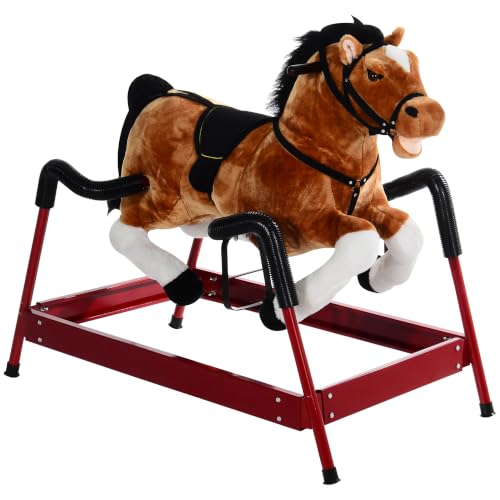
Rocking Horse: The Timeless Ride-On Toy That Grows With Your Child
From classic wooden heirlooms to plush interactive companions, a rocking horse is more than just a toy — it's a developmental tool, a nursery centerpiece, and a source of joy that spans generations. Explore our complete guide to choosing the perfect rocking horse for your family.
Explore Rocking Horse Types🧸 Why a Rocking Horse? Few toys stand the test of time like the rocking horse. Beyond its charming aesthetic, this ride-on toy supports balance, coordination, and core strength while sparking imaginative play. Whether you're outfitting a nursery, searching for a first birthday gift, or looking for a screen-free activity, a rocking horse delivers timeless value. This guide breaks down every consideration — from materials and safety to age suitability and space requirements — so you can choose with confidence.
What Makes a Rocking Horse Special?
A rocking horse is a ride-on toy designed with curved rockers at the base, allowing a child to sway back and forth in a gentle, rhythmic motion. Unlike motorized or battery-powered ride-ons, a rocking horse relies entirely on the child's movement, which makes it an excellent tool for developing gross motor skills, balance, and proprioception. The design dates back centuries, and modern versions range from traditional hand-carved wooden horses to plush, sound-enabled companions.
What sets the rocking horse apart from other ride-on toys is its dual role: it's both a plaything and a piece of decor. Many families pass wooden rocking horses down through generations, and plush models often become a child's comfort object. If you're exploring broader ride-on options for your child, our ride-on toys guide covers everything from scooters to electric cars, while this page focuses specifically on the enduring appeal of the rocking horse.
Types of Rocking Horses: Find Your Perfect Match
Rocking horses come in several distinct styles, each with its own advantages. Understanding these categories helps you match the toy to your child's age, your home's aesthetic, and your long-term goals.
Classic Wooden Rocking Horse
The traditional choice. Handcrafted from solid wood with a curved rocker base, these horses offer durability, a satisfying rocking motion, and timeless charm. Many are designed as heirlooms.
Premium tierPlush Rocking Horse
Soft, cuddly, and often featuring interactive elements like sounds or moving mouths. Plush rocking horses are gentler for younger toddlers and double as a comfort object.
Mid-range tierModern & Minimalist Rocking Horse
Sleek, Scandinavian-inspired designs that blend seamlessly into contemporary nurseries. Often made from bentwood or molded plastic with a focus on clean lines.
Balanced tierInteractive & Musical Rocking Horse
Battery-powered models that play songs, make galloping sounds, or feature moving parts. Great for sensory stimulation, though they require more maintenance.
Feature-rich tierFoldable & Space-Saving Rocking Horse
Designed for apartments and smaller homes. These models collapse or convert into a stationary seat, offering versatility without sacrificing the rocking experience.
Essential tierRocking Horse with Safety Harness
Ideal for younger toddlers (12–24 months). These models include a seat belt, high backrest, and footrests to keep little riders secure during the motion.
Starter tierMaterials & Construction: What to Look For
The material of your rocking horse affects its durability, safety, and visual appeal. Here's a breakdown of the most common options:
| Material | Best For | Key Characteristics |
|---|---|---|
| Solid Wood (Oak, Beech, Pine) | Long-term use & heirloom appeal | Durable construction, classic aesthetic, heavier weight for stability, requires periodic maintenance |
| MDF / Engineered Wood | Decorative use & lighter riders | Smooth finish, consistent shape, lighter than solid wood, more prone to wear over time |
| Plush Fabric over Frame | Toddlers & comfort-focused play | Soft edges, cuddly texture, often machine-washable covers, may include interactive features |
| Molded Plastic | Outdoor use & easy cleaning | Weather-resistant, lightweight, vibrant colors, less traditional aesthetic |
| Bentwood / Plywood | Modern & minimalist nurseries | Sleek curves, lightweight yet strong, often finished with non-toxic paints or stains |
When evaluating construction, pay attention to the rocker base — it should be wide enough to prevent tipping and made from a single piece of material (or securely joined) to avoid wobbling. Joints should be reinforced, and all finishes should be non-toxic and child-safe. If you're considering a wooden model, look for solid hardwood rather than particle board for longevity.
Age Recommendations & Safety Guidelines
Rocking horses are generally suitable for children aged 1 to 5 years, but the specific age depends on the design. Here's a practical breakdown:
- 12–24 months: Choose a plush rocking horse with a high backrest, safety harness, and footrests. The motion should be gentle, and the seat should be low to the ground.
- 2–3 years: Toddlers can transition to wooden rocking horses with handholds and a stable base. Supervise closely and ensure the rocker limits prevent excessive sway.
- 3–5 years: Most children can confidently ride a standard rocking horse. Look for models with a weight capacity that accommodates growing riders.
- 5+ years: Many children outgrow the rocking horse, but larger models or convertible designs can extend the toy's lifespan.
⚠️ Essential Safety Checklist
- Verify the rocking horse meets current safety standards (e.g., ASTM F963, EN 71).
- Check for a wide, stable base that resists tipping even during enthusiastic rocking.
- Ensure all edges are rounded and free from splinters or sharp corners.
- Confirm that paints and finishes are non-toxic and lead-free.
- Use a safety harness for children under 2 or those who cannot sit independently.
- Place the rocking horse on a flat, carpeted, or non-slip surface away from stairs, furniture, and sharp objects.
- Inspect regularly for loose screws, worn joints, or cracked rockers.
Safety doesn't stop at the product itself — proper placement matters. A rocking horse needs roughly a 3-foot by 5-foot clear area to rock safely. For families with limited space, a foldable or compact model is a smart choice. If you're also considering other ride-on options for your toddler, our guide to ride-on toys for 2-year-olds offers additional safety tips and product categories.
Developmental Benefits of Rocking Horse Play
The rocking horse isn't just a charming nursery accessory — it's a developmental powerhouse. Here's what the research and child development experts highlight:
- Gross motor skills: Rocking requires core engagement, leg coordination, and balance — all foundational for walking, running, and jumping.
- Vestibular stimulation: The rhythmic motion activates the vestibular system, which supports spatial awareness and balance.
- Proprioception: Children learn to gauge force and movement as they control the rocking speed and amplitude.
- Imaginative play: A rocking horse becomes a trusty steed, a race car, or a spaceship — fueling creativity and narrative thinking.
- Emotional regulation: The gentle, repetitive motion can be soothing, helping children self-calm during transitions or stress.
- Screen-free engagement: In a world of screens, a rocking horse offers tactile, physical play that builds focus and patience.
If you're curating a screen-free play environment, our screen-free toys guide pairs perfectly with a rocking horse for a well-rounded, developmentally rich toy collection.
How to Choose the Right Rocking Horse
With so many options available, narrowing down your choice can feel overwhelming. Use this decision framework to simplify the process:
If your child is under 2, prioritize a plush model with a safety harness and high backrest. For toddlers aged 2–3, a wooden rocking horse with handholds and a stable base is ideal. Older preschoolers can handle larger, more traditional models.
Measure your available floor area before purchasing. A standard rocking horse needs about 15 square feet of clear space. For apartments or small playrooms, consider a foldable or compact design. Our ride-on toys for 3-year-olds guide includes space-saving recommendations across toy categories.
Wooden rocking horses offer timeless appeal and long-term durability, making them excellent heirlooms. Plush models are softer and often more interactive. Modern minimalist designs suit contemporary nurseries. Choose a material that aligns with your home's style and your child's temperament.
Look for a wide base, rounded edges, non-toxic finishes, and a safety harness if your child is young. Check the weight capacity and ensure the rocker limits are appropriate for your child's size.
Rocking horses span a range of quality tiers. Entry-level models are typically lightweight and best suited for occasional use. Mid-range options offer solid construction and better safety features. Premium and luxury tiers include handcrafted wooden heirlooms and designer plush models with advanced interactive features. Choose a tier that matches your intended duration of use and your family's needs.
Care & Maintenance Tips for Your Rocking Horse
A well-maintained rocking horse can last for years — or even generations. Follow these simple care guidelines to keep your toy safe and beautiful:
- Wooden models: Wipe with a damp cloth and mild soap. Avoid soaking the wood. Re-oil or re-wax the surface annually to prevent drying and cracking.
- Plush models: Check the care label for washing instructions. Most covers are removable and machine-washable on a gentle cycle. Air-dry thoroughly before replacing.
- Plastic models: Clean with a damp cloth and mild detergent. Avoid abrasive cleaners that can scratch the surface.
- Hardware: Periodically check screws, bolts, and joints. Tighten any loose components and replace worn parts immediately.
- Storage: Store indoors in a dry environment. Avoid leaving wooden rocking horses in direct sunlight or humid areas, which can cause warping.
Rocking Horse vs. Other Ride-On Toys
How does the rocking horse compare to other popular ride-on toys? Here's a quick comparison to help you decide where the rocking horse fits in your child's toy collection:
| Toy Type | Best For | Developmental Focus |
|---|---|---|
| Rocking Horse | Indoor play, balance, nursery decor | Core strength, vestibular stimulation, imaginative play |
| Balance Bike | Outdoor play, transition to pedals | Balance, steering, coordination |
| Tricycle | Outdoor play, pedaling practice | Leg strength, coordination, spatial awareness |
| Electric Ride-On Car | Older toddlers & preschoolers, outdoor fun | Motor control, directional awareness (with parental remote) |
| Push-Along Toy | Early walkers, indoor/outdoor | Walking confidence, gross motor skills |
Many families pair a rocking horse with other ride-on toys to create a well-rounded play collection. If you're exploring options for older children, our ride-on toys for 5-year-olds and ride-on toys for 6-year-olds guides cover scooters, bikes, and more.
Ready to Find the Perfect Rocking Horse?
Browse our curated selection of rocking horses and other ride-on toys — hand-picked for safety, durability, and developmental value.
View Recommended Rocking HorsesFrequently Asked Questions About Rocking Horses
What age is a rocking horse suitable for?
Most rocking horses are designed for children aged 1 to 5 years. Plush rocking horses with high backs and safety harnesses can be suitable from around 12 months, while traditional wooden rocking horses are typically best for toddlers aged 2 and above who can sit independently and hold on securely.
Are wooden or plush rocking horses better?
Wooden rocking horses offer durability, timeless aesthetics, and a more pronounced rocking motion, making them excellent long-term investments and nursery heirlooms. Plush rocking horses provide extra comfort, softer edges, and often include interactive features like sounds, making them ideal for younger toddlers. The best choice depends on your child's age, your space, and your style preference.
What safety features should I look for in a rocking horse?
Look for a wide, stable base to prevent tipping, a safety harness or seat belt for younger riders, rounded edges and non-toxic finishes, a high backrest for support, and sturdy handholds. Always check that the rocker limits are appropriate for your child's age and weight, and ensure the toy meets current safety standards.
How much space does a rocking horse need?
A standard rocking horse requires roughly a 3-foot by 5-foot clear area to rock safely without hitting walls or furniture. Compact and foldable designs are available for smaller spaces. Always place the rocking horse on a flat, carpeted, or non-slip surface away from stairs and sharp objects.
Do rocking horses help with child development?
Yes, rocking horses support physical development by strengthening core muscles, improving balance and coordination, and refining gross motor skills. The rhythmic motion also provides sensory input that can be calming, while imaginative play on a rocking horse encourages creativity and language development.