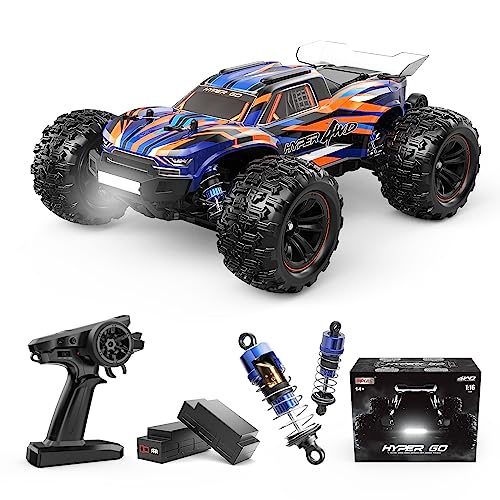
Ready to Run RTR Electric RC Cars: Your Complete Buyer Guide
Everything you need to know before choosing a ready to run electric RC car — from motor types and battery systems to chassis scale and upgrade potential. Start driving in minutes, not hours.
Explore Recommended RTR Electric RC Cars⚡ Why RTR electric RC cars are the smart starting point: A ready to run package removes the biggest barrier to the hobby — assembly. The motor, electronic speed controller (ESC), steering servo, and radio system arrive factory-installed and pre-tuned, so the only remaining steps are charging the battery and inserting AA batteries into the transmitter. That convenience makes RTR electric models the natural entry point for first-time drivers while still offering a genuine hobby-grade platform that can be maintained and upgraded over time.
This guide is written for research-stage buyers who already know they want an electric RC car but need clarity on which configuration suits their driving environment, experience level, and long-term goals.
What Does "Ready to Run" Actually Mean?
In the RC hobby, kits and RTR models sit at opposite ends of the assembly spectrum. A kit requires you to build the chassis, install electronics, and often paint the body shell yourself. An RTR model arrives fully assembled at the factory, with the drivetrain and electronics already installed and bench-tested. For electric RC cars, RTR packaging typically includes the vehicle, a rechargeable battery pack, a wall charger, and a transmitter. Most manufacturers recommend adding AA batteries for the transmitter and occasionally a few tools for maintenance.
The main trade-off is that RTR models generally use slightly more economical electronics than a comparable kit build, but the gap has narrowed considerably. Modern mid-range and high-end tier RTR electric cars frequently ship with brushless motors, waterproof ESCs, and metal-gear servos — components that would have been considered premium upgrades only a few product cycles ago.
Key Features That Define a Good RTR Electric RC Car
Motor Type
Brushed motors dominate entry-level RTR packages, while brushless systems define mid-range and top-tier models. Brushless delivers higher efficiency, longer service intervals, and stronger acceleration.
Battery Chemistry
NiMH packs are common in starter tier RTR cars and are forgiving to store. LiPo packs appear in balanced tier and high-end tier models, offering higher energy density and punchier throttle response.
ESC Rating
The electronic speed controller must be rated for the motor and battery voltage. Waterproof ESCs are standard on off-road RTR trucks and a valuable feature on any terrain.
Chassis Scale
1/10 scale is the most popular hobby size, balancing stability and parts availability. 1/16 and 1/18 scales suit smaller spaces, while 1/8 scale favours rough terrain.
Drivetrain Layout
2WD models are lighter and simpler to maintain. 4WD models put power down more effectively on loose surfaces and are the standard for off-road RTR trucks.
Parts Support
A strong spare-parts ecosystem matters more than any single specification. Brands with widely stocked replacement arms, gears, and bearings keep a car running for years.
RTR Electric RC Car Tiers: A Relative Comparison
Rather than quoting figures that change constantly, the table below classifies RTR electric RC cars by market position and intended use. Use it to match a model to your driving goals.
| Tier | Best For | Typical Characteristics | Upgrade Potential |
|---|---|---|---|
| Starter Tier | First-time drivers, kids, flat pavement | Brushed motor, NiMH battery, plastic chassis, sealed electronics | Limited; integrated electronics |
| Essential Tier | Backyard bashing, mixed surfaces | Brushed or entry brushless, improved suspension, hobby-grade servo | Moderate; standard connectors |
| Balanced Tier | Regular hobby use, light off-road | Brushless motor, LiPo-ready ESC, oil-filled shocks | Good; full parts support |
| High-End Tier | Serious bashing, track use | Brushless power, metal drivetrain, tuned suspension geometry | Excellent; race-legal components |
| Top-Tier | Competition and enthusiast builds | Professional-grade electronics, reinforced chassis, precision bearings | Maximum; wide aftermarket |
A general rule holds across the market: mid-range models usually deliver noticeably smoother throttle modulation and more consistent handling than entry-level packages, while high-end tier models focus on durability under repeated hard use rather than raw speed alone.
Pre-Purchase Checklist for RTR Electric RC Cars
- Confirm the driving surface: Smooth pavement suits on-road and drift-oriented RTR cars, while grass, gravel, and dirt call for an off-road truck or buggy with taller suspension travel.
- Check scale and clearance: A 1/10 scale off-roader is the most versatile starting point; smaller scales are better for limited indoor or driveway spaces.
- Verify battery and charger inclusion: Some RTR packages ship without a battery or charger, so read the box contents carefully before committing.
- Look for waterproof electronics: Splash-resistant ESC and servo ratings extend usable conditions and simplify cleanup after wet runs.
- Review the parts network: Confirm that suspension arms, gears, and bearings are readily available from the brand or reputable aftermarket sellers.
- Assess the transmitter: A 2.4 GHz radio with adjustable throttle limits is valuable for younger drivers and tight spaces.
- Plan for a second battery: Run time per pack is limited, and rotating two packs roughly doubles usable driving time per session.
Brushed vs Brushless: Which RTR Electric Motor Suits You?
Brushed motors use physical carbon brushes to transfer current to the rotor. They are simple, dependable, and common in starter tier and essential tier RTR cars. Their main drawback is wear: brushes eventually need replacement, and performance fades gradually with use. For casual backyard driving, a brushed RTR car is a solid choice with a low maintenance burden.
Brushless motors eliminate brush contact entirely, using electronic commutation instead. The result is higher efficiency, longer service life, and stronger torque delivery. Balanced tier and high-end tier RTR electric cars almost universally adopt brushless systems. If your long-term interest is likely to grow, starting at the balanced tier is often the more efficient path — it avoids buying twice.
Battery Systems: NiMH vs LiPo in RTR Packages
NiMH (nickel-metal hydride) packs are the traditional companion to entry-level RTR cars. They tolerate partial charging, require no balance leads, and are simpler to store safely. The trade-off is lower energy density and a gradual voltage drop that softens performance toward the end of a run.
LiPo (lithium polymer) packs deliver more consistent voltage under load and a higher energy-to-weight ratio, which translates to crisper acceleration and longer run time for a similar physical size. They demand more careful handling: balance charging, storage voltage, and protection from physical damage are mandatory. RTR cars described as LiPo-ready include an ESC with low-voltage cutoff. If you choose a LiPo-equipped model, budget time to learn proper charging practice before the first run.
Matching an RTR Electric RC Car to Your Driving Environment
On-road RTR cars prioritise low ground clearance, slick tyres, and precise steering. They excel on paved surfaces and parking lots. Off-road buggies and trucks raise the chassis, add oil-filled shocks, and fit knobby tyres for loose terrain. Monster trucks and rock crawlers take this further with larger wheels and torque-focused gearing. If you drive across a mix of surfaces, a 4WD off-road buggy is the safest all-rounder.
For enthusiasts drawn to a specific niche, more specialised guides are useful. Those interested in low-grip sliding techniques can explore RC drift car options, while buyers who prefer scale accuracy often look at RC car 1/10 scale models. Off-road fans comparing trail-focused rigs may find value in the RC rock crawler overview, and anyone considering a build-it-yourself alternative can read about RC car kits to build for adults to understand what a kit adds over an RTR package.
Frequently Asked Questions
What does RTR mean for electric RC cars?
RTR stands for Ready to Run. The car arrives fully assembled with the motor, ESC, servo, and radio system already installed. You charge the battery, add AA batteries to the transmitter, and drive.
Are RTR electric RC cars good for beginners?
Yes. RTR electric cars are the most beginner-friendly option because no assembly or soldering is required. They let new drivers start immediately and learn maintenance incrementally.
How long does an RTR electric RC car run on a single charge?
Run time depends on battery type and driving style. A typical NiMH pack provides roughly 15 to 25 minutes; a LiPo pack of similar capacity can reach 20 to 30 minutes. Carrying a spare pack is common practice.
What is the difference between brushed and brushless RTR electric RC cars?
Brushed motors are simpler and sealed, common in entry-level RTR cars. Brushless motors are more efficient, need less maintenance, and deliver stronger performance — typical of mid-range and high-end tier models.
Can RTR electric RC cars be upgraded?
Most hobby-grade RTR electric cars use standard components like separate servos and ESCs, so they can be upgraded over time. Toy-grade RTR cars usually use integrated electronics that are not designed for upgrades.
Ready to Choose Your RTR Electric RC Car?
Browse our curated selection of ready to run electric RC cars below — hand-picked for reliability, parts support, and driving enjoyment.
View Recommended Models