
Ready to Run RTR RC Drift Cars: The Complete Buyer's Guide
Everything you need to know before choosing a ready to run RC drift car — from chassis layout and motor types to tuning secrets and top-tier recommendations for every skill level.
Explore Top PicksWhat You'll Learn in This Guide
- What Makes an RTR RC Drift Car Different?
- Key Components of a Quality RTR Drift Car
- Chassis Types and Drivetrain Layouts Explained
- Motor and ESC: Brushed vs Brushless
- Tuning and Setup Tips for Better Drifts
- Choosing the Right Tier for Your Skill Level
- Top RTR RC Drift Car Recommendations
- Frequently Asked Questions
What Makes an RTR RC Drift Car Different?
A ready to run (RTR) RC drift car arrives fully assembled and pre-configured. Unlike kit builds that require you to solder electronics, install a motor, and set up a radio system, an RTR drift car is essentially plug-and-play. You charge a battery, insert it, power on the transmitter, and you are ready to slide.
This convenience does not mean compromise. Modern RTR drift cars from reputable brands ship with purpose-built drift chassis, hard-compound drift tires, and steering systems tuned for counter-steer control. The RTR category has evolved into a serious segment where entry-level and mid-range models share the same DNA as competition-grade platforms.
Key insight: The biggest advantage of an RTR drift car is that the factory has already matched the motor, ESC, gearing, and suspension geometry for drifting. You get a balanced starting point that lets you focus on driving technique rather than electronics setup.
For those curious about the broader world of radio-controlled drift machines, our RC drift car guide covers the fundamentals, while this page dives deep into the RTR subset specifically. If you are weighing RTR against building from scratch, the RC car kits to build for adults resource explains what kit building involves and who it suits.
Key Components of a Quality RTR Drift Car
Before comparing models, it helps to understand what separates a well-specified RTR drift car from a basic one. The following components have the greatest impact on drift performance and long-term satisfaction.
Chassis and Suspension
A drift-specific chassis typically features a low center of gravity, adjustable camber and toe settings, and a steering rack designed for high steering angles. Look for a chassis with a rigid main deck and threaded shock bodies. Threaded shocks allow precise ride-height and preload adjustments, which directly affect weight transfer during transitions.
Drift Tires and Wheels
Hard-compound drift tires are mandatory for controlled sliding. Most RTR drift cars include a set of hard tires, often with a realistic wheel design. The tire compound determines how much grip the rear end has — harder compounds produce longer, more controllable slides, while softer compounds suit tighter, technical courses. A good RTR package includes at least one spare set or offers easy access to replacements.
Steering Servo
Drifting demands fast, precise steering corrections. A metal-geared servo with high torque and quick transit time is a hallmark of a well-specified RTR drift car. Plastic-geared servos are common in entry-level models but are a known weak point under repeated drift loads.
Drivetrain
Rear-wheel-drive (RWD) is the standard for realistic drifting. Some entry-level RTR cars use four-wheel-drive (4WD) with a front one-way or locked rear differential to mimic drift behavior. RWD platforms generally offer more authentic drift feel, while 4WD drift cars can be more forgiving for absolute beginners.
Radio System
A 2.4 GHz radio system is the modern baseline. It resists interference and provides reliable range. Some RTR packages include a transmitter with adjustable endpoints and exponential, which are useful for fine-tuning steering response as your skills grow.
Chassis Types and Drivetrain Layouts Explained
The chassis layout influences how a drift car behaves and how easy it is to tune. Here is a comparison of the most common configurations found in RTR drift cars.
| Layout | Best For | Drift Character | Tuning Potential |
|---|---|---|---|
| RWD shaft-driven | Intermediate to advanced drifters | Authentic, requires throttle discipline | High — wide aftermarket support |
| RWD belt-driven | Technical courses and smooth surfaces | Smooth power delivery, quiet operation | High — precise gearing options |
| 4WD with drift spec | Beginners learning throttle control | Forgiving, easier to initiate slides | Moderate — less realistic feel |
| Front-motor RWD | Scale realism enthusiasts | Weight-forward, stable transitions | Moderate — layout-specific parts |
The 1/10 scale is the dominant size for RTR drift cars. It strikes a balance between indoor and outdoor usability and has the deepest parts ecosystem. If you are also considering other RC vehicle types, our 1/10 scale RC car overview provides useful context on how scale affects handling and parts compatibility.
For pure drift-focused driving, a rear-wheel-drive platform with a front one-way differential and a locked rear differential is the gold standard. Many mid-range and high-end tier RTR drift cars ship with this configuration out of the box.
Motor and ESC: Brushed vs Brushless
The motor and electronic speed controller (ESC) determine power delivery and how controllable the drift is. RTR drift cars generally fall into two camps.
Brushed Motor Systems
Brushed motors are common in entry-level RTR drift cars. They are simple, reliable, and deliver smooth low-end torque, which is helpful for learning throttle modulation. The trade-off is lower efficiency and shorter motor life compared to brushless systems. For casual indoor drifting, a brushed system is entirely adequate and keeps the overall package in the essential tier.
Brushless Motor Systems
Brushless systems offer more power, better efficiency, and longer service life. In drift applications, a sensored brushless motor paired with a drift-specific ESC provides precise throttle response and smooth power delivery — critical for holding a slide. Brushless RTR drift cars sit in the mid-range to premium tiers and are the better long-term investment for anyone planning to drift regularly.
ESC Features to Look For
- Drift mode or throttle profiles — smooths power delivery for controlled slides
- Adjustable drag brake — helps maintain cornering attitude
- Thermal protection — safeguards the ESC during long drift sessions
- LiPo compatibility — modern ESCs should support 2S LiPo batteries with a low-voltage cutoff
Practical tip: If you are choosing between a brushed entry-level RTR and a brushless mid-range RTR, consider how often you plan to drive. Brushed systems are fine for occasional indoor sessions; brushless pays off in durability and consistency if drifting becomes a regular hobby.
Tuning and Setup Tips for Better Drifts
One of the pleasures of RC drifting is that small setup changes produce noticeable handling differences. Even a box-stock RTR drift car can be improved with a few targeted adjustments.
Suspension Adjustments
- Camber: A small amount of negative camber on the front wheels improves cornering grip and steering response. Start with 1–2 degrees and adjust to taste.
- Toe: Slight toe-out on the front axle sharpens turn-in. Rear toe-in adds straight-line stability.
- Ride height: Lowering the ride height reduces body roll and shifts the center of gravity downward, improving drift stability.
- Shock oil: Thicker shock oil slows weight transfer, which can make transitions more predictable on high-grip surfaces.
Drivetrain and Gearing
Gearing affects how quickly the rear wheels break traction. Taller gearing (higher top speed) can make it easier to initiate a drift on large surfaces, while shorter gearing provides more punch for tight courses. Many RTR drift cars include optional pinion gears to experiment with.
Tire Selection
The tire compound is the single most influential tuning variable. Hard tires produce long, sweeping drifts; softer tires provide more bite for technical layouts. Keep a small selection of compounds on hand to adapt to different surfaces — polished concrete, carpet, and asphalt each reward different setups.
Steering and Radio Settings
Use the transmitter's endpoint adjustment to ensure the steering rack reaches full lock without binding. Exponential (expo) can soften the steering response around center, making it easier to catch a slide smoothly. As your skills improve, reduce expo for a more direct feel.
If you plan to upgrade the radio system later, our guide to RC car transmitter and receiver combinations explains what to consider when moving beyond the included radio gear.
Choosing the Right Tier for Your Skill Level
The RTR drift car market spans several quality tiers. Rather than focusing on any single number, match the tier to your experience and ambitions.
Starter Tier
Starter-tier RTR drift cars are designed for newcomers. They typically use brushed power systems, plastic-geared servos, and simpler chassis layouts. They are an excellent way to discover whether drifting appeals to you before committing to a more specialized platform. Expect a functional, forgiving car that teaches the basics of throttle and steering coordination.
Mid-Range
Mid-range RTR drift cars introduce brushless power, metal-geared servos, and more adjustable suspension. This tier offers the best balance of performance and longevity for most hobbyists. You get a car that can grow with your skills through tuning and selective upgrades, without the complexity of a full competition build.
High-End Tier
High-end RTR drift cars feature competition-derived chassis designs, sensored brushless systems, and premium materials. They are aimed at experienced drifters who want a turnkey platform that performs at a high level out of the box. These models often share parts with dedicated competition kits, making them a long-term investment for serious enthusiasts.
Professional-Grade
At the top of the RTR spectrum, professional-grade drift cars are essentially factory-assembled competition machines. They are appropriate for dedicated drifters who compete or practice intensively. The setup is more focused, and the cars demand precise driving inputs to extract their best performance.
Recommendation: Most buyers are best served by the mid-range tier. It offers a meaningful step up in durability and adjustability over starter-tier models while remaining approachable. If you are unsure whether you will stick with the hobby, start at the starter tier and upgrade later.
If you are also exploring other segments of the hobby, the ready to run electric RC cars guide covers the broader electric RTR landscape, while radio controlled cars provides a top-level introduction to the category.
Top RTR RC Drift Car Recommendations
The products below represent a cross-section of the RTR drift car market, spanning starter-tier to high-end tier options. Each is selected for its drift-specific design, build quality, and aftermarket support. Use the comparison table to match a car to your experience level and intended use.
| Tier | Best For | Drive Layout | Motor Type |
|---|---|---|---|
| Starter tier | First-time drifters, indoor practice | 4WD drift spec | Brushed |
| Essential tier | Casual hobbyists, mixed surfaces | RWD shaft-driven | Brushed |
| Mid-range | Regular drifters seeking adjustability | RWD belt-driven | Sensored brushless |
| High-end tier | Experienced drifters, competition practice | RWD competition chassis | Sensored brushless |
When evaluating options, pay attention to parts availability in your region and whether the included radio system offers the adjustments you need. A car with strong aftermarket support is a better long-term investment even if its out-of-box specification is similar to a competitor's. For a wider view of RTR drift models, browse our ready to run RTR drift RC cars collection.
Top Rated Ready to Run RTR RC Drift Cars
⚠️ AFFILIATE DISCLOSURE: This website contains affiliate links. As an Amazon Associate, we earn from qualifying purchases. If you make a purchase through these links, we may receive a small commission at no additional cost to you. Read our full affiliate policy.
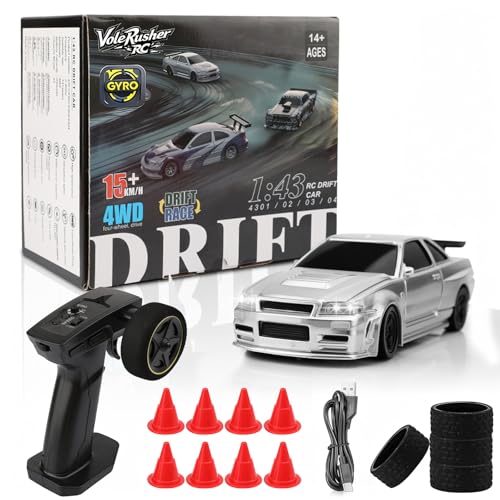
VoleRusher RC [2026 Upgrade 1/43 Mini RC Drift Car with Gyroscope, 4WD RTR | Gyro Mini Drift RC Car, 1/43 RC Drift Car Toys for Kids Ages 8-14, Birthday Gifts for Boys Girls, 2 Tire Sets, 8 Cones
Check price on Amazon
Geyiie Remote Control Cars, 2-Pack RC Cars for Boys Girls Age 8-12 | 2-Player Racing Set, Race Course Set,1:24 Scale, 4WD RC Drift Cars, Extra Grip tires, Up to 70 Minutes Per Car, Indoor Racing
Check price on Amazon
VoleRusher RC [2026 Upgrade 1/43 Mini RC Drift Car with Gyroscope, 4WD RTR | Gyro Mini Drift RC Car, 1/43 RC Drift Car Toys for Kids Ages 8-14, Birthday Gifts for Boys Girls, 2 Tire Sets, 8 Cones
Check price on Amazon
ARRIS 1/64 Micro Desktop RC Drift Car 4WD with 2-Speed Modes RTR | Pocket Size Design, LED Lights, Stunt Driving, Smooth Drifting, Indoor Fun
Check price on Amazon
Nowzeth RC Drift Car 1/24 Widebody Grey Remote Control Drift Car for Adults | Christmas Toys Vehicle for Kids Beginners 4WD 20KM/H High-Speed Widebody RC Sports Cars with LED Lights, Extra Tires
Check price on Amazon
VoleRusher RC [2026 Upgrade 1/43 Mini RC Drift Car with Gyroscope, 4WD RTR | Gyro Mini Drift RC Car, 1/43 RC Drift Car Toys for Kids Ages 8-14, Birthday Gifts for Boys Girls, 2 Tire Sets, 8 Cones
Check price on Amazon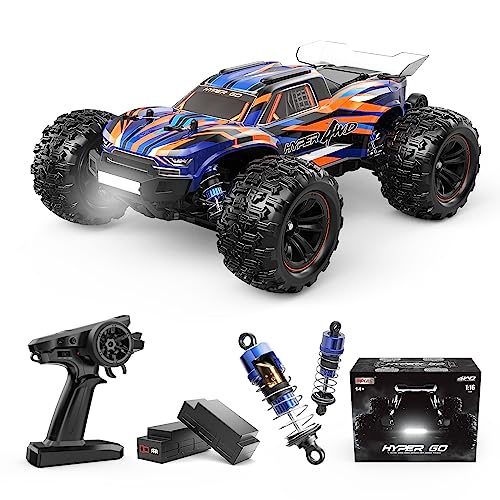
HYPER GO H16DR 1:16 Scale Ready to Run Fast Remote Control Car, High Speed Jump RC Monster Truck, Off Road RC Cars, 4WD All Terrain RTR RC Truck with 2 LiPo Batteries for Boys and Adults
Check price on Amazon
Redcat Racing Lightning EPX RC Drift Car 1/10 Scale 4WD with 2.4GHz Radio, 19T Brushed Motor, Tunable Suspension, Remote Control Car with Battery and Charger - Metallic Blue
Check price on AmazonFrequently Asked Questions
What does RTR mean for an RC drift car?
RTR stands for Ready to Run. It means the RC drift car comes fully assembled with the motor, ESC, servo, and radio system pre-installed. You typically only need to add batteries and charge them before driving. This makes RTR cars ideal for buyers who want to start drifting without the assembly and electronics work required by kit builds.
Can a beginner learn to drift with an RTR RC car?
Yes, RTR drift cars are ideal for beginners. They are pre-built and tuned, so you can start practicing drifting techniques immediately. Starter-tier and mid-range RTR models are specifically designed with forgiving handling characteristics that help new drivers develop throttle and steering control without fighting an overly aggressive setup.
What scale is best for RC drifting?
1/10 scale is the most popular for RC drifting because it offers a wide range of aftermarket bodies, wheels, and parts. Smaller scales like 1/16 or 1/24 are great for indoor practice and tighter spaces. The 1/10 scale also tends to have the most robust RTR selection and the deepest tuning ecosystem.
Do I need special tires for RC drifting?
Yes, drift-specific tires are essential. They are made from hard compounds that allow controlled sliding. Most RTR drift cars come with drift tires already installed or included in the box. Using standard grip tires will prevent the car from sliding predictably and can overheat the motor and ESC.
How long does a drift session last on one battery charge?
Session length depends on the battery capacity, motor type, and driving style. A typical 2S LiPo battery in a brushed RTR drift car provides a moderate practice session, while brushless systems are generally more efficient. Carrying a spare battery is the simplest way to extend a drift session. Always follow the manufacturer's guidance on battery care and charging.