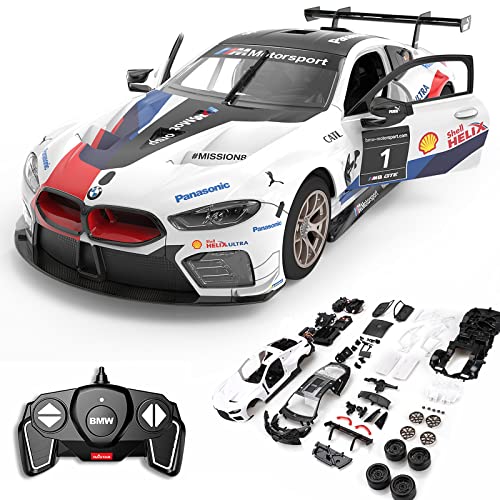
RC Car Kits to Build for Adults: The Complete Guide to Choosing Your Build
Building your own radio-controlled car is one of the most rewarding experiences in the hobby. From entry-level starter kits to professional-grade chassis, this guide helps you understand exactly what to look for before you commit to a build.
Explore Recommended Kits🚗 Why build instead of buy ready-to-run? A buildable RC car kit puts you in full control of the assembly process. You learn how every component — from the differential to the suspension geometry — works together. This understanding makes maintenance, tuning, and upgrades far more intuitive. For adults entering the hobby, a kit transforms a toy into a genuine mechanical project that delivers satisfaction long after the first drive. If you want a deeper overview of the hobby overall, our radio controlled cars guide covers the broader landscape.
Understanding the Types of Buildable RC Car Kits
Not all kits are created equal. The term "kit" spans a wide spectrum — from near-complete packages that need only minor assembly to full competition-spec builds where every bearing and screw is installed by hand. Understanding where a kit falls on this spectrum is the single most important decision you will make. The classification below uses a universal tier system that applies across the hobby regardless of brand or region.
Starter Build Kits
These kits typically include pre-assembled sub-components such as the gearbox or differential, requiring you to bolt together major sections. They are ideal for first-time builders who want to learn the fundamentals without soldering or precision electronics work. Most include a full tool set and highly visual manuals. Build time typically ranges from two to four hours.
Intermediate Build Kits
Stepping into mid-range territory, these kits require you to assemble the drivetrain, install bearings, and often perform basic soldering for motor and ESC connections. They demand patience and attention to detail but reward the builder with a deeper understanding of the vehicle's mechanics. Build time runs from four to eight hours depending on the chassis complexity.
Advanced & Competition Kits
These are full-assembly chassis where every component — from the ball differentials to the threaded shock absorbers — is built by the hobbyist. They often include premium materials such as carbon fiber and CNC-machined aluminum. Builders need experience with soldering, thread-locking compounds, and precise measurement. These kits are a long-term investment for dedicated enthusiasts.
If you are still deciding whether a kit or a factory-built model suits you better, our comparison of ready-to-run electric RC cars provides a useful counterpoint. Many hobbyists eventually own both types — a kit for the workshop and a ready-to-run model for quick weekend sessions.
Kit Comparison at a Glance
The table below summarizes the key differences across the three main kit tiers. Use this as a quick reference when browsing product listings, keeping in mind that individual kits vary within each tier.
| Tier | Assembly Scope | Skill Level | Best For | Typical Build Time |
|---|---|---|---|---|
| Starter Tier | Bolt-on assembly of pre-built modules | Beginner | First-time builders, casual hobbyists | 2–4 hours |
| Balanced Tier | Drivetrain assembly, bearing installation, basic wiring | Intermediate | Hobbyists with some mechanical background | 4–8 hours |
| High-End Tier | Full chassis assembly, soldering, precision setup | Advanced | Experienced builders, competitive racers | 8–15+ hours |
Key Components to Evaluate in Any Kit
When comparing kits, the component list tells you far more than the marketing copy. Focus on these critical areas:
- Chassis material: Molded composite chassis are common in entry-level and mid-range kits, while high-end kits often use carbon fiber or machined aluminum for reduced weight and increased rigidity.
- Drivetrain: Look for sealed gear differentials and ball bearings throughout. Bushings may be acceptable in starter-tier kits but bearings reduce friction and improve longevity significantly.
- Suspension: Oil-filled shock absorbers are the standard for anything beyond entry-level. Adjustable shock towers and multiple mounting positions give you tuning flexibility as your skills grow.
- Electronics included: Some kits ship with a motor and ESC; others are "roller" kits requiring you to source electronics separately. Verify what is in the box before committing. If you plan to source your own radio gear, our guide to RC car transmitters and receivers explains compatibility.
- Hardware quality: Hex-head screws are far superior to Phillips-head for RC applications — they resist stripping and allow higher torque. High-grade steel hardware with a rust-proof finish is a strong indicator of overall kit quality.
Choosing the Right Scale and Platform
Scale affects nearly everything: where you can drive, how much space you need to build, and the availability of spare parts. The 1/10 scale is the most popular for adult builders because it offers an ideal balance between mechanical complexity and practical usability. Our dedicated 1/10 scale RC car guide dives deeper into this class.
Larger scales such as 1/8 offer more robust components and better off-road capability, but they demand more storage space and are less suited to indoor assembly. Smaller scales like 1/16 or 1/18 are compact and excellent for indoor building, but their tiny hardware can be fiddly for builders with larger hands or limited close-up vision. Consider where you will drive most often and how much workbench space you can dedicate before selecting a scale.
Platform type matters just as much. On-road touring cars, off-road buggies, short-course trucks, and rock crawlers each have distinct build characteristics and driving environments. If you are drawn to trail driving rather than racing, a rock crawler kit offers a slower-paced, torque-focused build that many adults find deeply satisfying. For those interested in the drift scene, a drift RC car kit introduces unique steering and counter-steer geometry that adds an exciting dimension to the hobby.
Tools and Workspace Preparation
A clean, well-lit workspace is essential. Before opening the box, gather the tools specified in the manual. Most kits require hex drivers in 1.5mm, 2.0mm, and 2.5mm sizes, a nut driver set, needle-nose pliers, and a hobby knife. For kits that include electronics soldering, a temperature-controlled soldering iron and rosin-core solder are necessary. Invest in a magnetic parts tray to keep small screws organized — losing a single 2mm screw mid-build is a frustration every builder eventually experiences.
Read the entire manual before starting. This sounds obvious, but many builders dive in and later discover a step that required a component they had already bolted into place. A pre-read also helps you identify which steps require thread-locking compound or grease so you can prepare those materials in advance.
Build Tips for Adult Hobbyists
- Follow the manual sequence precisely. Manufacturers design assembly order for a reason — skipping ahead often means disassembling work you just completed.
- Apply thread-locking compound sparingly. A tiny drop on metal-to-metal fasteners prevents vibration loosening without gumming up the assembly.
- Do not overtighten screws into plastic. Plastic threads strip easily. Tighten until snug, then stop — the screw will not back out if thread-locking compound is applied correctly on metal fasteners.
- Route wires carefully during assembly. Once the chassis is closed up, rerouting becomes much harder. Keep wires away from moving parts and hot surfaces from the start.
- Test electronics before final assembly. Connect the motor, ESC, and servo to verify function before sealing everything into the chassis. Troubleshooting is far easier on an open frame.
- Set suspension geometry after the first drive. Ride height, camber, and toe settings are best tuned once you have observed how the car behaves on your typical surface.
Maintenance After the Build
Building the kit is only the beginning. Regular maintenance keeps your vehicle performing at its best. After each running session, inspect for loose screws, clean dust and debris from the drivetrain, and check tire wear. Rebuild shock absorbers periodically and re-grease differentials according to the manufacturer's schedule. Because you assembled the vehicle yourself, you already know exactly how each subsystem comes apart — a significant advantage over ready-to-run owners who must learn disassembly from scratch. For those who also enjoy larger-scale projects, our overview of 4x4 RC trucks for adults explores how kit-built platforms compare in the off-road segment.
Frequently Asked Questions
What is the difference between a kit and a ready-to-run RC car?
A kit requires you to assemble the vehicle from individual components, giving you full control over the build and a deeper understanding of the mechanics. A ready-to-run model comes pre-assembled and requires minimal setup before driving.
How much mechanical experience do I need to build an RC car kit?
Many entry-level kits require only basic tool handling and step-by-step instructions. Mid-range and high-end kits may demand more experience with electronics, soldering, and drivetrain assembly, but most manufacturers provide detailed manuals suitable for dedicated beginners.
What tools are typically needed for building an RC car kit?
Common tools include screwdrivers, hex drivers, nut drivers, pliers, a hobby knife, and sometimes a soldering iron for electronic connections. Many kits specify the exact tools required in their manuals.
Are buildable RC car kits suitable for beginners?
Yes. Starter-tier and entry-level kits are specifically designed for newcomers, with pre-assembled sub-components, clear instructions, and minimal specialized tool requirements.
Can I upgrade components on a kit-built RC car?
Absolutely. One of the primary advantages of kit-built models is modularity. Most kits use standard component sizes and mounting patterns, allowing you to swap motors, ESCs, servos, and suspension parts as you advance in the hobby.
Ready to Start Your Build?
The right kit is the one that matches your current skill level and grows with you. Browse our curated selection of buildable RC car kits for adults below — each chosen for build quality, parts availability, and long-term upgrade potential.
View Recommended Kits