
1/10 Scale RC Cars: The Complete Guide to Choosing Your Perfect Model
Everything you need to know about 1/10 scale radio-controlled cars — from rock crawlers and drift machines to ready-to-run bashers and build-your-own kits. Understand the tiers, the engineering, and the driving experience before you commit.
Jump to Buying GuideWhat "1/10 Scale" Really Means
The "1/10" designation describes the proportional relationship between the model and a full-size vehicle. A 1/10 scale RC car is roughly one-tenth the size of its real-world counterpart, which typically translates to a body length between 16 and 19 inches. This is not a strict engineering standard — different manufacturers interpret it with slight variation — but the category is universally recognized as the most popular size in the hobby-grade RC world.
This scale hits a remarkable balance. It is large enough to handle rough terrain, carry substantial battery packs, and deliver genuinely impressive speed, yet compact enough to store, transport, and drive in a backyard, parking lot, or local park. For many enthusiasts, 1/10 scale is the entry point into serious RC ownership and often remains their preferred size for years.
If you are still exploring the broader hobby, our guide to radio-controlled cars provides useful context on how different scales and categories compare across the market.
Why 1/10 Scale Is the Hobby's Sweet Spot
Walk into any RC track, club meeting, or hobby shop and you will see 1/10 scale models dominating. This dominance is not accidental. It stems from a combination of practical and experiential factors that make this scale uniquely appealing:
- Parts availability: Because 1/10 is the most common scale, replacement parts, upgrade components, tires, and bodies are widely stocked and easy to find. This ecosystem support is crucial for long-term ownership.
- Driving dynamics: The mass and dimensions of a 1/10 vehicle produce handling characteristics that feel satisfyingly realistic. Weight transfer, suspension travel, and traction behave in ways that smaller scales cannot replicate.
- Terrain capability: The larger wheels and higher ground clearance of 1/10 off-road models allow them to tackle grass, gravel, dirt, and modest obstacles that would stop smaller cars in their tracks.
- Community and competition: Most organized RC racing classes, from club-level to national championships, are built around 1/10 scale platforms. This means structured competition, shared knowledge, and a vibrant social scene.
- Upgradability: The 1/10 platform is a canvas for customization. Motors, electronic speed controllers, shocks, arms, and drivetrain components can all be swapped and tuned.
The combination of capability, community, and customization makes 1/10 scale a long-term investment in a hobby that rewards curiosity and skill-building.
Types of 1/10 Scale RC Cars
Within the 1/10 scale category, there are several distinct sub-types, each designed for a specific driving experience. Understanding these differences is the first step toward choosing a model that matches your interests.
Rock Crawlers and Trail Trucks
These models prioritize torque, articulation, and durability over raw speed. With locked differentials, high ground clearance, and aggressive tires, they are built to navigate boulders, roots, and steep inclines at a deliberate pace. The 1/10 scale 4x4 rock crawler category is particularly popular for its blend of technical driving and scale realism. If you enjoy hiking and the outdoors, a crawler turns every trail into a playground. For a broader look at this genre, explore our rock crawler guide.
Drift Cars
Drifting is about controlled slides, counter-steering, and style. 1/10 drift cars typically feature rear-wheel drive, specialized drift tires with low grip, and steering geometry that allows extreme angles. The RC drift car scene is vibrant, with dedicated tracks and competitions that judge both line and style. These models are often tuned for smooth power delivery and precise throttle control.
Short Course Trucks and Buggy Racers
Built for speed and competition, these models are designed for racing on prepared surfaces — dirt, clay, or carpet. Short course trucks mimic the look of off-road racing vehicles, while buggies are purpose-built for lightweight performance. Both demand sharp reflexes and reward precise tuning.
Monster Trucks and Bashers
If you want to jump, flip, and drive with abandon, a 1/10 monster truck is the tool for the job. These models feature large tires, robust suspension, and drivetrains built to absorb punishment. The rechargeable remote control monster truck category includes models that blend hobby-grade performance with user-friendly features.
On-Road and Touring Cars
For smooth asphalt and parking lot circuits, 1/10 touring cars offer precision handling and high-speed stability. These are the scalpel of the RC world — less about brute force and more about clean lines and consistent lap times.
Market Tiers Explained
Within the 1/10 scale market, products are positioned across distinct tiers. Understanding these tiers helps you calibrate expectations and choose a model that aligns with your intended use and experience level. We use a consistent three-tier classification throughout this guide.
Starter Tier
Models in this tier are designed for first-time hobbyists. They typically feature durable but simpler construction, brushed motors, and basic electronic speed controllers. Performance is modest but reliable, and the focus is on ease of use and out-of-the-box enjoyment. These models are well-specified for their class and offer a low-friction entry into the hobby.
Balanced Tier
The mid-range tier is where most enthusiasts find their sweet spot. These models often include brushless motor systems, improved suspension components, and more sophisticated chassis designs. They offer a noticeable step up in performance and durability without venturing into the specialized territory of high-end competition models. They are feature-rich for their class.
High-End Tier
At the top of the market, premium 1/10 models are engineered for serious competition or demanding bashing. They feature high-grade materials, precision-machined components, advanced suspension geometry, and often come as kits that require assembly. These are long-term investments for dedicated hobbyists who demand the best performance the scale can offer.
Ready-to-Run vs. Build Kits
One of the first decisions you will face is whether to buy a ready-to-run (RTR) model or a kit that requires assembly.
Ready-to-Run (RTR)
An RTR model arrives fully assembled and includes everything needed to drive — typically the car itself, a transmitter, a battery, and a charger (though some models require separate purchase of batteries). The ready-to-run electric RC cars category is the most popular entry point for newcomers. The appeal is obvious: unbox, charge, and drive. For those who want immediate gratification and a lower barrier to entry, RTR is the clear choice. You can also explore gas-powered RTR options and nitro RTR models if you prefer combustion power.
Build Kits
A kit requires you to assemble the vehicle from individual components. This process teaches you how every part of the car works, which is invaluable for maintenance, repair, and tuning. Kits are often chosen by hobbyists who want to understand their machine inside and out. The RC car kits to build for adults category caters to this audience. If you are considering a kit, be prepared to invest time and acquire a few basic tools.
For a focused comparison of drift-specific models, see our guide to ready-to-run RTR drift RC cars.
Electric vs. Nitro vs. Gas
The power source is another fundamental decision. Each has distinct characteristics and practical implications.
- Electric: The dominant choice for most hobbyists today. Electric motors deliver instant torque, require minimal maintenance, and can be driven indoors or in noise-sensitive areas. Modern brushless systems and lithium-polymer batteries provide impressive performance. Charging infrastructure is simple.
- Nitro: Nitro-powered models use a small internal combustion engine fueled by a methanol-nitromethane blend. They offer a distinct auditory experience and longer run times per tank, but require more maintenance, tuning, and a suitable driving location. Ready-to-run nitro RC cars are available for those who want the combustion experience without building from scratch.
- Gas: Gasoline-powered models are larger and more complex, typically found in larger scales but occasionally available in 1/10. They offer extended run times and a true engine-driven experience, but demand a higher level of mechanical involvement. See gas-powered RTR options for more.
For most first-time buyers, electric is the recommended path. It is quieter, cleaner, and easier to maintain, while still offering exceptional performance.
Key Components That Matter
When evaluating a 1/10 scale RC car, certain components have an outsized impact on performance and longevity. Understanding these will help you compare models intelligently.
Motor and Speed Controller
Brushed motors are simpler and adequate for entry-level driving. Brushless motors offer higher efficiency, longer lifespan, and more power. The electronic speed controller (ESC) must be matched to the motor and battery. A quality ESC provides smooth throttle response and protection against overheating.
Suspension and Shocks
Oil-filled shocks with adjustable preload and damping allow you to tune handling. Models with threaded shock bodies and multiple mounting positions offer more adjustment. For off-road use, suspension travel and articulation are critical.
Drivetrain
Look for metal gears and robust driveshafts in higher-tier models. Sealed differentials and slipper clutches protect the drivetrain from shock loads. The drivetrain layout (shaft-driven vs. belt-driven) affects both maintenance and handling characteristics.
Tires and Wheels
Tires are the interface between the car and the surface. Off-road tires have aggressive treads; drift tires are hard and low-grip; on-road tires are smooth and rubber-rich. Having the right tire for your terrain is essential for both performance and longevity.
Transmitter and Receiver
A comfortable transmitter with good ergonomics, adjustable trim, and a reliable receiver is essential. For those looking to upgrade or build a custom setup, our guide to RC car transmitter and receiver combinations is a useful reference.
How to Choose Your First 1/10 Scale RC Car
The right model for you depends on where you plan to drive, how much maintenance you are willing to perform, and your long-term goals in the hobby. Here is a practical framework for making that decision.
| Primary Use | Recommended Type | Suggested Tier | Best For |
|---|---|---|---|
| Backyard bashing and jumping | Monster truck or short course truck | Mid-range | Enthusiasts who want durability and fun without competition |
| Trail hiking and technical driving | Rock crawler | Entry-level to mid-range | Outdoor lovers and scale realism fans |
| Precision driving and style | Drift car | Mid-range | Hobbyists who enjoy tuning and controlled slides |
| Competitive racing | Buggy or touring car | High-end tier | Dedicated racers seeking maximum performance |
| First hobby-grade experience | RTR short course or monster truck | Starter tier | Beginners who want to learn the basics |
For those who are mechanically inclined and want a deeper connection to the machine, a kit is an excellent first purchase. The assembly process builds knowledge and confidence. Conversely, if your priority is immediate driving fun, an RTR model removes all barriers.
Consider also the ecosystem. A model from a manufacturer with strong parts support and a local dealer network will be far easier to maintain and upgrade. Community forums and local clubs are valuable resources for model-specific advice.
Ready to Explore the World of 1/10 Scale RC?
From ready-to-run bashers to precision drift machines and trail-ready crawlers, the 1/10 scale category offers something for every type of driver. Use the insights in this guide to narrow your options, then explore curated selections below.
See Recommended ModelsFrequently Asked Questions
What does 1/10 scale mean exactly?
It means the model is approximately one-tenth the size of a full-size vehicle. In practice, most 1/10 scale RC cars are between 16 and 19 inches long. It is a size category, not a precise engineering specification, and is the most popular scale in hobby-grade RC.
Is 1/10 scale a good size for a beginner?
Yes. The 1/10 scale is widely recommended for beginners because it offers a balance of capability, parts availability, and community support. It is large enough to drive on varied terrain but manageable to store and transport. Many entry-level RTR models are in this scale.
What is the difference between an RTR and a kit?
RTR (ready-to-run) models come fully assembled and include most of what you need to drive. Kits require assembly from individual parts, which teaches you how the vehicle works and is preferred by hobbyists who want to understand and customize their machine.
Should I choose electric or nitro power for my first 1/10 RC car?
Electric is the recommended starting point for most people. It is quieter, cleaner, requires less maintenance, and can be driven in more locations. Modern brushless electric systems offer excellent performance. Nitro is a niche choice that appeals to those who enjoy engine tuning and the combustion experience.
How do I know which tier is right for me?
Entry-level (starter tier) models are ideal for first-timers who want simplicity and reliability. Mid-range models offer better performance and durability for enthusiasts who drive regularly. High-end tier models are for serious hobbyists and racers who demand the best engineering and adjustability.
Are parts easy to find for 1/10 scale models?
Yes, 1/10 scale has the widest parts availability of any RC scale. Because it is the most common size, replacement and upgrade components are stocked by most hobby shops and online retailers, ensuring long-term support for your model.
Can I upgrade an entry-level model later?
In most cases, yes. Many entry-level models share chassis architecture with higher-tier versions, allowing you to upgrade motors, ESCs, shocks, and other components over time. However, it is worth checking the specific model's upgrade path before purchase if long-term customization is a priority.
Top-Rated 1/10 Scale RC Cars for Every Driving Style
⚠️ AFFILIATE DISCLOSURE: This website contains affiliate links. As an Amazon Associate, we earn from qualifying purchases. If you make a purchase through these links, we may receive a small commission at no additional cost to you. Read our full affiliate policy.
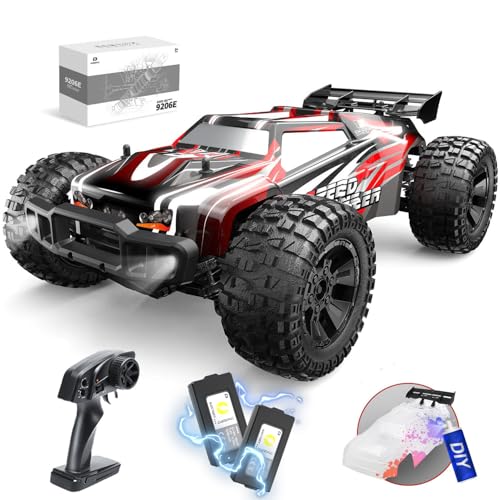
DEERC 9206E DIY Extra Shell 1:10 Scale Large RC Cars,48+ KM/H Hobby Grade High Speed Remote Control Car for Adults Boys,All Terrain 4WD 2.4GHz Off Road Monster RC Truck with 2 Battery for 40+ Min Play
Check price on Amazon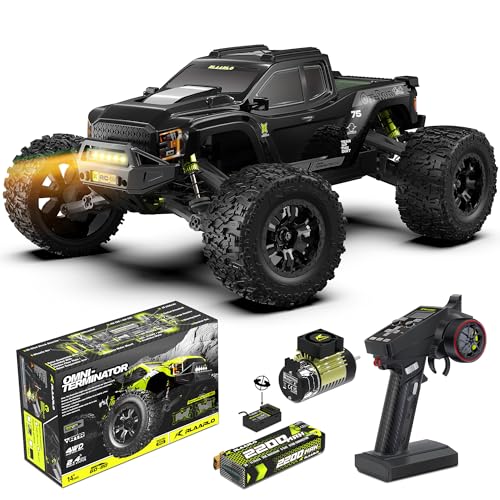
RIAARIO 1/10 Brushless RC Cars, 50+ MPH, 4WD, Waterproof, Carbon Fiber | 3650 2650KV Motor, 60A ESC, Gyro, 11KG Servo, CNC Drivetrain, Alloy Chassis, Oil Shocks and 5-Channel Transmitter
Check price on Amazon
1/10 RTR Brushless Fast RC Cars for Adults,Max 50mph,4WD,Waterproof,3S Lipo | Carbon Steel Drivetrain,Alloy Chassis,CNC Shock Tower,Hobby-grade Quality,Beginner-friendly
Check price on Amazon
1:10 High Speed RC Car, 30 KPH High Speed 4WD RC Car Truck with 2.4 GHz | 3 Interchangeable Tires, Rechargeable 2S Batteries, 4X4 Remote Control Car Truck Gifts Toys for Boys Kids Adults Teens
Check price on Amazon
Hosim 1/10 RC Car for Adults & Boys 48+KMH, Electric Remote Control Car High Speed Large RC Truck 4X4 Off-Road All Terrains Waterproof Monster Trucks, Hobby RC Cars Toys Gifts for Boys 8-12
Check price on Amazon
1/14 Brushless RC Cars for Adults Fast 50+ mph, RC Trucks 4x4 Offroad Waterproof, Electric Powered High Speed Remote Control Car, Fast Extreme All Terrain RC Truggy with 3S Battery for Snow Sand
Check price on AmazonFinal Thoughts: Making the Right Choice
The 1/10 scale RC car market is rich and varied, with options that cater to every driving style and skill level. The key is to be honest with yourself about how you plan to use the vehicle. A trail hiker will be happiest with a crawler. A creative driver will gravitate toward drifting. A competitor will need a racing-focused platform.
Once you have identified your primary use, the tier decision becomes clearer. Entry-level models minimize risk and complexity. Mid-range models provide the best balance of performance and durability for regular use. Premium models are an investment in top-tier engineering for those who have outgrown the basics.
Whatever you choose, the 1/10 scale platform is a gateway to a rewarding hobby. The combination of mechanical understanding, driving skill, and community makes it a pastime that can last for years. For further exploration of the broader RC universe, including aircraft and boats, browse our complete radio control models collection.