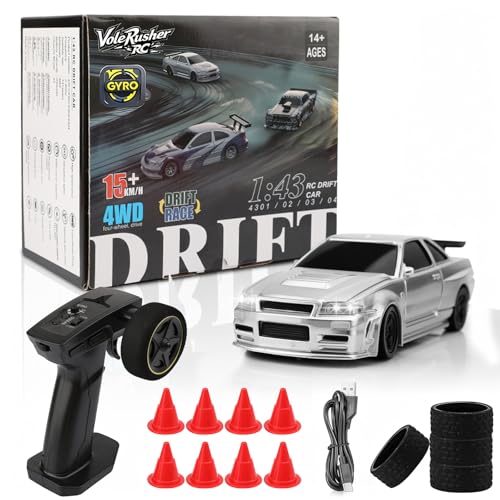
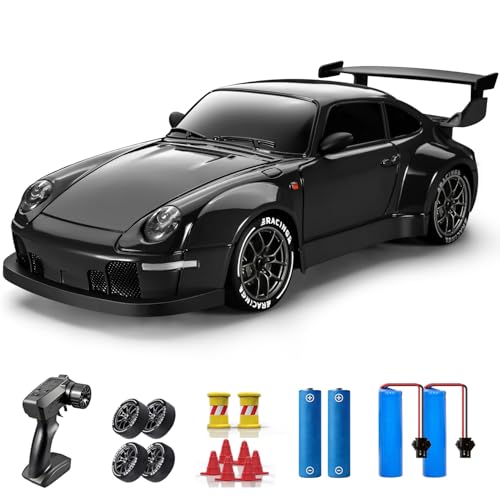
Ready to Run RTR Drift RC Cars: The Complete Buyer's Guide
Ready to run (RTR) drift RC cars have transformed how enthusiasts enter the hobby. Instead of sourcing a chassis, matching electronics, and assembling a kit over several evenings, you unbox a fully built machine, charge the battery, and start practising controlled slides. For anyone researching a first drift car — or upgrading from a basher — understanding what separates a genuine drift-ready RTR from a repurposed touring car is the single most important decision you will make.
This guide explains the anatomy of an RTR drift car, how the drivetrain layout affects your driving experience, which electronics matter, and how the market segments into distinct tiers of quality. By the end, you will know exactly which specification to look for and how to compare models confidently before you commit.
Why RTR Drift Cars Are the Smart Entry Point
- No assembly required — the chassis arrives factory-built and aligned.
- Matched electronics — motor, ESC, and servo are calibrated to work together.
- Included radio gear — a transmitter and receiver come in the box.
- Battery and charger bundled — usually a LiPo pack and wall charger on entry and mid-tier models.
- Immediate feedback loop — you start learning countersteer technique on day one.
What Makes an RC Car a True Drift Machine?
Not every RTR RC car can drift properly. A purpose-built drift chassis differs from a touring car or buggy in three critical areas: the drivetrain, the steering geometry, and the suspension setup. Understanding these differences will help you evaluate any model you encounter.
Countersteer (CS) Drivetrain
The defining feature of most entry and mid-range drift cars is a countersteer ratio, achieved by gearing the front and rear axles to spin at different speeds. Combined with a front one-way bearing or solid spool and a locked rear differential, this creates the oversteer bias that allows the car to rotate through corners while you apply opposite steering lock. Higher CS ratios produce more aggressive slide angles but demand smoother throttle control. If you want to explore the broader category first, our overview of RC drift cars covers the fundamentals.
Steering Geometry and Ackermann
Drift chassis use altered Ackermann geometry so the inside front wheel turns more sharply than the outside wheel during a slide. This keeps the car pointing where you want it while the rear steps out. Adjustable steering arms let you tune this behaviour, and most RTR drift platforms expose at least one adjustment point out of the box.
Suspension and Weight Transfer
Stiffer springs, low-friction dampers, and a low centre of gravity help the car transition smoothly between left and right slides. Drift cars typically run harder rear springs to promote rotation and softer front springs to maintain steering feel. Many RTR models ship with a baseline setup that suits smooth polished concrete or dedicated drift tiles.
Market Tiers: How RTR Drift Cars Are Segmented
RTR drift cars fall into four broad tiers of quality and specification. Rather than focusing on figures, compare models by their position in the market and the features they deliver within that position.
| Tier | Best For | Typical Characteristics |
|---|---|---|
| Entry-Level | Absolute beginners, indoor practice | Plastic or composite chassis, brushed motor, basic ESC, fixed CS ratio, bundled NiMH or entry LiPo battery |
| Mid-Range | Drivers progressing to regular track sessions | Aluminium or carbon-reinforced chassis, brushless motor, programmable ESC, adjustable CS ratio, oil-filled dampers |
| Premium | Competitive club drivers | Full carbon fibre or aluminium chassis, high-grade brushless system, precision servo, fully adjustable suspension geometry, sealed drivetrain |
| Flagship | Serious competitors and collectors | Professional-grade materials, competition-spec electronics, extensive tuning range, optional upgrade paths, factory-tuned baseline setup |
The jump from entry-level to mid-range is the most meaningful for most buyers. Mid-range models typically offer a brushless power system and adjustable drivetrain ratios that let you grow your skills without immediately outgrowing the car. Premium and flagship tiers reward drivers who already understand weight transfer and throttle modulation and want the chassis to respond with greater precision.
Electronics That Matter in an RTR Drift Car
Because you are buying ready to run, the electronics are already chosen for you — which makes it essential to know what you are getting. The three components that most influence driving feel are the motor, the ESC, and the servo.
Motor: Brushed vs Brushless
Brushed motors dominate entry-level RTR drift cars. They are smooth at low speed and forgiving of partial throttle, which suits the stop-start nature of drift practice. Brushless motors deliver more torque and efficiency, respond faster to throttle input, and require less maintenance. Mid-range and above drift cars almost universally use sensored brushless systems because the sensor feedback produces the linear low-speed control that drifting demands. If you are comparing the broader field of electric RTR options, our guide to ready to run RTR electric RC cars puts drift-specific electronics in context.
ESC: Programmable or Fixed?
A programmable ESC lets you adjust throttle punch, drag brake, and sometimes timing. For drift driving, a gentle initial throttle curve and a modest drag brake are valuable because they smooth the transition from grip to slide. Entry-level ESCs are usually fixed, while mid-range units offer at least basic programming via a button or programming card.
Servo: Speed and Torque Balance
Drift driving requires fast steering correction. A servo with a quick transit time and moderate torque gives you the responsiveness to catch a slide before it becomes a spin. Premium drift cars often include metal-geared servos with replaceable horns, which survive the repeated full-lock inputs that drifting involves.
Chassis and Drivetrain Layouts Explained
The chassis architecture determines how the car behaves at the limit. Three layouts dominate the RTR drift market.
Shaft-driven, front-motor: The motor sits ahead of the rear axle and drives a central shaft. This layout is common in entry-level cars because it is simple and durable. Weight distribution is slightly nose-heavy, which suits beginners learning throttle control.
Belt-driven, front-motor: A belt transfers power to the rear axle. Belt drivetrains are quieter and allow finer tuning of the CS ratio by swapping pulleys. Mid-range and premium drift cars frequently use this layout because it is easier to adjust as your skills develop.
Rear-motor or mid-motor: Found mostly in premium and flagship drift chassis, these layouts concentrate mass near the centre of rotation, producing quicker direction changes and a more neutral slide. They reward precise inputs but are less forgiving of ham-fisted throttle.
Checklist Before You Choose an RTR Drift Car
- Confirm it is a drift chassis, not a touring car with drift tires fitted.
- Check the drivetrain — look for a front one-way or spool and a locked rear differential.
- Verify the radio gear is included and offers at least basic endpoint adjustment.
- Confirm battery chemistry and whether a charger is bundled.
- Check parts availability for the chassis in your region.
- Look for adjustability — CS ratio, damper position, and steering Ackermann are the three settings you will want to tune.
- Read owner feedback on durability of the drivetrain under repeated drift use.
Tuning an RTR Drift Car for Better Slides
One of the pleasures of RTR drift cars is that they respond well to small setup changes. You do not need to rebuild the car to notice a difference.
Start with tires. Drift tires are hard compounds designed to break traction predictably. Running the correct tire for your surface — PVC, ABS, or carpet-specific — is the single biggest handling change you can make. Soft compound tires on polished concrete will grip too much and resist rotation.
Adjust the CS ratio. If the car spins out too easily, reduce the countersteer ratio. If it refuses to rotate, increase it. Many mid-range chassis allow this by swapping a pulley or gear.
Tune the dampers. Stiffer rear damping promotes rotation; softer rear damping stabilises the car on exit. Start with the factory setting and change one adjustment at a time.
Set steering endpoints. Excess steering throw causes the front wheels to bind at full lock, which upsets the chassis mid-slide. Dial the endpoints back until the wheels turn smoothly to their mechanical limit.
Where to Drive: Surfaces and Space
RTR drift cars are happiest on smooth, low-grip surfaces. Polished concrete garage floors, painted warehouse floors, and purpose-built drift tracks with interlocking tiles are ideal. Carpet is popular indoors because it slows the car down and gives you more time to react. Avoid rough asphalt, gravel, and grass — these surfaces destroy drift tires and force the drivetrain to work harder than it was designed to.
If you are exploring the wider world of radio-controlled vehicles alongside drifting, our collection of radio control models shows how drift cars fit into the broader hobby. For those who prefer scale realism and a different driving discipline, RC rock crawlers offer a slower, technical contrast.
Frequently Asked Questions
What does ready to run (RTR) mean for drift RC cars?
Ready to run means the drift RC car arrives fully assembled with the chassis, motor, ESC, servo, battery, charger, and transmitter included. You only need to charge the battery and install AA batteries in the transmitter before driving. There is no kit building, painting, or electronics soldering involved.
Can I drift with any RTR RC car?
No. True drift RC cars use a countersteer drivetrain with a front one-way or spool and a locked rear differential. Touring cars and buggies can slide on low-grip surfaces, but they are not purpose-built for controlled, repeatable drifting. Always confirm the model is marketed as a drift chassis.
Are RTR drift RC cars suitable for beginners?
Yes. RTR drift cars are the recommended entry point because they remove assembly and electronics-matching complexity. Entry-level and mid-range RTR drift models offer progressive steering and stable chassis geometry that help new drivers learn throttle and countersteer control without fighting an unpredictable machine.
What surface is best for RTR drift RC cars?
Smooth, low-grip surfaces such as polished concrete, painted garage floors, and dedicated drift tracks with PVC or carpet tiles work best. Avoid rough asphalt and grass, which damage drift tires and disrupt chassis balance.
How long does an RTR drift car battery last per session?
Run time depends on battery capacity, motor type, and driving style. Entry-level brushed cars with bundled packs typically deliver shorter sessions than mid-range brushless cars running larger LiPo packs. Carrying a second battery is the simplest way to extend a practice session.
Can I upgrade an entry-level RTR drift car later?
Yes, but the ceiling depends on the chassis. Entry-level cars usually allow tire, damper, and steering upgrades, while mid-range and above support motor, ESC, and drivetrain ratio changes. Check that replacement and upgrade parts are readily available for the model before you commit.
Whether you are drawn to the hobby for the precise control of a well-tuned drift chassis or simply want a fun indoor activity, an RTR drift car removes the barriers that once kept newcomers out. Choose a model whose tier matches your ambitions, confirm it is a genuine drift platform, and invest your practice time in smooth throttle and countersteer technique. The car will reward you for it.