Learning Toys for 3-5 Year Olds: The Complete Guide to Playful Development
Discover the most effective learning toys for 3-5 year olds. Expert insights on how the right toys boost cognitive development, fine motor skills, creativity, and early literacy — so you can choose with confidence.
Explore Top Picks🧠 Why Learning Toys Matter for Preschoolers: The ages of 3 to 5 are a critical window for brain development. During this period, children's brains form over one million neural connections per second. The right learning toys harness this natural curiosity, transforming playtime into powerful opportunities for growth. Whether your child is stacking blocks, solving puzzles, or engaging in pretend play, the toys you choose today lay the foundation for lifelong learning.
Why Learning Toys Are Essential for 3-5 Year Olds
At this age, children transition from parallel play to cooperative play, develop language at an astonishing rate, and begin to understand abstract concepts like numbers and letters. Learning toys for 3-5 year olds are specifically designed to support these developmental milestones while keeping children engaged and entertained. Unlike passive entertainment, educational toys require active participation, encouraging children to think, experiment, and solve problems.
The best learning toys for preschoolers strike a balance between structure and open-ended exploration. They provide enough guidance to teach specific skills while leaving room for imagination and creativity. For example, a set of wooden toy train sets teaches sequencing and spatial awareness while also inviting storytelling and imaginative play.
🧩 Cognitive Development
Puzzles, matching games, and building sets strengthen memory, concentration, and problem-solving abilities. Children learn to recognize patterns, understand cause and effect, and develop logical thinking skills that form the basis for later academic success.
✋ Fine Motor Skills
Manipulating small objects, drawing, and assembling pieces help refine hand-eye coordination and dexterity. These skills are directly linked to handwriting readiness and daily self-care tasks like buttoning clothes and using utensils.
🗣️ Language & Literacy
Alphabet toys, storytelling props, and interactive games expand vocabulary and phonemic awareness. Pretend play with dolls, action figures, or play sets encourages children to narrate, negotiate roles, and express ideas clearly.
❤️ Social & Emotional Growth
Cooperative games and group activities teach sharing, turn-taking, and empathy. Children learn to manage frustration when a puzzle is challenging and experience pride when they complete a project, building resilience and self-confidence.
🎨 Creativity & Imagination
Art supplies, play dough, and open-ended building materials allow children to express themselves freely. Creative play supports divergent thinking and helps children process emotions and experiences in a safe, constructive way.
🔬 STEM Foundations
Early science kits, magnetic tiles, and coding toys introduce basic STEM concepts through hands-on experimentation. Children learn to hypothesize, test, and observe — building a mindset of curiosity and inquiry that serves them for life.
Top Learning Toy Categories for Preschoolers
When shopping for learning toys for 3-5 year olds, it helps to think in categories. Each category targets different developmental domains, and the ideal toy collection includes a mix from several categories. Below are the most impactful types of educational toys for this age group, along with tier recommendations to help you match options to your child's needs and your family's priorities.
Building Blocks & Construction Sets
Building toys are the gold standard of developmental play. They teach spatial reasoning, engineering basics, and persistence. From classic wooden blocks to magnetic tiles and interlocking plastic bricks, construction toys grow with your child. Three-year-olds stack and knock down; five-year-olds build complex structures with ramps and bridges.
Best for: Spatial skills, problem-solving, creativity, patience.
Balanced TierPuzzles & Brain Teasers
Puzzles are unmatched for developing visual-spatial reasoning and fine motor control. For 3-year-olds, start with 9- to 24-piece wooden puzzles with thick pieces. By age 5, children can tackle 48- to 100-piece jigsaw puzzles. Look for puzzles with themes that match your child's interests — animals, vehicles, or favorite characters.
Best for: Concentration, visual discrimination, goal-setting.
Starter TierSTEM & Science Discovery Kits
Preschool-friendly STEM toys introduce scientific concepts through play. Magnetic discovery kits, simple circuit sets, and nature exploration tools spark curiosity. For 3-5 year olds, focus on toys that require no reading and emphasize sensory exploration — like magnets, magnifying glasses, and color-mixing experiments.
Best for: Curiosity, observation, early scientific thinking.
Top-TierPretend Play & Role-Play Sets
Pretend play is serious learning. When children play doctor, chef, or shopkeeper, they practice language, social norms, and emotional regulation. Toys like play kitchens, doctor kits, and toy cash registers with scanner and receipt provide rich contexts for imaginative play.
Best for: Language, empathy, social skills, storytelling.
Balanced TierArt & Creative Materials
Art supplies are essential for preschoolers. Crayons, washable markers, finger paints, play dough, and collage materials support fine motor development and self-expression. Choose non-toxic, washable products and provide plenty of paper. The process matters far more than the product.
Best for: Creativity, fine motor skills, emotional expression.
Starter TierLiteracy & Language Toys
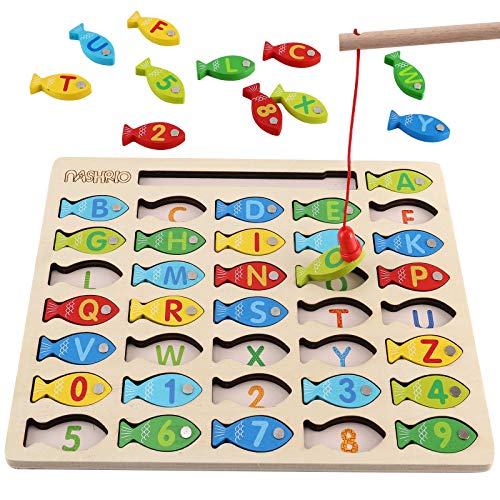
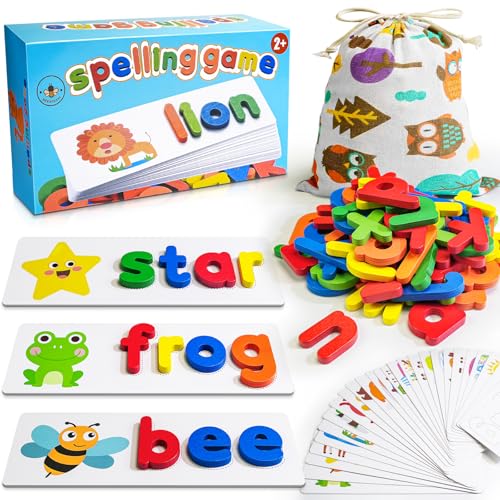
Alphabet puzzles, phonics games, and interactive storybooks build early literacy skills. Look for toys that connect letters to sounds and words to pictures. Magnetic letters, alphabet matching games, and storytelling card sets are excellent choices. These toys prepare children for reading while keeping learning playful.
Best for: Letter recognition, vocabulary, pre-reading skills.
Balanced TierAge-Specific Learning Toy Recommendations
Children develop at different rates, but these general guidelines can help you choose learning toys that match your child's current abilities and challenge them just enough to grow. Remember that the best toy is one that engages your child's interests and invites active exploration.
For 3-Year-Olds
- Large wooden puzzles with 9-12 pieces
- Stacking and nesting toys
- Simple matching games (colors, shapes, animals)
- Washable crayons and large paper
- Play dough with simple tools
- Pretend play sets (play food, doctor kit)
- Ride-on toys and push-pull toys
- Board books and interactive storybooks
- Take-apart toys for 3-year-olds with large, safe parts
- Sensory bins with rice, beans, or water
For 4-Year-Olds
- 48- to 60-piece puzzles
- Magnetic building tiles
- Alphabet and number learning games
- Scissors with rounded tips for cutting practice
- Pattern blocks and tangrams
- Simple board games with counting
- Dress-up costumes and props
- Picture books with more complex stories
- Beginner toys for 4-year-old boys and girls that challenge coordination
- Play sets with small figures (supervised)
For 5-Year-Olds
- 100-piece jigsaw puzzles
- Complex building sets with instructions
- Early coding toys and logic games
- Chapter books and early readers
- Detailed art kits with colored pencils and watercolors
- Strategy board games for young children
- Science kits with simple experiments
- Writing and tracing workbooks
- Developmental toys that prepare for kindergarten
- Construction toys with moving parts
How to Choose the Right Learning Toys for Your Child
Selecting learning toys for 3-5 year olds is about more than picking items from a shelf. Consider these factors to make thoughtful, child-centered choices that will genuinely benefit your preschooler's development.
- Follow your child's interests. A child obsessed with dinosaurs will learn more from a dinosaur-themed counting game than from a generic math toy. Observing what your child naturally gravitates toward is the best starting point.
- Look for open-ended toys. Toys that can be used in multiple ways — blocks, art supplies, pretend play props — offer more long-term value than single-purpose toys. Open-ended play fosters creativity and problem-solving.
- Check age recommendations and safety labels. Always verify that toys are appropriate for your child's age. Avoid toys with small parts for children under 3, and inspect toys regularly for wear and damage. For more detailed guidance, see our age-appropriate toys for 2-year-olds guide, which offers principles that apply across early childhood.
- Balance guided and open-ended play. Some toys, like puzzles and workbooks, have a clear goal. Others, like blocks and play dough, are entirely open-ended. Both types are valuable, so aim for a mix.
- Consider durability and materials. Preschoolers are not gentle on toys. Look for solid construction, non-toxic finishes, and materials that withstand enthusiastic play. Wooden toys, high-quality plastics, and reinforced fabric toys tend to last longer.
- Rotate toys to maintain engagement. Too many toys at once can overwhelm children. Keep a selection accessible and store the rest, rotating every few weeks. This keeps play fresh and focused.
- Involve your child in the process. When possible, let your child help choose toys. A toy that your child feels ownership over is more likely to be played with meaningfully.
Play Tips to Maximize Learning
The toy is only half the equation. How you support play makes a significant difference in what your child gains from the experience. Here are practical ways to enhance learning through play:
- Narrate and ask questions. While your child plays, describe what they are doing and ask open-ended questions: "What will happen if you put this block here?" or "Tell me about your picture." This builds vocabulary and metacognition.
- Follow your child's lead. Resist the urge to direct play. Instead, join in on your child's terms. If your child is building a tower, build alongside them rather than suggesting a different activity.
- Create a dedicated play space. A defined area with accessible storage and a comfortable surface encourages focused play. For inspiration, explore our ideas for multi-purpose furniture toys that blend storage and play.
- Incorporate learning into daily routines. Count steps as you walk, name colors during meals, and sing songs during transitions. Learning doesn't require a dedicated toy — everyday moments are rich with educational potential.
- Limit screen time during play. Background TV and tablet use can disrupt focused play. Create a screen-free environment during playtime to help your child engage deeply with toys and activities.
- Celebrate effort, not just outcomes. Praise your child for trying, persisting, and being creative — not just for completing a puzzle or building a perfect tower. This builds a growth mindset and resilience.
Related Guides You May Find Helpful
- Developmental Toys for 5 Year Olds
- Toys for 4 Year Old Boys
- Age-Appropriate Toys for 2 Year Olds
- Sensory Bin Ideas for 2 Year Olds
- Dress-Up Kits for 3 Year Olds
- Family Board Games
- Wooden Toy Train Set
- Take-Apart Toys for 3 Year Olds
- Toys for 1 Year Old Boys
- Sensory Toys for 6 Month Olds
- Infant Toys 0-6 Months
- Toys for 9 Month Olds
- Robot Dog Toy
- Toy Cash Register with Scanner and Receipt
- Garbage Truck Toy
Frequently Asked Questions
The best learning toys for 3-5 year olds combine play with skill-building. Look for building blocks and construction sets that develop spatial reasoning, puzzles that enhance problem-solving, art supplies that foster creativity, STEM kits that introduce early science concepts, and pretend play sets that build social and language skills. The key is choosing toys that match your child's developmental stage while being engaging and fun.
Learning toys support preschoolers' development across multiple domains. They build fine motor skills through manipulation and grasping, enhance cognitive abilities like memory and problem-solving, develop language through pretend play and storytelling, and teach social skills like sharing and cooperation. Educational toys also introduce early math and literacy concepts in playful, age-appropriate ways.
Quality matters more than quantity. A curated collection of 15-20 well-chosen learning toys is typically sufficient, with some kept in rotation. Too many toys can overwhelm young children and reduce focused play. Consider implementing a toy rotation system where you cycle toys in and out every few weeks to keep engagement high and maintain novelty.
Electronic learning toys can be beneficial when used in moderation and with parental involvement. They can introduce cause-and-effect relationships, letter recognition, and basic math concepts. However, open-ended toys like blocks, art materials, and pretend play sets are generally more valuable for creativity and problem-solving development. Aim for a balanced mix of electronic and traditional toys.
Look for toys that meet safety standards like ASTM F963 (US) or EN71 (EU). Check for age-appropriate labeling, avoid small parts that could be choking hazards for children under 3, ensure there are no sharp edges or points, verify non-toxic materials and finishes, and check for secure battery compartments. Always supervise play and inspect toys regularly for wear and damage.