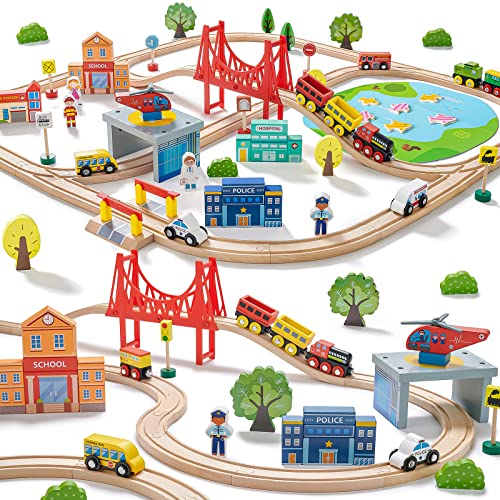
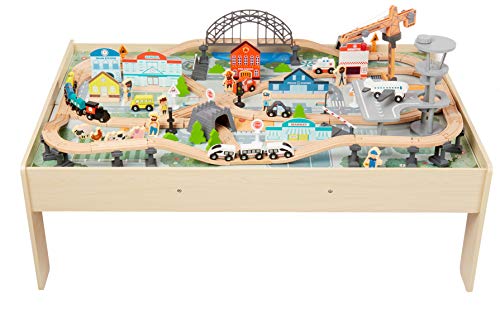
Wooden Toy Train Set: The Complete Guide for Parents
Everything you need to know about choosing, expanding, and playing with a wooden toy train set — from developmental benefits and age suitability to material safety and creative play ideas that keep children engaged for years.
Explore Recommended SetsWhy Choose a Wooden Toy Train Set?
Wooden train sets have remained a classic in early childhood play for generations, and for good reason. They combine tactile natural materials with an open-ended building system that rewards creativity. Whether your child is assembling a simple oval track or designing an elaborate multi-level railway, the experience supports development on multiple fronts. If you are also exploring broader categories of learning toys for 3-5 year olds, a wooden railway is one of the most versatile options available.
Fine Motor Development
Connecting track pieces, attaching magnetic couplers, and placing trains on the rails all strengthen the small muscles in a child's hands and fingers — the same muscles needed for writing and drawing later on.
Spatial Reasoning
Planning a track layout requires children to think about how pieces fit together, how curves connect to straights, and how to close a loop. This builds early geometry and spatial awareness skills.
Open-Ended Imaginative Play
Trains become characters, stations become destinations, and tracks become stories. A wooden railway invites children to invent narratives, which supports language development and creative thinking.
Problem-Solving & Persistence
When a track does not connect or a bridge collapses, children learn to troubleshoot, adjust, and try again — building resilience and patience through natural play.
Durability & Longevity
High-quality wooden sets are built to withstand years of active play and can be passed down between siblings. Solid hardwood construction resists wear far better than thin plastic alternatives.
Tactile Natural Material
Wood offers a warm, satisfying texture that plastic cannot replicate. Many parents prefer the sensory experience and the timeless aesthetic of a natural wood finish in the playroom.
Age Suitability: What to Look For
Wooden toy train sets are available in several forms, and the right choice depends heavily on your child's age and stage. The table below breaks down what to prioritize at each stage. For a broader look at age-based recommendations, see our age-appropriate toys for 2 year olds guide.
| Age Range | Recommended Type | Key Considerations |
|---|---|---|
| 12–24 months | Chunky toddler train with large pieces | Look for oversized trains without small magnetic parts. Focus on push-along play and simple, safe exploration. Always supervise. |
| 2–3 years | Entry-level wooden set with basic track | Simple loop layouts with few pieces. Check that couplers are securely attached and that pieces are too large to swallow. |
| 3–5 years | Standard wooden railway starter set | The ideal age for a first full train set. Children can begin connecting tracks independently and enjoy imaginative station play. |
| 5–8 years | Expanded sets with bridges, switches, and accessories | More complex layouts become possible. Children can plan multi-level tracks and incorporate themed destinations. |
| 8+ years | Large collections and advanced expansion packs | Older children enjoy designing elaborate systems and may combine sets with other building toys for hybrid play. |
Materials, Safety, and Build Quality
Not all wooden train sets are created equal. The quality of the wood, the finish, and the connection system all affect both safety and longevity. When evaluating a set, pay attention to the following features:
- Solid hardwood construction: Beech and maple are common choices because they resist splitting and hold their shape well over time. Avoid sets made from soft or composite woods that can chip easily.
- Non-toxic, water-based finishes: Look for paints and stains that are explicitly labeled as non-toxic and safe for children. Many premium sets use water-based finishes that meet strict safety standards.
- Rounded edges and smooth surfaces: Quality sets sand every edge and corner. Run your hand along the track and train bodies — there should be no rough spots or splinters.
- Secure magnetic couplers: Magnets should be firmly embedded and impossible for small hands to pry loose. Check that the polarity is consistent so trains always connect in the correct orientation.
- Compatible track system: If you plan to expand, choose a set that follows a widely supported track profile. This makes it easier to add bridges, switches, and accessories from the same or compatible brands later.
- Age-appropriate warnings: Always follow the manufacturer's age recommendation. Small magnetic parts and tiny track connectors are not suitable for children under three.
Safety Checklist Before First Play
- Inspect every piece for loose magnets, screws, or splinters before handing the set to your child.
- Confirm that the set meets current toy safety standards and carries the appropriate age warning on the packaging.
- Supervise play for children under three, and store small accessories out of reach when not in use.
- Check magnetic couplers periodically — if a magnet ever comes loose, stop using that piece immediately.
- Keep wooden pieces away from prolonged water exposure to prevent warping and finish degradation.
Understanding Quality Tiers Without the Guesswork
Wooden train sets are available across a wide spectrum of quality and completeness. Rather than focusing on specific figures, it helps to understand the relative positioning of sets on the market. The tiers below describe how sets compare within the category, so you can match your choice to your family's needs and long-term plans.
Entry-Level Tier
These sets typically include a basic loop of track and one or two trains. They are a solid choice for families testing whether a child will engage with train play, or for grandparents looking for a thoughtful starter gift. The wood may be lighter and the track count modest, but a well-made entry-level set can still provide hours of play and serve as a foundation for future expansion.
Best for: First-time buyers, gift-givers, and families who want to start simple.
Mid-Range Tier
Mid-range sets usually add more track variety — curves, straights, and perhaps a bridge or switch — along with additional train cars and themed accessories. The wood quality is noticeably more substantial, and the connection system is often designed for easy expansion. This tier represents the sweet spot for most families, offering a balanced combination of play value and long-term expandability.
Best for: Families with children aged 3–6 who want a complete, satisfying play experience from day one.
Premium and Top-Tier Tiers
Premium sets use high-grade hardwood, precision-cut track pieces, and detailed train designs with smooth-rolling wheels. Top-tier collections may include extensive track counts, multi-level bridge systems, and a wide range of themed destinations. These sets are built as long-term investments and are often passed down between siblings or even generations.
Best for: Enthusiast families, collectors, and households planning a permanent play table or railway corner.
Planning for Expansion: Building a Railway That Grows
One of the greatest strengths of a wooden toy train set is that it can grow incrementally. A child who starts with a simple oval can gradually add switches, bridges, tunnels, and destination pieces over birthdays and holidays. This makes the system an efficient long-term investment rather than a single-use purchase.
When planning expansion, prioritize pieces that unlock new layout possibilities. Switches allow for branching routes, bridges add vertical interest, and destination pieces like stations and sheds give children narrative anchors for their play. If you are also considering other open-ended construction toys, our guide to wood building kits for 12 year olds covers how older children can extend their building skills into more advanced projects.
Creative Play Ideas to Get More From the Set
A wooden train set can support far more than solo track-building. The ideas below help extend play value and keep the set interesting as your child grows.
Story-Driven Railway Play
Encourage your child to create characters and destinations. A station becomes a bustling town, a tunnel becomes a mountain pass, and each train car carries a story. This builds narrative thinking and vocabulary.
Track Design Challenges
Set simple goals: build the longest loop, create a figure-eight, or design a track that uses every piece. These challenges turn track-building into a puzzle that develops planning and persistence.
Counting and Color Games
For younger children, use the trains and track pieces to practice counting, sorting by color, and comparing lengths. The set becomes a hands-on math tool without feeling like a lesson.
Cooperative Building
Invite siblings or friends to build a shared layout. Negotiating where the bridge goes and who connects which section teaches cooperation, turn-taking, and communication.
Quiet-Time Focus Play
The repetitive, tactile nature of connecting tracks and rolling trains makes a wooden railway a calming activity. It works well as a wind-down option after school or before bedtime.
Hybrid Play with Other Toys
Combine the railway with blocks, small figures, or plush toys to create a larger imaginary world. A station can become a house, and a train can deliver a monkey stuffed animal to its next adventure.
Cleaning and Maintaining Your Wooden Train Set
Proper care keeps wooden tracks and trains in good condition for years. Wipe pieces with a damp cloth and mild soap, then dry them immediately — never soak wooden components, as moisture can cause warping and finish damage. Store the set in a dry location, and check magnetic couplers and small screws periodically for tightness. If a piece develops a rough edge, a light sanding with fine-grit paper can restore a smooth surface.
Frequently Asked Questions
What age is a wooden toy train set suitable for?
Most wooden toy train sets are designed for children aged 3 and up, as small magnetic couplers and track pieces can pose a choking hazard for younger toddlers. Some simpler sets with larger, chunkier pieces may be suitable from around 18 months, but always check the manufacturer's age recommendation on the packaging.
Are wooden toy train sets compatible with other brands?
Many wooden train sets use a standardized track connection system, which means they are often cross-compatible with other major wooden railway brands. However, magnetic couplers and track profiles can vary slightly between manufacturers, so it is best to verify compatibility before mixing brands, especially if your child wants to connect new pieces to an existing collection.
What are the educational benefits of wooden toy train sets?
Wooden toy train sets support several areas of child development, including fine motor skills through track assembly and coupling, spatial reasoning through layout planning, creative storytelling through imaginative play, and early problem-solving when children figure out how to connect different track pieces into a working loop.
How do I clean and maintain a wooden toy train set?
Wipe wooden tracks and trains with a damp cloth and mild soap, then dry immediately to prevent warping. Avoid soaking wooden pieces in water. Check magnetic couplers and small screws periodically for tightness, and store the set in a dry place to protect the wood from moisture damage over time.
Can a wooden toy train set be passed down to younger siblings?
Yes — one of the main advantages of a high-quality wooden railway is its durability. Solid hardwood construction and secure magnetic couplers mean a well-made set can withstand years of play and be handed down between siblings. Inspect the set periodically for wear and replace any damaged pieces before passing it on.
Final Thoughts Before You Choose
A wooden toy train set is one of the most enduring and developmentally rich toys you can bring into a child's life. Focus on solid construction, non-toxic finishes, age-appropriate sizing, and a track system that supports future expansion. Start with a set that matches your child's current stage, and plan to grow the railway over time. With proper care, a quality wooden railway can serve your family for years — and provide a foundation for countless hours of creative, screen-free play.