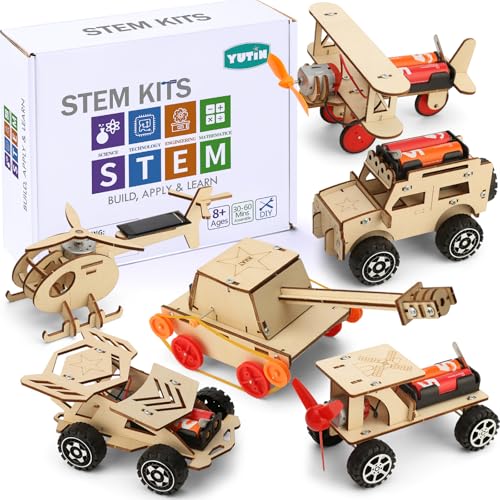
Wood Building Kits for 12 Year Olds: The Complete Buying Guide
Find the perfect wooden model kit to challenge, engage, and inspire your twelve year old. Compare skill tiers, learn which features matter, and choose a build that turns free time into real craftsmanship.
Quick Answer: For most twelve year olds, an intermediate-tier wooden building kit is the sweet spot. Look for 100 to 300 pre-cut pieces, illustrated step-by-step instructions, and a mechanism or architectural theme that matches your child's interest. These kits take several focused hours to finish and reward patience with a display-worthy model. If your teen is new to wood kits, start with an entry-level set; if they have already built several, move up to a high-end mechanical or architectural kit.
Why Wooden Building Kits Are a Great Fit at Age 12
Twelve is a transitional age. Kids this age have the fine motor control to handle small parts, the reading comprehension to follow multi-step manuals, and the patience to see a long project through. Wooden building kits match that developmental moment almost perfectly. Unlike screen-based entertainment, a physical build offers tangible progress, a clear finish line, and a finished object the teen can be proud of.
These kits also bridge the gap between "toy" and "hobby." A twelve year old who has outgrown simpler play sets can step into model building, mechanical engineering, or architectural design without feeling talked down to. That makes wood building kits a strong choice for birthdays, holidays, or screen-free weekends.
Builds Spatial Reasoning
Translating a 2D instruction diagram into a 3D object strengthens mental rotation and geometric intuition, skills that support math and engineering later on.
Trains Patience & Focus
A multi-hour build teaches sustained attention and delayed gratification, valuable counterweights to short-form digital media.
Develops Fine Motor Control
Handling small wooden gears, pins, and joints refines dexterity and hand-eye coordination in a purposeful, rewarding way.
Introduces Engineering Concepts
Mechanical kits with gears, cams, and linkages give a hands-on feel for how real machines work, a natural gateway to STEM learning.
Encourages Independence
Most twelve year olds can complete an intermediate kit with minimal supervision, building confidence and self-reliance.
Creates a Sense of Achievement
Finishing a detailed wooden model gives a tangible, displayable result that boosts self-esteem far more than a high score.
Parents often pair a wood building kit with other hands-on STEM projects to keep momentum going. If your child enjoys science experiments as much as model building, explore science project kits for 10 year olds as a complementary activity. For teens who prefer mechanical challenges, a robot dog toy can extend the same engineering curiosity into a different medium.
Understanding Wood Kit Skill Tiers
Wood building kits are not one-size-fits-all. They range from simple snap-together shapes to complex mechanical models with hundreds of moving parts. The table below shows how the main tiers compare, so you can match a kit to your twelve year old's experience level.
| Tier | Typical Piece Count | Build Time | Best For |
|---|---|---|---|
| Entry-Level | 30–80 pieces | 1–2 hours | First-time builders or a relaxed afternoon project |
| Mid-Range | 100–300 pieces | 3–8 hours | Most twelve year olds with some building experience |
| High-End Tier | 300–600+ pieces | 10+ hours | Experienced builders who want a serious challenge |
| Professional-Grade | 500+ pieces with precision joints | Multiple sessions | Teens ready for near-model-kit complexity |
Rule of thumb: If your twelve year old has never finished a wood kit, begin at entry-level. If they have completed two or three kits, a mid-range set will keep them engaged without overwhelming them. Move to high-end tier only after they have shown they can follow a long manual independently.
How to Choose the Right Wood Building Kit
Beyond skill tier, several practical factors determine whether a kit becomes a rewarding project or a frustrating shelf ornament. Use the checklist below before you commit to a set.
- Check the age label: Look for kits explicitly rated for ages 12 and up. Younger labels may include small parts or tools not suited to a twelve year old.
- Review the tool requirements: Some kits are fully press-fit and need no tools; others require a hobby knife, sandpaper, or wood glue. Confirm your child can use the listed tools safely.
- Match the theme to their interests: Architecture, vehicles, animals, mechanical contraptions, and fantasy structures all exist in wood kit form. A teen who loves cars will stay engaged with a vehicle model far longer than with a generic shape.
- Look for illustrated instructions: Clear, step-by-step diagrams are the single biggest predictor of build success. Avoid kits with text-only manuals or vague assembly notes.
- Consider moving parts: Mechanical kits with gears, cranks, or linkages add an engineering dimension that many twelve year olds find thrilling. They also tend to hold attention longer.
- Check part quality: Pre-cut plywood parts with clean edges and snug joints make the build smoother. Reviews that mention splintering or loose fits are a warning sign.
- Plan for display: Many wooden models are meant to be displayed after completion. Confirm the finished size fits a shelf or desk your child has available.
If your teen is also drawn to imaginative and fantasy-themed builds, the fantasy toys category offers creative directions that pair well with wood model building. And for younger siblings who want to join in, take apart toys for 3 year olds provide an age-appropriate introduction to construction play.
Why Wood Beats Other Kit Materials at This Age
Wood has a tactile warmth and natural variation that plastic kits cannot replicate. Each piece feels slightly different, and the finished model has a visual character that makes it feel like a genuine craft object rather than a mass-produced toy. Wood also holds up well over time, so a completed model can sit on a desk for years without yellowing or becoming brittle.
From a safety standpoint, wood kits avoid the sharp metal edges and chemical smells sometimes associated with other model materials. Sanded plywood parts are smooth to the touch, and press-fit joints mean no harsh adhesives in many designs. For parents who want a screen-free, hands-on activity that feels substantial, wood is often the most satisfying choice.
Some families pair wood building with other classic construction toys to keep variety in the rotation. A wooden toy train set is a natural companion for younger siblings, while a building block set offers open-ended construction for kids who prefer free building over following a manual.
Safety and Supervision Guidelines
Most wood building kits for twelve year olds are designed to be built with limited adult involvement, but a few sensible precautions keep the experience positive. If the kit requires cutting or trimming, introduce the tool in a supervised first session and set clear rules about blade handling and storage. Keep glue and finishes in a ventilated area, and make sure the work surface is stable and well lit.
Check the kit's age recommendation carefully. A set labeled for ages 12 and up has been assessed for the fine motor and safety skills typical of that age. If a kit is labeled for 14 and up, it may include tools or small parts better suited to older teens. When in doubt, contact the manufacturer or choose a kit with a younger age label.
Related Toy Guides for Twelve Year Olds
Wood building kits are one part of a balanced toy collection for a twelve year old. If you are planning gifts or activities across the year, these related guides can help you round out the options.
For families who want to build together, a family board game night pairs nicely with a weekend wood-building session. And if your twelve year old has younger siblings, the learning toys for 3-5 year olds guide covers age-appropriate options that keep everyone engaged.
Frequently Asked Questions
What skill level of wood building kit is best for a 12 year old?
Most twelve year olds thrive with intermediate-tier kits that involve 100 to 300 pieces, require basic tools like a hobby knife or sandpaper, and take several hours to complete. Entry-level kits may feel too simple, while advanced mechanical kits can be frustrating without adult support.
Are wood building kits safe for 12 year olds to build alone?
Yes, provided the kit is age-labelled for 12 and up and the teen follows safety guidance for cutting tools. Look for kits that include pre-cut parts and clear illustrated instructions. Adult supervision is still wise for the first session involving sharp tools.
What are the educational benefits of wooden model kits?
Wooden building kits develop spatial reasoning, patience, fine motor control, and problem-solving skills. Many kits also introduce basic engineering, mechanics, or architecture concepts, making them valuable for STEM-oriented teens.
How long does it take to complete a wooden building kit for teens?
Completion time varies by tier. Starter kits may take 1 to 2 hours, mid-range kits typically take 3 to 8 hours, and high-end mechanical or architectural kits can span 10 or more hours across multiple sessions.
Do wooden building kits need glue or special tools?
Many modern kits use press-fit or snap-together joints and need no glue. Others benefit from wood glue, sandpaper, or a hobby knife. Always check the kit description for the required tool list before starting.