Age Appropriate Toys for 2 Year Olds: The Complete Guide
Your two-year-old is a whirlwind of curiosity, energy, and discovery. This guide helps you choose toys that match their developmental stage — supporting movement, language, imagination, and problem-solving skills while keeping safety front and center.
🧸 Why This Stage Matters: At two years old, children are hitting major milestones — running, climbing, speaking in short sentences, and engaging in simple pretend play. The right toys don't just entertain; they become tools for building confidence, coordination, and cognitive skills. This guide is designed for parents and gift-givers who want to make informed choices that align with a toddler's natural development.
Understanding Your 2-Year-Old's Developmental Stage
Before selecting toys, it helps to understand what's happening developmentally. Two-year-olds are typically mastering gross motor skills like walking, running, and kicking a ball. Their fine motor control is improving — they can stack blocks, turn pages, and scribble with crayons. Language is exploding: most 2-year-olds use 50 or more words and are starting to combine them into short phrases.
Socially and emotionally, they're beginning to assert independence ("I do it!") while still needing close supervision. Pretend play emerges — feeding a doll, talking on a toy phone, or stirring a play pot. Cognitive skills like sorting, matching, and simple problem-solving are developing rapidly. Toys that tap into these emerging abilities without being frustrating are ideal.
For a broader look at how toy choices shift across early childhood, you might also explore our guide to age appropriate toys for 18 months to see the progression leading up to this stage. And if you're shopping for a younger sibling or planning ahead, our recommendations for toys for 1 year old boys offer useful context.
Best Toy Categories for 2-Year-Olds
1. Push and Pull Toys
Two-year-olds love to move — and push and pull toys channel that energy productively. A sturdy wooden toy train set that can be pushed along a track or a simple pull-along animal encourages walking, balance, and coordination. These toys also introduce cause-and-effect: push here, and the toy moves there.
Look for toys with smooth edges, easy-to-grip handles, and wheels that roll smoothly. The wooden toy train set is a classic choice that grows with your child — initially for pushing and carrying, later for imaginative track-building.
2. Building and Stacking Toys
Large building blocks, stacking cups, and simple shape sorters are perfect for this age. They develop fine motor skills, spatial awareness, and problem-solving. At two, children are just beginning to stack two or three blocks — celebrate every tower! Avoid tiny pieces; choose blocks that are large enough to be safe and easy for small hands to grasp.
Building toys also introduce early math concepts like size ordering and balance. For more ideas on toys that support this kind of learning, see our learning toys for 3-5 year olds guide, which shows how building play evolves.
3. Pretend Play Toys
Pretend play is a hallmark of this age. Toy phones, play food sets, simple dress-up items, and toy cash registers with scanners and conveyor belts all fuel imaginative scenarios. These toys support language development, social skills, and emotional expression. A toy cash register with a scanner and receipt, for example, lets your child mimic shopping trips while practicing counting and turn-taking.
For children ready to explore more structured pretend play, our guide to dress-up kits for 3 year olds is a helpful next step.
4. Sensory and Creative Toys
Sensory play is powerful at this age. Play dough, water tables, sandboxes, and squishy toys like mochi squishies or stress balls provide tactile input that supports brain development. A simple sensory bin — filled with rice, scoops, and small containers — can keep a two-year-old engaged for long stretches.
For more inspiration, explore our sensory bin ideas for 2 year olds and our collection of squishy fidget toys. Bathtime is also sensory-rich; check out our favorite bath toys for toddlers.
5. Outdoor and Active Toys
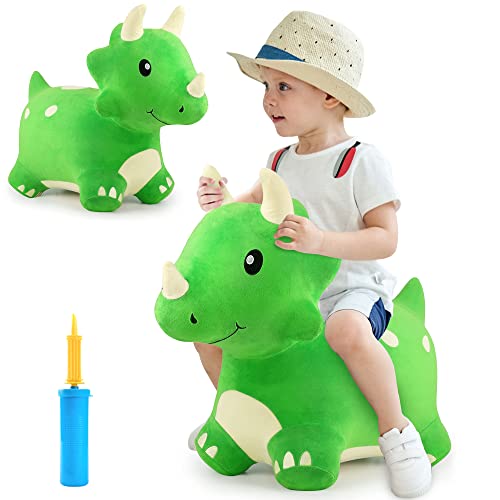
Two-year-olds need to move. Outdoor toys like a small ride-on car, a simple outdoor playset, or a blow-up bounce house for supervised play help burn energy and build gross motor skills. A foam play mat that looks like a rug can also turn any indoor space into a safe play zone.
For families with a pool, a bull floatie or small inflatable pool slide can make water play safe and fun. Explore more outdoor toys for older kids if you're shopping for siblings too.
6. Early Learning and Problem-Solving Toys
Puzzles with large, chunky pieces; simple take-apart toys; and toys with buttons, knobs, or levers support cognitive growth. A take-apart toy for 3 year olds — while slightly ahead of age 2 — often appeals to advanced two-year-olds and can be a great next-step challenge.
If you're selecting toys for a mixed-age group, our guide to developmental toys for 5 year olds can help you balance options.
Choosing Toys by Tier: A Relative Comparison
When comparing toys for 2-year-olds, it helps to think in relative tiers rather than absolute categories. The table below uses a consistent classification system — essential tier, balanced tier, and premium tier — to describe relative market positioning. This approach stays relevant over time and avoids tying recommendations to fluctuating factors.
| Tier | Category | Best For | Typical Characteristics |
|---|---|---|---|
| Essential Tier | Basic building blocks, stacking cups, simple puzzles | Everyday play, foundational skill-building | Durable construction, straightforward design, easy to clean |
| Balanced Tier | Wooden train sets, pretend play kits, sensory bins | Extended play sessions, developmental variety | Premium materials, thoughtful design, multiple play modes |
| Premium Tier | Heirloom wooden toys, complex playsets, branded learning systems | Long-term investment, multi-child use | High-grade construction, curated experience, often grows with the child |
Safety First: What to Look For
Two-year-olds explore with their mouths, so choking prevention is critical. Avoid toys with small parts that fit through a toilet-paper tube. Check that batteries are secured with screws and cannot be accessed by little hands. Look for non-toxic finishes and paints, especially on wooden toys.
- No small parts that could detach or be swallowed
- No sharp edges, points, or loose strings longer than 12 inches
- Battery compartments secured with screws
- Non-toxic, child-safe materials and finishes
- Age-appropriate safety labeling (look for "2+" or "3+" depending on the toy)
- Sturdy construction that withstands dropping, throwing, and chewing
Always supervise play, especially with water toys, outdoor equipment, and ride-on toys. For more detailed safety guidance, our toy safety guide covers standards and best practices.
The Toy Rotation Strategy for Toddlers
Too many toys can overwhelm a two-year-old. A simple rotation system — keeping 8 to 12 toys accessible and storing the rest — keeps play focused and exciting. Every few weeks, swap out the accessible toys for stored ones. This approach makes old toys feel new again and reduces clutter.
Pair rotation with good storage. A toy box or open shelving at your child's height encourages independence. For more organization ideas, see our guide to toy organization.
Toys to Avoid at Age Two
- Toys with small, detachable parts (choking risk)
- Electronic toys that encourage passive watching rather than active play
- Toys with sharp edges or fragile components
- Complex construction sets designed for older children
- Any toy without clear age-recommendation labeling
- Toys with long cords or strings
Frequently Asked Questions
What are the best types of toys for a 2 year old?
The best toys support developmental milestones: push and pull toys for movement, building blocks and shape sorters for fine motor skills, pretend play items for imagination, and sensory toys for tactile exploration. Our guide above covers each category in detail, with specific product recommendations.
How many toys should a 2 year old have?
Experts suggest keeping 8-12 toys accessible at any given time. A rotation system keeps play fresh and prevents overwhelm. Quality and variety matter more than quantity — open-ended toys that can be used in multiple ways provide the richest play experiences.
Are electronic toys good for 2 year olds?
Electronic toys can be engaging but should be used sparingly. Passive electronic toys that entertain rather than engage can limit creativity and language development. Opt for interactive electronic toys that encourage participation and turn-taking, and balance screen-free, child-led play.
What safety features should I look for?
Prioritize toys without small parts, sharp edges, or long cords. Check that battery compartments are secured with screws, look for non-toxic materials, and verify age-recommendation labeling. Always supervise play and follow the manufacturer's safety guidance.
How do I choose toys that support my 2 year old's development?
Match toys to your child's current stage — walking, talking, and beginning pretend play. Observe their interests and follow their lead. Toys that challenge emerging skills without causing frustration are ideal. See our learning toys for 3-5 year olds guide for the next stage of development.
Bottom Line: Play That Grows With Your Child
Choosing age appropriate toys for 2 year olds doesn't have to be complicated. Focus on safety, developmental fit, and open-ended play. A well-curated collection — even a small one — can support your toddler's growth across motor, language, cognitive, and social domains.
Remember: the best toy is the one your child actively engages with. Follow their interests, rotate toys regularly, and keep play supervised. For more stage-specific guidance, explore our toys by age hub or check our recommendations for 18 months and older toddlers.