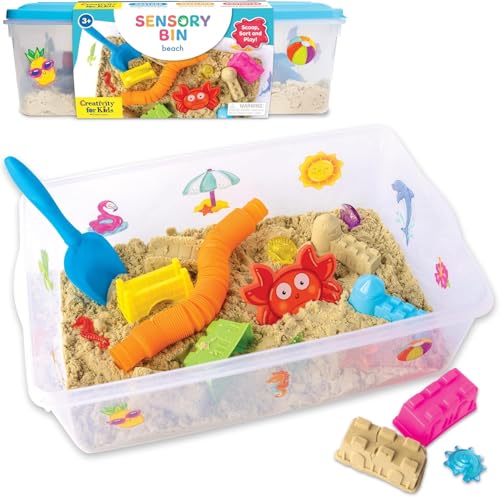
Sensory Bin Ideas for 2 Year Olds: Safe, Fun, and Easy
Sensory bins give toddlers a world of texture, color, and discovery in one contained space. Here is how to build safe, engaging bins that match a two-year-old's curiosity.
EXPLORE THE IDEASWhat You Will Find in This Guide
Why Sensory Bins Work for 2 Year Olds
Two-year-olds are natural explorers. They learn through their hands, mouths, and bodies, and they are especially drawn to texture, movement, and cause-and-effect. A sensory bin channels that curiosity into a contained, repeatable activity that supports fine motor development, language growth, and early problem-solving.
The beauty of a sensory bin is its flexibility. Unlike a single-purpose toy, a bin can be changed in minutes by swapping out the filler or adding a few new tools. A two-year-old who is bored with dry rice one week may be completely absorbed by water beads the next. This adaptability makes sensory bins one of the most cost-effective play investments a family can make.
This guide focuses specifically on the needs of two-year-olds, which differ meaningfully from older preschoolers. At this age, mouthing is still common, attention spans are short, and choking risk is a real concern. Every idea here has been chosen with those realities in mind. If you are also shopping for complementary toys, our selections of motor skills toys for 2-year-olds and top-rated toys for 2 to 3-year-olds pair well with sensory play.
Safe Fillers for Toddlers
The filler is the heart of any sensory bin, and choosing the right one is the most important safety decision you will make. For two-year-olds, avoid anything small enough to fit inside a toilet paper tube, since that is the standard choking-hazard test. The fillers below are widely used and generally safe for this age group with supervision.
Dry Rice or Pasta
Large pasta shapes such as rigatoni or penne are easier for small hands to scoop and less likely to scatter than rice. Both can be dyed with food coloring for visual appeal.
Large Pom-Poms
Soft, colorful, and easy to grasp. Choose larger sizes to reduce any risk of mouthing. Great for sorting, scooping, and color matching.
Water Beads (Supervised)
Fascinating to touch but must be used with strict supervision. Water beads are not appropriate for children who still mouth toys, so reserve them for older toddlers.
Shredded Paper
Light, easy to scoop, and visually interesting. Choose plain paper rather than glossy magazines to reduce ink exposure.
Chickpeas or Beans
Dry legumes offer a satisfying scoop and pour experience. Larger beans are safer than small lentils for two-year-olds.
Play Sand or Kinetic Sand
Kinetic sand holds its shape and is easier to clean than loose sand. Best used in a shallow tray rather than a deep bin.
Whichever filler you choose, the rule is simple: if it fits inside a toilet paper tube, it does not go in a two-year-old's bin. For more sensory play ideas that support development at this age, our guide to sensory play ideas for a 6-month-old shows how sensory experiences evolve as children grow.
Themed Bin Ideas
A theme gives a sensory bin focus and invites storytelling. The themes below are simple to set up and use materials most families already have at home.
Farm Animal Bin
Fill a shallow bin with large dried pasta or shredded paper and add a few chunky farm animal figures. Two-year-olds love to bury and uncover the animals, which supports object permanence and vocabulary. Our collection of fun learning toys for 2-year-olds offers additional ideas for building language through play.
Color Sorting Bin
Use large pom-poms in three or four colors and add matching cups or bowls. Encourage your child to sort by color. This bin supports color recognition, fine motor skills, and early categorization. Pair it with other color-focused activities from our guide to educational toys for 1 to 3-year-olds.
Water and Scoop Bin
A shallow tray of water with cups, spoons, and floating toys is one of the simplest sensory experiences available. Add a few drops of food coloring for visual interest. Water play supports hand-eye coordination and is endlessly repeatable. Our ideas for outdoor play ideas for 2-year-olds include water-based activities that pair well with this bin.
Nature Bin
Collect large pinecones, smooth stones, and leaves on a walk and place them in a bin with a magnifying glass. This bin encourages observation and language, and it changes with the seasons. For families who want to extend outdoor discovery, our guide to gross motor toys for 2-year-olds offers ideas for active outdoor play.
Play Dough Bin
Play dough is technically its own sensory category, but a shallow tray with dough, cookie cutters, and rolling pins is a classic for a reason. Choose non-toxic, taste-safe homemade dough if your child still mouths toys. Our overview of non-toxic toys for 1-year-olds offers useful guidance on material safety that applies here too.
Setup Tiers at a Glance
Sensory bins can be as simple or as elaborate as you want. The table below groups setups into three tiers based on the time and materials involved.
| Tier | Typical Setup | Best For |
|---|---|---|
| Essential tier | One filler, one or two tools, a shallow plastic container. Quick to assemble and clean. | First-time sensory bins, daily play, families with limited storage. |
| Balanced tier | Two or three fillers, themed accessories, and a dedicated bin or tray. Supports extended play. | Regular sensory play, rotating themes, toddlers who love to sort and scoop. |
| Top-tier | Curated themed bins with matching tools, storage containers, and rotating monthly themes. | Families who make sensory play a core part of the routine or who homeschool. |
Most families find the balanced tier offers the most value: it is flexible enough to keep a two-year-old engaged without requiring elaborate storage or setup. The essential tier is a great starting point if you are new to sensory bins.
How to Set Up a Sensory Bin
Setup takes only a few minutes, but a thoughtful setup makes the difference between a bin that gets used daily and one that sits in the closet. Follow these steps.
1. Choose the Right Container
A shallow plastic storage bin works best for two-year-olds. Deep bins encourage dumping and are harder for small hands to reach into. A bin roughly the size of a baking dish allows a toddler to sit beside it and reach everything comfortably. For a more permanent setup, a low sensory table gives your child a dedicated play space. Our guide to sensory table ideas for 3-year-olds shows how to scale up as your child grows.
2. Add Tools
A few simple tools make a bin far more engaging. Scoops, spoons, small cups, and tongs are the classics. Choose tools that are large enough to be safe and easy for a two-year-old to grip. Avoid anything with sharp edges or small detachable parts.
3. Introduce the Bin
Show your child how to scoop, pour, and explore. Sit beside them for the first few sessions and model the play. Two-year-olds learn best through imitation, and your presence also reinforces the safety rules.
4. Keep It Fresh
Rotate the filler or theme every week or two, or whenever interest fades. A bin that has been sitting untouched for a month is a sign it is time for a change. For more activity ideas to rotate into your routine, our guide to toys for two-and-a-half-year-olds offers a wide range of complementary options.
Safety Rules Every Parent Needs
Sensory bins are wonderful, but they require active supervision and a few firm rules. Run through this checklist before every sensory session.
- Supervise at all times: A two-year-old should never play with a sensory bin unsupervised. Mouthing is common at this age, and small pieces are a real risk.
- Test every filler: If a filler fits inside a toilet paper tube, it is a choking hazard for a two-year-old. Choose larger materials.
- Avoid small toys: Small animal figures, beads, and tiny accessories belong in older children's bins. Keep pieces large enough to be safe.
- Skip water beads for mouthing toddlers: Water beads expand in the digestive tract and are not safe for children who still put toys in their mouths.
- Use food-safe materials: If your child still mouths toys, choose taste-safe fillers such as cooked pasta, plain oats, or homemade play dough.
- Check for allergies: Some children are sensitive to certain materials. Avoid known allergens and introduce new fillers gradually.
- Clean thoroughly after play: Empty and wash the bin after each session to prevent mold and bacteria growth, especially with water-based fillers.
For families who want a broader safety framework, our guide to non-plastic toys for 2-year-olds covers material safety considerations that apply to sensory play as well.
Cleanup and Storage
Cleanup is the part of sensory play that families most often underestimate. A little planning makes it manageable. Place a washable mat or old sheet under the bin before play begins; this catches spills and makes sweeping easy. Keep a small handheld vacuum or dustpan nearby for dry fillers.
Store dry fillers in sealed containers or zip-top bags between sessions. Label the containers with the filler type and date. Water-based fillers should be emptied and the bin washed after every session. For tips on storing and maintaining all the toys in your home, our guide to toy maintenance covers routines that keep play spaces organized.
Final Verdict
Sensory bins are one of the most valuable play tools available for two-year-olds. They support fine motor development, language growth, and early problem-solving, and they are endlessly adaptable as a child's interests change. The key is to choose safe fillers, set up a simple bin, and supervise closely.
Start with the essential tier: one filler, a couple of tools, and a shallow container. As your child's engagement grows, expand into themed bins and rotate materials regularly. With a thoughtful setup and a few firm safety rules, sensory play becomes a daily ritual your toddler looks forward to. For families building a broader play collection, our selections of award-winning toys for 3-year-olds and good toys for active 2-year-olds offer natural next steps as your child grows.
Ready to build your first sensory bin? Browse our curated selection of sensory bin supplies and toddler play tools below.
SEE RECOMMENDED SUPPLIES