Age Appropriate Toys for 18 Months: The Complete Developmental Guide
Your 18-month-old is a curious explorer, constantly on the move and eager to understand the world. Discover which toys genuinely support this critical developmental stage — and how to choose them with confidence.
Why this guide matters: At 18 months, toddlers are mastering walking, beginning to run, and developing a vocabulary that grows daily. The right toys can nurture these milestones, while the wrong ones may frustrate or pose safety risks. This guide breaks down exactly what to look for, based on child development research and practical play experience.
Understanding Your 18-Month-Old's Development
Before choosing toys, it helps to understand what your toddler is working on. At 18 months, children typically demonstrate a range of skills across four key developmental domains. While every child develops at their own pace, these milestones provide a useful framework for selecting toys that match — and gently stretch — your child's abilities.
Physical & Motor Skills
- Walks independently and begins to run
- Climbs onto low furniture
- Throws a ball overhand
- Stacks two to three blocks
- Uses a spoon and drinks from a cup
Cognitive & Problem-Solving
- Points to familiar objects when named
- Imitates simple actions
- Begins to sort shapes and colors
- Understands simple cause-and-effect
- Explores toys in multiple ways
Language & Communication
- Says several single words
- Follows simple one-step instructions
- Points to show interest
- Shakes head "no"
- Enjoys being read to
Social & Emotional
- Plays alongside other children
- Shows affection to familiar people
- Begins pretend play
- May show separation anxiety
- Seeks comfort from a favorite toy
Toys that support multiple domains at once are especially valuable. A simple stacking ring set, for example, builds fine motor control, teaches size sequencing, encourages language ("big," "small," "on," "off"), and provides a sense of accomplishment. These open-ended, multi-purpose toys are the backbone of a developmentally appropriate play collection. For a broader look at toys for this age group, explore our toys for 1-year-old boys collection.
Toy Categories That Shine at 18 Months
With the developmental picture in mind, here are the toy categories that consistently deliver value for 18-month-olds. Each category targets specific skills while remaining fun and engaging.
1. Stacking & Nesting Toys
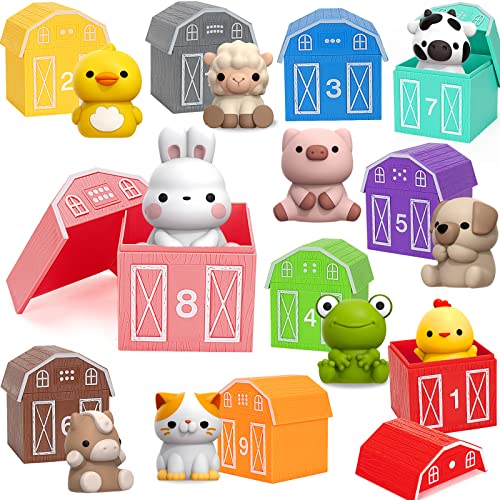
These classic toys remain a top choice for good reason. They build fine motor skills, teach size relationships, and encourage problem-solving. Look for sets with varying textures and colors to add sensory enrichment. Wooden or high-grade plastic versions with smooth edges are ideal for this age.
2. Push-and-Pull Toys
Walking is still a newly acquired skill at 18 months, and push toys — especially those with a sturdy handle — provide the confidence and support toddlers need to practice. Pull toys encourage coordination and spatial awareness as the child learns to move forward while the toy follows. Choose models with wheels that roll smoothly on both carpet and hard floors.
3. Simple Shape Sorters
Shape sorters introduce the concept of matching and problem-solving. Start with a simple sorter featuring two to three basic shapes and large, easy-to-grip pieces. Avoid complicated sorters with many pieces, which can overwhelm a young toddler. This type of toy supports cognitive development and hand-eye coordination simultaneously.
4. Large Building Blocks
Large, lightweight blocks — such as foam or oversized plastic bricks — allow toddlers to stack, knock down, and experiment with balance. The act of building and toppling teaches cause and effect while strengthening gross motor skills. Blocks also grow with your child, becoming more elaborate as their imagination develops. You can browse our wood building kits for ideas, though those are geared toward older children.
5. Board Books and First Words Toys
Language is exploding at this age, and board books are among the most powerful tools you can offer. Choose books with bright, high-contrast images and simple text. Toys that pair words with actions — such as a toy that says "moo" when a button is pressed — reinforce vocabulary and cause-and-effect understanding.
6. Pretend Play Starters
At 18 months, pretend play is just beginning. Simple props like a toy phone, a small doll, or a play food set can spark imitation games. These early pretend-play experiences build social understanding and language skills. Look for toys that are realistic enough to be recognizable but simple enough for small hands.
7. Ride-On Toys (Stationary)
A stationary ride-on toy — one that doesn't move forward — lets your toddler practice sitting, balancing, and pushing with their feet. This builds core strength and coordination. Choose one with a low seat and a stable base so your child can get on and off safely.
8. Musical and Sensory Toys
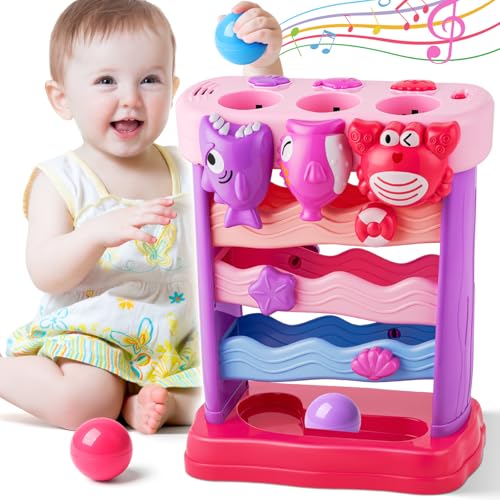
Simple musical instruments — shakers, drums, xylophones — introduce rhythm and cause-and-effect while engaging the senses. Sensory toys like textured balls or water play toys offer tactile exploration. Avoid electronic toys with loud, repetitive sounds that can overstimulate. Our sensory toys for 6-month-olds page offers more ideas that can be adapted for this age.
Comparing Toy Tiers: What to Expect at Each Level
Toys for 18-month-olds span a wide spectrum in terms of features, durability, and design complexity. To help you navigate the market without referencing specific currencies, here is a tier-based comparison. This framework focuses on what each tier generally delivers in terms of build quality and functionality.
| Tier | Best For | Typical Characteristics |
|---|---|---|
| Entry-Level | Everyday play and first introductions | Basic functionality, lightweight materials, simple designs. Good for testing which categories your child enjoys before investing further. |
| Mid-Range | Balanced value and durability | Sturdier construction, more thoughtful design details, often with additional sensory features. A solid choice for the majority of families. |
| Premium | Long-term use and heirloom quality | High-grade materials, refined craftsmanship, enhanced safety features. Often designed to be passed down or used across multiple children. |
| Luxury | Special gifts and design-conscious homes | Exceptional materials, artisanal detailing, and often brand prestige. The focus is on the experience and aesthetic as much as play value. |
In practice, the mid-range tier often offers the best balance for a toy that will be used daily. Entry-level options are perfectly adequate for toys that your child may outgrow quickly, while premium and luxury tiers make sense for items you plan to keep for years. What matters most is that the toy is safe, developmentally appropriate, and genuinely engaging for your child.
Safety First: What to Check Before You Buy
Safety is non-negotiable when selecting toys for an 18-month-old. At this age, children still mouth objects, so choking hazards are a real concern. Follow these essential guidelines:
- Check the age label: Toys marked for "18 months and up" have been assessed for this age group. Avoid toys labeled for ages 3 and up, as they may contain small parts.
- Look for small parts: Anything that fits inside a toilet paper tube is a choking hazard. This includes small detachable parts, buttons, and beads.
- Inspect for sharp edges: Run your fingers along all surfaces. There should be no sharp points or edges.
- Secure battery compartments: Battery-operated toys should have compartments that require a screwdriver to open.
- Avoid long strings and cords: Strings longer than 7 inches pose a strangulation risk. This includes pull toys with long cords — choose ones with shorter, safer handles.
- Verify non-toxic materials: Look for toys that use non-toxic paints and finishes, especially for items likely to be mouthed.
For more detailed safety guidance, refer to our comprehensive toy safety resources. Also consider browsing our toys for 9-month-old page to understand the safety considerations that carry over from earlier stages.
How Many Toys Does an 18-Month-Old Need?
It's tempting to build a large toy collection, but research and practical experience suggest that fewer toys lead to deeper, more focused play. A well-curated set of 8–12 toys that are rotated regularly is often more beneficial than a room full of options.
Consider a toy rotation system: keep a small selection accessible and store the rest out of sight. Swap the selection every week or two. This approach keeps toys feeling fresh, reduces clutter, and encourages your child to engage more deeply with each item. It also makes clean-up manageable for both you and your toddler.
For families looking to streamline their toy collection, our multi-purpose furniture toys guide explores storage solutions and play furniture that serve double duty. And if you're looking ahead to the next stage, our age appropriate toys for 2-year-olds page will help you plan the transition.
Building a Play Space That Supports Development
The environment around the toys matters as much as the toys themselves. Create a play area with low, open shelving so your toddler can see and reach their toys independently. Use soft floor coverings — a foam play mat that looks like a rug can provide comfort and safety. Keep the space uncluttered and rotate toys to maintain interest.
Designate different zones if space allows: a quiet corner with books and a soft cushion, an active area for building and push toys, and perhaps a sensory bin station for supervised play. Even a small apartment can accommodate these zones with a bit of creativity.
Practical Tips for Choosing Toys at This Stage
- Prioritize open-ended toys: A set of blocks can be stacked, sorted, lined up, or used as pretend food. Open-ended toys grow with your child's imagination.
- Observe before you buy: Notice what your child gravitates toward during play. Do they prefer active toys or quiet, focused activities? Choose accordingly.
- Look for durability: Toddlers are not gentle. Choose toys with solid construction and reinforced joints that can withstand enthusiastic play.
- Avoid overstimulation: Toys with flashing lights and loud sounds can overwhelm young children. Simpler toys encourage deeper concentration.
- Include your child in the process: When possible, let your toddler explore a toy briefly before you commit. Their interest is the best indicator of whether a toy will be used.
Ready to explore specific toy recommendations? Browse our curated selection below, featuring toys selected for their developmental value and safety for 18-month-olds.
View Recommended ToysFrequently Asked Questions
What types of toys are best for an 18-month-old?
The best toys for an 18-month-old support their rapidly developing motor skills, language, and cognitive abilities. Look for stacking and nesting toys, push-and-pull toys, simple shape sorters, large building blocks, board books, and toys that encourage pretend play. These categories align with the developmental milestones of this age.
How many toys does an 18-month-old really need?
Children at this age thrive with fewer, higher-quality toys that can be used in multiple ways. A curated selection of 8-12 toys rotated regularly is often more beneficial than a large collection. Focus on open-ended toys that grow with your child and support different types of play.
Are electronic toys good for 18-month-olds?
While electronic toys can be engaging, they are generally less effective for development at this age than simple, open-ended toys. Toys that require the child to be an active participant rather than a passive observer are better for language and cognitive development. Choose electronic toys that encourage interaction and avoid those with excessive screen time.
What safety features should I look for in toys for an 18-month-old?
Look for toys labeled for ages 18 months and up, with no small parts that could be choking hazards. Ensure there are no sharp edges or points, and that batteries are securely enclosed. Avoid toys with long strings or cords. Always check for sturdy construction and non-toxic materials.
How can I encourage language development through play at 18 months?
Narrate your child's play ("You're stacking the red block on top!"), ask simple questions ("Where's the ball?"), and use toys that prompt interaction. Board books, toys with realistic sounds, and pretend-play props all create natural opportunities for language. Follow your child's lead and respond to their attempts to communicate.
For more age-specific guidance, explore our age appropriate toys for 18 months resource page, and don't miss our toys for 4-year-old boys guide for when your child is ready for the next stage.