Toys for 9 Month Old: The Complete Developmental Buyer's Guide
At nine months, your baby is crawling, sitting, reaching, and exploring cause and effect. The right toys support these milestones while staying safe for a mouthing, curious little explorer. Here's everything to consider before you choose.
Explore Top Picks🧸 Why toy choice matters at 9 months: Nine months is a period of rapid motor and cognitive growth. Babies are pulling up to stand, transferring objects between hands, and beginning to understand that actions cause reactions. The best toys for 9 month olds are simple, safe, and open-ended — they invite grasping, banging, stacking, and repeated exploration rather than passive entertainment. This guide helps you choose toys that match this stage and grow with your child.
What's Happening Developmentally at 9 Months?
Understanding the milestones your baby is working on makes it much easier to choose toys that genuinely support their development rather than sitting unused in a toy bin.
- Gross motor: Sitting without support, crawling or scooting, pulling up to stand, and cruising along furniture.
- Fine motor: Picking up small objects with a pincer grasp, transferring items between hands, and banging objects together.
- Cognitive: Exploring cause and effect, searching for partially hidden objects, and beginning to understand object permanence.
- Language: Babbling with varied sounds, responding to their name, and imitating simple sounds.
- Sensory: Intense curiosity about textures, tastes, and sounds — mouthing is a normal part of exploration.
Our guide to toys and activities for 4 month olds covers the earlier stage if you're tracking your baby's developmental progression, and the sensory play ideas for 6 month olds page bridges the gap before nine months.
Key Toy Categories for 9 Month Olds
Not every toy suits this age. The categories below are the ones that most directly support the skills a nine-month-old is developing.
Stacking & Nesting Toys
Stacking cups and rings build hand-eye coordination, teach size relationships, and encourage problem-solving through trial and error.
Sensory Balls
Textured, easy-to-grip balls encourage reaching, grasping, rolling, and crawling after. Look for ones without small parts.
Activity Cubes
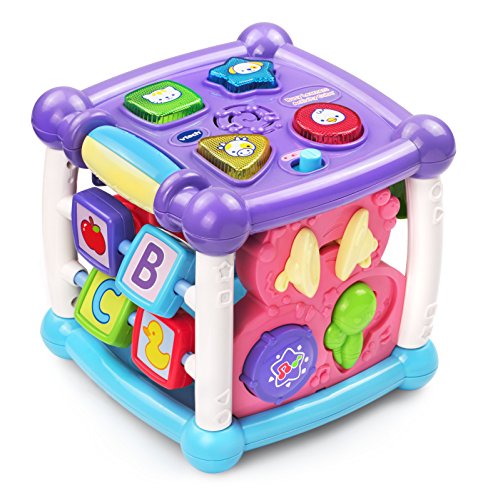
Multi-sided activity centers offer buttons, dials, and textures that teach cause and effect and keep babies engaged in sitting play.
Board Books
Sturdy board books with high-contrast images and simple textures support language development and early page-turning skills.
Cause-and-Effect Toys
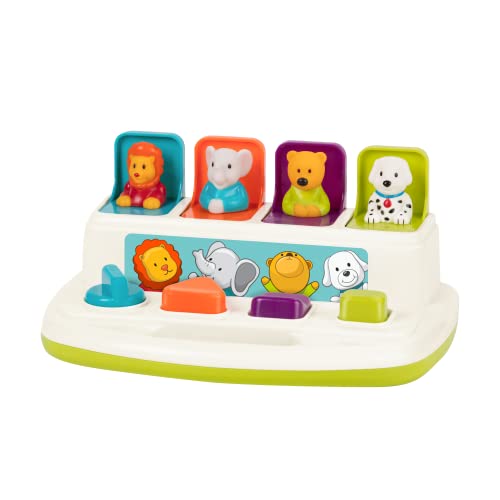
Toys with buttons, pop-up features, or sounds that respond to a baby's action reinforce the understanding that their actions matter.
Textured Teethers
Safe, non-toxic teethers with varied textures soothe sore gums and satisfy the strong mouthing drive at this age.
Pull-Along & Push Toys
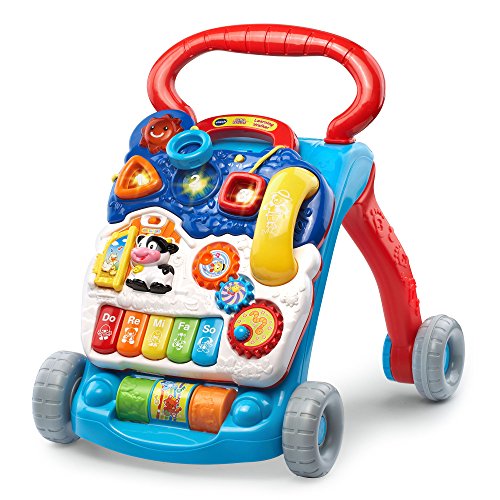
Simple pull-along toys encourage crawling and early walking, while sturdy push toys support pulling up and cruising.
Soft Blocks
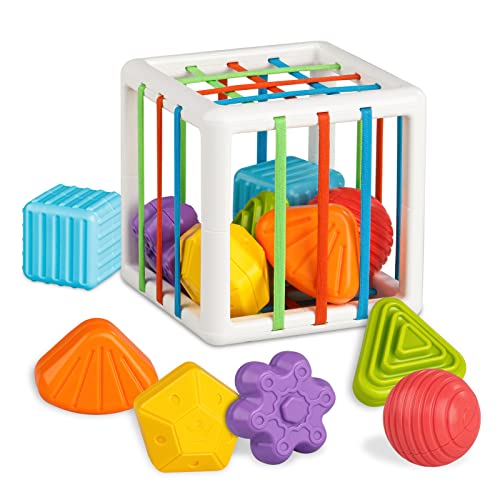
Soft, squeezable blocks are safe for mouthing and banging and introduce early stacking and building concepts.
Mirrors
Baby-safe mirrors support self-recognition, visual tracking, and tummy time engagement.
Matching Toys to the Nine-Month Stage
Within the nine-month window, babies vary widely in their abilities. The table below maps typical skills to the toy types that best support them.
| Skill Focus | Toy Category | What It Supports |
|---|---|---|
| Sitting & reaching | Activity cubes, sensory balls | Hand-eye coordination, trunk stability during seated play |
| Crawling & movement | Rolling balls, pull-along toys | Gross motor strength, visual tracking, motivation to move |
| Fine motor & grasp | Stacking cups, soft blocks | Pincer grasp, object transfer, size discrimination |
| Cognitive & cause-effect | Pop-up toys, button boards | Understanding that actions produce results, object permanence |
| Language & sensory | Board books, textured teethers | Sound imitation, vocabulary exposure, oral sensory exploration |
Many parents pair these toys with simple sensory setups. The sensory table ideas for 3 year olds page offers inspiration that can be simplified for younger babies, while the sit and play toys for 6 month olds guide covers seated play options that bridge into the nine-month stage.
Entry-Level vs. Mid-Range vs. High-End Tier
Toy quality for nine-month-olds varies considerably. Understanding the tiers helps you match the toy to your child's needs and your family's usage patterns.
| Tier | Best For | Typical Characteristics |
|---|---|---|
| Entry-Level | Short-term use and simple exploration | Basic construction, fewer textures, simpler mechanisms. A solid introduction for families building a first toy collection. |
| Mid-Range | Families who want toys that last through toddlerhood | Durable construction, more varied textures, better mechanisms, and designs that grow with the child into the toddler years. |
| High-End Tier | Daily use and multi-sibling households | Premium materials, non-toxic certifications, reinforced build, and the most durable construction in the category. |
As a general rule, mid-range toys usually offer the best balance of durability and developmental value for a typical family. Entry-level toys are ideal for a first introduction, while high-end tier toys make sense when they will be used daily and passed down to younger siblings. For broader ideas, the educational toys for 1-3 year olds guide covers the next developmental stage.
Safety Checklist Before You Buy
Safety should drive every decision. At nine months, mouthing is constant, so material safety and choking hazard prevention are paramount.
Must-Have Safety Features
- Explicit non-toxic certification (BPA-free, phthalate-free, lead-free)
- No small parts that could detach and pose a choking hazard
- No long cords, strings, or straps longer than 7 inches
- No loose batteries, magnets, or easily removable components
- Rounded edges and smooth surfaces free of sharp points
- Sturdy construction that withstands dropping, banging, and chewing
- Clear age and safety labeling from the manufacturer
- Easy-to-clean surfaces for hygiene
It's also wise to build good cleaning habits early. Our toy maintenance guide covers cleaning and storage practices that keep frequently-mouthed toys hygienic and safe. For families choosing plastic-free options, the non-plastic toys for 2 year olds guide offers natural-material alternatives that share safety principles with the nine-month stage.
Common Mistakes Parents Make
- Buying toys that are too advanced. Toys designed for older toddlers often have small parts or complex mechanisms that frustrate a nine-month-old and pose safety risks.
- Ignoring the mouthing stage. Every toy at this age will likely end up in your baby's mouth. Prioritize non-toxic materials above all else.
- Overloading the toy bin. Too many toys at once overwhelms babies and reduces focused play. A toy rotation system keeps engagement high with fewer toys.
- Skipping the cleaning routine. Frequently-mouthed toys need regular cleaning. Wipe down hard toys and wash fabric toys according to the manufacturer's instructions.
- Choosing screen-based toys too early. At nine months, hands-on, open-ended play is far more valuable for development than screen-based entertainment.
- Forgetting to baby-proof the play area. Toys alone don't make a space safe. Ensure outlets are covered, furniture is anchored, and small household items are out of reach.
How to Choose the Right Toys for Your Nine-Month-Old
With the categories, tiers, and safety checklist in mind, narrow your shortlist using these practical questions:
- What skill is your baby working on right now? Crawling babies benefit from rolling toys; sitting babies benefit from activity cubes and stacking toys.
- Is the toy safe for mouthing? At nine months, assume every toy will be chewed. Non-toxic certification is non-negotiable.
- Will it grow with your child? Mid-range and high-end tier toys often remain engaging well into the toddler years.
- How many toys does your baby already have? A small, rotating collection outperforms an overflowing toy bin every time.
- Does it encourage active exploration? Open-ended toys that invite grasping, banging, stacking, and movement are the most developmentally valuable.
For families planning ahead, the top selling toys for 1 year olds guide covers the next stage, and the fun learning toys for 2 year olds page shows how play evolves as children grow.
Frequently Asked Questions
Ready to Choose the Perfect Toys for Your 9 Month Old?
Browse our hand-picked selection of safe, developmentally appropriate toys for 9 month olds, organized by category and tier, and find the picks that match your baby's stage.
See Recommended Toys