
Science Project Kits for 10 Year Olds
Unlock your child's inner scientist with hands-on experiments, exciting discoveries, and STEM adventures designed specifically for curious ten-year-olds.
Explore Top Picks🔬 Why Science Kits Matter at Age 10: Ten-year-olds are at a perfect stage for scientific exploration. Their reading skills are strong, their curiosity is boundless, and they can follow multi-step instructions with growing independence. The right science project kit transforms abstract concepts into tangible discoveries—turning "I wonder why" into "I just figured it out!" Whether your child dreams of being a chemist, an engineer, or simply loves to ask questions, these kits build critical thinking, patience, and a lifelong love of learning.
What Makes a Great Science Project Kit for a 10-Year-Old?
Choosing the right kit goes beyond a flashy box. At this age, children benefit most from kits that balance challenge with achievability. Here are the key qualities to look for:
🧪 Age-Appropriate Complexity
Experiments should require some adult guidance but allow the child to take the lead. Look for clear step-by-step instructions and safe materials that encourage independent problem-solving.
📚 Educational Depth
The best kits explain the "why" behind each experiment. A great kit doesn't just show a reaction—it teaches the underlying scientific principle in a way a ten-year-old can grasp and remember.
🔄 Replayability
Kits that offer multiple experiments or that can be repeated with household items provide lasting engagement. Look for kits with reusable components and extension activities.
🛡️ Safety First
Ensure the kit includes child-safe chemicals, non-toxic materials, and clear safety guidelines. Supervision is still important, but the kit should minimize risk through thoughtful design.
🎯 Clear Learning Outcomes
Whether it's building a circuit, growing crystals, or launching a rocket, the kit should have a defined goal that gives the child a sense of accomplishment and a tangible result.
🧩 Quality of Components
Durable, well-made parts make a difference. Flimsy equipment frustrates young scientists. Prioritize kits with solid construction and reliable results.
Types of Science Project Kits for 10-Year-Olds
The world of science kits is vast. Here's a breakdown of the most popular categories and what each offers:
| Kit Category | Best For | Key Skills Developed | Tier Example |
|---|---|---|---|
| Chemistry Kits | Kids who love mixing, observing reactions, and asking "what happens if…" | Observation, lab safety, understanding chemical reactions | Mid-range to premium |
| Physics & Engineering Kits | Builders and tinkerers who enjoy constructing and testing machines | Problem-solving, spatial reasoning, mechanical principles | Starter tier to high-end tier |
| Robotics & Coding Kits | Tech-savvy kids interested in how things work and basic programming | Logic, sequencing, introductory coding, perseverance | Mid-tier to top-tier |
| Earth & Space Science Kits | Curious minds fascinated by planets, rocks, weather, and the cosmos | Geology, astronomy, data collection, observation | Essential tier to mid-range |
| Biology & Nature Kits | Animal lovers and kids who enjoy the outdoors and living things | Microscopy, classification, ecology, patience | Entry-level to premium |
Top Science Project Kits for 10-Year-Olds
Our experts have curated a selection of standout kits across different categories. Each offers a unique blend of fun, learning, and quality. Use the tier descriptors to understand relative positioning in the market—from essential entry points to top-tier comprehensive sets.
Recommended Science Project Kits for 10-Year-Olds
⚠️ AFFILIATE DISCLOSURE: This website contains affiliate links. As an Amazon Associate, we earn from qualifying purchases. If you make a purchase through these links, we may receive a small commission at no additional cost to you. Read our full affiliate policy.
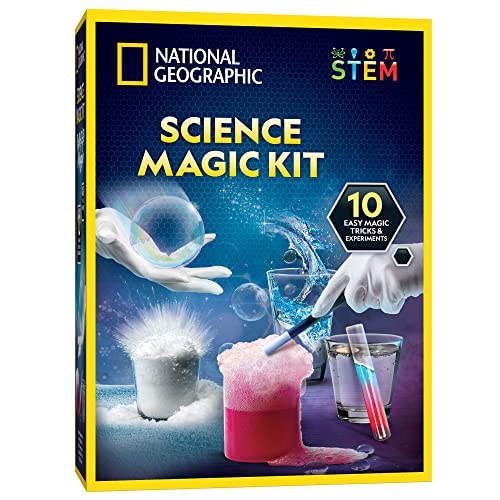
National Geographic Magic Chemistry Set with 10 Tricks for Kids Ages 8-12 | Science Experiments, STEM Projects, Science Toys, Hands-On Learning, Magic Tricks, Birthday Gift
Check price on Amazon
UNGLINGA 150 Experiments Science Kits for Kids Chemistry Lab S.T.E.MToys | Volcano, Crystal, Magic, Dig, Reation, Physics, Scientist Tools Set, Educational Project for Boys Girls Birthday Gifts Ideas
Check price on Amazon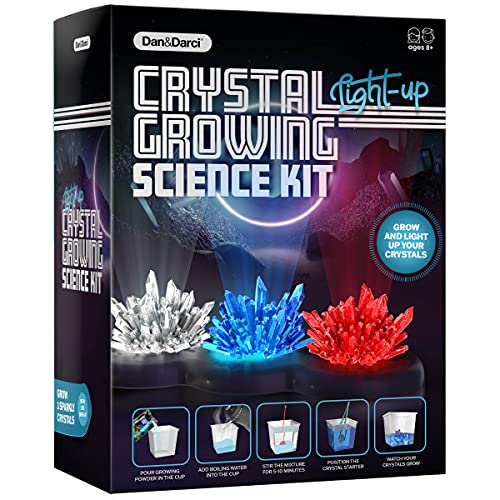
Light-up Crystal Growing Kit for Kids - Science Kits for Kids Age 8-12 - 6 7 8 9 10 Year Old Boy Birthday Gifts - Gifts for Girls - STEM Toys for 7 Year Old Boys, Experiment Crafts for Age 10-12 Years
Check price on Amazon
STEM Kits for Kids Crafts 6-8 8-12, Boys Gifts Toys for 6 7 8 Year Old Boy | STEM Toys Crafts for 6 7 8 9 10 Year Old Boy Birthday Gift Idea, Robotics Science Kits Activities Robot Building 5-7 8-13
Check price on Amazon
Smartivity My First Science Experiment Kit for Kids 6-14 Years | 50+ Amazing Science Experiments | Educational STEM Toy | Birthday Gift for Boys & Girls Ages 6,7,8,9,10,11,12,13,14
Check price on Amazon
Science Kit for Kids,80 Science Lab Experiments,Scientist Role Play | STEM Educational Learning Scientific Tools,Birthday Gifts and Toys for 8 9 10 Years Old Boys Girls Kids
Check price on Amazon
Doctor Jupiter Girls' Ultimate Science Experiments Kit for Kids Ages 8+ | Birthday Gift Ideas for Girls 9, 10, 11, 13, 14, 135+ Experiments, Science Kits for Kids Ages 8-12, Learning, Educational Toy
Check price on Amazon
STEM Kits for Kids Robotics Kit Set, Boys Craft Educational STEM Toys Gifts | Science Experiments Project Activities for Kids, Engineering Building Electronic Motor Craft for 8 9 10 12 Year Old Birthday
Check price on AmazonHow to Choose the Right Kit for Your Child
With so many options available, narrowing down the choice can feel overwhelming. Follow this simple framework:
1. Identify Their Interest
Does your child gravitate toward building, mixing, observing nature, or tinkering with gadgets? Start with a kit that aligns with their natural curiosity. A child who loves LEGO will likely thrive with an engineering or robotics kit, while a nature enthusiast may prefer a biology or earth science set.
2. Consider the Learning Curve
Look for kits labeled for ages 10+ or "grades 5-8." These are designed with the cognitive and motor skills of ten-year-olds in mind. Avoid kits that are too simplistic (which can bore) or too advanced (which can frustrate). The ideal kit stretches their abilities without overwhelming them.
3. Check for Reusability
Kits that can be used multiple times or that include refill options offer better long-term engagement. Some kits provide digital access to additional experiments or online resources, extending the learning beyond the box.
4. Read Reviews and Ratings
Parent and educator reviews are invaluable. Look for feedback on clarity of instructions, reliability of results, and durability of components. A kit that consistently delivers successful experiments is worth its weight in gold.
5. Factor in Supervision Needs
Some experiments require adult supervision due to chemicals or heat. Be honest about how much time you can dedicate. Kits that are largely self-directed are great for independent play, while more involved kits can become wonderful bonding experiences.
6. Look for Educational Value
The best kits go beyond entertainment. They explain the science, encourage hypothesis testing, and connect experiments to real-world applications. A kit that sparks follow-up questions and further exploration is a winner.
⚠️ Safety Reminder: Always review the kit's safety guidelines with your child before starting. Ensure proper ventilation, use protective gear when provided, and keep younger siblings away from small parts or chemicals. Even "safe" kits benefit from adult oversight, especially during first-time experiments. For more on toy safety, explore our toy safety guide.
Frequently Asked Questions
Are science kits safe for 10-year-olds to use independently?
Most science kits designed for ages 10+ are formulated with safety in mind, but adult supervision is still recommended, especially for chemistry kits involving liquids or reactions. Read the instructions together first, establish ground rules, and ensure your child understands the importance of following steps precisely. Over time, many children can handle the kits with minimal oversight.
How do I know if a kit is age-appropriate?
Check the manufacturer's age recommendation on the box. Kits labeled "10+" or "grades 5-8" are specifically designed for this developmental stage. Additionally, read reviews from other parents—they often provide real-world insight into whether the kit's complexity matches the stated age range. If a kit seems too advanced, it can always be saved for later or used with more parental guidance.
What if my child loses interest quickly?
Choose kits with multiple experiments or open-ended components that allow for repeated use. Kits that build something lasting (like a robot or a crystal garden) tend to hold attention longer. You can also try rotating kits—put one away for a few weeks and reintroduce it later. Sometimes a fresh perspective reignites enthusiasm.
Can these kits be used for school projects?
Absolutely. Many science project kits align with school curriculum standards and are perfect for science fair projects or classroom demonstrations. They provide a structured way to explore scientific concepts and often include explanations that help children articulate their findings. Just be sure to check with teachers about any specific requirements.
How can I extend the learning beyond the kit?
Encourage your child to keep a science journal, take photos of their experiments, and research related topics online or at the library. Many kits come with links to additional resources. You can also plan simple follow-up experiments using household items to reinforce the concepts learned. The goal is to foster a habit of inquiry that extends far beyond the kit itself.
Explore More Educational Toys
Looking for other ways to nurture your child's development? Check out these related guides:
- Educational Toys: A Comprehensive Guide — Discover toys that make learning fun across all ages.
- STEM Toys for Kids — Explore the best in science, technology, engineering, and math.
- Toys for 9-12 Year Olds — Find age-appropriate picks that challenge and delight.
- Family Board Games — Bring the family together with games that teach strategy and cooperation.
- Learning Toys for 3-5 Year Olds — Start the STEM journey early with foundational toys.
Ready to Inspire Your Young Scientist?
Browse our recommended science project kits above and find the perfect match for your child's curiosity. Whether they're mixing potions, building circuits, or exploring the cosmos, the right kit opens a world of discovery.
View Top Picks