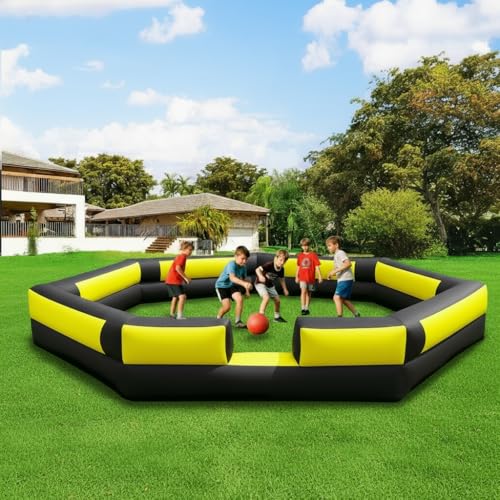
Gaga Ball Pit for Sale: The Complete Buyer's Guide
Everything you need to choose the right gaga ball pit for your backyard, school, camp, or community park — from panel construction and safety features to size selection and surface preparation.
Explore Top Picks🎯 Quick Overview: A gaga ball pit is an octagonal or hexagonal enclosure where players dodge and strike a soft ball below the knee. It is one of the most inclusive playground games available — easy to learn, fast-paced, and suitable for mixed-age groups. This guide helps research-stage buyers understand construction tiers, safety standards, and the practical differences between portable and permanent installations before choosing a pit.
What Is a Gaga Ball Pit and Why Is It So Popular?
Gaga ball (also spelled "ga-ga" or "gaga pit") originated in Israeli playgrounds and has spread rapidly across schools, summer camps, and family backyards worldwide. The game is played inside a walled enclosure — typically octagonal — where players use their hands or fists to hit a soft ball at opponents. A player is eliminated when the ball touches them below the knee, and the last player remaining wins the round.
The appeal is straightforward: gaga ball requires minimal equipment, accommodates large groups, and levels the playing field between athletic and non-athletic children. Unlike many playground games, it rewards quick reflexes and spatial awareness rather than raw strength. This inclusivity is why schools and camps frequently invest in a dedicated gaga pit as a permanent or semi-permanent fixture.
For families exploring outdoor toys for two-year-olds or seeking active group games, a gaga pit complements other backyard installations like a children's playhouse with swing and slide or residential playground equipment. The game's social nature also makes it a natural fit alongside fun outdoor toys for nine-year-olds and older age groups.
Gaga Ball Pit Construction Tiers: Entry-Level to Commercial-Grade
Buyers researching a gaga ball pit for sale will encounter three broad construction categories. Understanding these tiers helps align expectations with intended use, expected player volume, and installation environment. The descriptors below are relative market positions, not absolute specifications.
Starter Tier Pits
Lightweight interlocking panels, often high-density polyethylene or composite wood. Best for backyard use with younger children and occasional play. Assembly is typically tool-free, and the pit can be relocated seasonally. Suitable for families testing interest before committing to a permanent structure.
Balanced Tier Pits
Reinforced panel construction with thicker walls, rounded cap edges, and galvanized or powder-coated hardware. A solid choice for schools, churches, and community centers with moderate daily use. These pits balance durability with manageable installation requirements and often include integrated bench or entry-gate features.
Commercial-Grade Pits
Heavy-duty steel or high-grade aluminum framing, weather-resistant coating, and rust-proof finish designed for high-traffic public parks and large school districts. These installations are anchored permanently, meet stringent safety standards, and represent a long-term investment for institutions planning decades of use.
Key Features to Evaluate Before You Buy
Not all gaga pits are built to the same standard. The following features differentiate a well-specified pit from a basic enclosure and directly affect safety, longevity, and player experience.
- Panel Material: High-density polyethylene resists splintering and moisture; composite wood offers a natural look but requires more maintenance; steel and aluminum provide the highest durability for commercial-grade installations.
- Wall Height: Standard gaga pit walls measure around 24 to 30 inches. Lower walls suit younger children, while taller walls prevent balls from escaping during aggressive play.
- Rounded Cap Edges: Safety caps on top of panels reduce impact injuries. Look for smooth, UV-resistant caps that stay secure over time.
- Fastening System: Bolted or pin-locked connections are more secure than friction-fit panels. Commercial-grade pits typically use tamper-resistant hardware.
- Entry Gate: A hinged or removable gate simplifies access and helps control player flow. Some pits include a small integrated bench for waiting players.
- Drainage: Slotted or raised bottom edges prevent water pooling on the playing surface, extending the pit's usable life outdoors.
- Ball Compatibility: Most pits accommodate standard 8-inch foam or rubber gaga balls. Confirm the panel gap width does not allow the ball to escape underneath.
Buyers comparing a gaga pit alongside other active outdoor investments may also research foam blaster toys, gross motor toys, or cool outdoor toys for five-year-olds to build a well-rounded play area that serves multiple age groups.
Choosing the Right Size for Your Space
Size selection depends on three factors: the number of simultaneous players, the available flat surface area, and whether the pit will be portable or permanent. The table below outlines common configurations to guide your decision.
| Tier / Configuration | Typical Player Capacity | Best For | Installation Type |
|---|---|---|---|
| Compact starter tier | 4–8 players | Backyards, family homes | Portable, tool-free |
| Standard mid-tier | 8–14 players | Schools, churches, camps | Semi-permanent, anchored panels |
| Large mid-tier | 12–18 players | Community centers, parks | Permanent with ground anchors |
| Commercial-grade | 16–24+ players | Public parks, large school districts | Permanent, engineered installation |
Beyond player capacity, allow a buffer zone of at least 4 to 6 feet around the exterior of the pit for safe entry and exit. The playing surface should be level and free of debris. Concrete, asphalt, and rubberized playground surfacing are ideal; grass can work if well-maintained and level, but it wears quickly under heavy use. For families planning a broader backyard upgrade, pairing a gaga pit with children's play tents or outdoor play equipment for 2–5 year olds creates a layered play environment for different ages.
Safety Considerations and Age Recommendations
Gaga ball is generally a low-risk activity, but safety depends on proper installation and supervision. Consider the following when evaluating a gaga ball pit for sale:
- Age Suitability: Most manufacturers recommend gaga pits for ages 5 and up. Younger children can play with a softer ball and closer supervision.
- Ball Selection: Use soft foam or low-bounce rubber balls. Avoid hard plastic or dense rubber balls that can cause injury on impact.
- Panel Integrity: Inspect fasteners and caps periodically. Loose panels or missing caps create pinch and impact hazards.
- Supervision: Adult supervision is recommended for children under eight, and rule enforcement (no hitting above the knee, no pushing) is essential for fair play.
- Surface Maintenance: Keep the playing surface free of standing water, loose gravel, and debris. Repair cracks in concrete promptly.
Schools and parks should verify that the selected pit meets applicable playground safety standards for their region. Commercial-grade installations typically include documentation and compliance labeling. For families building a broader outdoor play area, resources on heavy-duty metal swing sets and residential playground equipment offer useful context on durable outdoor structures.
Portable vs. Permanent: Which Installation Suits Your Needs?
Portable gaga pits use interlocking panels that assemble and disassemble without tools. They suit families who relocate the pit seasonally, camps that rotate equipment between sites, and renters who cannot modify the ground. The trade-off is slightly lower rigidity and a shorter lifespan under heavy use.
Permanent gaga pits are anchored into the ground using stakes, concrete footings, or engineered brackets. They offer superior stability, withstand high-traffic play, and require less maintenance over time. Schools, parks, and community centers typically choose permanent installations as a long-term investment. Portable options are often preferred for children's play houses and temporary event setups where flexibility matters more than permanence.
Both types can be paired with other outdoor installations. A gaga pit works well alongside a blow-up slide with pool for summer events, or near ride-on toys for 5–7 year olds to create a multi-activity play zone.
Setup Tips for a Safe and Durable Installation
Proper setup extends the life of your gaga pit and improves the playing experience. Follow these practical steps:
- Prepare a Level Surface: Clear the area of roots, rocks, and debris. Compact the ground or pour a concrete pad if installing permanently.
- Follow Manufacturer Instructions: Use the provided hardware and follow the recommended assembly sequence. Do not substitute fasteners.
- Anchor Securely: For permanent pits, drive stakes or set footings according to the manufacturer's depth and spacing guidelines.
- Check Panel Alignment: Ensure panels are flush and gaps are consistent. Misaligned panels create weak points and ball-escape gaps.
- Install Safety Caps: Secure all top caps before allowing play. Replace any cracked or loose caps immediately.
- Mark Boundaries: Use paint or tape to mark the playing area and entry zone, reducing confusion during games.
For families coordinating a larger backyard build, guides on battery-operated ride-on cars with remote control and electric ride-on toys for three-year-olds can help plan complementary active-play zones.
Frequently Asked Questions
What is a gaga ball pit and how does the game work?
A gaga ball pit is an octagonal or hexagonal enclosure where players hit a soft foam or rubber ball at each other below the knee. Players are eliminated when hit, and the last person standing wins. It is a fast-paced, inclusive game popular in schools, camps, and backyards.
What size gaga ball pit should I choose for a backyard versus a school?
Backyard pits typically range from small octagons suited for 4–8 players, while school and park installations use larger commercial-grade pits that accommodate 10–20+ players. Match the pit size to the number of expected players and available space.
Are gaga ball pits safe for younger children?
Yes, when age recommendations are followed and adult supervision is present. Soft foam balls, rounded wall caps, and secure panel connections reduce risk. Always check safety labels and supervise play for children under six.
Do gaga ball pits require installation or can they be portable?
Both options exist. Portable pits use interlocking panels that assemble and disassemble without tools, ideal for camps and rotating events. Permanent installations are anchored into the ground for schools, parks, and community centers.
What is the best surface for a gaga ball pit?
Smooth, level surfaces such as concrete, asphalt, rubberized playground surfacing, or packed decomposed granite work best. Avoid loose gravel, mud, or uneven grass, which affect ball bounce and player safety.
Ready to Choose Your Gaga Ball Pit?
Compare our recommended picks below and find the right tier for your backyard, school, or community space. Each option is selected for construction quality, safety features, and long-term durability.
View Top Picks