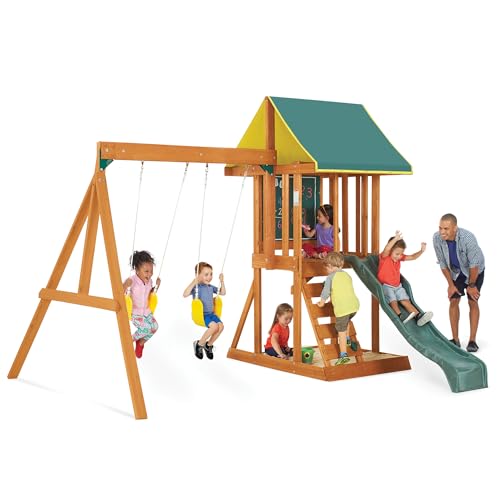
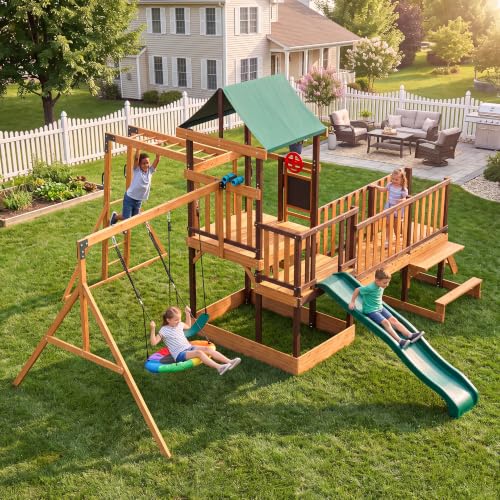
Children's Playhouse with Swing and Slide: The Ultimate Backyard Adventure
A combination playhouse with swing and slide transforms any backyard into a complete playground. This guide walks you through materials, safety standards, space planning, and tier-based recommendations so you can choose with confidence.
Explore the Buying GuideWhy a combination playhouse? A children's playhouse with swing and slide delivers three classic play experiences in one footprint: a private pretend-play cottage, the thrill of swinging, and the rush of sliding. For families researching before purchase, the key questions are always the same — which material lasts longest, how much yard space is truly needed, and which safety certifications matter. This guide answers each of those questions in plain language, with tier-based comparisons that stay relevant regardless of market changes.
What to Look For in a Playhouse with Swing and Slide
Combination playsets vary widely in construction quality and feature density. Understanding the core components helps you evaluate any model objectively, whether you are comparing wooden cottage-style sets or molded plastic towers.
1. Structural Frame and Material
The frame is the backbone of the entire structure. Wooden sets — particularly cedar and treated pine — offer a natural look and can be stained or repainted over time. High-density polyethylene (HDPE) plastic sets resist rot and splintering and require almost no maintenance. Metal frames are less common for playhouses but appear in some hybrid designs. Whichever material you choose, look for reinforced joints, galvanized hardware, and a weather-resistant coating on all exposed fasteners.
2. Swing Beam and Anchoring
A swing beam carries dynamic loads far greater than static weight. Mid-range and premium sets use laminated beams or steel-reinforced wooden beams to reduce flex. Ground anchoring is not optional — every outdoor playset should be secured with ground stakes or anchor kits to prevent tipping. Check that the swing beam height is appropriate for the age range you are shopping for.
3. Slide Design and Safety
Slides on combination sets are typically blow-molded plastic with either straight or wavy chutes. Key details include high side walls, a rounded exit, and a gentle slope for younger children. Premium sets often include a longer slide with a deeper chute and a reinforced entry platform. Always confirm the slide meets ASTM F1148 (the standard for home playground equipment) or the equivalent regional safety standard.
4. Playhouse Platform and Enclosure
The playhouse portion should have a stable platform with railings on all open sides. Look for rounded edges, no exposed bolt threads, and gaps sized to prevent head entrapment. Windows and doors should be cut with safe clearances. A canopy or roof adds shade and extends playtime on sunny days.
5. Assembly and Instructions
Assembly complexity scales with feature count. Entry-level sets typically assemble in a few hours with two adults. High-end tier wooden playsets with towers, bridges, and multiple slides may take a full day or require professional installation. Clear, illustrated instructions and pre-drilled holes are strong indicators of a well-engineered kit.
Tier-Based Comparison: Finding the Right Fit
Rather than comparing absolute figures, the clearest way to evaluate combination playhouses is by market tier. The table below maps each tier to construction quality, feature set, and the family profile it suits best.
| Tier | Construction | Typical Features | Best For |
|---|---|---|---|
| Entry-level | Molded plastic or lighter wooden frame; basic hardware | Compact playhouse, short slide, single swing | Small yards; first playset for toddlers |
| Mid-range | Treated wood or reinforced HDPE; galvanized fasteners | Elevated playhouse, wavy slide, two swings, canopy | Growing families with mixed-age children |
| Premium | Cedar or premium treated pine; laminated swing beam | Two-level playhouse, longer slide, glider, climbing wall | Families wanting long-term backyard value |
| High-end tier | Architectural-grade wood; commercial-style brackets | Tower, bridge, multiple slides, sandbox, picnic area | Large yards; families hosting frequent playdates |
Space Planning and Safety Standards
Safety begins before assembly. The most common installation mistake is underestimating the required fall zone. Every playset needs a clear perimeter of at least six feet on all sides, measured from the outermost point of any moving component — including the full arc of the swings and the slide exit.
Surface and Ground Preparation
Grass is common under playsets but compresses over time and offers limited shock absorption. For better protection, consider engineered wood fiber, rubber mulch, or poured-in-place rubber surfacing. The ground should be level and well-drained; standing water accelerates rot in wooden sets and creates slip hazards on plastic slides.
Key Safety Checklist
- Confirm the set meets ASTM F1148 (home playground standard) or your regional equivalent.
- Anchor the structure to the ground with the manufacturer's anchor kit.
- Check for head-entrapment gaps (between 3.5 and 9 inches) in railings and ladders.
- Inspect for sharp edges, exposed bolts, and splinters before each season.
- Supervise children under 6 at all times and enforce one-at-a-time sliding.
- Re-tighten hardware and inspect swing chains or ropes every few weeks.
For families comparing additional backyard structures, our guide to children's playhouses covers standalone cottage designs, while the playhouse overview explains how enclosed play spaces support pretend play. If you are also evaluating climbing and active-play equipment, the outdoor play equipment guide for 2–5 year olds pairs well with this article.
Age Suitability and Developmental Benefits
Combination playhouses support several developmental domains at once. The playhouse enclosure encourages imaginative role-play; the swing builds core strength and vestibular awareness; the slide develops balance and coordination. Matching the set to your child's age keeps play safe and engaging.
- Ages 2–3: Focus on low platforms, short slides, and bucket swings. Adult supervision is essential.
- Ages 4–6: Mid-range sets with standard swings and wavy slides become the backyard centerpiece.
- Ages 7–10: Premium sets with climbing walls, gliders, and taller slides extend the play lifespan.
If you are shopping for younger children, our recommendations for outdoor toys for two-year-olds and great outdoor toys for 4-year-olds provide age-appropriate alternatives and complements. Families with older children may find the outdoor toy ideas for 9-year-olds helpful for extending backyard play.
Maintenance: Keeping the Playset Safe Year After Year
A well-maintained playset can serve a family for a decade or more. Wooden sets benefit from an annual inspection and a fresh coat of water-based sealant every one to two years. Plastic components should be cleaned with mild soap and checked for cracks, especially after freezing winters. Swing chains, ropes, and attachment points deserve a monthly visual check during peak play season.
Store removable accessories — canopies, sandbox covers, and slide plugs — during extreme weather. If a component shows wear, contact the manufacturer for replacement parts rather than improvising repairs. For families who also own ride-on equipment, our ride-on car with remote control guide covers similar maintenance principles for powered toys.
Related Guides on Toy Range
- Children's Play Houses: Styles and Buying Tips
- Children's Play House: A Complete Overview
- Outdoor Play Equipment for 2–5 Year Olds
- Residential Outdoor Playground Equipment
- Outdoor Toys for Two-Year-Olds
- Great Outdoor Toys for 4-Year-Olds
- Fun Outdoor Toys for 9-Year-Olds
- Heavy-Duty Metal Swing Sets for Adults
Frequently Asked Questions
What age is a children's playhouse with swing and slide suitable for?
Most combination sets are designed for children aged 3 to 10 years. Always check the manufacturer's age recommendation and weight limits, and provide adult supervision for younger children, especially around swings and slide exits.
How much space do I need for a playhouse with swing and slide?
Plan for a fall zone of at least 6 feet around all sides of the structure, plus additional clearance for the swing arc. A typical mid-range set needs a flat area of roughly 12 by 16 feet. High-end tier sets with bridges or multiple slides require considerably more room.
What materials are best for an outdoor playhouse?
Cedar and treated pine are popular for wooden sets due to natural rot resistance. High-density polyethylene is durable and low-maintenance for plastic models. Avoid untreated softwoods unless properly sealed, and confirm all hardware is galvanized or rust-proof.
Do I need to anchor the playhouse to the ground?
Yes. Ground anchoring is strongly recommended for all outdoor playsets to prevent tipping in high winds or during energetic play. Most kits include anchor kits or ground stakes — use them even on level ground.
How long does assembly typically take?
Entry-level sets can take 2 to 4 hours for two adults, while premium and high-end tier wooden playsets may require 6 to 10 hours or professional installation. Pre-drilled holes and illustrated instructions make the process much smoother.