Backyard Playset: The Complete Guide to Choosing the Perfect Outdoor Play Space
Everything you need to know before buying a backyard playset — from safety standards and material choices to age-appropriate features and installation tips. Make an informed decision for your family's outdoor fun.
Explore the Buying Guide🏡 Why a Backyard Playset Matters: A backyard playset transforms your outdoor space into a hub of active, imaginative play. It encourages physical development, social interaction, and screen-free fun for children of all ages. This guide walks you through every consideration — so you can choose a playset that fits your family's needs, your yard's layout, and your long-term expectations.
What Exactly Is a Backyard Playset?
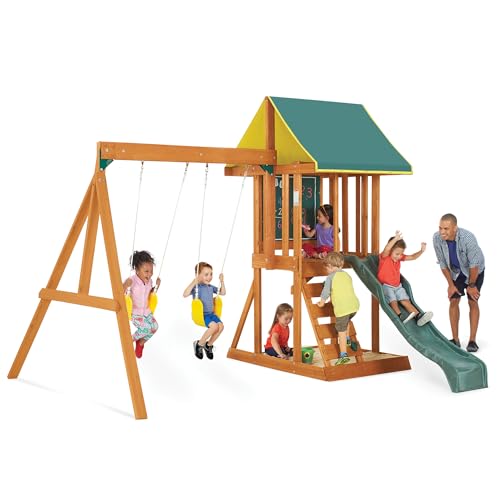
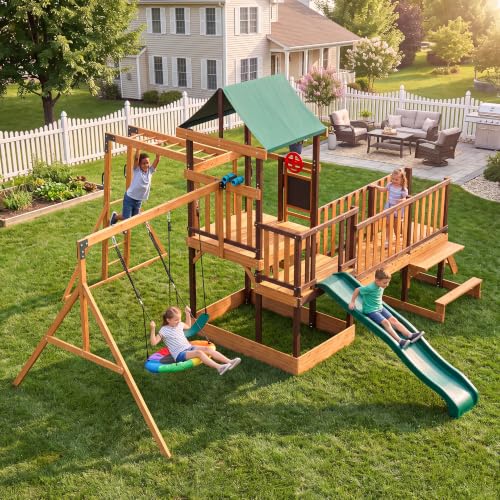
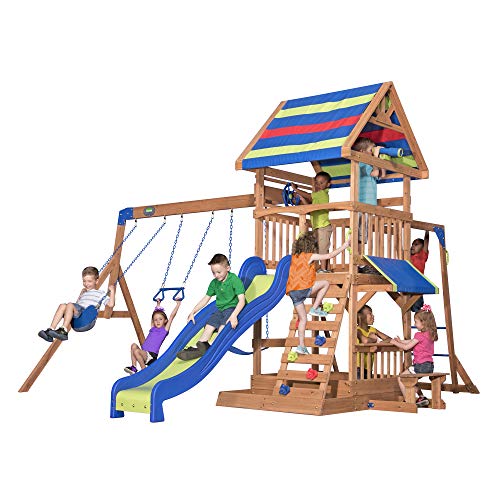
A backyard playset is a freestanding outdoor structure designed for recreational play. Unlike permanent playground installations found in parks or schools, a backyard playset is typically modular and can be adapted to residential spaces. Most models combine multiple play elements — swings, slides, climbing walls, monkey bars, forts, and sandboxes — into a single integrated unit.
These structures range from compact starter sets suitable for smaller yards to expansive outdoor playscapes that mimic full playground experiences. The key differentiator is versatility: a quality backyard playset grows with your child, offering adjustable features and modular expansions.
Core Components You'll Find
🛝 Slides
Straight, curved, or tube slides made from high-density polyethylene or metal. Slide height and slope should match your child's age and confidence level.
🎪 Swing Sets
Belt swings, bucket swings for toddlers, and trapeze bars. A-frame or A-frame-with-extension designs provide stability and multiple play stations.
🧗 Climbing Structures
Rock walls, rope ladders, and cargo nets that build coordination and strength. Look for textured handholds and safety-rated hardware.
🏰 Forts & Platforms
Elevated play decks with roofs, lookout towers, and hidden cubbies. These spark imaginative play and provide shaded rest areas.
Backyard Playset Buying Guide: Key Factors to Consider
Before you commit to a playset, evaluate these critical factors. A well-chosen playset delivers years of enjoyment; a poorly matched one becomes an unused eyesore. Use this framework to narrow your options systematically.
1. Age-Appropriate Design
The single most important factor is matching the playset to your child's developmental stage. Toddlers need low platforms, bucket swings, and gentle slides. School-age children require higher climbing challenges, monkey bars, and more complex play structures. If you have children of different ages, consider a modular set with distinct zones — or explore dedicated outdoor play equipment for 2-5 year olds and equipment for 6 year olds to understand the progression.
2. Material Quality & Durability
Backyard playsets are typically constructed from wood (cedar, redwood, or pressure-treated pine), metal (galvanized steel), or high-grade plastic. Wooden sets offer a natural aesthetic and can be stained or painted; cedar and redwood naturally resist rot. Metal sets provide exceptional durability and low maintenance. Plastic sets are lightweight and weather-resistant but may not support the same weight capacity as wood or metal. Look for wooden construction with reinforced joints and safety-certified hardware.
3. Yard Space & Layout
Measure your available space carefully — including clearance zones for swinging and sliding. A general rule: allow at least 6 feet of clearance around the entire structure and 8 feet in front of slides. For compact yards, explore outdoor play equipment for small backyards or playground equipment designed for tight spaces. Consider ground slope, drainage, and proximity to fences or trees.
4. Safety Standards & Surfacing
Prioritize playsets that meet ASTM International (F1148) and CPSC safety standards. Check for rounded edges, enclosed platforms, and non-slip surfaces. Ground surfacing is equally critical — playground safety surfacing such as rubber mulch, engineered wood fiber, or poured rubber can dramatically reduce injury risk. Never install a playset over concrete, asphalt, or packed earth.
5. Assembly & Installation
Most backyard playsets ship as flat-pack kits requiring 4–12 hours of assembly. Professional installation services are available for complex models. Factor in site preparation: leveling the ground, anchoring the structure (ground stakes or concrete footings), and assembling any accessories like canopy swing sets or playsets with monkey bars and tube slides.
Playset Tiers: A Relative Comparison
To help you navigate the market, here is a tier-based comparison. These descriptors reflect relative market positioning — not absolute figures.
| Tier | Best For | Typical Features | Durability |
|---|---|---|---|
| Entry-level | First-time buyers, toddlers | Basic swing set, small slide, low platform | Standard construction, limited modularity |
| Mid-range | Growing families, mixed ages | Multi-level fort, monkey bars, 2–3 swings, climbing wall | Reinforced joints, weather-resistant finish |
| Premium | Long-term use, large yards | Expansive playscape, tube slide, rock wall, sandbox, lookout tower | Heavy-duty hardware, premium rot-resistant wood |
| Luxury / Commercial-grade | Multi-family use, schools, childcare | Custom configurations, inclusive features, high weight capacity | Commercial-grade steel, professional installation |
For context, entry-level sets typically suit younger children and smaller spaces, while mid-range models often deliver the best balance of features and expandability. Premium and luxury tiers are designed for families seeking a long-term investment with maximum play value.
Age-by-Age Playset Recommendations
Children's physical abilities and play preferences evolve rapidly. Here's how to tailor your playset choice to each developmental stage.
Toddlers (1–3 Years)
Safety and accessibility are paramount. Choose low platforms (under 3 feet), bucket swings with full back support, and gentle slopes. Avoid open climbing walls or high monkey bars. Explore outdoor toys for 1-2 year olds and outdoor play toys for 2 year olds for complementary ideas. A backyard playset with a enclosed toddler zone works well.
Preschoolers (3–5 Years)
This age group craves climbing, sliding, and swinging. Look for playsets with a 4-foot platform, a gentle slide, and at least two swing positions. Monkey bars may be too advanced; instead, consider a playset with monkey bars and tube slide that offers graduated challenges. See outdoor play equipment for 4 year olds for detailed recommendations.
School-Age Children (6–10 Years)
Older kids need physical challenge and variety. Prioritize playsets with monkey bars, climbing nets, high slides, and multiple play stations. A playset for 8-10 year olds typically includes a 5–6 foot deck, a tube slide, and trapeze bar. Explore outdoor toys for 6-10 year olds to complement the playset experience.
Tweens & Teens (11+ Years)
While playsets may seem "for younger kids," many tweens still enjoy swing sets, climbing structures, and hangout spaces. Consider a playset with a large deck or fort that can double as a social hub. Alternatively, explore outdoor toys for 10-12 year olds or outdoor play equipment for 12 year olds that offer age-appropriate challenges.
Ready to Find Your Ideal Backyard Playset?
Browse our curated selection of top-rated playsets, organized by age group and feature set. Compare options and discover the perfect fit for your family's outdoor space.
View Playset OptionsBackyard Playset Safety Checklist
Before and after installation, run through this checklist to ensure a safe play environment.
- Age labeling: Confirm the playset is rated for your child's age group.
- Hardware inspection: Check all bolts, screws, and brackets for tightness. Re-tighten periodically.
- Surfacing depth: Maintain at least 9 inches of loose-fill surfacing (wood chips, rubber mulch) or use a certified rubber mat.
- Clearance zones: Keep 6 feet clear on all sides and 8 feet in front of slides.
- Anchoring: Secure the playset to the ground with stakes or concrete footings to prevent tipping.
- Regular maintenance: Inspect for splinters, rust, loose hardware, and wear. Touch up stains or paints as needed.
- Supervision: Always supervise young children during play. Establish clear play rules.
For a deeper dive into safety standards and age-appropriate guidelines, refer to our toy safety guide and choking hazard prevention resources.
Complementary Outdoor Products to Enhance Your Playset
A backyard playset is just the beginning. Consider these complementary products to create a complete outdoor play destination.
🚗 Ride-On Toys
For younger siblings or added variety, ride-on toys for 5 year olds and 6 year olds offer hours of active fun.
💧 Water Play
Pair your playset with water toys for 4 year olds or water toys for 5 year olds to create a summer splash zone.
🏖️ Sandboxes & Playhouses
Add a playhouse or sandbox for imaginative, quiet play. Explore outdoor playhouse options for inspiration.
⚽ Sports & Games
Encourage group play with outdoor toys and games for 5 year olds or outdoor toys for all ages.
Installation Tips for a Trouble-Free Setup
Proper installation is critical for safety and longevity. Follow these best practices:
- Site preparation: Clear the area of rocks, roots, and debris. Level the ground — a slight slope can be accommodated but significant gradients require grading.
- Read the manual: Assemble in the order specified. Sort hardware by step to save time.
- Use the right tools: A power drill, socket set, and rubber mallet are typically required. Consider professional assembly for complex premium models.
- Anchor securely: Use ground stakes for wooden sets or concrete footings for larger structures. Never skip anchoring — tipping is a leading cause of playset injuries.
- Add surfacing: Install 9–12 inches of loose-fill surfacing or rubber playground tiles. Maintain the depth over time.
- Post-installation inspection: After assembly, check every bolt, swing, and slide. Test the structure for wobble or instability.
Long-Term Care & Maintenance
A well-maintained playset can last a decade or more. Schedule these maintenance tasks seasonally:
- Spring: Inspect for winter damage. Tighten hardware, sand splinters, and re-stain wood. Refresh surfacing.
- Summer: Check for rust on metal components. Lubricate swing chains and moving parts. Clean slide surfaces.
- Fall: Remove debris from platforms and slides. Check anchors for looseness. Prepare for winter.
- Winter: Remove or secure loose accessories. Avoid use during freezing conditions if the playset is not rated for winter play.
For more maintenance guidance, see our toy longevity tips and repair guide.
Frequently Asked Questions About Backyard Playsets
What size backyard do I need for a playset?
Minimum requirements vary by playset size. A compact entry-level set may fit in a 12x12 foot area, while a premium multi-station playset requires 20x20 feet or more. Always account for clearance zones. For small yards, explore equipment designed for small backyards.
Is professional installation worth it?
For complex premium playsets, professional installation ensures proper anchoring and assembly — a worthwhile investment for safety and peace of mind. Entry-level and mid-range sets can typically be assembled by handy homeowners over a weekend.
How do I childproof a backyard playset?
Install safety surfacing, anchor the structure, check for sharp edges, and establish play rules. For toddlers, consider a playset with enclosed platforms and bucket swings. Supervise young children at all times.
Can I expand a playset later?
Many mid-range and premium playsets are modular and support add-ons like extra slides, climbing walls, or swing extensions. Check manufacturer compatibility before purchasing add-ons.
What's the best material for a backyard playset?
Cedar and redwood offer natural rot resistance and aesthetic appeal. Pressure-treated pine is durable and often more accessible. Galvanized steel provides exceptional longevity with minimal maintenance. Plastic sets are lightweight but may have lower weight capacities.
How often should I inspect my playset?
Perform a thorough inspection at the start of each play season and monthly during active use. Check hardware tightness, surfacing depth, and structural integrity. Address any issues immediately.