
Play Houses: The Complete Guide to Choosing the Perfect Playhouse for Your Child
From cozy indoor hideaways to sprawling backyard adventures, discover how the right playhouse sparks imagination, supports development, and creates years of happy memories.
EXPLORE THE BUYING GUIDE🏠 Why Play Houses Matter: A playhouse is more than just a toy — it is a dedicated space where children exercise independence, practice social roles, and let their creativity run wild. Whether you are outfitting a backyard, a playroom, or a corner of the living room, understanding the types, materials, and safety considerations of play houses ensures you choose a model that grows with your child and fits your lifestyle.
What Exactly Is a Play House?
A play house is a child-sized structure designed for imaginative and pretend play. Unlike simple tents or pop-up tunnels, play houses typically mimic the form of a real dwelling — complete with walls, a roof, windows, and a doorway. They range from compact indoor fabric cottages to full-scale outdoor wooden cabins with working doors, windows, and even lofted platforms.
Play houses serve as a "home base" for childhood role-play. Children use them to host pretend tea parties, run imaginary shops, read quietly, or simply claim a space that feels entirely their own. This sense of ownership is powerful: research in early childhood development consistently links dedicated play spaces to longer, deeper, and more collaborative play sessions.
If you are still exploring broader outdoor options, our outdoor playhouse guide offers a complementary overview of structures designed for year-round backyard use.
Types of Play Houses: Finding the Right Fit
Play houses come in several distinct formats, each suited to different spaces, budgets (expressed here as market tiers), and play styles. Below is an overview of the main categories.
Indoor Play Houses
Indoor models are designed for playrooms, bedrooms, or living areas. They are typically lighter, more compact, and often foldable. Popular styles include fabric teepees, cardboard cottages, and compact wooden structures. These are ideal for apartment dwellers or families in regions with long rainy seasons. Many indoor play houses double as reading nooks or quiet corners.
Outdoor Play Houses
Outdoor play houses are built to withstand the elements. They are usually constructed from wood, heavy-duty plastic, or resin and are anchored to the ground for stability. These models often feature functioning doors, windows, and sometimes elevated platforms or climbing elements. For families with generous backyard space, an outdoor playhouse becomes a centerpiece of daily play. Explore our dedicated outdoor playhouse collection for models built to last.
Playhouse and Playset Combinations
Some play houses are integrated into larger playsets, combining a clubhouse with swings, slides, or climbing walls. These combination units maximize backyard play value and are excellent for families with multiple children of varying ages. If you are considering a full backyard setup, our playsets guide explains how to evaluate combined structures.
Specialty and Themed Play Houses
Beyond the classic cottage, you will find themed play houses modeled after castles, fire stations, cafés, and even pirate ships. These specialty designs add an extra layer of narrative to pretend play and can be particularly engaging for children with specific interests. Many themed playhouses are available in both indoor and outdoor formats.
Play House Market Tiers: Understanding Your Options
To help you navigate the range of play houses available, we use a consistent market-tier framework based on construction quality, material grade, and feature set — never on numerical figures. This classification helps you compare models relative to one another.
Starter Tier
Lightweight fabric or pop-up play houses, basic plastic models, and simple cardboard structures. Best for toddlers, temporary setups, and families testing whether a playhouse suits their child's play style. Construction is functional but not designed for heavy daily use.
Balanced Tier
Solid wooden cottages, reinforced plastic playhouses, and mid-sized outdoor models with functioning doors and windows. These offer a strong balance of durability, features, and design. Ideal for families who want a permanent or semi-permanent playhouse without moving into premium territory.
Top-Tier
Large wooden cabins, two-story playhouses, and integrated playset combinations with premium materials and weather-resistant finishes. These are long-term investments designed to accommodate multiple children and years of active play.
Within each tier, quality varies. A well-specified entry-level model from a reputable brand can outperform a poorly made mid-range alternative. Always prioritise solid construction, safe finishes, and age-appropriate design over feature count. For a deeper look at how playhouses fit into complete backyard setups, see our guide to outdoor playscapes.
Play House Comparison at a Glance
Use the table below to compare the main play house types across the dimensions that matter most when making a purchase decision.
| Type | Tier | Best For | Durability | Setup |
|---|---|---|---|---|
| Fabric Teepee / Pop-Up | Starter Tier | Indoor play, toddlers, small spaces | Light use | Foldable, seconds to assemble |
| Cardboard Cottage | Entry-Level | Temporary indoor play, creative decoration | Short-term | Simple slot-together assembly |
| Plastic Playhouse | Mid-Tier | Outdoor or indoor, easy cleaning, portability | Weather-resistant, moderate | Snap-fit panels, tool-light |
| Wooden Playhouse | Balanced to Top-Tier | Permanent backyard installation, long-term use | Heavy-duty, premium materials | Requires assembly, anchoring recommended |
| Playset Combination | High-End Tier | Multiple children, active backyard play | Commercial-grade construction available | Professional assembly recommended |
Developmental Benefits of Play Houses
A playhouse is a powerful developmental tool disguised as pure fun. Here is what the research and child-development experts highlight:
- Imaginative play and language: Play houses provide a stage for role-play — running a pretend shop, hosting a tea party, or playing house. This type of play is strongly linked to vocabulary growth, narrative skills, and abstract thinking.
- Social and emotional growth: Sharing a playhouse requires negotiation, turn-taking, and cooperation. Children practice empathy and conflict resolution in a low-stakes environment.
- Independence and ownership: A playhouse is a child's own domain. Having a space to control builds confidence and self-regulation.
- Physical activity (outdoor models): Outdoor playhouses with climbing elements, doors, and windows encourage movement, coordination, and gross motor development. For age-specific outdoor recommendations, see our outdoor toys for 3-6 year olds guide.
- Connection with nature: Backyard playhouses foster extended outdoor time, which is associated with improved mood, attention, and physical health.
Play House Safety: What Every Parent Should Check
Safety is the non-negotiable factor in any play house purchase. Use this checklist before and after setup:
- Age labelling: Always follow the manufacturer's age recommendation. Toddler models should have low entry heights and no climbable exterior features.
- Rounded edges and non-toxic finishes: Check for smooth surfaces and certified non-toxic paints or finishes, especially on models for children under three.
- Stability and anchoring: Outdoor playhouses must be anchored to the ground. Look for wide bases, ground stakes, or anchoring kits included or available.
- Ventilation: Enclosed playhouses should have adequate ventilation. Avoid models with fully sealed interiors.
- Hardware and assembly: Ensure all screws, bolts, and fasteners are secure and capped. Re-check hardware periodically, especially after storms.
- Placement: Position outdoor playhouses on level ground away from hazards such as fences, tree limbs, or water features. Consider surfacing with playground safety surfacing for added protection.
- Supervision: No playhouse replaces adult supervision, particularly for children under five.
How to Choose the Right Play House: A Step-by-Step Buying Guide
Follow these steps to narrow down your options and make a confident decision.
Step 1: Define the Play Space
Measure your available space — indoors or outdoors — before browsing. Account for clearance around the playhouse for doors, windows, and safe play. For small yards, compact models are essential; see our guide to outdoor play equipment for small backyards for space-saving strategies.
Step 2: Match the Playhouse to Your Child's Age
A two-year-old needs a low-entry, enclosed playhouse with no climbable exterior. A seven-year-old will get far more from a taller model with windows, a loft, or integrated play features. Age-appropriate design is the single strongest predictor of long-term play value. Our age-specific outdoor guides — such as outdoor play equipment for 2-5 year olds and outdoor play equipment for 6 year olds — offer tailored recommendations.
Step 3: Choose the Material
Wood offers natural aesthetics, durability, and customization potential. Plastic is lightweight, weather-resistant, and easy to clean. Resin blends the look of wood with the low maintenance of plastic. Fabric and cardboard suit temporary or indoor use. Consider your climate: in high-rainfall areas, a well-sealed wooden playhouse or a quality plastic model will hold up best.
Step 4: Decide on Indoor vs. Outdoor
Indoor playhouses are compact, portable, and weather-independent. Outdoor playhouses are larger, more permanent, and encourage active outdoor play. Some families choose both: a fabric teepee indoors and a wooden cottage in the backyard. For a deeper dive into outdoor options, our outdoor playhouse hub is the best starting point.
Step 5: Evaluate Features and Construction Quality
Prioritise solid construction: thick panels, reinforced joints, and quality hardware. Functioning doors and windows add play value. Avoid overly complex features that compromise stability. Within any tier, a simpler, well-built playhouse outperforms a feature-heavy but flimsy alternative.
Step 6: Plan for Setup and Maintenance
Check whether assembly is required and whether tools are included. Wooden outdoor playhouses benefit from periodic sealing or repainting. Plastic models need occasional cleaning. Factor in anchoring supplies and, if necessary, professional assembly. For playground-grade structures, see our guide to residential playground equipment.
Indoor vs. Outdoor Play Houses: Which Is Right for You?
This is one of the most common decision points for parents. Here is a direct comparison:
- Indoor play houses are best for apartments, small homes, and unpredictable weather. They are lightweight, often foldable, and easy to store. However, they offer limited physical play value and may be outgrown more quickly.
- Outdoor play houses deliver greater play value: more space, fresh air, and physical activity. They require a yard or patio, anchoring, and weather-related maintenance. They also tend to have a longer lifespan because children use them across a wider age range.
- Hybrid approach: Many families start with an indoor playhouse for toddlers and transition to an outdoor model as children grow. If you are planning a long-term backyard setup, our outdoor playhouse for 8-10 year olds guide covers larger models for older children.
Caring for Your Play House: Maintenance Tips
Proper maintenance extends the life of your playhouse and keeps it safe:
- Wooden playhouses: Inspect annually for splinters, loose screws, and finish wear. Reapply a child-safe sealant every one to two years depending on climate.
- Plastic playhouses: Clean with mild soap and water. Check for cracks or fading; UV exposure can degrade plastic over time.
- Fabric playhouses: Spot-clean and air-dry. Store indoors during wet seasons to prevent mildew.
- General: Tighten hardware after storms, clear debris from doorways and windows, and check anchoring points seasonally.
For broader toy upkeep advice, including outdoor structures, our outdoor toy storage guide offers practical seasonal storage solutions.
Best Play Houses for Kids: Recommended Picks
⚠️ AFFILIATE DISCLOSURE: This website contains affiliate links. As an Amazon Associate, we earn from qualifying purchases. If you make a purchase through these links, we may receive a small commission at no additional cost to you. Read our full affiliate policy.

Little Tikes Cape Cottage Pretend Princess Playhousefor Kids, Indoor Outdoor, with Working Doors and Windows, for Toddlers Ages 2+ Years,Pink,Large
Check price on Amazon
Backyard Discovery Sweetwater Cedar Wooden Kids Playhouse Cottage with Play Kitchen, Snack Bar, Half Door, Toy Phone, Windows, Flowerpot Holders, and Working Doorbell for Outdoor Imaginative Play
Check price on Amazon
Albott Outdoor Wooden Playhouse for Kids, Backyard Cottage with Fence | Pretend Playhouse with Kitchen Playset, Dutch Door, Pet Door & Wooden Flowerpot, Play House for Boys & Girls Ages 3–8
Check price on Amazon
Firstness Wooden Outdoor Playhouse for Kids Ages 3-8, Grey | Toddler Outdoor Playhouse Cottage Play House with Play Kitchen, Blackboard, Doorbell, Flowerpot, Bird Cage, Pet Door, Sink
Check price on Amazon
Albott Kids Outdoor Wooden Playhouse Backyard Cottage | Pretend Playhouse with Kitchen Playset, Bench, Chalkboard, Pet Door, Wooden Mailbox & Flowerpot, for Boys & Girls Ages 3–8
Check price on Amazon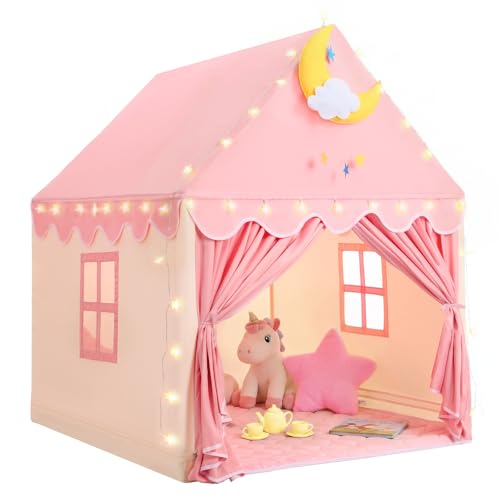
GeeSound Kids Tent for Girls Indoor: with Mat, Star Lights, Pink Play Tents | Indoor Playhouse Princess Tent for Playroom Gift for Girls Birthday for Kids
Check price on Amazon
Little Tikes Cape Cottage- Red & Blue Playhouse Indoor & Outdoor with Working Door and Windows, Boys and Girls Ages 3+
Check price on Amazon
KidKraft Lantana Lane Wooden 6-ft. Tall Playhouse with Secret Door | White Wooden Outdoor House, Tall Enough for an Adult, BBQ Grill, Clock, Chalkboards, Planter Boxes
Check price on AmazonFrequently Asked Questions About Play Houses
Most play houses are designed for children aged 2 to 10 years old. Toddler-friendly options with low entry points and rounded edges suit ages 2-4, while larger models with climbing features or elevated platforms are better for ages 5-10. Always check the manufacturer's age recommendation and safety labels.
Wooden playhouses offer superior durability, natural aesthetics, and can be painted or customized. They are ideal for permanent outdoor installation. Plastic playhouses are lightweight, easy to clean, weather-resistant, and often more portable. The best choice depends on your climate, space, and whether you need a permanent or temporary setup.
Yes, play houses significantly support child development. They encourage imaginative and pretend play, which builds language skills, social interaction, and emotional regulation. Playhouses also provide a sense of ownership and independence, and outdoor models promote physical activity and connection with nature.
Look for rounded edges, non-toxic finishes, stable bases, and age-appropriate entry heights. Outdoor models should have weather-resistant hardware, anchored foundations, and no exposed sharp edges. Check for certification marks and ensure the playhouse meets safety standards for your region.
Absolutely. Indoor playhouses, including fabric teepees, cardboard structures, and compact wooden models, are excellent for rainy days and small spaces. They provide a dedicated imaginative play zone without requiring a backyard. Many indoor models are foldable or lightweight for easy storage.
🏡 Ready to Find the Perfect Playhouse? Browse our curated selection of play houses above, compare features across tiers, and choose a model that matches your space, your child's age, and your long-term play goals. For even more outdoor inspiration, explore our full outdoor toys collection and age-specific guides like outdoor toys for 3-4 year olds to build a backyard that grows with your family.