Indoor Playground Equipment for Sale: A Complete Buyer's Guide
Everything you need to know before investing in an indoor play structure — from soft play sets for home use to commercial-grade playground systems for play centers, schools, and family entertainment venues.
Explore Equipment OptionsWhy this guide matters: Shopping for indoor playground equipment is a significant decision. Whether you're outfitting a home playroom, a daycare center, a school gym, or a commercial family entertainment venue, the choices you make affect safety, durability, and long-term usability. This guide breaks down equipment categories, tier classifications, safety standards, and key buying considerations so you can evaluate options with confidence and choose the right system for your space and audience.
What Counts as Indoor Playground Equipment?
Indoor playground equipment covers a broad spectrum of play structures designed to be installed inside a building. Unlike outdoor playgrounds that must withstand weather, indoor systems prioritize compact footprints, padded surfaces, and modular designs that fit through standard doorways and ceilings. The category includes soft play sets, climbing frames, ball pits, slides, tunnels, and integrated multi-activity structures.
Buyers typically fall into two groups: those setting up a home indoor play space and those specifying commercial-grade play systems for public use. The right choice depends on traffic volume, supervision levels, available floor area, and ceiling height. A home playroom might suit a balanced-tier soft play set, while a busy play center demands commercial-grade components rated for continuous use.
This guide focuses on equipment that is actively sold today, covering both residential and commercial applications, with guidance on how to match each tier to your situation.
Main Categories of Indoor Playground Equipment
Understanding the equipment types helps you compare listings accurately. Most products on the market fall into one or more of the following categories.
Soft Play Sets
Foam-core blocks, shapes, and connectors covered in wipe-clean vinyl. Ideal for babies and toddlers, these sets build gross motor confidence with minimal fall risk. Often used alongside gross motor toys for structured development.
Climbing Frames & Pikler Structures
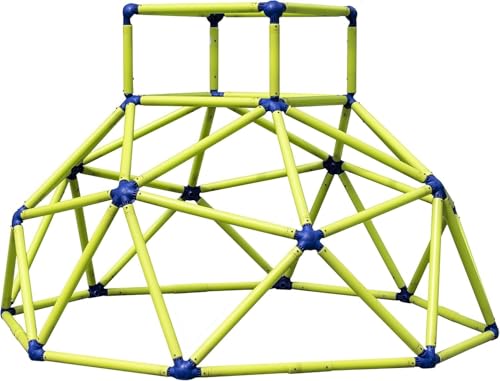
Wooden or padded climbing arches, triangles, and climbing walls. Suitable for toddlers through early school age, they encourage balance and coordination. See options for indoor climbing toys for 2-year-olds and older age groups.
Slides & Tunnels
Freestanding slides, collapsible tunnels, and slide-and-climb combos. These add variety to a play circuit and work well in both home and light-commercial settings.
Ball Pits & Sensory Zones
Mesh or padded ball pits paired with tactile panels and mirrors. These support sensory play and are popular in play centers and special-needs environments.
Multi-Activity Play Structures
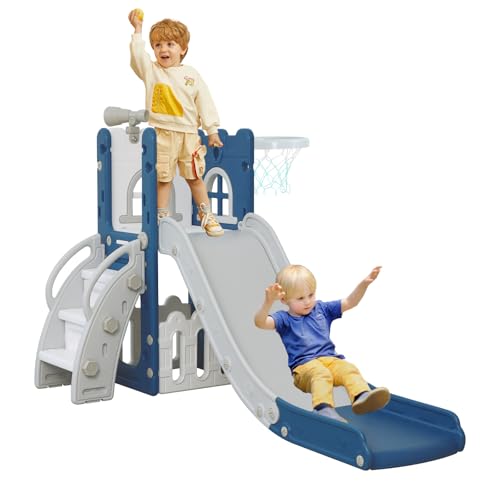
Integrated frames combining slides, climbing elements, tunnels, and platforms. These are the closest equivalent to a full playground brought indoors and are common in commercial venues.
Interactive Play Panels
Wall-mounted or freestanding panels with gears, mazes, and tactile elements. These fit small spaces and complement larger structures. Explore interactive play panels for wall-based engagement.
Equipment Tiers: Matching the System to Your Use Case
Instead of comparing raw specifications across wildly different products, it helps to group indoor playground equipment into tiers based on intended use, build quality, and expected lifespan. The table below uses a consistent three-tier system throughout this guide.
| Tier | Best For | Typical Characteristics |
|---|---|---|
| Starter Tier | Home playrooms, nurseries, small apartments | Compact soft play sets, single-piece climbing triangles, foldable slides. Lightweight, easy to move, suitable for one or two children at a time. |
| Mid-Range Tier | Large family homes, home daycares, preschool classrooms | Modular soft play systems, multi-piece climbing frames, combined slide-and-climb units. Better padding density and sturdier connectors than starter tier. |
| Commercial-Grade Tier | Play centers, schools, family entertainment venues | Heavy-duty frames, reinforced joints, fire-retardant padding, modular expansion options, and compliance with commercial safety standards. Designed for continuous daily use. |
A mid-range modular system usually offers smoother transitions between components and more stable anchoring than a starter-tier set, while commercial-grade equipment adds structural redundancy and replaceable wear parts that extend service life. Matching the tier to your traffic volume is the single most important decision in the buying process.
Safety Standards and Compliance
Safety is non-negotiable when children are climbing, sliding, and tumbling. Before comparing features, confirm that any equipment you consider meets recognized safety benchmarks.
- Padding and fall height: Ensure soft-play padding is thick enough for the height of the highest platform. Commercial systems should specify fall-height ratings.
- Certifications: Look for ASTM F1917 (home playground equipment) or ASTM F1148 where applicable, and for commercial systems, compliance with ASTM F1487 and CPSC guidelines.
- Non-toxic materials: Vinyl covers and foam cores should be free of harmful phthalates and heavy metals. See our non-toxic toy guide for context on material safety.
- Entrapment and entanglement: Check that openings avoid head-entrapment hazards and that there are no protruding bolts or sharp edges.
- Anchoring: Taller climbing frames and multi-activity structures must be anchored or weighted to prevent tipping.
- Supervision requirements: Commercial equipment should be paired with clear supervision ratios and signage.
For a broader overview of safety considerations, our toy safety guide covers age labeling, choking hazards, and material standards in more depth.
Space Planning: How to Size Your Indoor Playground
Measure your space before browsing listings. Ceiling height, floor area, and access routes dictate what equipment can realistically be installed. A few practical rules of thumb help narrow the field quickly.
- Clearance zones: Allow at least a meter of clear floor space around climbing frames and slides. Commercial installations typically require wider fall zones.
- Ceiling height: Slides and climbing structures need headroom above the highest platform. Measure from floor to ceiling, not floor to beam, unless beams are clear of the play zone.
- Flooring: Vinyl, foam mats, or padded tiles reduce impact injuries. A large padded play mat for hard floors is a practical base layer for home setups.
- Access and delivery: Confirm that door widths and stairwells can accommodate the largest component. Modular systems are easier to deliver than single-piece structures.
- Traffic flow: In commercial settings, design a one-way flow through the play area to reduce collisions and improve supervision sightlines.
For homes with limited square footage, wall-mounted interactive panels and foldable climbing triangles maximize play value without eating up floor area.
Home Use vs. Commercial Use: Key Differences
The same equipment category can look similar between home and commercial listings, but the underlying construction differs significantly. Home-oriented systems prioritize portability and compact storage, while commercial systems prioritize structural strength and replaceable parts.
If you are outfitting a home playroom, a starter-tier or mid-range soft play set paired with a climbing triangle covers the developmental essentials. Families looking to expand might also consider indoor play equipment for home setups that combine multiple activity zones.
For commercial venues, budget for maintenance and inspection routines in addition to the initial installation. Commercial-grade equipment should ship with spare pads, documented load ratings, and clear guidance on anchoring. Schools and daycare centers often pair climbing structures with gross motor skill toys for 2-year-olds and hand-eye coordination toys for 3-year-olds to create a balanced developmental program.
If your facility serves older children, explore indoor climbing toys for 4-year-olds and indoor climbing options for 10-year-olds to extend the age range your playground serves.
Final Buying Checklist
Before finalizing any purchase, run through this checklist to avoid common pitfalls.
- Confirm the age range the equipment is designed for and compare it to your intended users.
- Verify safety certifications and request documentation from the seller.
- Measure ceiling height, floor area, and doorway widths against product dimensions.
- Check whether the system is modular or fixed, and plan for future expansion.
- Review the cleaning and maintenance requirements, especially for vinyl covers and foam cores.
- For commercial installations, confirm the seller provides spare parts and installation guidance.
- Plan the flooring and fall-zone layout before assembly begins.
- Set up a supervision and inspection routine for ongoing use.
Frequently Asked Questions
What is the difference between home and commercial indoor playground equipment?
Home equipment is designed for portability and light use, often with lighter frames and smaller footprints. Commercial equipment uses heavier frames, reinforced joints, fire-retardant padding, and replaceable wear parts to withstand continuous daily use in public settings.
How much floor space do I need for a home soft play set?
A compact starter-tier soft play set can fit in roughly two square meters, while a mid-range modular system typically needs four to six square meters plus clearance around the edges. Always leave at least one meter of clear space around climbing elements.
Are indoor climbing frames safe for toddlers?
Yes, when matched to the child's age and paired with proper padding. Pikler-style wooden triangles and foam-core soft play sets are specifically designed for toddlers and emphasize low fall heights. Supervision remains essential at all times.
What certifications should I look for?
For home equipment, look for ASTM F1917 or equivalent. For commercial installations, confirm compliance with ASTM F1487 and CPSC guidelines. Sellers should be able to provide documentation on request.
How do I clean and maintain indoor playground equipment?
Vinyl covers can be wiped with mild soap and water; avoid harsh solvents that degrade the surface. Foam cores should be inspected for cracks, and any damaged cover should be replaced promptly to prevent moisture ingress. Commercial systems should follow a documented inspection schedule.
Can I expand a modular system later?
Many mid-range and commercial systems are designed for expansion with add-on components. Confirm compatibility with the original manufacturer before mixing brands, as connector standards vary.