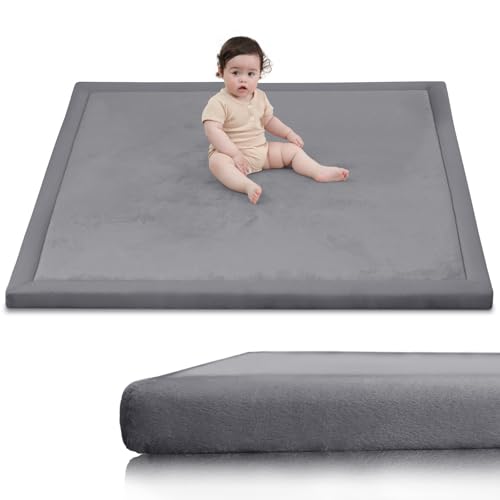
Large Padded Play Mat for Hard Floors: The Complete Buyer's Guide
Hardwood, tile, and laminate floors look beautiful—but they are unforgiving on little knees, elbows, and heads. A large padded play mat transforms any hard surface into a safe, comfortable, and hygienic play zone for babies and toddlers.
Explore the Buying FactorsQuick Summary: For hard floors, look for a mat that is at least 0.6 inches (1.5 cm) thick, made from non-toxic, phthalate-free foam (XPE or EVA), and large enough to cover the primary play area. A foldable, one-piece design is easier to clean and store than interlocking tiles, and a non-slip textured underside is essential on smooth surfaces.
Why Hard Floors Need a Padded Play Mat
Hard floors offer durability and easy cleaning, but they provide almost no shock absorption. When a baby learns to crawl, sit up, or take those first wobbly steps, a fall onto hardwood or tile can result in bruises—or worse. A large padded play mat for hard floors bridges that gap by adding a shock-absorbing layer that cushions falls, insulates against cold surfaces, and creates a defined, hygienic play area.
Beyond safety, a padded mat also protects your flooring from scratches caused by toy wheels, building block corners, and furniture movement. It reduces noise from dropped toys—a real benefit in apartments—and gives children a comfortable surface for tummy time, sensory play, and imaginative play ideas that involve sitting or kneeling for extended periods.
Key Buying Factors for Large Padded Play Mats
Not all play mats are created equal. The right choice depends on your floor type, your child's age, and how you plan to use the mat. Below are the factors that matter most when shopping for a large padded mat designed specifically for hard floors.
Thickness & Shock Absorption
For hard floors, a thickness of 0.6 inches (1.5 cm) is the practical minimum. Mid-range and premium mats often reach 0.8 inches (2 cm) or more, which provides noticeably better cushioning for toddlers who are still mastering balance.
Material Safety
Look for XPE (cross-linked polyethylene) or EVA foam that is explicitly labeled non-toxic, BPA-free, phthalate-free, and lead-free. These materials are lightweight, water-resistant, and free from the strong chemical odor associated with lower-grade foams.
Surface Grip
On hardwood or tile, a smooth mat can slide dangerously. Choose a mat with a textured, non-slip underside. A slightly textured top surface also helps prevent socks from slipping during active play.
Size & Coverage
A "large" mat should cover at least the footprint of a standard playpen or a dedicated corner of the living room. Popular dimensions range from roughly 6 x 4 feet up to 6 x 6 feet for a full play zone.
Ease of Cleaning
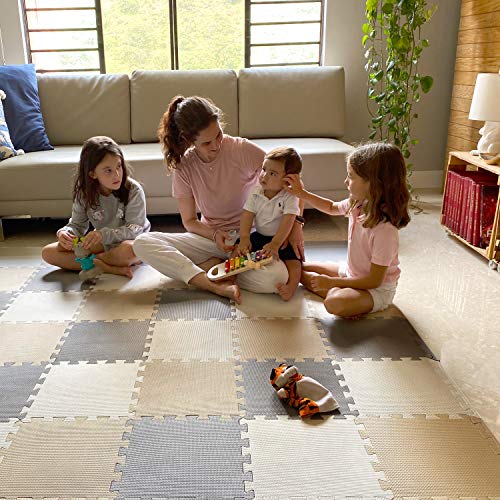
One-piece foldable mats with a wipe-clean, waterproof surface are the easiest to maintain. Interlocking tile mats are more flexible in shape but have seams where crumbs and spills can collect.
Portability & Storage
Foldable mats collapse into a compact stack for storage behind a sofa or in a closet. If you plan to move the mat between rooms, consider its weight and whether it includes a carry handle or storage strap.
Comparing Play Mat Tiers
Play mats fall into three broad tiers based on construction quality, material refinement, and design features. The table below summarizes how each tier performs on hard floors.
| Tier | Best For | Typical Construction | Key Trade-offs |
|---|---|---|---|
| Entry-level | Short-term use, light traffic, tight spaces | Thinner EVA foam (around 0.4–0.5 inches), interlocking tiles or a basic foldable mat | Less shock absorption; may show compression marks sooner; simpler surface finish |
| Mid-range | Daily use with babies and toddlers on hardwood or tile | XPE foam, 0.6–0.8 inches thick, one-piece foldable design with non-slip base | Balanced cushioning and durability; fewer color and pattern options than premium lines |
| Premium / high-end tier | Long-term use, multiple children, design-conscious living spaces | Dense XPE or dual-layer foam, 0.8 inches or more, reversible patterns, reinforced seams | Higher initial investment; heavier to move; larger footprint when unfolded |
Materials: What Works Best on Hard Floors
XPE Foam (Cross-Linked Polyethylene)
XPE is the most common material in mid-range and premium play mats. It is lightweight, closed-cell (meaning it resists water absorption), and generally free from the strong odor that plagues cheaper foams. On hard floors, XPE provides reliable shock absorption without feeling overly soft or unstable underfoot.
EVA Foam (Ethylene-Vinyl Acetate)
EVA is found in many interlocking tile mats and entry-level foldable mats. Quality varies widely: high-grade EVA is dense and durable, while lower-grade EVA can compress permanently under furniture legs and may emit an odor when new. If you choose EVA, look for mats that are explicitly labeled non-toxic and phthalate-free.
PU Leather Surface (Polyurethane)
Some premium mats combine a foam core with a PU leather top layer. This surface is easy to wipe clean and resists stains from snacks and art supplies. However, PU surfaces can feel slightly slippery compared to textured foam, so check that the mat includes a non-slip base.
- Avoid mats with a strong chemical smell that persists after airing out for 48 hours.
- Avoid unlabeled foams that do not state BPA-free, phthalate-free, or lead-free status.
- Avoid mats with a glossy, smooth top and no textured base if your floor is polished hardwood or tile.
Safety Checklist Before You Buy
Safety is the primary reason parents buy a padded mat in the first place, so it deserves careful attention. Use this checklist when evaluating any large padded play mat for hard floors:
- Non-toxic certification: Look for explicit statements that the foam is BPA-free, phthalate-free, lead-free, and formaldehyde-free.
- Age-appropriate thickness: Babies learning to sit and crawl benefit from at least 0.6 inches; toddlers who climb and jump benefit from 0.8 inches or more.
- Edge design: Rounded or beveled edges reduce trip hazards for early walkers and crawling babies.
- Non-slip base: Essential on hardwood, laminate, and tile. A mat that slides is a fall risk.
- Seam integrity: For foldable mats, check that seams are reinforced and do not create gaps where small fingers could get pinched.
- Flame retardant status: Reputable brands disclose whether flame retardants are used. Many parents prefer mats that are made without them.
If you are also setting up a broader play area for a toddler, our guide to indoor play equipment for home covers complementary pieces that work well alongside a padded mat.
Choosing the Right Size
"Large" means different things in different homes. A practical approach is to measure the area where your child actually plays, then add a buffer of about a foot on each side. Common configurations include:
- Corner setup: A mat around 4 x 6 feet fits neatly into a living room corner or beside a sofa.
- Dedicated play zone: A 5 x 7 or 6 x 6 feet mat covers the footprint of most playpens and small play kitchens.
- Full-room coverage: For a nursery or playroom, modular tiles or two large foldable mats can cover an entire floor.
Keep in mind that a mat which is too small encourages children to drift onto the bare floor, defeating the purpose. If space is tight, prioritize thickness over width—a slightly smaller but thicker mat is safer than a wide, thin one.
Cleaning and Maintenance Tips
A padded mat on a hard floor is easy to clean if you stay ahead of spills and crumbs. Wipe the surface with a damp cloth and mild soap, then dry thoroughly. Avoid harsh chemical cleaners, which can degrade the foam over time. For foldable mats, unfold them fully after cleaning so the creases dry completely and do not develop mildew.
If you notice compression marks from furniture legs, rotate the mat periodically or place felt pads under heavy items. Mats used for active toddlers may benefit from a weekly vacuum with a soft brush attachment to lift dust from textured surfaces.
Complementary Play Space Ideas
A large padded mat is often the foundation of a wider play setup. Families building a toddler-friendly space frequently pair it with indoor climbing toys for 2-year-olds or soft play blocks. For older children, a kids table and chairs set can sit at the edge of the mat for art projects and snacks. If you are designing a sensory-friendly area, interactive play panels can be mounted on a nearby wall within reach of the mat.
Frequently Asked Questions
How thick should a play mat be for hardwood floors?
For babies and toddlers, aim for at least 0.6 inches (1.5 cm). If your child is newly walking or prone to falling, 0.8 inches (2 cm) or more provides noticeably better shock absorption on hardwood and tile.
Are interlocking foam tiles or one-piece mats better for hard floors?
One-piece foldable mats are generally easier to clean and less likely to shift on smooth floors. Interlocking tiles offer flexibility in shape and are useful for irregular spaces, but seams can collect debris and tiles may separate under heavy play.
Can a padded play mat damage hardwood floors?
A quality mat with a non-slip, foam-safe base will not damage sealed hardwood. Avoid mats with harsh adhesive backing, and lift the mat occasionally to allow the floor to breathe. Felt pads under heavy furniture placed on the mat also help.
How do I remove a chemical smell from a new play mat?
Unfold the mat and place it in a well-ventilated room for 24–48 hours. Most reputable XPE and high-grade EVA mats lose any manufacturing odor within that window. If the smell persists after several days, contact the manufacturer—persistent odor can indicate lower-grade foam.
What is the best mat surface for tummy time?
A slightly textured, non-slip foam surface works best. It gives babies traction for pushing up and prevents the mat from sliding on hard floors. Avoid overly glossy surfaces that can feel slippery against bare skin.
Final Thoughts
A large padded play mat is one of the most practical purchases you can make for a child living with hard floors. It protects developing bodies from falls, insulates against cold surfaces, and creates a clean, defined space for play and learning. Focus on thickness, non-toxic materials, and a non-slip base, and match the tier to how heavily the mat will be used. With the right choice, your hard floor becomes a safe and comfortable foundation for years of play.