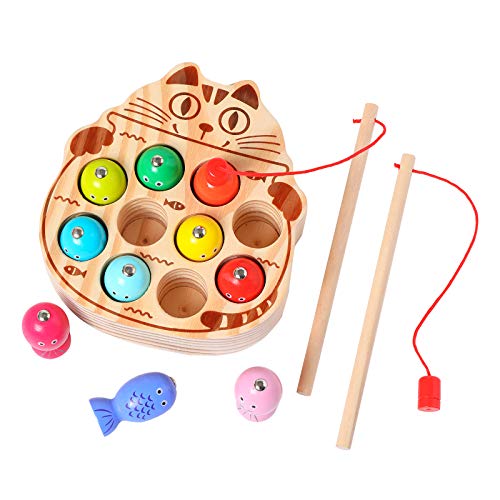
What Is Hand Eye Coordination and Why Does It Matter at Age Three?
Hand eye coordination is the ability of the eyes to guide the hands in a coordinated movement. For a three-year-old, this skill is the bridge between seeing an object and acting on it — whether that means stacking a block, threading a bead, or catching a soft ball. At this age, the brain is building neural pathways that connect visual information with motor output, and repetition through play is the most effective way to strengthen them.
Three-year-olds typically progress from broad, whole-arm movements to more controlled, wrist-and-finger actions. Toys that encourage precise placement, catching, threading, and tracing are ideal because they match this developmental stage without being frustrating. If you want to broaden the scope of physical development, our guide to gross motor toys covers the larger-movement side of the equation.
It is also worth noting that hand eye coordination does not develop in isolation. It overlaps with fine motor control, visual perception, and even problem-solving. Parents who observe their child struggling with one specific type of task can use targeted toys to build confidence gradually. For children a year older, the approach shifts slightly — see our recommendations for hands-on toys for 4 year olds to understand how the progression continues.
Key Toy Categories That Build Coordination
Not all toys are created equal when it comes to developing coordination. The best options share a few traits: they require the child to aim, place, catch, thread, or manipulate with increasing precision. Below are the categories that consistently deliver results — and that three-year-olds genuinely enjoy.
Stacking and Nesting Toys
Simple, durable, and endlessly repeatable. Stacking cups and rings teach graded force, spatial awareness, and cause-and-effect. Look for sets with varied sizes that require deliberate placement.
Lacing and Threading Sets
Threading beads or lacing cards demand sustained visual focus and a pincer grasp. These are excellent quiet-time activities that build concentration alongside coordination.
Large Pegboards and Mosaic Sets
Placing pegs into holes requires aim and controlled release. Mosaic peg sets add a creative layer — children match patterns while refining hand control.
Ball Catchers and Soft Toss Games
Catching a soft ball or tossing a beanbag into a target builds predictive tracking and timing. Velcro catch paddles are a popular choice for this age group.
Magnetic Tiles and Building Sets
Connecting magnetic pieces requires aligning edges and applying controlled force. These also support spatial reasoning — a bonus for growing minds.
Puzzles with Knobs and Pegs
Wooden puzzles with large knobs are perfect for three-year-olds: the child must visually match the shape and then physically rotate and insert it. Start simple and increase complexity.
Art and Drawing Tools
Fat crayons, washable markers, and stamp sets encourage controlled mark-making. Tracing stencils add a guided challenge that directly mirrors early writing motions.
Interactive Play Panels
Panels with latches, dials, gears, and switches offer varied manipulation tasks in one compact station. They are excellent for sustained attention and finger dexterity.
How to Choose the Right Toy for Your Three-Year-Old
The ideal toy is one that sits just slightly beyond your child's current ability — challenging enough to be interesting, but not so difficult that it causes frustration. Here are practical selection criteria:
- Size and safety: Avoid small parts that pose choking hazards. Three-year-olds still mouth objects occasionally, so choose pieces that are large enough to be safe and durable enough to withstand rough handling.
- Adjustable difficulty: Toys that grow with your child — like puzzles with increasing piece counts or building sets with multiple configurations — offer longer-term value.
- Open-ended vs. goal-directed: Both have a place. Goal-directed toys (like a ring toss or lacing card) build precision; open-ended toys (like blocks) build creativity and experimentation.
- Interest-led: A child who loves animals will engage longer with an animal-themed lacing set than with a generic one. Follow their curiosity.
- Durability: Look for solid construction and non-toxic finishes. Wooden toys with rounded edges and reinforced joints tend to hold up well in this age group.
If you are also considering broader developmental categories, our interactive toys for 3-4 year olds guide covers toys that blend coordination with cause-and-effect learning. And for a wider view of what is popular at this age, the highest rated toys for 3 year olds list is a useful cross-reference.
Comparison of Toy Types by Developmental Focus
The table below summarizes how different toy categories map to specific coordination sub-skills. Use it as a quick reference when deciding where to focus your play budget and space.
| Toy Category | Primary Coordination Skill | Best For | Tier |
|---|---|---|---|
| Stacking & Nesting | Graded force, spatial placement | Beginners building control | Essential Tier |
| Lacing & Threading | Pincer grasp, sustained visual focus | Quiet, focused play sessions | Balanced Tier |
| Pegboards & Mosaics | Aim, controlled release | Pattern recognition + dexterity | Essential Tier |
| Ball Catchers & Toss Games | Predictive tracking, timing | Active, energetic children | Balanced Tier |
| Magnetic Tiles | Alignment, controlled force | Spatial reasoning + building | Mid-Tier |
| Knob Puzzles | Shape matching, rotation | Early problem-solving | Starter Tier |
| Art & Drawing Tools | Controlled mark-making | Pre-writing practice | Mid-Tier |
| Interactive Play Panels | Finger dexterity, varied manipulation | Sustained attention practice | Balanced Tier |
Play Ideas to Maximize Coordination Development
Buying the right toy is only half the equation. How you present and engage with it matters just as much. Here are practical, low-prep play ideas that turn ordinary toys into coordination workouts:
- Obstacle courses with a coordination twist: Set up a simple path where your child must carry a soft object, step over cushions, and place the object into a bucket at the end. This combines gross motor movement with precise placement.
- Threading races (cooperative, not competitive): Sit side by side and thread beads together, narrating what you are doing. The shared focus keeps your child engaged longer than solo play.
- Target practice with beanbags: Use masking tape to mark circles on the floor and take turns tossing beanbags into them. Adjust distances to match your child's skill level.
- Puzzle rotation: Keep a small selection of puzzles accessible and rotate them weekly. Novelty drives repetition, and repetition builds coordination.
- Drawing prompts with stencils: Offer a stencil and a fat crayon. Tracing shapes gives structure to mark-making and directly practices the eye-hand loop.
For children who need a bit more physical challenge, combining coordination play with larger movements is highly effective. Our guide to gross motor skills toys for 2 year olds offers ideas that can be adapted upward for a three-year-old. If you are specifically looking for climbing and balance options, the indoor climbing toys for 3 year olds article covers that category in detail.
Safety Considerations for Three-Year-Olds
At three, children are still developing judgment and impulse control. Safety should remain a top priority when selecting any toy, especially those with small components. Choose toys that are labeled for ages three and up, and always supervise play with items that have strings, small magnets, or detachable parts. Avoid toys with button batteries, which pose a serious hazard if swallowed. Check toys regularly for wear and tear, and retire any item with cracks, loose joints, or peeling finishes.
For a broader look at safety and material considerations, our interactive toys overview includes guidance on choosing durable, safe options across categories.
Frequently Asked Questions
How do I know if my three-year-old needs more practice with hand eye coordination?
Typical signs include difficulty holding a crayon with a functional grasp, trouble placing puzzle pieces accurately, or frustration with tasks like threading or stacking. If you notice persistent difficulty across many activities, it is worth mentioning to your pediatrician. In most cases, targeted play with the right toys is enough to build skills naturally.
How long should a three-year-old play with coordination toys each day?
There is no strict rule. Short, frequent sessions — ten to fifteen minutes at a time — tend to work better than long forced periods. Follow your child's interest. If they are engaged and enjoying the activity, let them continue; if they lose interest, move on and try again another day.
Are digital games or apps useful for hand eye coordination?
Some research suggests that interactive digital play can support certain aspects of visual-motor coordination, but physical toys offer richer sensory feedback and full-body engagement. For three-year-olds, hands-on toys should be the primary tool. Screen-based activities, if used at all, should be limited and supervised. Our iPad learning games for 3 year olds guide covers this topic in more depth.
What if my child gets frustrated easily with coordination toys?
Frustration is a sign that the task is slightly too hard — or that the child is tired or hungry. Scale back the difficulty: choose larger pieces, simpler puzzles, or toys with more forgiving tolerances. Model the activity yourself and narrate what you are doing. Celebrate effort rather than outcome.
Can siblings or friends play together with these toys?
Absolutely. Many coordination toys work well for parallel play or simple cooperative games. Turn-taking games like beanbag toss or shared building projects also build social skills alongside physical ones.