Indoor Climbing Toys for 3 Year Olds: A Parent's Complete Guide
Active play doesn't have to stop when you step inside. Discover safe, durable indoor climbing toys that help your 3-year-old build strength, balance, and confidence — right in your living room.
Why indoor climbing matters at age three: By age three, children are eager to climb, jump, and explore. An indoor climbing toy gives them a safe outlet for that energy while strengthening gross motor skills, coordination, and problem-solving — all without a trip to the playground.
Why Indoor Climbing Toys Are Great for 3-Year-Olds
Three-year-olds are in a critical window for physical development. Indoor climbing toys offer structured, repeatable challenges that match their growing abilities. Here's what they support:
Gross Motor Development
Climbing, crawling, and sliding strengthen large muscle groups, improving leg strength, core stability, and overall coordination.
Balance & Spatial Awareness
Navigating ramps and steps teaches toddlers to judge distance, height, and body position — essential for confident movement.
Confidence & Independence
Mastering a small climbing challenge gives 3-year-olds a sense of accomplishment that fuels self-esteem and independent play.
Safe Energy Release
Indoor climbing provides a physical outlet on rainy days, reducing restlessness and supporting better focus and sleep.
Types of Indoor Climbing Toys for 3-Year-Olds
Not every climbing toy suits every home. Below are the main categories, with notes on which market tier typically fits each style and what to expect from each option.
-
Starter Tier
Soft Foam Climbing Blocks
Lightweight foam shapes covered in easy-to-clean fabric. Ideal first climbing toys for 3-year-olds — low to the ground, modular, and gentle on falls. Starter-tier sets often include a few basic shapes, while mid-tier sets add ramps and stairs for more variety.
-
Balanced Tier
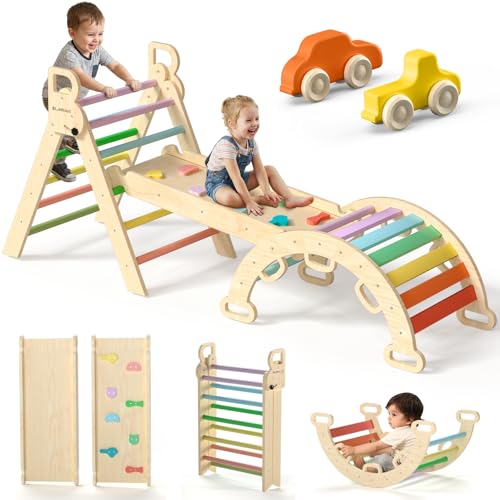
Wooden Climbing Arches & Pikler-Style Frames
Montessori-inspired wooden arches and triangle climbers encourage self-directed exploration. They are stable, durable, and built from solid materials. Mid-range and high-end tier versions offer smoother finishes, folding designs, and reversible ramps.
-
Mid-Tier
Indoor Play Structures with Slides
Compact playsets combining a small slide, steps, and a climbing wall. These are the most popular choice for 3-year-olds and typically occupy a corner of a playroom. Mid-tier models balance sturdy construction with a manageable footprint.
-
Premium Tier
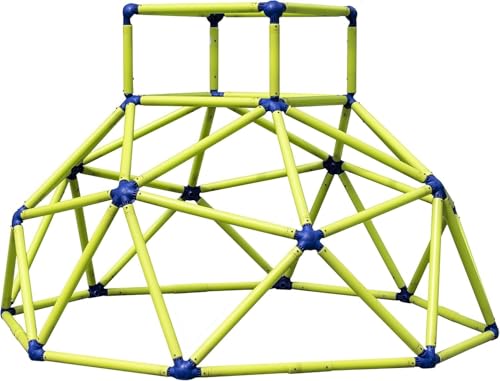
Padded Climbing Frames & Junior Gym Sets
Larger, padded structures with multiple climbing surfaces and safety rails. Premium-tier options are heavy-duty, reinforced, and designed for daily use — a long-term investment for active families.
-
High-End Tier
Foldable & Space-Saving Climbers
Foldable wooden or padded climbers that store flat against a wall. Ideal for apartments. High-end tier models offer premium materials, tool-free assembly, and clever storage designs.
Safety Checklist for Indoor Climbing Toys
- Age rating: Confirm the toy is labeled for ages 3 and up. Avoid toys rated for older children, even if your child seems ready.
- Stable base: Choose wide, weighted feet or non-slip pads that keep the structure firmly in place on hard floors.
- Soft landing zone: Place a padded play mat underneath and around the climber. A large padded mat is a smart companion purchase.
- Rounded edges: Check that all corners, rails, and joints are smooth and free of sharp hardware.
- Height limits: For a 3-year-old, climbing heights should remain low — typically under 2 feet — with easy handholds.
- Clearance: Leave at least 3 feet of open space on all sides so your child can enter and exit safely.
- Supervision: Always supervise climbing play at age 3 and set simple rules like "feet first" on slides.
Looking to expand your home play setup? Explore our guides on indoor climbing toys for 2 year olds for younger siblings, indoor climbing toys for 4 year olds as your child grows, and gross motor toys that complement climbing play. For coordination-focused picks, see hand-eye coordination toys for 3 year olds, and for a broader active-play setup, browse indoor play equipment for home. You can also compare our highest rated toys for 3 year olds and pair your climber with a large padded play mat for hard floors.
How to Choose the Right Indoor Climbing Toy
When comparing options for a 3-year-old, focus on four factors: safety rating, footprint, material quality, and adjustability. Entry-level foam sets are a great first step and easy to rearrange. Mid-range wooden arches and small playsets offer more durable construction and grow with your child. Premium and high-end tier frames are worthwhile investments if you expect daily use or plan to pass the toy down to siblings. Always measure your available floor space before ordering and check whether the model folds for storage.
Frequently Asked Questions
What is the safest indoor climbing toy for a 3-year-old?
The safest options feature low heights, soft padded surfaces, sturdy bases, and non-slip feet. Choose models rated specifically for ages 3 and up with rounded edges and certified safety labels.
How much space do I need for an indoor climbing toy?
Most 3-year-old climbers need roughly 4 to 6 feet of clear space on each side. Always check the manufacturer's recommended clearance and place the toy on a flat, padded surface away from furniture.
Which skills do indoor climbing toys help develop?
They build gross motor skills, balance, hand-eye coordination, and spatial awareness, while also supporting confidence and problem-solving through independent play.
Should a 3-year-old always be supervised on a climbing toy?
Yes. Even the safest age-appropriate climbers should be used with adult supervision at age 3. Place the toy on a soft, non-slip surface and set clear rules about climbing and sliding safely.