Developmentally Appropriate Toys for 5 Year Olds: The Complete Guide
Five is a magical age of curiosity, early literacy, and blossoming social skills. Learn which toys truly match a five-year-old's developmental stage — and why the right match matters for confidence, learning, and joyful play.
What You'll Find in This Guide
What "Developmentally Appropriate" Really Means
Developmentally appropriate toys are not simply toys labeled for a certain age — they are toys that align with a child's current cognitive, physical, social, and emotional capabilities, while offering just enough challenge to encourage growth. For a five-year-old, this means toys that reward emerging literacy, support small-hand precision, invite cooperative play, and fuel imaginative storytelling.
The concept draws from decades of child development research, including the work of Piaget and Vygotsky, which emphasizes that children learn best when materials meet them at their current stage and gently stretch them toward the next. A toy that is too advanced leads to frustration; a toy that is too simple leads to boredom. The sweet spot — often called the "zone of proximal development" — is where real learning and delight happen.
At age five, children are typically transitioning from preschool to kindergarten. They are refining their grasp, recognizing letters and numbers, beginning to sound out words, and developing the ability to take turns and follow multi-step rules. The right toy selection supports all of these transitions simultaneously. For related age-stage guidance, see our guides on educational toys for 4–5 year olds and developmentally appropriate toys for a 3-month-old.
Key Developmental Milestones at Age 5
Before choosing toys, it helps to understand what a typical five-year-old is working on. While every child develops at their own pace, most five-year-olds are mastering the following:
- Cognitive: Counting to 20 or beyond, recognizing most letters, understanding simple time concepts (morning, night), following three-step directions, and beginning to sound out short words.
- Fine motor: Holding a pencil with a mature grip, drawing recognizable figures, using scissors with control, buttoning and zipping clothing, and building with small pieces.
- Gross motor: Hopping, skipping, throwing and catching a ball, riding a tricycle or balance bike, and climbing with confidence.
- Social-emotional: Taking turns, sharing with prompting, expressing empathy, engaging in cooperative pretend play, and beginning to understand rules in games.
- Language: Speaking in full sentences, telling simple stories, asking "why" and "how" questions, and understanding humor and wordplay.
Toys that target these milestones — without overwhelming — are the true "developmentally appropriate" choices. Our cool toys for 5 year olds collection highlights many of these categories in action.
Cognitive & Early Academic Toys
Five-year-olds are on the cusp of reading and arithmetic. Toys that make letters, numbers, and logic feel like play — rather than drills — are invaluable. Look for materials that invite exploration, self-correction, and repetition without pressure.
Alphabet & Phonics Puzzles
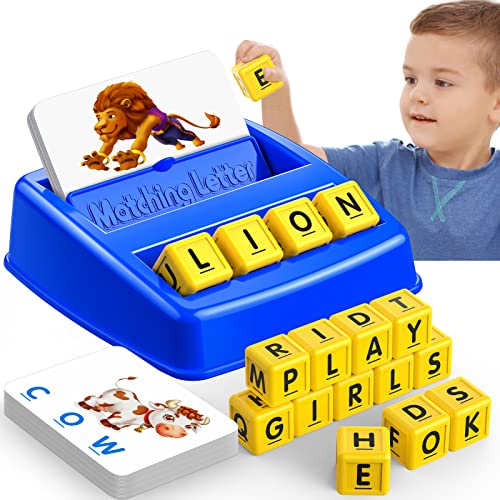
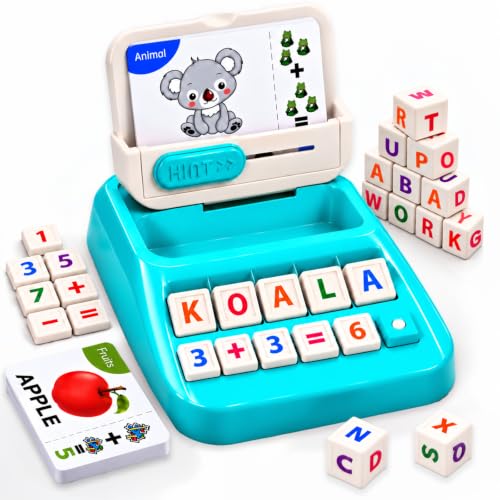
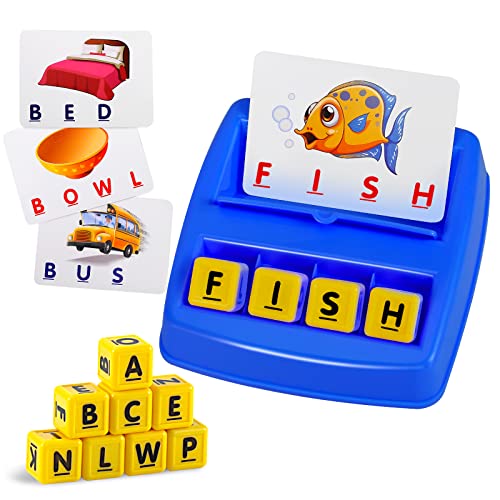
Chunky letter puzzles, magnetic letter sets, and phonics matching games help children connect letters to sounds. Choose sets with lowercase and uppercase options and clear, realistic images.
Early Math Manipulatives
Counting bears, linking cubes, number lines, and simple balance scales make early math tactile and concrete. These tools support one-to-one correspondence, sorting, and patterning — the foundations of arithmetic.
STEM Discovery Kits
Age-appropriate science kits with magnets, simple circuits, or sink-and-float experiments introduce cause-and-effect thinking. Look for kits labeled for ages 4–6 with adult supervision. Explore more in cool science toys for 5 year olds.
Memory & Matching Games
Simple memory card games, lotto games, and matching sets build working memory, attention, and turn-taking — all critical kindergarten readiness skills.
For a broader look at academic-adjacent play, our guide to educational toys for 5–6 year olds covers additional categories like early coding toys and language games.
Fine Motor & Creative Toys
A five-year-old's hands are getting stronger and more precise every week. Toys that encourage drawing, cutting, molding, and building directly support handwriting readiness and hand-eye coordination.
- Art supplies: Washable markers, crayons, colored pencils, child-safe scissors, glue sticks, and open-ended paper invite daily creativity. Avoid complex craft kits that require adult assembly.
- Play dough and modeling clay: Squeezing, rolling, and shaping build hand strength and imagination. Choose non-toxic, re-sealable options.
- Building sets: Interlocking bricks, magnetic tiles, and wooden blocks with small pieces challenge precision and planning. Our educational building toys for 5 year olds guide covers the best categories.
- Beads and lacing: Threading beads, lacing cards, and simple sewing cards refine pincer grasp and patience.
- Drawing and tracing: Stencils, tracing boards, and blank sketchbooks encourage early writing and storytelling.
Creative play also supports emotional expression. Five-year-olds often use drawing and pretend play to process new experiences, from starting school to welcoming a sibling. Open-ended art materials are among the most developmentally valuable toys you can provide.
Physical & Outdoor Toys
Five-year-olds need daily movement to develop strength, balance, and coordination. Outdoor play also supports risk assessment, confidence, and emotional regulation.
- Balance bikes and tricycles: Build core strength and steering control. Five is often the age when children transition to a pedal bike with training wheels.
- Balls of all sizes: Throwing, catching, kicking, and bouncing refine hand-eye coordination and gross motor planning.
- Climbing structures and swing sets: Safe, age-appropriate climbing equipment builds upper-body strength and confidence. Always supervise.
- Sand and water play: Sensory play with buckets, scoops, and molds supports fine motor skills and scientific exploration.
- Gardening tools for kids: Child-sized trowels, watering cans, and seed kits introduce responsibility and connection to nature.
For more ideas, our guide to cool outdoor toys for 5 year olds covers seasonal and active-play options. If your child is ready for wheels, see also electric cars for 5 year olds to drive (with adult supervision).
Toy Category Comparison Table
The table below summarizes the main toy categories for five-year-olds, their developmental focus, and the tier that best describes their typical market positioning. Use it as a quick reference when planning purchases or gifts.
| Toy Category | Developmental Focus | Typical Tier | Best For |
|---|---|---|---|
| Alphabet & phonics puzzles | Early literacy, letter-sound connection | Essential tier | Pre-readers and early readers |
| Math manipulatives | Counting, sorting, patterning | Essential tier | Children building number sense |
| STEM discovery kits | Cause-and-effect, observation | Top-tier | Curious, hands-on learners |
| Building sets | Fine motor, spatial reasoning, planning | Mid-range to top-tier | Children who love construction |
| Art supplies | Fine motor, creativity, self-expression | Essential tier | Every five-year-old |
| Board games | Rule-following, turn-taking, patience | Essential to mid-tier | Family and peer play |
| Pretend play kits | Language, empathy, narrative thinking | Balanced tier | Imaginative, social children |
| Outdoor active toys | Gross motor, balance, confidence | Essential to premium tier | Active, energetic children |
Note that tier reflects relative market positioning and construction quality, not a judgment of developmental value. A simple, well-chosen entry-level puzzle can be more developmentally valuable than a complex top-tier electronic toy.
Safety & Supervision Notes
Even developmentally appropriate toys require sensible safety practices. Keep the following in mind for five-year-olds:
- Choking hazards: Although five-year-olds are past the peak choking-risk age, small parts still pose a risk, especially for children who mouth objects. Follow age labels and keep small pieces away from younger siblings.
- Supervision outdoors: Always supervise climbing, wheeled toys, and water play. Ensure helmets are worn for balance bikes and tricycles.
- Art material safety: Choose non-toxic, washable art supplies. Avoid solvents and permanent markers.
- Screen time balance: If using educational screen-based toys, keep sessions short and co-view when possible. Hands-on play should remain the priority.
- Toy condition: Regularly inspect toys for loose parts, sharp edges, or broken pieces. Repair or retire damaged toys promptly.
For a deeper look at toy safety standards, our toy safety guide covers age labeling, materials, and recall awareness.
Ready to choose with confidence? Browse our curated cool toys for 5 year olds collection, or explore educational toys for 5–6 year olds to find the perfect match for your child's current stage and interests.
Frequently Asked Questions
What types of toys are developmentally appropriate for a 5 year old?
Five-year-olds benefit from toys that support emerging literacy and numeracy, fine motor skills, imaginative play, and social cooperation. Building sets, puzzles, art supplies, board games, pretend play kits, and early STEM toys are all excellent choices.
How long should a 5 year old play with toys each day?
Five-year-olds typically engage in self-directed play for 45 to 90 minutes at a time, with a mix of active and quiet play throughout the day. Unstructured play is essential for creativity and problem-solving development.
Are screen-based toys appropriate for 5 year olds?
When used in moderation and with caregiver guidance, high-quality educational screen-based toys can complement learning. However, hands-on, tactile toys remain the priority for healthy development at this age.
How can I tell if a toy is too advanced for my 5 year old?
If a toy requires reading fluency, complex multi-step instructions, or fine motor precision beyond small-hand capabilities, it may be too advanced. Look for toys labeled for ages 4 to 6, and observe whether your child can engage independently or with minimal help.
How many toys should a 5 year old have access to at once?
Research suggests that fewer toys in view can lead to deeper, more focused play. Many families find that rotating a small set of 8–12 toys at a time — and storing the rest — encourages sustained engagement and creativity. Our toy organization section offers rotation and storage strategies.
Final Thoughts
Choosing developmentally appropriate toys for a five-year-old is less about finding the "best" toy and more about matching materials to your child's current interests, strengths, and emerging skills. A well-chosen set of open-ended, tactile, and socially engaging toys will support growth across every domain — cognitive, physical, social, and emotional — while keeping play joyful and child-led.
Observe your child, follow their curiosity, and rotate toys thoughtfully. With the right match, play becomes the most powerful learning tool of childhood.