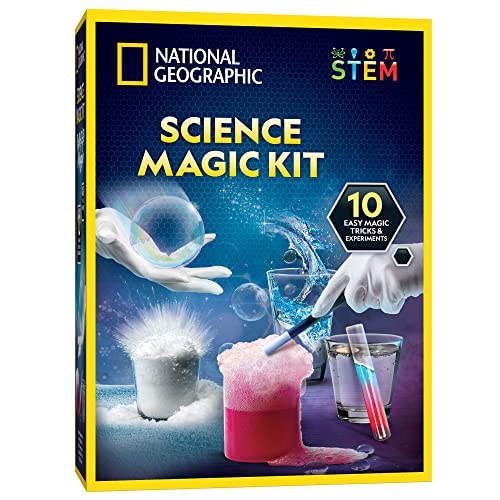
Cool Science Toys for 5 Year Olds: Spark Curiosity Through Play
Five-year-olds are natural scientists—they ask questions, test ideas, and explore the world with endless energy. The right science toys channel that curiosity into hands-on discovery, building foundational STEM skills while keeping playtime genuinely fun.
Explore Top Science Toys🧪 Why science toys matter at age five: At five, children are transitioning from sensory exploration to purposeful experimentation. They can follow simple instructions, make predictions, and observe cause-and-effect relationships. Science toys designed for this age group tap into that developmental window—turning everyday curiosity into structured, joyful learning.
This guide cuts through the noise. We've analyzed what actually works for five-year-olds: kits that are safe, engaging, and genuinely educational without being frustrating. Whether you're shopping for a birthday, a holiday, or just because, you'll find clear recommendations organized by learning style and developmental benefit.
What Science Toys Teach 5-Year-Olds
Observation Skills
Simple experiments encourage kids to watch closely, notice details, and describe what they see—core scientific habits that extend far beyond the playroom.
Cause & Effect Thinking
When a five-year-old mixes colors, builds a circuit, or watches a volcano erupt, they're learning that actions produce predictable results—a foundation for logical reasoning.
Fine Motor Control
Pipettes, tweezers, connectors, and small tools build hand strength and coordination—skills that support writing, drawing, and everyday independence.
Language & Vocabulary
Science play introduces words like "predict," "observe," "experiment," and "result"—expanding a child's ability to explain and describe their world.
Patience & Persistence
Not every experiment works the first time. Science toys teach five-year-olds to try again, adjust their approach, and celebrate small victories.
Confidence & Independence
Completing a science activity on their own gives five-year-olds a powerful sense of capability—"I did it!" moments that build self-esteem.
Understanding Science Toy Tiers
Science toys for five-year-olds fall into three broad tiers based on complexity, materials, and depth of engagement. Here's how to think about them:
| Tier | Best For | Key Characteristics |
|---|---|---|
| Essential Tier | First-time science explorers | Simple, open-ended tools that introduce basic concepts—magnets, magnifying glasses, color mixing. Minimal setup, immediate payoff, and very durable construction for enthusiastic handling. |
| Balanced Tier | Kids ready for guided activities | Structured kits with step-by-step instructions and multiple experiments. Typically include child-safe chemicals, tools, and a parent guide. Good value for its tier, with enough variety to sustain repeat play. |
| Top-Tier | Enthusiastic young scientists | Feature-rich kits with premium materials, more advanced concepts (simple circuits, basic chemistry), and longer engagement cycles. Often include storage cases and detailed experiment manuals. A worthwhile investment for families who want long-term learning value. |
What to Look For in Science Toys for 5-Year-Olds
Not all science toys are created equal. Here's what separates a great pick from a frustrating one:
- Age-appropriate safety labeling: Look for clear age recommendations (5+ or 6+), non-toxic materials, and no small parts that pose choking risks. Avoid kits with glass components or harsh chemicals.
- Clear, visual instructions: Five-year-olds can't read complex manuals. The best kits use pictures, color-coding, and simple steps that a child can follow with minimal adult help.
- Hands-on engagement: The toy should require doing, not just watching. Pipettes, molds, connectors, and building components keep little hands busy and minds active.
- Repeat play value: A kit that can be used once and discarded isn't a good investment. Look for toys that can be reset, refilled, or recombined for ongoing experimentation.
- Adult involvement level: Some kits are designed for independent play; others require close adult supervision. Choose based on your availability and your child's temperament.
- Storage and organization: Science toys come with many small parts. A storage case or labeled compartments makes cleanup easier and keeps components from getting lost.
- Real science concepts: Even simple toys should introduce genuine principles—magnetism, buoyancy, color theory, basic chemistry—not just flashy effects.
Matching Science Toys to Your Child's Learning Style
Every five-year-old is different. Some love messy experiments; others prefer building and tinkering. Here's how to match toys to your child's natural inclinations:
- For the hands-on explorer: Choose kits with sensory elements—color mixing, slime-making, water play, or texture experiments. These kids learn by touching and manipulating materials.
- For the builder and tinkerer: Look for simple circuit kits, magnetic building sets, or construction-based science toys. These children want to understand how things work and fit together.
- For the observer and questioner: Pick toys that encourage close looking and note-taking—magnifying glass sets, bug viewers, simple microscopes, or nature exploration kits.
- For the storyteller and imaginative player: Choose science toys with role-play elements—doctor kits, veterinarian sets, or "mad scientist" lab kits that frame experiments as stories.
- For the energetic mover: Select toys that incorporate physical activity—balloon-powered cars, rocket launchers, or simple physics toys that demonstrate force and motion.
Frequently Asked Questions
Are science toys safe for 5-year-olds?
Yes—when chosen correctly. Always check age recommendations on the packaging and look for non-toxic, child-safe materials. Avoid kits with glass, sharp tools, or harsh chemicals. Most science toys designed for the 5+ age group are specifically engineered with safety in mind, using plastic tools, mild ingredients, and rounded edges. Adult supervision is still recommended for any activity involving water, small parts, or step-by-step experiments.
How do I know if a science toy is too advanced for my 5-year-old?
If a kit requires reading long instructions, uses complex terminology without visual aids, or has many small steps that need precise execution, it's likely too advanced. The best science toys for five-year-olds have visual guides, simple components, and immediate feedback. If your child gets frustrated within the first few minutes, the toy is probably designed for an older age group. Start with essential-tier toys and work up as your child's confidence grows.
Can science toys replace screen time?
They can be a fantastic alternative for families looking to reduce passive screen time. Hands-on science toys engage multiple senses and require active participation—unlike passive video watching. However, the key is availability: keep science toys accessible and rotate them regularly to maintain novelty. Many parents find that a dedicated "science shelf" or bin encourages independent exploration without screens.
How often should I introduce new science toys?
Rather than constantly buying new kits, focus on rotating and extending the ones you have. A single well-chosen science toy can provide weeks of exploration if you encourage variations—changing one variable, trying a new material, or repeating an experiment with a twist. Introduce a new kit every few months or for special occasions, and keep a small collection of open-ended tools (magnets, magnifiers, measuring cups) available for everyday play.
Do science toys actually help with school readiness?
Absolutely. Science toys build foundational skills that directly support school success: following directions, making predictions, observing carefully, and communicating findings. They also introduce math concepts (measuring, counting, comparing) and language skills (describing, asking questions, explaining). Perhaps most importantly, they foster a positive attitude toward learning—children who associate discovery with joy are more likely to embrace academic challenges later on.
Ready to Spark Your Child's Curiosity?
The best science toy is the one your child will actually use—and love. Our curated recommendations focus on safety, engagement, and genuine learning value for five-year-olds. Explore our top picks below and find the perfect fit for your young scientist.
View Recommended Science ToysExplore More Toy Guides
Looking for more age-appropriate toy recommendations? These guides cover related topics that parents of five-year-olds often ask about:
- Developmentally Appropriate Toys for 5-Year-Olds — a broader look at what five-year-olds need across all toy categories.
- Educational Toys for 5-6 Year Olds — learning-focused picks that complement science play.
- Educational Toys for 4-5 Year Olds — if you're shopping for a slightly younger child or want stepping-stone options.
- Cool Outdoor Toys for 5-Year-Olds — science extends outdoors; these picks encourage nature exploration and active discovery.
- Educational Building Toys for 5-Year-Olds — construction play and engineering concepts for young builders.
- Educational Games for 4-5 Year Olds — game-based learning that reinforces science thinking.
- Cool Toys for 5-Year-Olds — a wider selection of top-rated toys for this age group.